Hachiōji Castle: A Sengoku-Period Mountain Fortress in Japan


Site at a Glance
- Rating
- 4.1
- Popularity
- Medium
- Country
- Japan
- Primary era
- Early Modern
- External website
- Open
- Eras represented
- Early Modern
- Civilizations
- Later Hōjō
- Site type
- Military
- Remains
- Castle
On this page12 sections
History
Hachiōji Castle is a Sengoku-period Japanese mountain castle in Japan, built in the 1570s by Hōjō Ujiteru on Mount Fukasawayama near Hachioji. The Sengoku period was an era of political fragmentation and warfare among competing military lords. The castle became a stronghold of the Late Hōjō clan and guarded routes linking Kai Province with Musashi Province.
Foundation and Hōjō control
Ujiteru, the younger brother of Hōjō Ujimasa and one of the clan’s leading commanders, began building the castle after his earlier residence at Takiyama Castle proved vulnerable. During a 1569 incursion by the Takeda clan, Takiyama’s weak defensive position exposed the need for a stronger mountain refuge. Hachiōji Castle occupied the mountainside and summit, giving Ujiteru a more defensible base.
Construction continued after the Takeda clan was destroyed in 1582 by an alliance between Oda Nobunaga and Tokugawa Ieyasu, both of whom were hostile to the Hōjō. Ujiteru had transferred his seat to Hachiōji Castle by 1587. From there, the castle controlled the main route through Kobotoke Pass and a subsidiary route through Ange Pass.
The 1590 conquest
In 1590, Toyotomi Hideyoshi attacked the Hōjō after they refused to pledge fealty to him. Hideyoshi was the military ruler who unified Japan during the late sixteenth century. Ujiteru left approximately 1,300 men at Hachiōji Castle while he unsuccessfully attempted to relieve the Siege of Odawara, the Hōjō clan’s principal stronghold.
A Toyotomi army commanded by Maeda Toshiie and Uesugi Kagekatsu captured a succession of Hōjō fortresses before reaching Hachiōji Castle. The assault began on 23 June 1590, and the castle fell before the day ended. Afterward, Hideyoshi ordered its destruction. The site remained abandoned for years because local belief held that it was haunted.
Archaeology and modern recognition
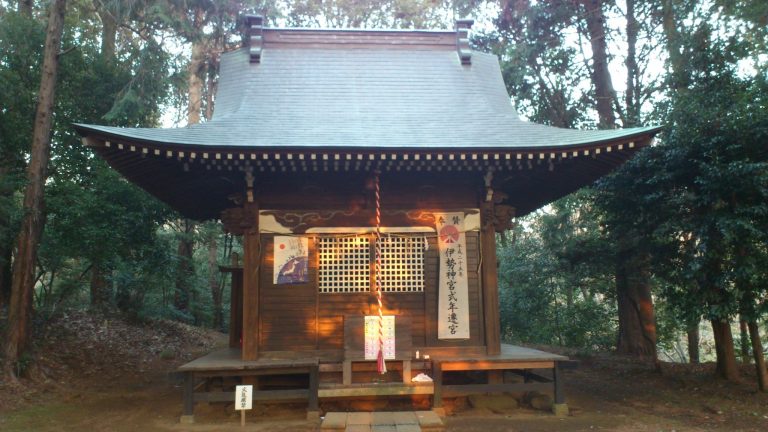
Archaeological excavation and maintenance began in 1951, when the ruins were designated a National Historic Site of Japan. The protected area was enlarged in 2005, and Hachiōji Castle was included among Japan’s Top 100 Castles in 2006. The name Hachiōji comes from Hachiōji Gongen, a deity of the Gion religious tradition enshrined at the site. Gion was historically associated with protection from epidemic disease and calamity.
Remains
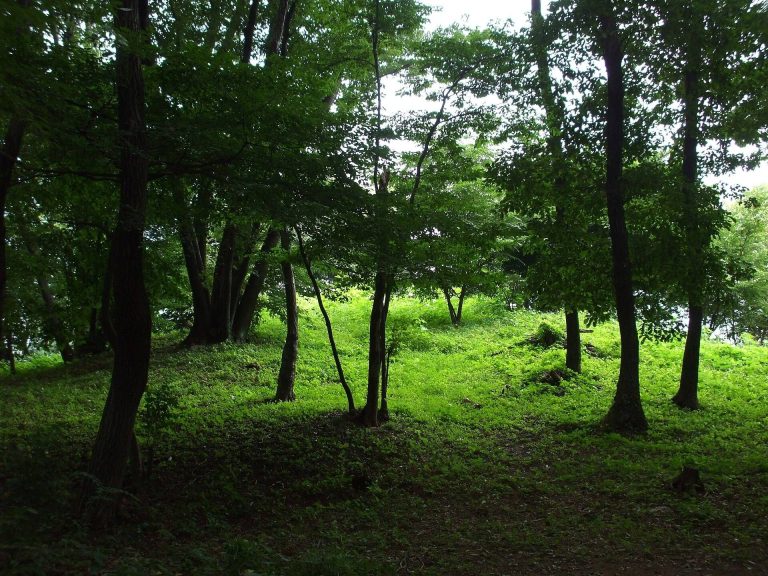
Hachiōji Castle survives as ruins on Mount Fukasawayama, about five kilometers southwest of central Hachioji. This yamashiro, or mountain castle, used the steep mountainside and summit as part of its defenses. Built of wood and stone, it combined clay ramparts, dry moats, stone-lined approaches, and enclosed areas spread across the natural contours of the mountain.
Mountain defenses and enclosures
Outer defensive line
The outer defenses followed the mountain’s contours. Clay ramparts and dry moats formed the principal defensive line, while the hillside contained a large enclosure for the castellan’s residence and several smaller enclosures around it. A dry moat is a defensive ditch without water. In front of the main gate, a drawbridge crossed the moat, and the front wall and approach were lined with stones that apparently expressed the authority of the castle.
Summit and rear fortification
The summit held a small inner bailey, the main enclosed area of a castle, with no significant defenses. A separate fortification with a stone wall stood on a neighboring hill, about a 20-minute walk from the inner bailey, and protected the main castle from attack from the rear. The defenses were unevenly developed: the hillside structures used stone and were strongly defended, while other areas were weaker, reflecting the castle’s incomplete condition.
Reconstructed features and archaeological finds
Stone walls, bridge, and palace entrance
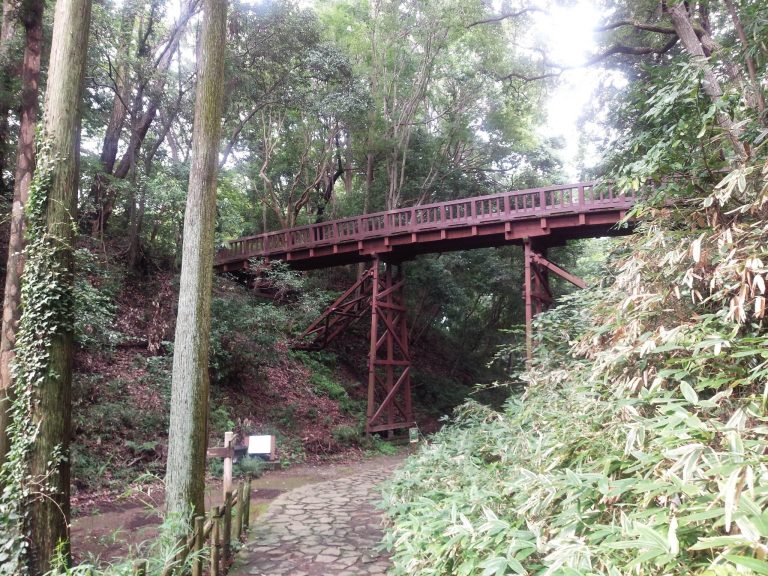
In 1990, some stone walls, a bridge across a moat, and the entrance to the lord’s palace were reconstructed. These features represent parts of the castle’s defensive and residential arrangement within the surviving ruins.
Weapons and defensive objects
Small, pointed clay balls found in the ruins around 1960 have been identified as primitive forms of caltrops, although that identification remains qualified. A flat hexagonal stone may also have been an early form of the weapon later associated with ninja shuriken.
Landscape changes
Timber felling during the war around 1945 left the area around the castle, except near the summit, as a bald mountain. Hinoki cypress trees were planted after World War II. In 2004, the Ken-Ō Expressway was built through a tunnel running directly beneath the mountain’s western end.