Matsuyama Castle: A Sengoku-Period Hill Castle in Japan
Site at a Glance
- Rating
- 3.6
- Popularity
- Low
- Country
- Japan
- Primary era
- Medieval
- External website
- Open
- Eras represented
- Medieval, Early Modern
- Civilizations
- Ashikaga shogunate
- Site type
- Military
- Remains
- Castle
On this page12 sections
History
Matsuyama Castle in Japan was a Japanese hirayamajiro, or hill castle incorporating both elevated and level defensive ground, in present-day Yoshimi, Saitama. Its foundation is traditionally attributed to Ueda Tomonao in 1399, although the date remains uncertain and has also been placed in the latter half of the fifteenth century. From the Muromachi period into the Sengoku period, an era of prolonged political fragmentation and warfare, the castle held a strategic position in central Musashi.
Foundation and regional strategy
The Ueda clan, originally retainers of the Ogigayatsu Uesugi clan, used Matsuyama as a forward base against the Koga kubo, the Ashikaga-affiliated military lord based at Koga, and against the Yamanouchi Uesugi clan advancing from the north. After the Later Hōjō expanded into Musashi, the castle became a base for operations against them. It also formed part of a defensive line associated with Ōta Dōkan, a fifteenth-century samurai and castle builder, together with Hachigata, Kawagoe, and Edo castles.
Control passed among the Ueda, Nambada, Ogigayatsu Uesugi, Ōta, and Sakurai Matsudaira families. After Hōjō Ujitsuna captured Kawagoe Castle in 1537, Hōjō forces attacked Matsuyama, but defenders commanded by Nambada Norishige repelled them. Uesugi Tomosada, who had lost Kawagoe, then made Matsuyama his residence and strengthened its defenses, including its dry moats.
Uesugi and Hōjō contests
The failed Uesugi attempt to recover Kawagoe, followed by the deaths of Uesugi Tomosada and Nambada Norishige, brought about the destruction of the Ogigayatsu Uesugi clan. Matsuyama consequently passed to Hōjō Ujiyasu. Ōta Sukemasa later recaptured it for the Uesugi side, with Ueda Tomonao serving as castellan, the official responsible for holding and administering a castle. Tomonao then defected to the Hōjō, returning Matsuyama to Hōjō control.
One tradition holds that Ōta Sukemasa had inherited the lordship as Nambada Norishige’s adopted son-in-law and continued to claim it after returning to his family seat at Iwatsuki Castle. In 1561, Uesugi Kenshin seized Matsuyama and appointed Sukemasa as castellan. Two years later, a combined Hōjō and Takeda Shingen force recaptured the castle in the Battle of Ikunoyama. This conflict contributed to the subsequent Second Battle of Kōnodai. Matsuyama was then briefly administered directly by the Hōjō before returning to the Ueda clan, which governed the surrounding Hiki area, known as Matsuyama territory, as Hōjō retainers.
The 1590 siege
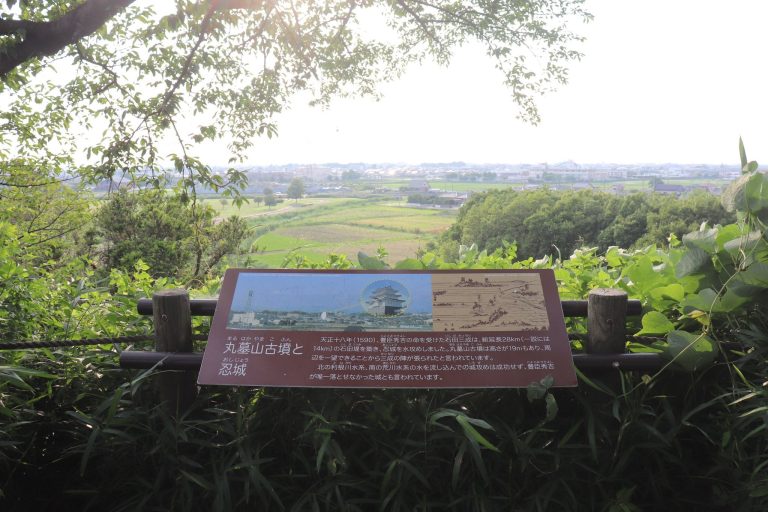
During Toyotomi Hideyoshi’s Odawara Campaign in 1590, the campaign that ended Hōjō rule in the Kantō and brought the region under Hideyoshi’s control, castle lord Ueda Norisada was defending Odawara Castle. Yamada Naoyasu and about 2,300 defenders instead held Matsuyama. An army led chiefly by Maeda Toshiie and Uesugi Kagekatsu besieged the castle, which eventually fell. A contemporary deployment map associated with the surrender also names Sanada Masayuki and Naoe Kanetsugu among the Toyotomi forces.
Tokugawa administration and abandonment
After Tokugawa Ieyasu entered the Kantō region, Matsudaira Ieharu occupied Matsuyama and established Matsuyama Domain. When his successor, Matsudaira Tadayori, was transferred to Hamamatsu Domain in 1601, the castle became vacant and was abandoned. The surrounding area was incorporated into Kawagoe Domain.
A bridge was reportedly built across the Ichinokawa between Ieharu’s arrival and the castle’s abandonment, improving transport between Matsuyama and its castle town. During the Hōjō period, no bridge existed in that direction because the river crossing formed an important part of the defenses. In 1867, after Kawagoe lord Matsudaira Naokatsu moved to Maebashi Domain, the Hiki and Iruma territories became detached holdings requiring an administrative base. Matsuyama Castle was not reused. Instead, Matsuyama Jin’ya, a smaller administrative and military headquarters, was established on level ground about 1.7 kilometers to the west.
Several unverified traditions connect the castle’s foundation with Ono no Takamura, Taira no Nobukiyo, Minamoto no Tsunemoto, Minamoto no Yorinobu, or Nitta Yoshisada. Other local stories say that defenders concealed a shortage of water by washing horses with rice, or that Takeda Shingen’s mining specialists tried to undermine the castle with tunnels and explosives. The latter tradition remains weakly documented locally. Archaeological investigation has provided a firmer basis for understanding the castle’s later history, and the ruins now form part of the Hiki Castle Sites Group, designated a National Historic Site in 2008.
Remains
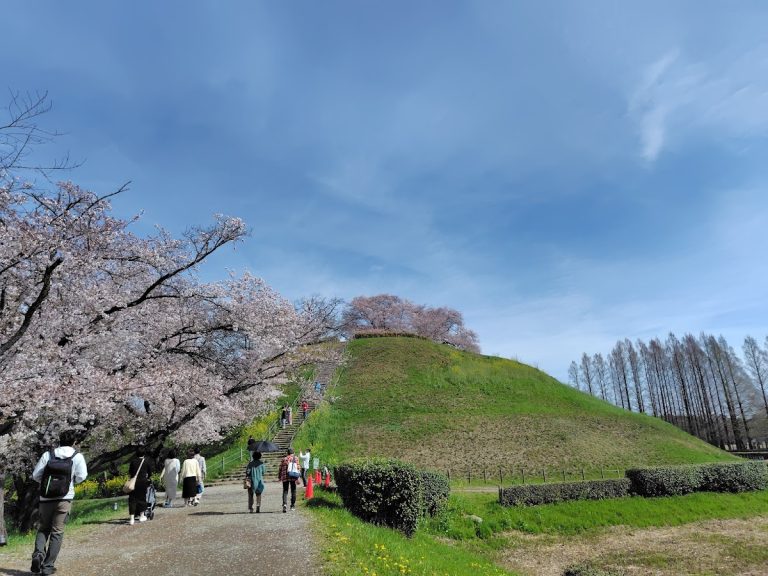
Matsuyama Castle was laid out as a hirayamajiro, using a natural hill together with lower defensive ground. The Ichinokawa at the foot of the hill served as a natural moat, while Matsuyama Hongo, the castle town, lay across the river to the west. The western section, commonly called Shiroyama, covers about 16 hectares and contains the principal concentration of baileys, enclosed defensive sections formed partly by changes in ground level and partly by large dry moats.
Hilltop enclosures and defenses
Main and eastern baileys
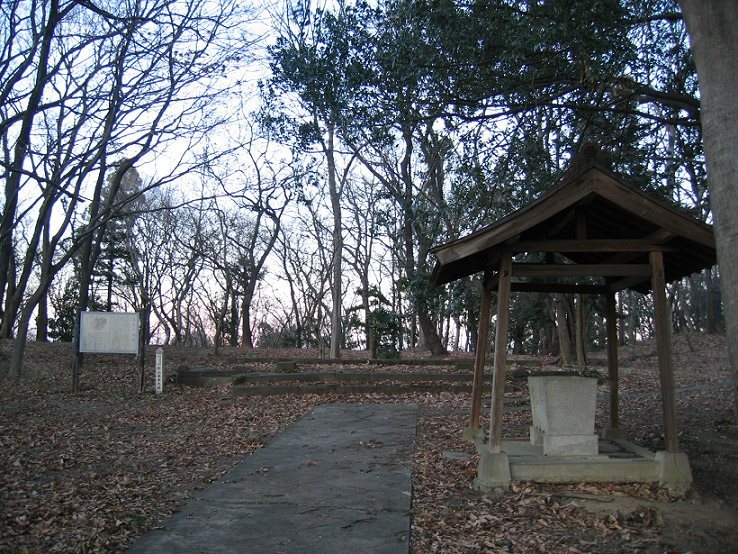
The main bailey occupied the summit. The Second Bailey, Kasugamaru, and Third Bailey extended eastward along the ridge in a stepped arrangement. Belt baileys and lower baileys surrounded these principal enclosures. Low earthen bridges generally linked the baileys, while surviving fortification elements include entrances, wells, earthen ramparts, and additional earthen bridges.
Dry moats and defensive design
Dry moats, excavated ditches without standing water, are especially prominent at Shiroyama and reportedly occupy more than half of the main castle area. Their comparatively well-preserved remains make the defensive plan visible in detail. Matsuyama had no tenshu, the principal tower of a Japanese castle. Its defenses instead depended on the hill, the Ichinokawa, large excavated moats, earthworks, and interconnected baileys.
Archaeological evidence and altered areas
Sōguruwa and main-bailey investigations
Archaeological investigations in the Sōguruwa in 2003 and in the main bailey in 2004 uncovered charcoal associated with fire, burnt soil, and pottery altered by intense heat. These deposits were followed by earth-filled rebuilding at least once in the Sōguruwa and at least twice in the main bailey. The dates of the fire and the later earthworks remain undetermined. Most excavated objects date from the latter half of the fifteenth century to the middle of the sixteenth century, while relatively few come from the later sixteenth-century Hōjō phase.
Central troop enclosures
The central part of the castle contained large, relatively simple baileys suitable for stationing troops. This area was omitted from the original historic-site designation and was destroyed by soil extraction in 1970 during construction associated with the Kanetsu Expressway. Musashigaoka Junior College buildings and grounds now occupy the area.