Takiyama Castle: A Sixteenth-Century Fortress in Hachioji, Japan


Site at a Glance
- Rating
- 4.2
- Popularity
- Low
- Country
- Japan
- Primary era
- Early Modern
- External website
- Open
- Eras represented
- Early Modern
- Civilizations
- Ashikaga shogunate, Later Hōjō
- Site type
- Military
- Remains
- Castle
On this page5 sections
History
Takiyama Castle is a Japanese castle in Hachioji, Japan, built in 1521 by Ōishi Sadashige of the Ōishi clan as a hirayama-style stronghold on a long ridge. It replaced an earlier fortification at Takatsuki, about one kilometre away, and became an important base in the struggles for control of Musashi Province.
Ōishi Rule and Hōjō Control
During the Muromachi period, an era of rule under the Ashikaga shogunate marked by conflicts among regional military houses, the Ōishi clan governed this part of Musashi as vassals of the Ogigayatsu branch of the Uesugi clan. The clan also served as shugodai, or local deputies of the provincial military governor.
After the Late Hōjō clan defeated the Uesugi at the 1546 Siege of Kawagoe Castle, the Ōishi were forced to submit to Hōjō Ujiteru. Ujiteru, a commander of the Late Hōjō military house based at Odawara, made Takiyama Castle his field headquarters for the conquest of Musashi. He expanded the castle and strengthened its defenses.
The 1569 Campaign and Abandonment
In 1569, Takeda Shingen, the warlord of Kai Province, attacked Hōjō positions during the Siege of Todoriko. He sent 20,000 men under Takeda Katsuyori to the opposite bank of the Tama River. The movement was a feint intended to draw Hōjō troops away from Odawara Castle, the main target of Shingen’s campaign.
Shingen encircled and threatened Odawara for a week before withdrawing to Kai Province. The forces facing Takiyama Castle were withdrawn as well. The campaign exposed serious weaknesses in the fortress. Advances in military technology, including the use of gunpowder, had made its defenses outdated. The ridge also limited further expansion and prevented the creation of greater defensive depth, while the castle’s position did not block an attack toward the Hōjō heartland at Odawara.
A few years later, Hōjō Ujiteru moved to Hachiōji Castle, and Takiyama Castle had been abandoned by 1584. It may have been demolished in 1576. The ruins have been protected as a National Historic Site of Japan since 2007, and the castle was included among the Continued Top 100 Japanese Castles in 2017.
Remains
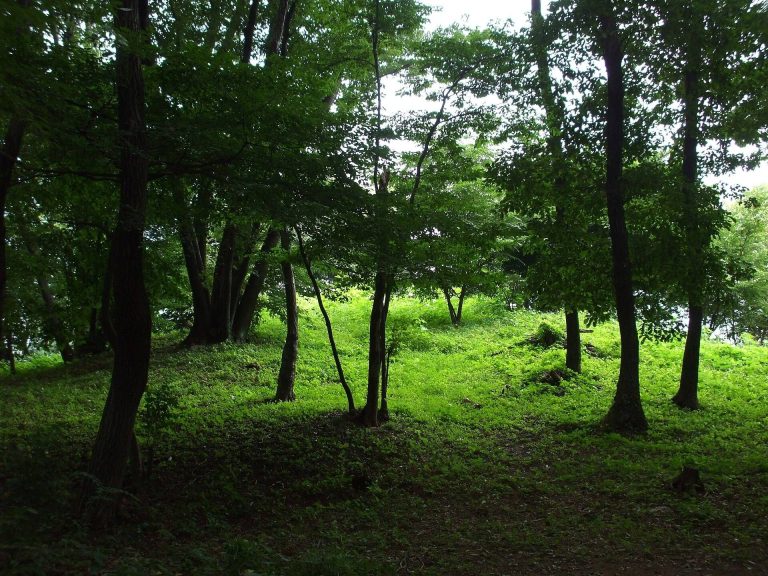
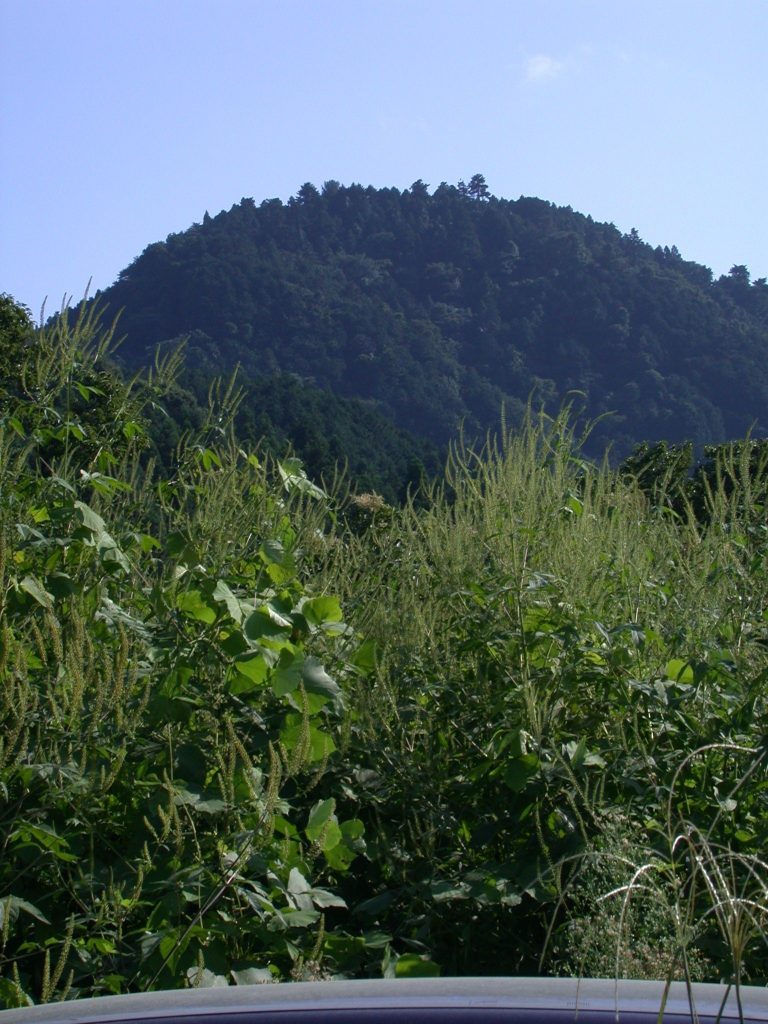
Takiyama Castle occupies a long ridge south of the Tama River, near the meeting point of the Tama River, which comes from the Ome area, and the Aki River, which comes from the Okutama area of Musashi Province. Its surviving layout consists of enclosed castle areas arranged along the ridge, with defensive earthworks and dry moats shaping the approaches.
Enclosures and Defensive Works
Before Hōjō Ujiteru’s expansion, the castle had two principal enclosures: the Honmaru, or central bailey, and the Nakanomaru, or intermediate bailey. Ujiteru added the Ninomaru, or second bailey, the Sannomaru, or third bailey, and the Komiya Kuruwa, or Komiya enclosure. Each enclosure was protected by a dry moat, a ditch without water, and an earthen rampart made mainly from packed earth.
The gates were reinforced with yagura towers, fortified structures used for defense and observation. In front of each entrance stood an umadashi, a projecting or enclosed buffer area designed to obstruct a direct assault and protect the gate. The site is now in ruins, but remnants of the moats and earthen earthworks survive. A bridge between the bases of the Honmaru and Nakanomaru has been reconstructed.