Yata Ōtsuka Kofun: A Late Kofun-Period Megalithic Burial Mound in Japan


Site at a Glance
- Rating
- 4.1
- Popularity
- Very Low
- Country
- Japan
- Primary era
- Medieval
- External website
- Open
- Eras represented
- Medieval
- Civilizations
- Yamato
- Site type
- Burial
- Remains
- Burial Mound
On this page9 sections
History
Yata Ōtsuka Kofun is a large burial mound in Kurashiki, Okayama, Japan, built during the latter half of the sixth century in the late Kofun period. A kofun was an earthen burial mound used in ancient Japan, especially between approximately the third and seventh centuries. Further burials are thought to have continued until around the beginning of the seventh century.
Construction and political connections
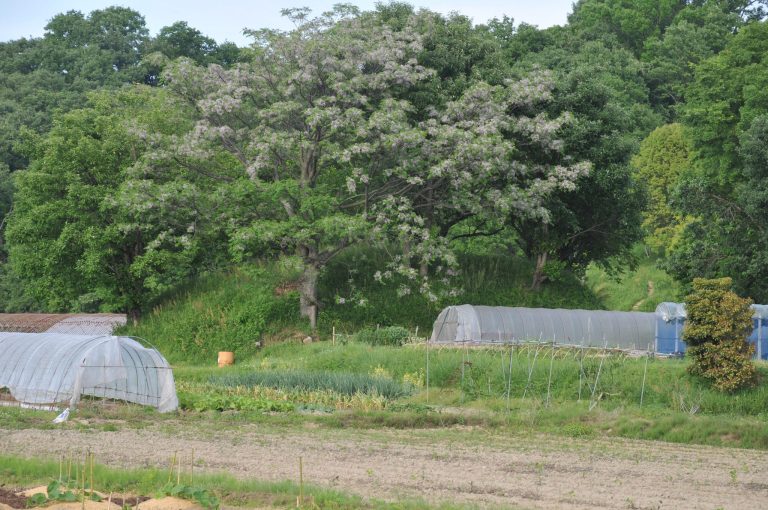
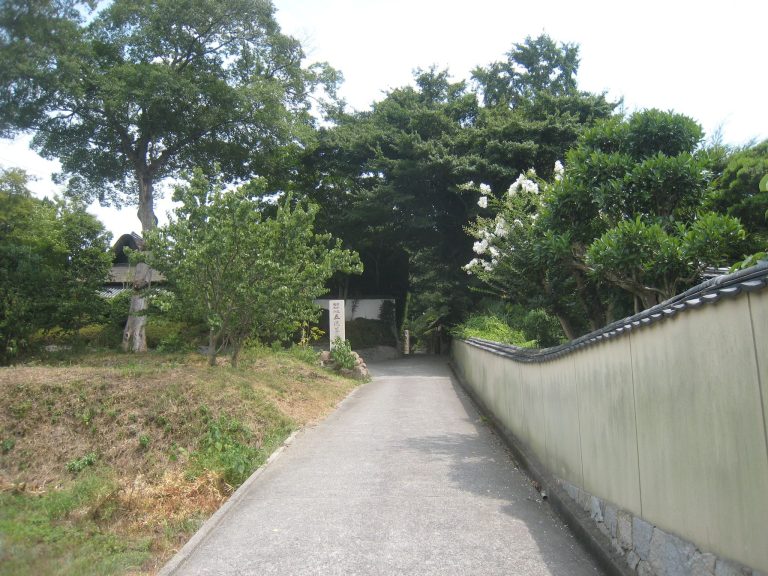
The mound was built on the north bank of the Oda River, near its confluence with the Takahashi River, at the northern edge of the Yata plain and beside the end of a hill. Its large stone burial facility and megalithic construction have made Yata Ōtsuka Kofun one of Okayama Prefecture’s representative megalithic burial mounds. Together with Musa Ōtsuka Kofun and Kōmorizuka Kofun, it forms the group traditionally known as the three great megalithic kofun of Okayama.
A decorated sword recovered from the chamber suggests a connection with the Yamato kingship, the early Japanese ruling power centered in the Kinai region around present-day Nara, Kyoto, and Osaka. Prestigious or imported objects placed in regional tombs can indicate political relationships with this ruling center.
Excavation and changing interpretation
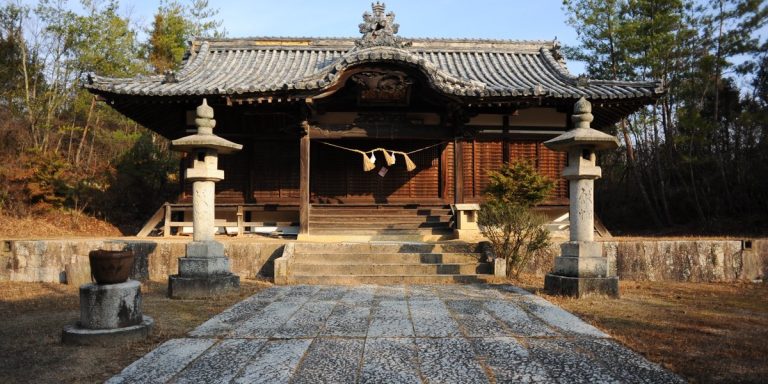
Yata Ōtsuka Kofun was excavated in 1901, producing numerous grave goods. The work was described in the Record of the Ōtsuka Mound in Yata Village, Kibi District, Bitchu Province. Most of the excavated objects are now held by the Tokyo National Museum, while some are kept at Kibiji Temple.
Before the mound was investigated in detail, its plan had been interpreted either as keyhole-shaped or scallop-shaped. A measured survey of the stone chamber was carried out in 1981 by the Archaeological Research Laboratory of Okayama University. In 1983, the Mabi Town Board of Education surveyed the mound and investigated its extent, with the results reported in 1984. This work established that the mound is round and surrounded by a ditch.
Protection and continuing recognition
The mound became a National Historic Site on December 17, 1929, and the protected area was expanded on December 18, 1992. The single-phoenix ring-pommeled sword pommel from the tomb was designated a Kurashiki City Important Tangible Cultural Property on February 21, 2020. It is kept at Kibiji Temple.
Remains
Round mound and surrounding ditch
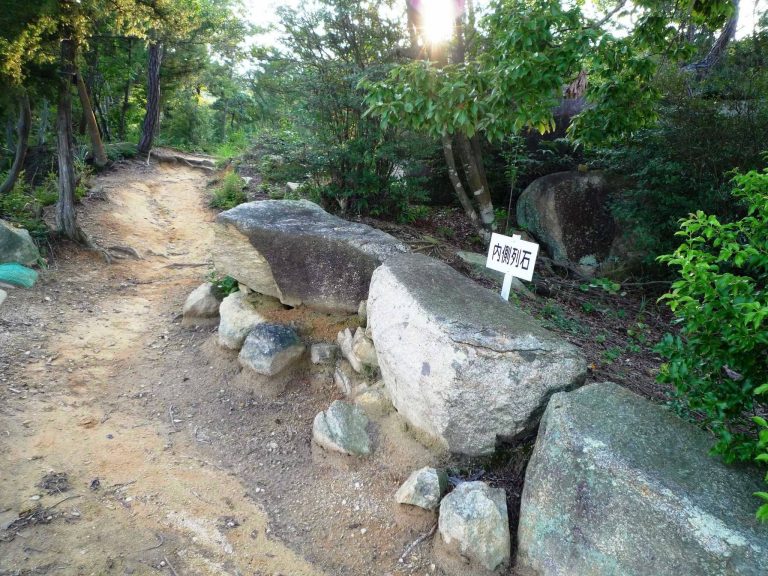
Yata Ōtsuka Kofun is a round mound approximately 46 meters in diameter, built in three tiers. A projecting platform extends from its western side, measuring about 5 to 6 meters in length and 10 to 15 meters in width. The mound is enclosed by a surrounding ditch approximately 4 to 6 meters wide. Rows of cylindrical haniwa and figurative haniwa, including human figures, were found on the exterior. Haniwa were clay cylinders and figures placed on or around burial mounds.
Horizontal stone chamber
The burial facility is a large horizontal stone chamber with a bilateral-sleeve plan, meaning that a central passage meets the chamber while the chamber extends on both sides. It opens toward the southeast, and the chamber and passage together measure 19.1 meters in length. The burial chamber is 8.4 meters long and 3 meters wide, with a height of approximately 3.5 to 3.9 meters. Its side walls are formed from three courses of massive stones, and four stones make up the ceiling.
An enormous upright stone forms the rear wall as a mirror stone, the large facing stone set at the back of a burial chamber. The passage measures between 9.2 and 10.7 meters in length, 2.2 to 2.3 meters in width, and 2.4 meters in height. Three ceiling stones cover the passage, which leads into the chamber from the southeast.
Assembled stone coffins
Three assembled stone coffins were placed inside the burial chamber. These were made by joining separate stone slabs. The rearmost coffin runs east to west, parallel to the rear wall, and uses that wall as one of its side stones. The two coffins nearer the entrance run north to south, parallel to the chamber’s side walls, and use the western wall as a side stone.
Grave goods
The chamber yielded a decorated sword, a single-phoenix ring-pommeled sword pommel, metal rings, beads including magatama, horse equipment, Sue ware, Haji ware, and iron swords. Sue ware was high-fired gray pottery made with kiln technology, while Haji ware was unglazed earthenware produced through a different low-fired tradition. The sword pommel is held at Kibiji Temple, and the other excavated objects are primarily held by the Tokyo National Museum.