Dauytbek Mausoleum: A 13th-Century Funerary Monument in Taraz, Kazakhstan
Site at a Glance
- Rating
- 4.3
- Popularity
- Very Low
- Country
- Kazakhstan
- Primary era
- Medieval
- Eras represented
- Medieval, Modern
- Civilizations
- Chagatai Khanate, Mongolian
- Site type
- Burial
- Remains
- Tomb
On this page6 sections
History
A Mongol-era funerary monument
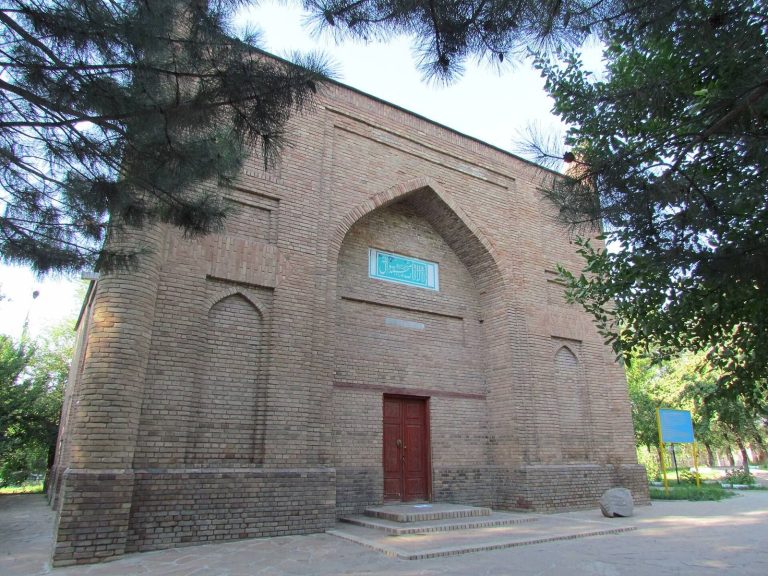
The Dauytbek Mausoleum, also known as the Shamansur Mausoleum, is a 13th-century funerary monument in Taraz, Kazakhstan. Built during the period of Mongol expansion and rule across much of Central Asia, it stands in the rabat of ancient Taraz, an urban quarter associated with a fortified Central Asian city and commonly situated outside or around its main citadel. The mausoleum was erected over the grave of Ulug-Bilge-Ikbalhan-Davutbek, who is described as one of the Mongol governors. The architect and builder are unknown.
An Arabic inscription on the tomb gives the deceased’s death date as 1262. It praises him as a great malik, or ruler or prince, as well as a scholar, just and generous man, military and literary figure, and protector of scholars, Islam, Muslims, and the weak. The inscription also describes him as an authority chosen by the khakans, the supreme rulers in certain Turkic and Mongol political traditions. A second inscription identifies him through a series of titles and names him as the son of the noyon Uchul-Bek, a noyon being a Mongol aristocratic or military title.
Study, restoration, and protection
Historians, architects, and art historians have examined the monument repeatedly since the mid-19th century. Vasily Bartold identified the name of the buried man and his death date in the Arabic inscription, while T. Belenitsky read the inscription in 1939.
The mausoleum was restored in 1982 by the Dzhambulrestavratsiya workshop. That year it was placed under state protection as part of the Monuments of Ancient Taraz complex and entered the republican register of monuments of history and culture. In 2008, the register separated it from that complex and listed it as an individual protected monument.
Remains
Portal and dome
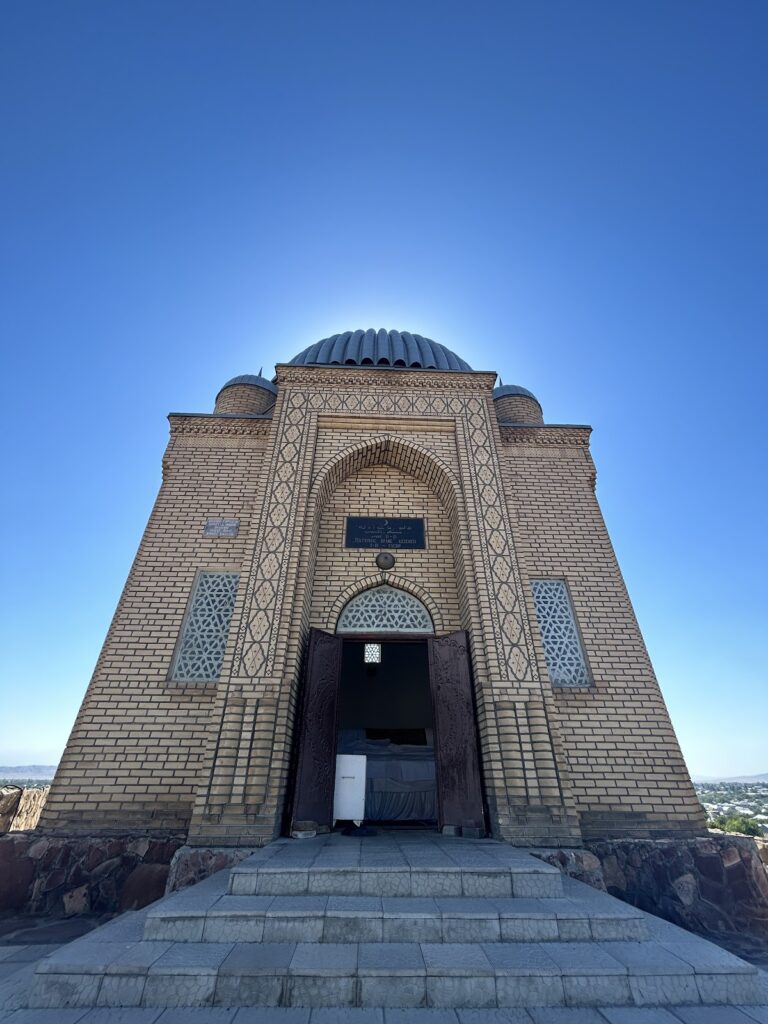
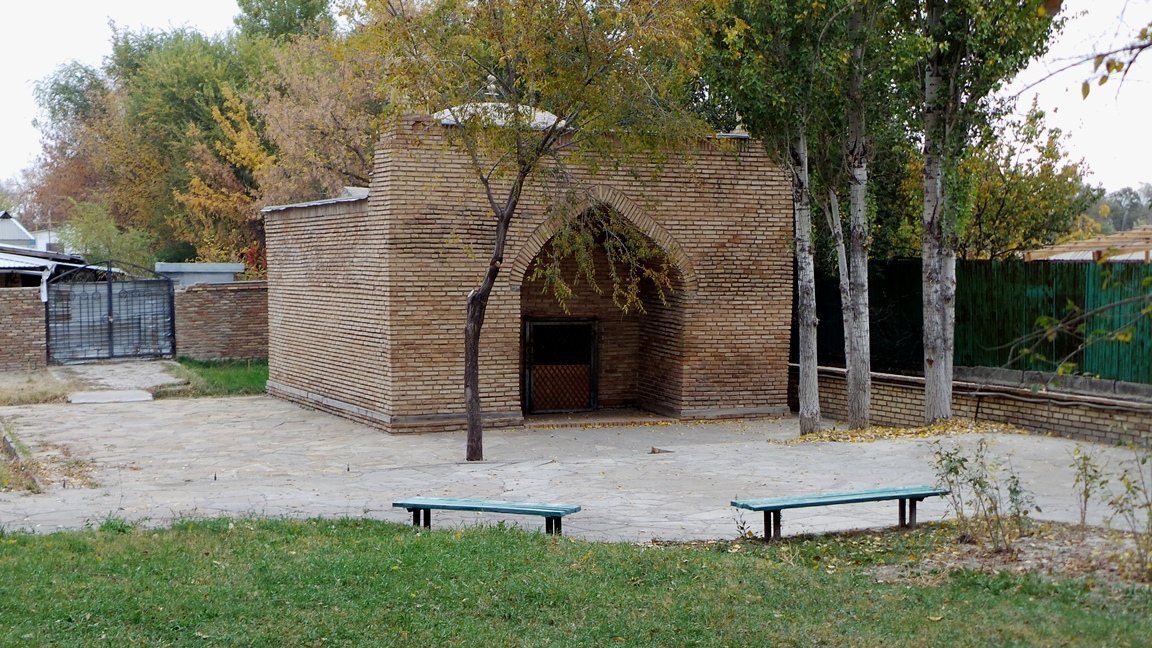
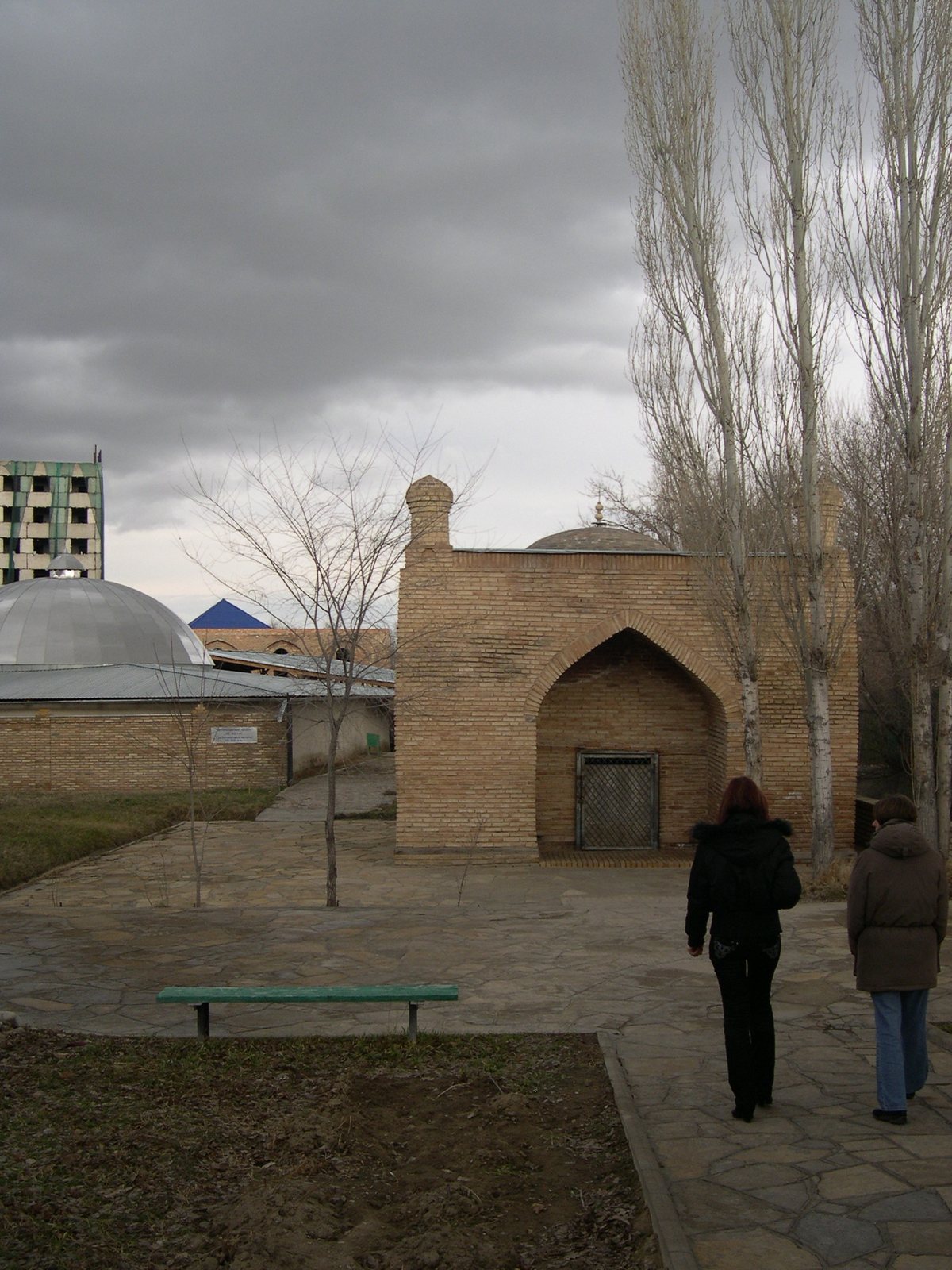
The mausoleum is a portal-domed structure built of fired brick. This architectural form combines a monumental entrance portal with a domed chamber. Its doors carry ornamental designs. In its original form, four semicircular arches rose from a rubble foundation and supported the dome.
The building’s present appearance reflects alterations made in the late 19th century, when the arched passages were filled with brick. The southern passage received a small portal, and two false minarets, nonfunctional imitations of minarets, were built beside it. The roof is described as a double dome. The squat dome is supported by the arches and walls, while the domes are also described as secured by arches and resting externally against the doorway.
Central tomb and setting
A three-stepped stone tomb shaped like a stepped pyramid stands at the center of the interior. Its stone slabs bear the Arabic inscription that identifies the buried person and records his death in 1262. The tomb therefore forms the monument’s central physical and commemorative feature.
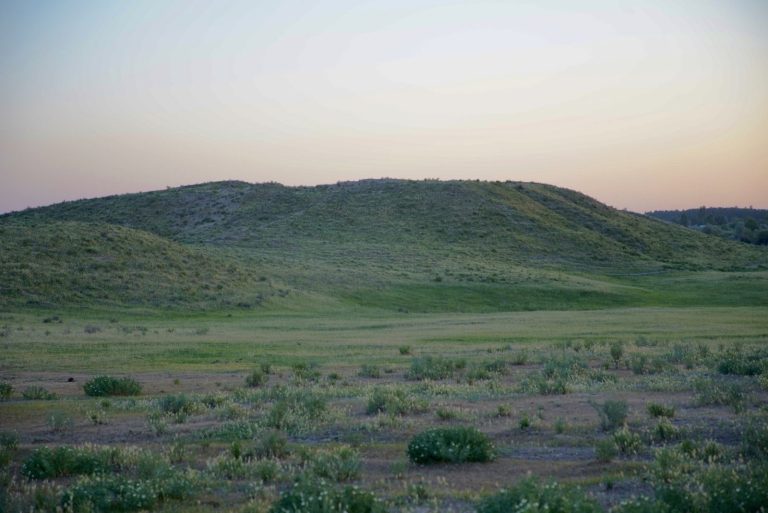
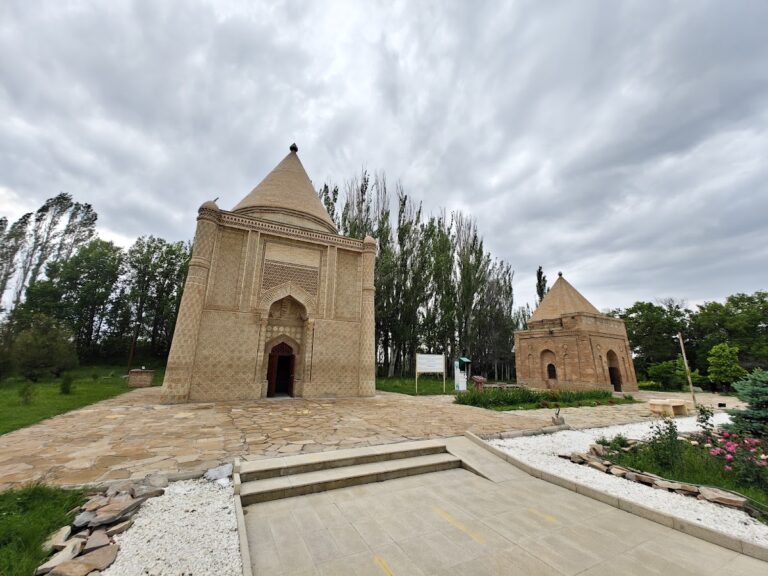
The mausoleum stands in the Old Taraz rabat, east of the Karakhan Mausoleum, a medieval mausoleum associated with the Karakhanid period.