Said Otaliq Madrasa: An Islamic Educational Institution in Denov, Uzbekistan
Site at a Glance
- Rating
- 4.9
- Popularity
- Very Low
- Country
- Uzbekistan
- Primary era
- Early Modern
- Eras represented
- Early Modern, Modern
- Civilizations
- Emirate of Bukhara
- Site type
- Religious
- Remains
- Madrasa
On this page7 sections
History
Said Otaliq Madrasa is a two-story Islamic educational institution in Denov, Uzbekistan, built in the Central Asian and Bukhara architectural tradition. Its construction date is disputed: Uzbekistan’s official heritage list places it in the sixteenth century, while another account attributes its construction to the nineteenth century during the rule of Emir Haydar, the Manghit ruler of the Emirate of Bukhara.
Origins and Dating
The sixteenth-century dating accords with a tradition that descendants of Hazrat Xoja Alouddin Attor built the madrasa between the fifteenth and seventeenth centuries. A different construction account, associated with Mir Olim Buxoriy’s historical work Fathnomayi Sultoniy, places the building in the nineteenth century. In that version, Ahmad Mamat Buxoriy was the master architect and Said Otaliq was the patron. Said Otaliq was the father-in-law of Emir Haydar and served as Denov’s governor for several years.
The madrasa’s name and institutional origins are also linked by tradition to Hazrat Xoja Alouddin Attor, a Naqshbandi sheikh, meaning a religious teacher within a major Sufi spiritual tradition. He died in Denov on 18 March 1400 and is said to have reached the Chaghaniyan region with his family between 1389 and 1396. Later descendants, including Sheikh Hasan Attori and Khoja Yusuf Attar, were buried in the associated cemetery of Sarmozor Ota.
Education and Later History
Before the Bukharan Revolution, about 400 students studied at the madrasa under 33 instructors. The institution was closed during the Soviet period. Scientists of the Uzbek Soviet Socialist Republic examined the building in 1956–1960 and again in 1972–1973.
After 1991, four-year student education resumed on the initiative of Hoji Luqmonxon Haydarxon O‘g‘li. The madrasa no longer operates as an Islamic educational institution. Investigations between 2018 and 2020 found large cracks and partly collapsed rooms. In 2020, the Uzbek government planned conservation work, utility and communications services, and repairs to nearby roads, with completion projected for March–April 2021. A craft center was also proposed for the site.
Said Otaliq Madrasa was placed on Uzbekistan’s 2019 national list of real-estate objects of tangible cultural heritage of republican significance. It remains under state protection and is operated by the Surxondaryo Regional cultural heritage department.
Remains
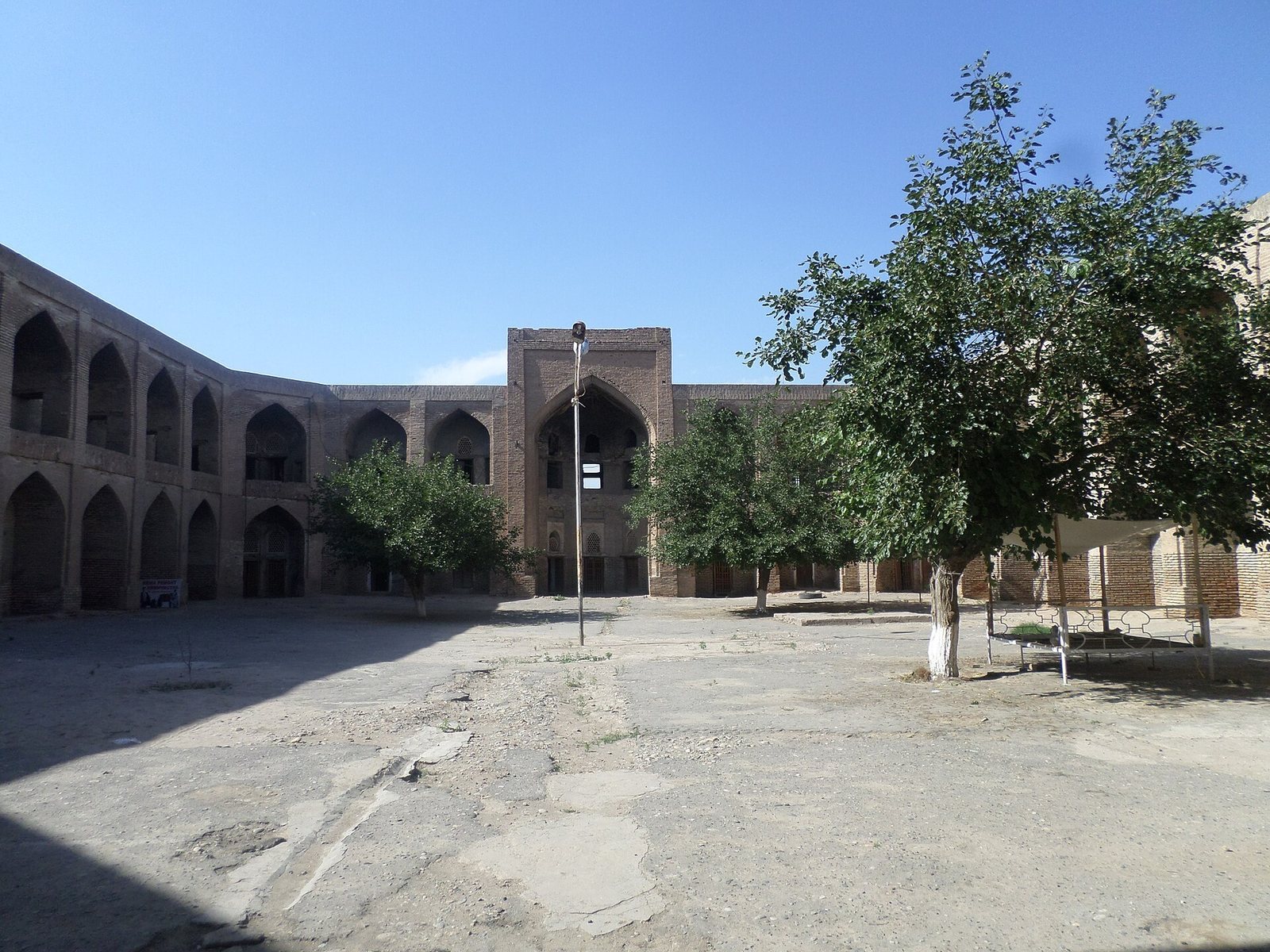
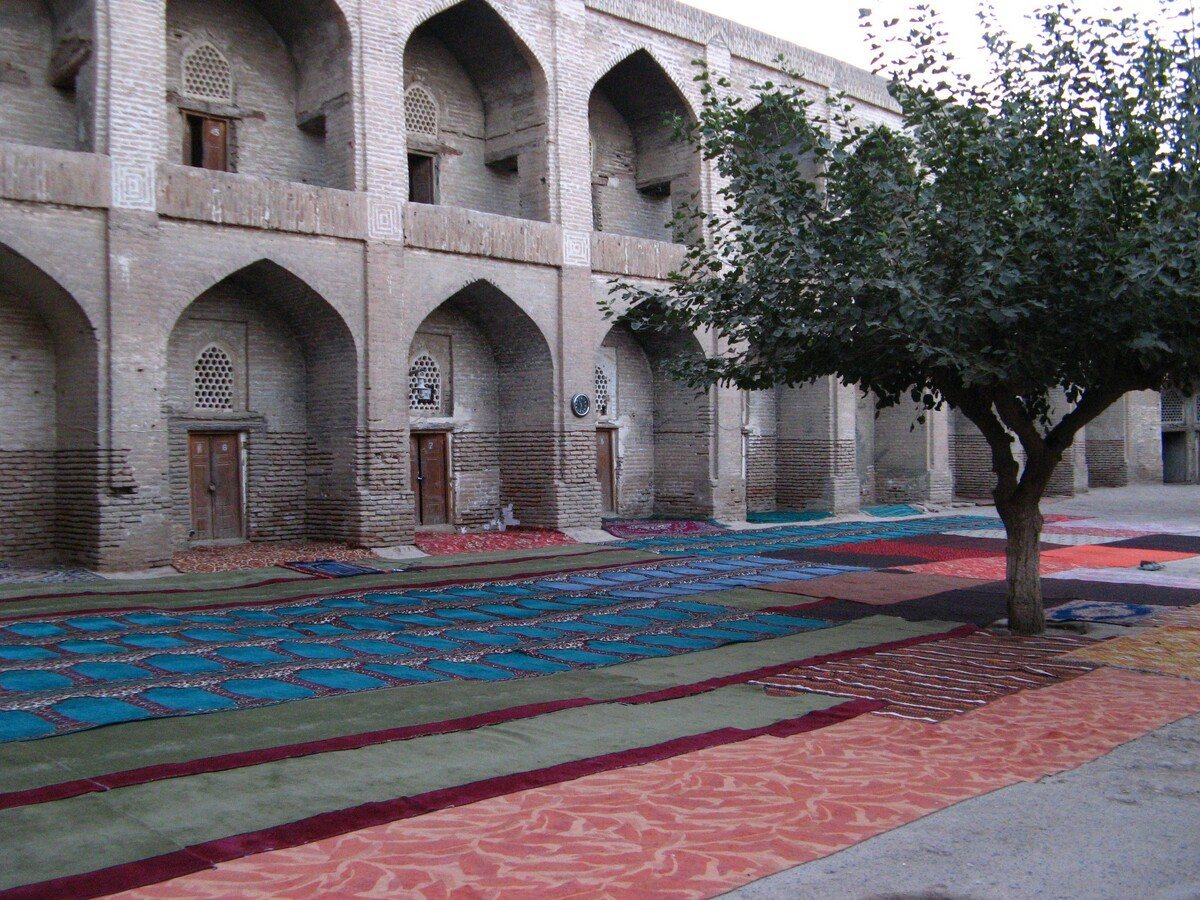
The surviving structure is a two-story brick building arranged around an internal courtyard. Its form follows the Central Asian and Bukhara-style madrasa tradition and has been compared in design with large Bukhara madrasas such as Kukeldash. The building is described as unique among madrasas in Surxondaryo Region.
Courtyard and Rooms
The courtyard contains large and small rooms on both floors, with two terraces, each measuring 40 by 29.5 meters. The mosque, classrooms, and other chambers are covered by vaulted roofs. The foundations extend 5.5 meters below ground, providing the structural base for the substantial brick building.
Entrance and Religious Spaces
Behind the main entrance facade stands the pesh tak, a monumental entrance portal used in Central Asian Islamic architecture. Beyond it is a mionsaroy, with a mosque on one side and a classroom on the other. Several additional classrooms form part of the building’s educational layout.
Carved Decoration and Condition
Floral bouquet motifs decorate the corners, while many elements around the windows, arches, and facades were made with ganch, a plaster-like material carved for architectural decoration. The windows also contained panjara, a decorative ganch latticework. The building now has extensive visible cracking, and some rooms have partly collapsed. Its overall condition has been described as approaching structural collapse.