Galatista Tower: A Medieval Defensive Watchtower in Greece


Site at a Glance
- Rating
- 4.6
- Popularity
- Low
- Country
- Greece
- Primary era
- Medieval
- External website
- Open
- Eras represented
- Medieval
- Civilizations
- Byzantine
- Site type
- Military
- Remains
- Tower
On this page6 sections
History
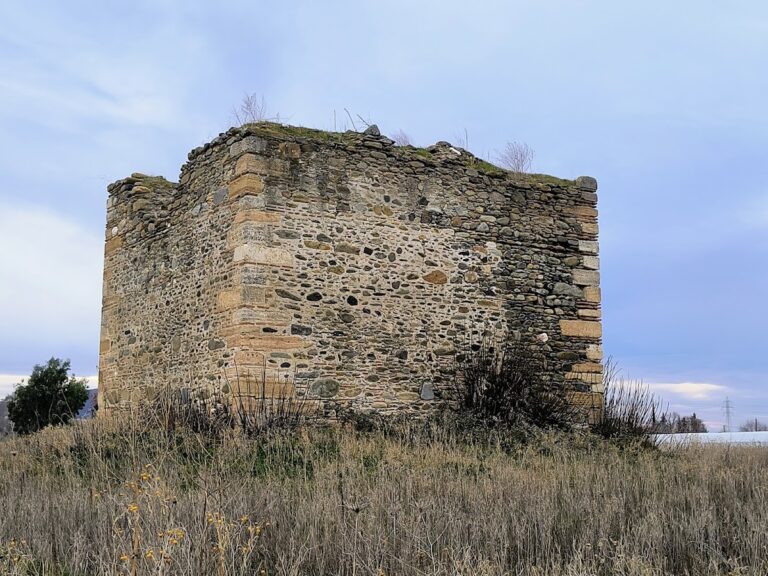
Galatista Tower is a medieval defensive structure in Greece, built on the Chalkidiki Peninsula during the thirteenth or fourteenth century in a Venetian architectural style. Its construction is also associated with the Palaiologan period, the era when the Palaiologos dynasty ruled the Byzantine Empire from the mid-thirteenth century until 1453, and the building may have been erected by the Venetians themselves.
Medieval origins and use
The tower served as a fortified watchtower and may also have been used as a prison. Its defensive role extended across the surrounding countryside, where messages were transmitted to rural villages by light signals placed on nearby hills known as tumbas.
A tradition connects the tower with the origin of Galatista’s name. According to this explanation, the name developed through the Greek translation of Serenissima Repubblica di Venezia, the Republic of Venice’s traditional title. The proposed connection reflects the tower’s association with Venetian rule or influence, although its precise builders remain uncertain.
Protection and restoration
Galatista Tower was declared a protected cultural monument in 1981. The Tenth Ephorate of Antiquities, a regional archaeological authority responsible for protecting and conserving historic monuments, restored the structure in 1995 and 1996. These works helped preserve the tower’s fabric and made its upper level accessible through a new staircase.
Remains
Exterior structure and setting
The tower is a substantial rectangular building standing on a hill that was formerly surrounded by forest. The hill is now within the center of Galatista. Stone and clay form the construction, including a type of stone called kurana. Each side contains a long, narrow slit and small windows, features consistent with the building’s defensive purpose.
Its overall form has been compared with several medieval towers in the wider region, including Vrastena Tower at Vrasna, Ayvasil Tower in Agios Vasilios, Milutin’s Tower at Hilandar, the Pirgoudia Tower at the Pirgoudia monastic dependency, and Hrelyo’s Tower at the Rila Monastery. Hilandar is an Eastern Orthodox monastery on Mount Athos, while Hrelyo was a fourteenth-century Bulgarian nobleman associated with the Rila Monastery.
Interior and preserved fabric
Inside, a wooden staircase leads to small rooms fitted with windows. The 1995–1996 restoration installed a wooden ceiling and floor, added glazing to the windows, and built the staircase leading to the elevated entrance. The tower is preserved with these elements forming part of its present interior.