Church of Saint Anne: A Romanesque Filial Church in Czechia

Site at a Glance
- Rating
- 4.7
- Popularity
- Very Low
- Country
- Czechia
- Primary era
- Medieval
- Eras represented
- Medieval
- Civilizations
- Unclassified
- Site type
- Religious
- Remains
- Church
On this page7 sections
History
The Church of Saint Anne is a Roman Catholic filial church in Czechia, belonging to the Přibyslavice parish in the Diocese of Brno. Built in the Romanesque period during either the second third or the second half of the twelfth century, it originated as part of an old Přemyslid court. The Přemyslids were the medieval ruling dynasty of Bohemia and Moravia, and their courts served as residences and administrative centres. Přibyslavice was once a settlement on the Lovětín route, and a priest named Jerome appears in a document issued by King Přemysl Otakar I at Hulín in 1224.
Medieval origins
Archaeological and architectural research carried out by the West Moravian Museum between 1968 and 1973, followed by a building-historical survey at the Faculty of Arts of Jan Evangelista Purkyně University in Brno from 1977 to 1980, placed the church within the twelfth century. Its early connection with the Přemyslid court and the associated religious and fiscal administration reflects the wider institutional role of the settlement.
Changing dedication and Marian devotion
The present dedication to Saint Anne, the Christian tradition’s mother of the Virgin Mary and grandmother of Jesus, is probably not the original one. The church may earlier have been dedicated to the Virgin Mary, while a dedication to Saint Gothard, an eleventh-century bishop of Hildesheim venerated as a saint, appears in records from the 1660s.
Before 1622, when Protestants administered the church, its artistic decoration was apparently destroyed. Paintings, statues, and altars were removed, and painted decoration inside and outside the building was covered with limewash. By the sixteenth century, a Gothic image of the Virgin Mary holding the infant Jesus was being venerated. Although whitewashed, the image remained visible. After the first miraculous healings attributed to its power, the area before it became a pilgrimage site.
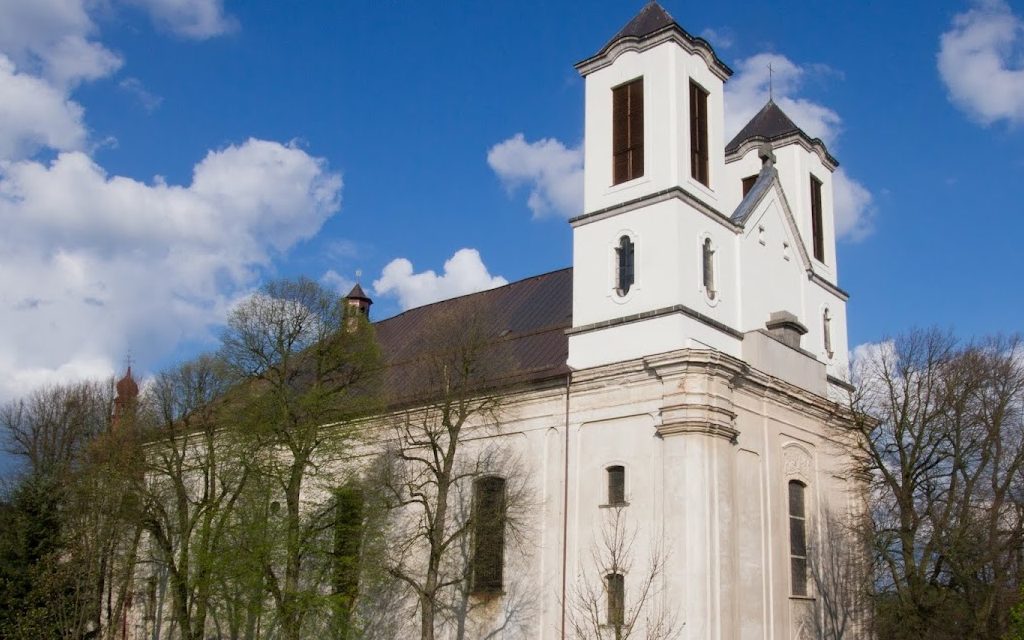
By 1715, rain had destroyed the church’s other exterior painting down to the masonry, while the sacred image retained its painted surface. A chapel was built to protect the image in 1724, and the pilgrimage Church of the Nativity of the Virgin Mary was later constructed beside Saint Anne’s.
Repair and protection
Between 2010 and 2018, the roofs and roof trusses of the two adjoining churches were repaired in stages, with the preservation and repair of the original trusses as a principal aim. The tower cap was removed, repaired, and replaced, and a banner was installed. The exterior façades were reconstructed in 2019 and 2020. The Church of Saint Anne is protected as a cultural monument and forms part of the protected monument complex shared with the Church of the Nativity of the Virgin Mary.
Remains
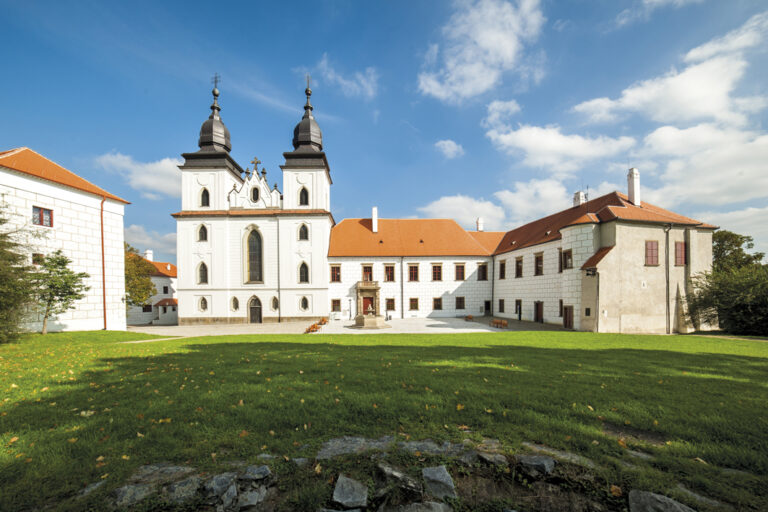
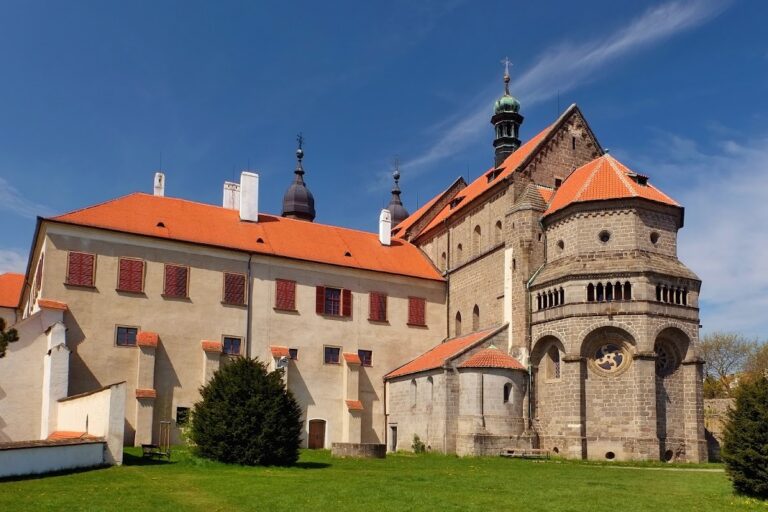
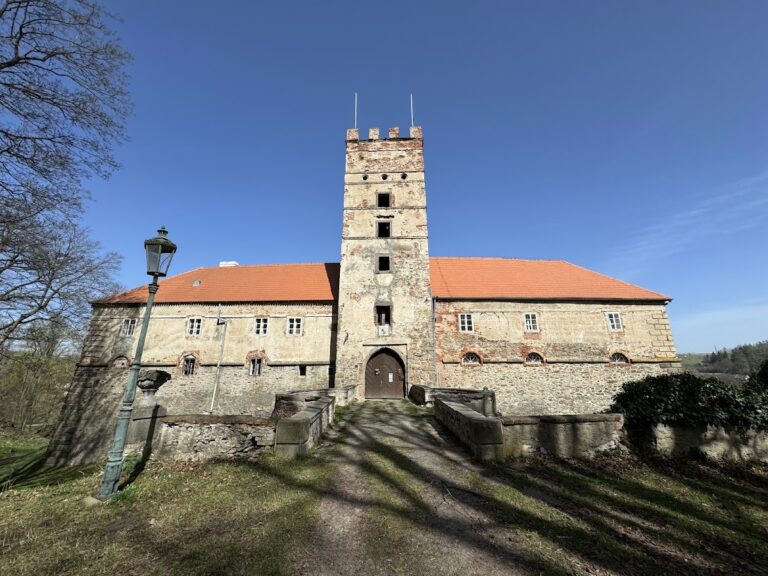
The Church of Saint Anne is a small Romanesque, single-nave building with a raised tribune and a semicircular apse. A tribune church contains an elevated gallery or platform associated with participation in worship. The rectangular presbytery, the area around the main altar reserved for the clergy, was added later, and the tower may also belong to a later phase.
The church and adjoining administration building
A multistory building stands immediately beside the church. Expanded at the beginning of the thirteenth century, it housed both religious and fiscal administration. The church itself stands directly beside the newer pilgrimage Church of the Nativity of the Virgin Mary, creating the paired monument complex that developed around the earlier Marian devotion.
Painted decoration and sacred image
The church once carried painted decoration on both its interior and exterior. Limewash covered this decoration, and rain later destroyed much of the exterior painting. The Gothic image of the Virgin Mary with the infant Jesus remained visible beneath the limewash and retained its painted surface when the surrounding exterior decoration had deteriorated. The chapel erected in 1724 protected the image, whose veneration shaped the later pilgrimage use of the site.