Zeynel Abidin Mosque: A Zengid Religious Complex in Türkiye


Site at a Glance
- Rating
- 4.8
- Popularity
- Low
- Country
- Turkey
- Primary era
- Medieval
- Eras represented
- Medieval
- Civilizations
- Unclassified
- Site type
- Religious
- Remains
- Mosque
On this page8 sections
History
Zeynel Abidin Mosque is a historic religious complex in Nusaybin, Türkiye, built during the Zengid period in 1159. The Zengids were a medieval Muslim dynasty that ruled parts of northern Mesopotamia and Syria during the twelfth century. The complex remains in use as a mosque and occupies the site of the church of Saint Febronia of Nisibis, a Christian martyr.
Zengid Foundation
An inscription associated with the tombs dates the construction of the complex to 1159. Its religious setting reflects the transformation of a site connected with Saint Febronia into a Muslim complex during the Zengid period.
Zeynel Abidin and Sitti Zeynep
The complex is associated with Zeynel Abidin and his sister, Sitti Zeynep. They are identified as descendants of Muhammad, the founder and prophet of Islam, in the thirteenth generation. Zeynel Abidin commemorated here is distinct from Ali ibn Husayn al-Sajjad, also known as Zayn al-Abidin, an early Islamic religious figure.
Heritage Recognition
On 15 April 2014, Zeynel Abidin Mosque was added to UNESCO’s World Heritage Tentative List in the cultural category together with the nearby Mor Yakup Church.
Remains
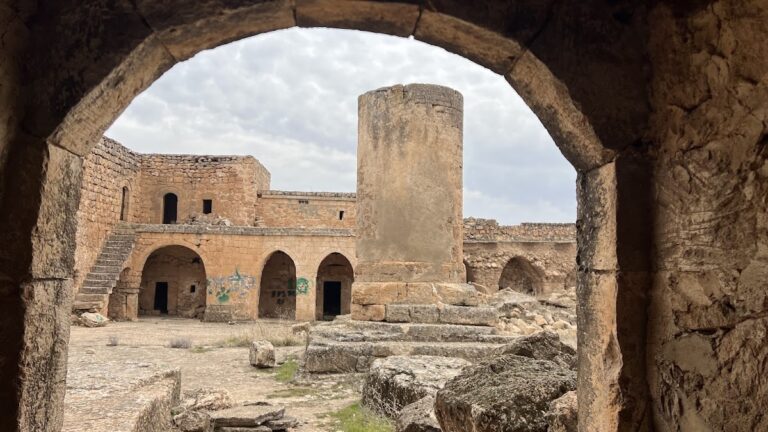
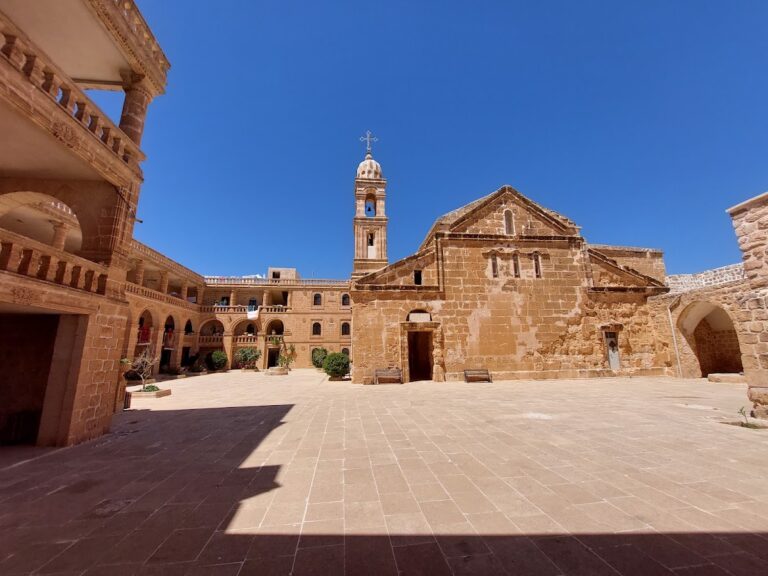
The complex has an L-shaped plan and is built of rough stone. Its surviving components include the mosque, the tombs of Zeynel Abidin and Sitti Zeynep, a madrasa, a fountain, a cemetery, and an ablution building.
Religious Buildings
Prayer Hall and Minaret
The mosque forms the principal religious structure of the complex. Its minbar, the pulpit used for preaching, its mihrab, the prayer niche indicating the direction of Mecca, and its single minaret were added after the original construction.
Tombs and Supporting Features
The tombs of Zeynel Abidin and Sitti Zeynep stand southeast of the mosque. The wider complex also contains a madrasa, an institution for Islamic religious and scholarly education, together with a fountain, cemetery, and ablution building.