Saint George Church: A Medieval Orthodox Church on Mount Lycabettus


Site at a Glance
- Rating
- 4.7
- Popularity
- Medium
- Country
- Greece
- Primary era
- Early Modern
- External website
- Open
- Eras represented
- Medieval, Early Modern
- Civilizations
- Ottoman
- Site type
- Religious
- Remains
- Church
On this page7 sections
History
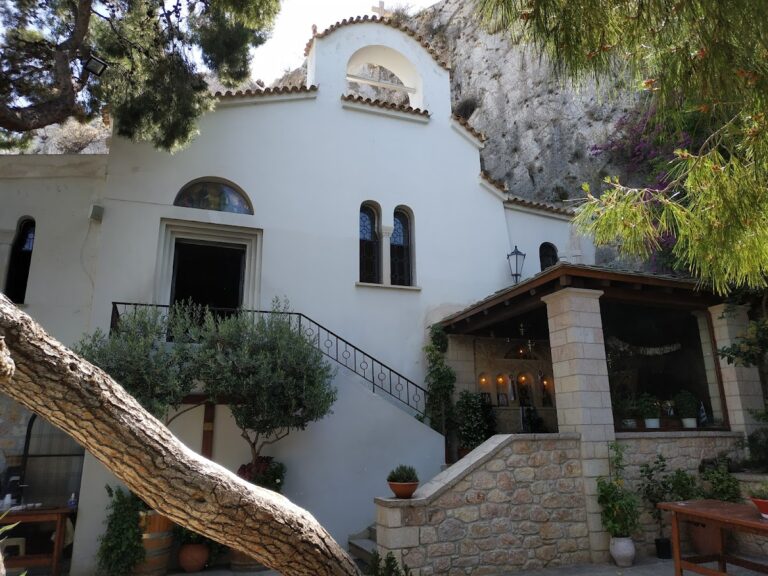
Saint George Church is a medieval Orthodox church in Greece, standing at the summit of Mount Lycabettus in Athens. It belongs to the ecclesiastical jurisdiction of Athens and follows the basilica style, a longitudinal hall plan traditionally associated with the basilica form. Saint George, a Christian saint widely venerated in Eastern Orthodox Christianity, gives the church and its former mountain name their shared identity.
An Earlier Church and Cemetery Area
Travel illustrations from the seventeenth century, including one produced by Laborde in 1672, show that a church had occupied the site during an earlier period. Two inscriptions found in the area refer to the cemeteries of Anastasius Charkeus and E. Orandas, together with a separate cemetery. These inscriptions preserve evidence of the site’s earlier religious and burial functions.
Rebuilding and Later Enlargement
After the earlier church fell into ruin, a new church dedicated to Saint George was erected on its foundations. A floor inscription states that the chapel of Saint George was dedicated by Benedict, Metropolitan of Athens, a senior bishop governing an ecclesiastical district, during 1782–1785.
The church was later enlarged with two chapels dedicated to the Prophet Elijah and Saint Constantine. The mountain was formerly known as Saint George, a name derived from the church at its summit.
Remains
Summit Church and Later Additions
Main Church
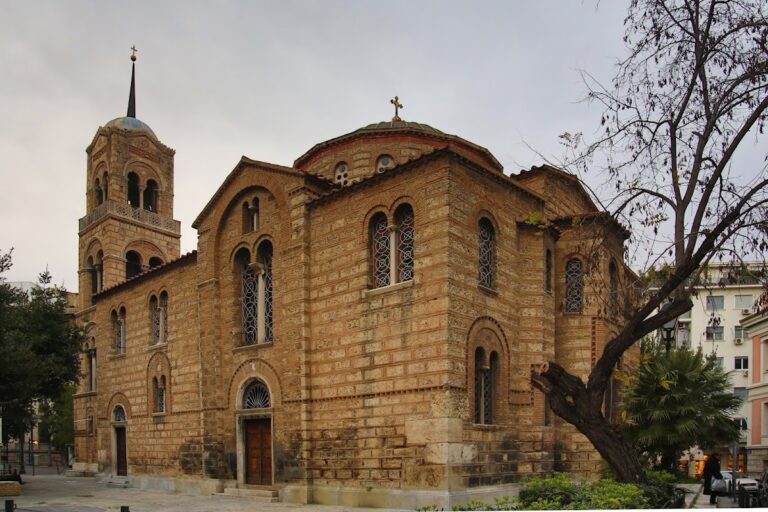
The church occupies the highest point of Mount Lycabettus. Its main body is a single-aisled basilica, meaning that it contains one principal longitudinal worship space. The structure was built over the foundations of the earlier ruined church. Inside, frescoes decorate the walls, while a floor inscription records the dedication of the Saint George chapel.
Chapels and Bell Tower
Two later chapels extend the complex, one dedicated to the Prophet Elijah and the other to Saint Constantine. A bell tower forms part of the surviving group of structures, alongside the frescoed interior and the floor inscription that preserves the church’s eighteenth-century dedication.