Saint Gregory the Illuminator Church: The Early Religious Nucleus of Tatev Monastery


Site at a Glance
- Rating
- 4.5
- Popularity
- Very Low
- Country
- Armenia
- Primary era
- Medieval
- Eras represented
- Medieval
- Civilizations
- Armenian
- Site type
- Religious
- Remains
- Church
On this page4 sections
History
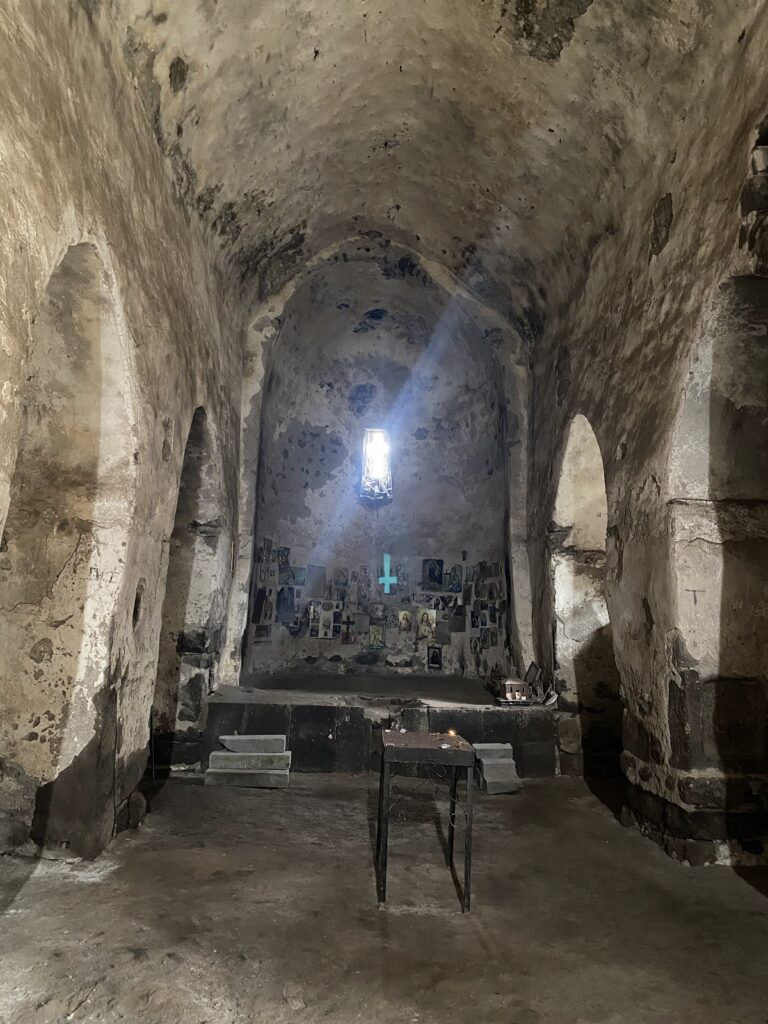
Saint Gregory the Illuminator Church is an Armenian church at Tatev Monastery in Armenia, dedicated to Gregory the Illuminator, the Christian missionary traditionally credited with converting Armenia to Christianity and regarded as the country’s patron saint. A modest church was founded on this site in the fourth century, during the early period of Armenia’s adoption of Christianity. The building is regarded as Tatev’s earliest surviving religious structure and as the nucleus around which the monastic complex developed.
Early foundations and medieval rebuilding
According to the foundation tradition recorded by the thirteenth-century historian and churchman Stepanos Orbelian, the first structure was replaced in the mid-ninth century. The new church was erected under the patronage of the Syunik prince Pilipos, during a period associated with the restoration of Armenian independence and the rise of the medieval Bagratuni kingdom, whose political center was Ani.
An earthquake destroyed the church in 1138. The Orbelian dynasty, a powerful Armenian princely house that controlled Syunik, restored it in the late thirteenth century. The surviving building dates to 1295. The Cathedral of Saints Peter and Paul was later built against its southern side, while the surrounding elements of Tatev Monastery were assembled around the church.
Saint Gregory the Illuminator Church remains part of the Armenian Apostolic Church under the Syunik Diocese. It continues to serve as an active place of worship and is recognized as a cultural monument in Armenia.
Remains
The surviving church
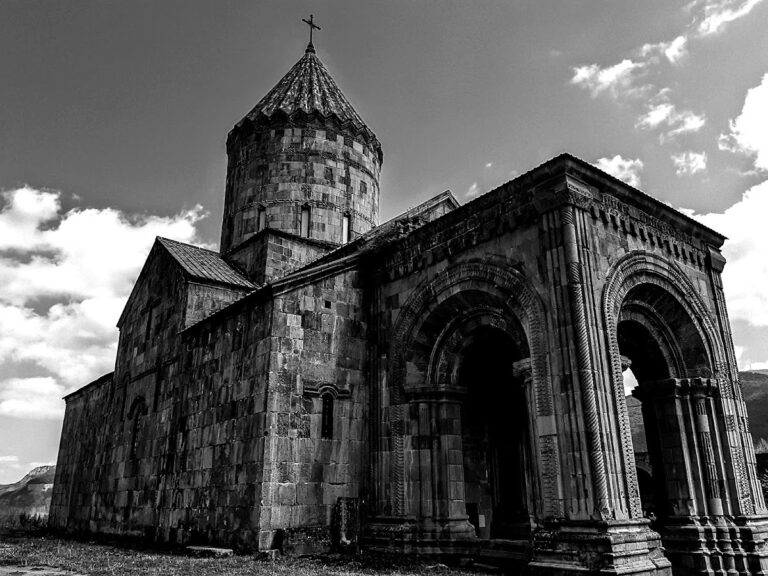
The church follows the Armenian architectural tradition and takes the form of a vaulted hall, meaning that its interior is covered by a continuous vault rather than a flat ceiling. Its decoration is restrained, and its architectural character reflects a movement from the austerity associated with the early medieval period toward the more developed artistic culture connected with Tatev. The building stands on the site of the earlier fourth-century church and forms the architectural nucleus of the monastery. The Cathedral of Saints Peter and Paul adjoins it on the south.