Alan Tagavor Church: A 13th-Century Church and Monastery near Harjis, Armenia
Site at a Glance
- Popularity
- Very Low
- Country
- Armenia
- Primary era
- Medieval
- Eras represented
- Medieval
- Civilizations
- Armenian
- Site type
- Religious
- Remains
- Church
On this page4 sections
History
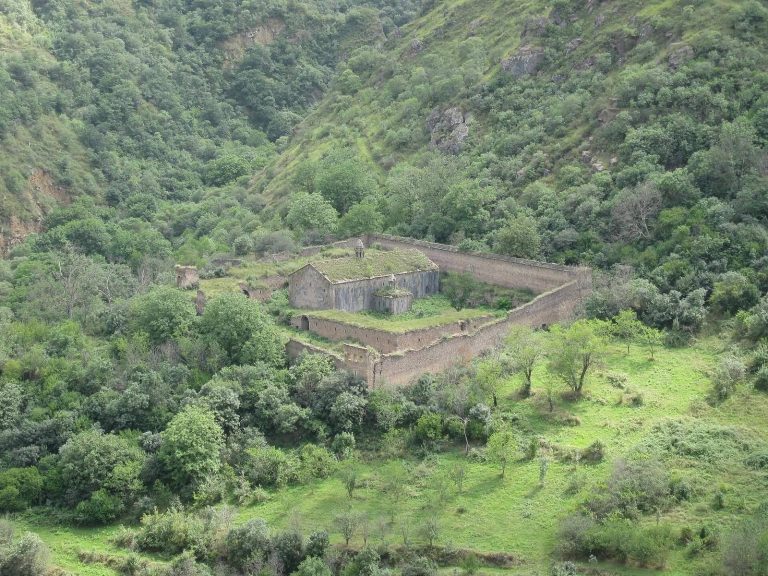
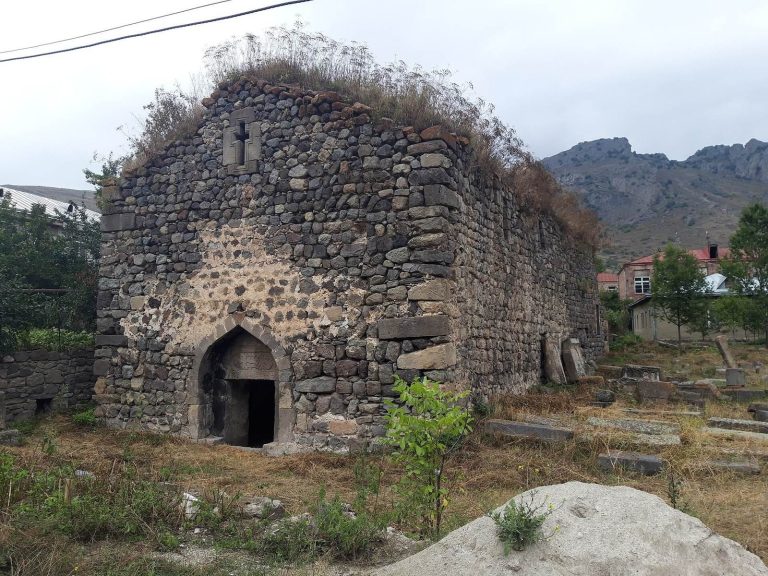
Alan Tagavor Church, near Harjis in Armenia, was founded and completed in the 13th century as a church of the Armenian Apostolic Church; it is also described as a monastery. The Armenian Apostolic Church is Armenia’s historic Christian church and belongs to the Oriental Orthodox tradition. Historically, the site lay in Tsghuk, a district of Syunik within Greater Armenia, the historical Armenian kingdom and its territory. The church is recognized as a cultural monument in Armenia.
A tombstone at the site is attributed to a member of the Orbelyan family, a prominent Armenian noble family associated with Syunik. Its inscription describes the deceased as young, and the name has been read as Aln. Tradition identifies him as Alan Tagavor, meaning “King Alan.”
Remains
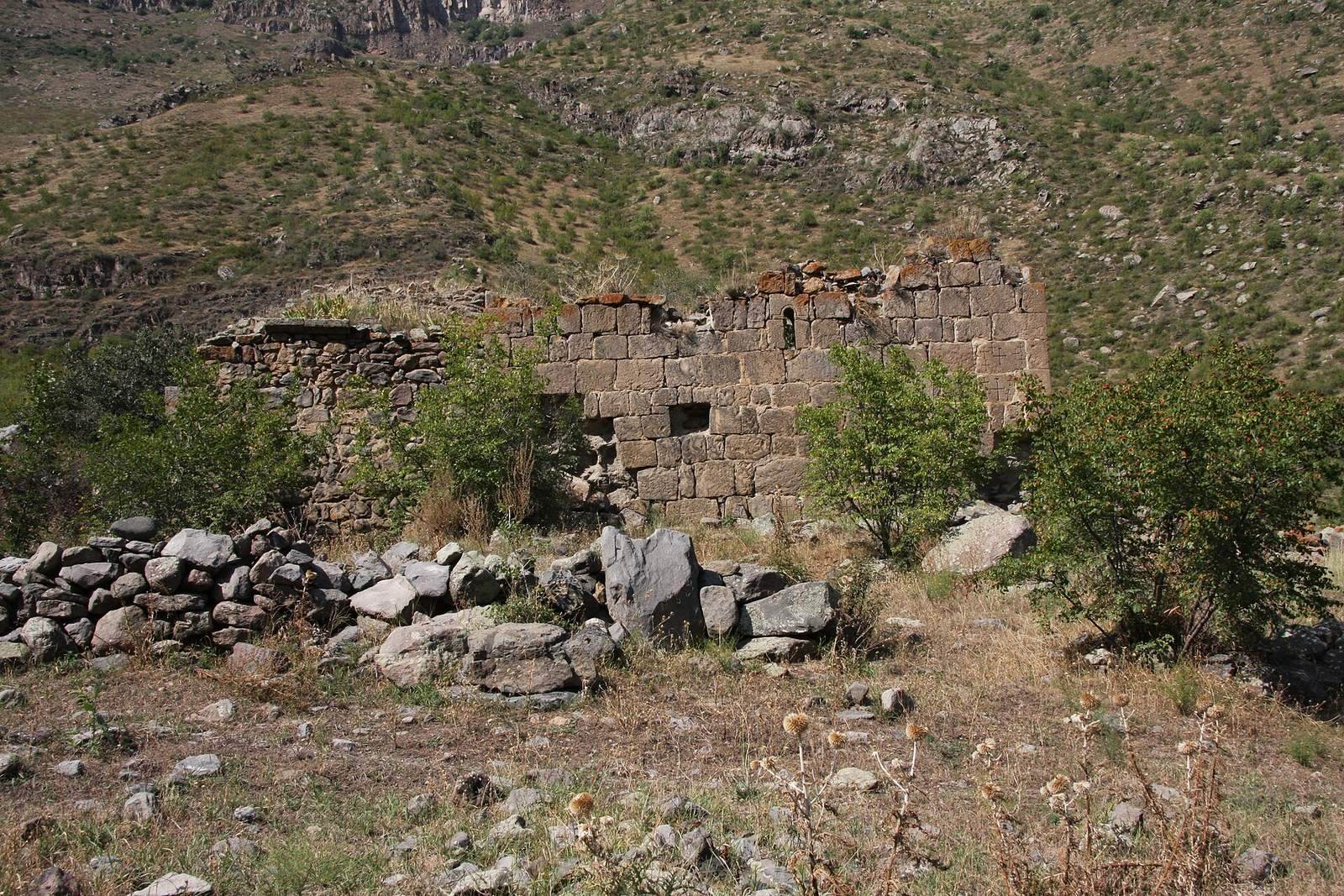
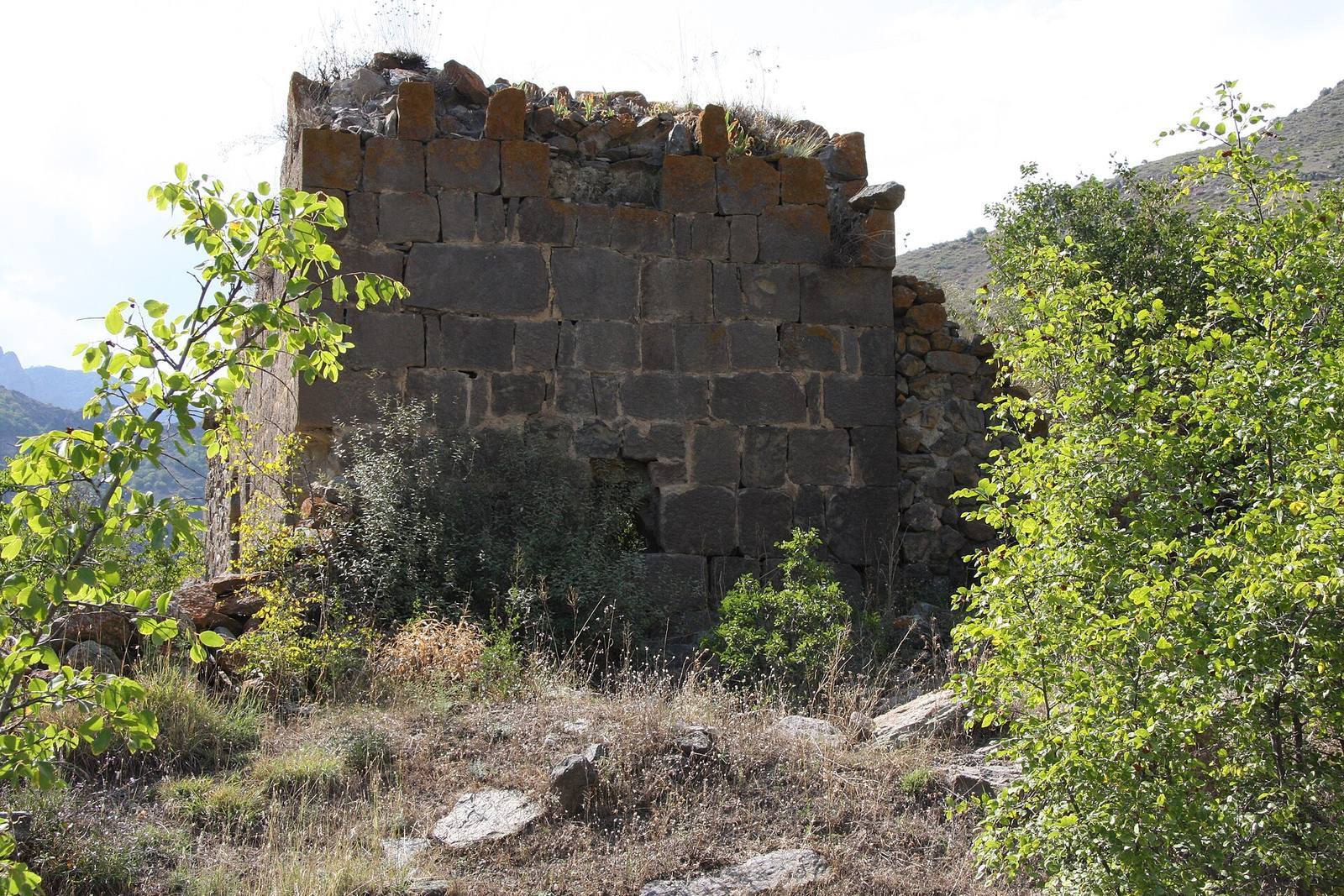
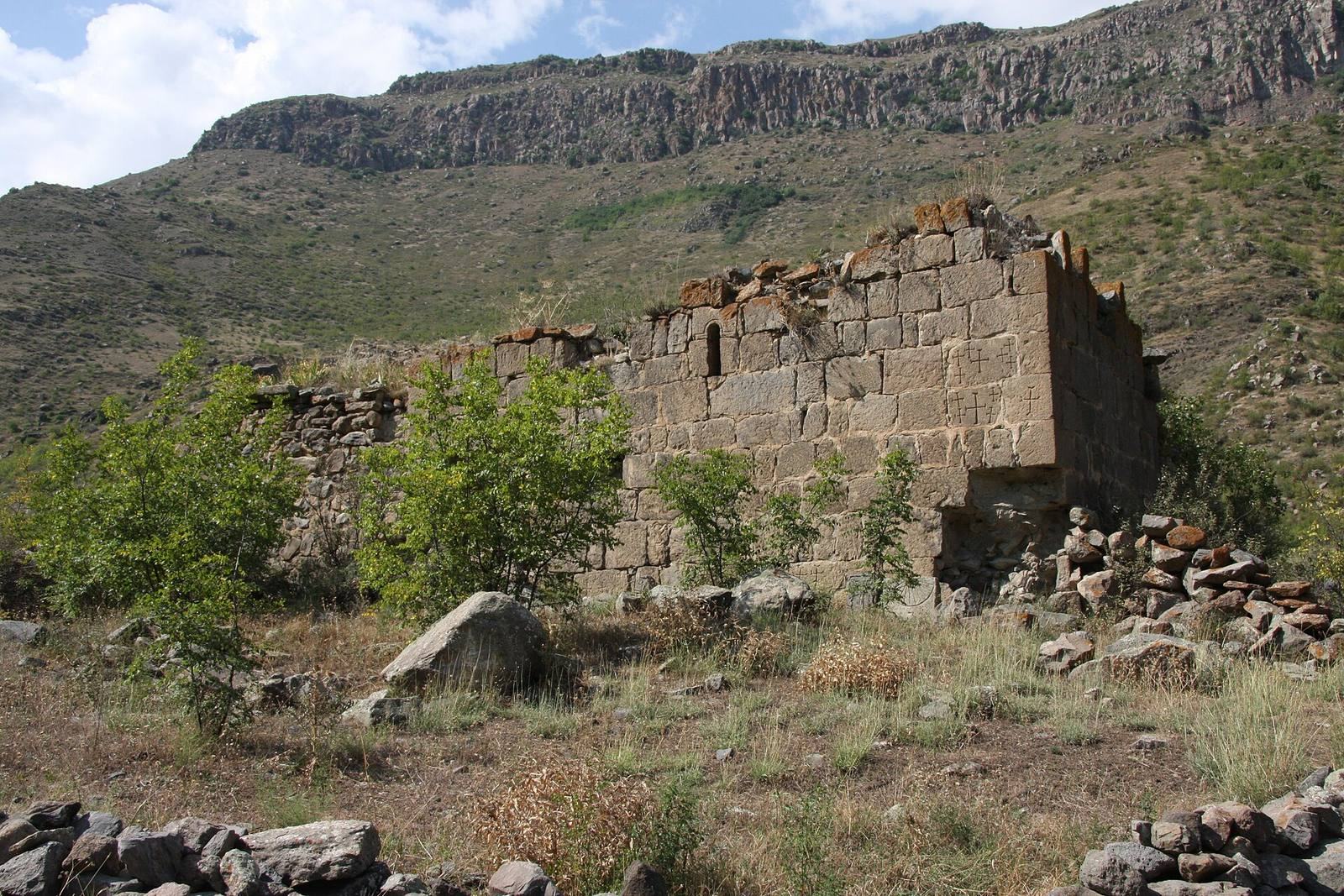
The small, partly ruined church stands at the western edge of a former village settlement, on the left-bank slope of a river gorge. It is 2 km southeast of Harjis and 7 km west of Halidzor. Built from shaped basalt, its plan and architectural features resemble those of a funerary church.
Church and entrance hall
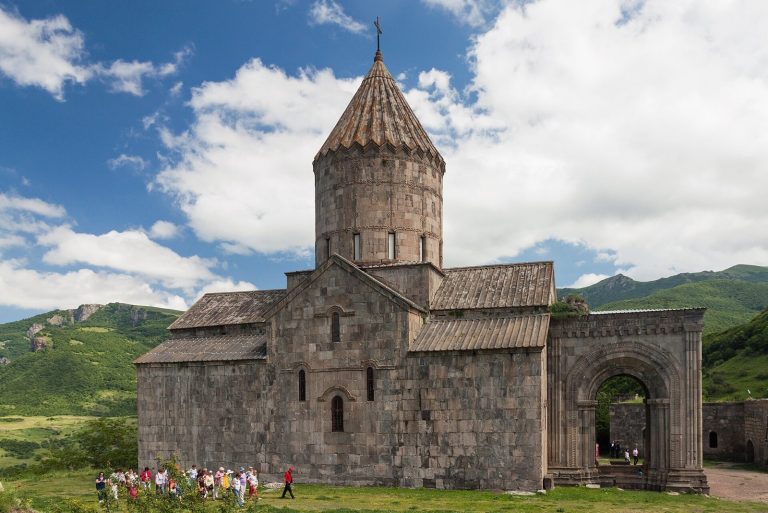
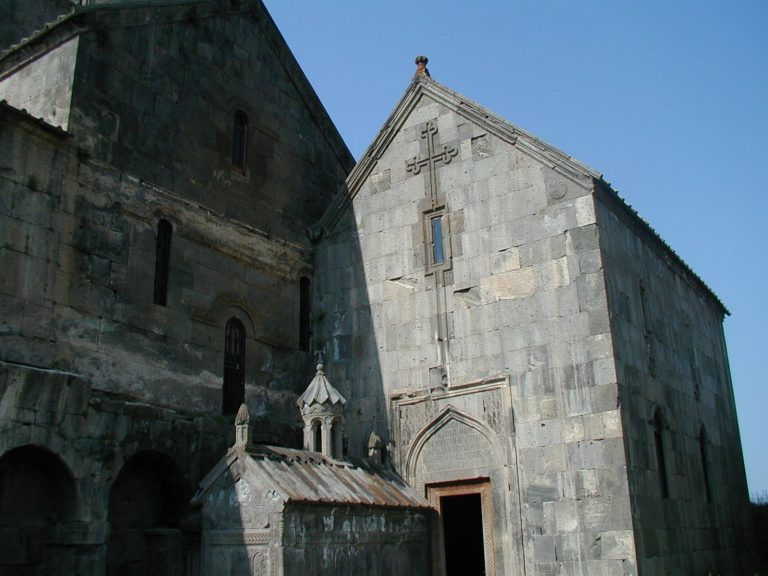
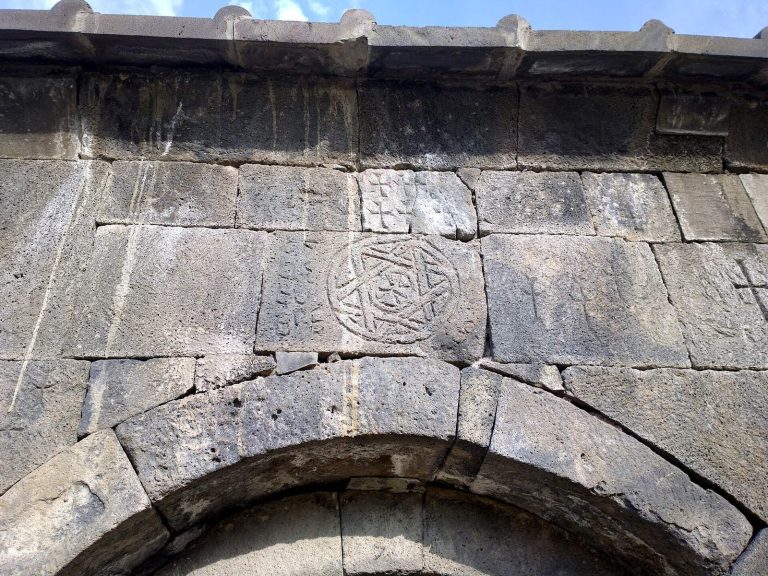
The church includes arches and an open-arched narthex, the entrance space at a church’s west end, adjoining it on the west. The sanctuary is at the east end, while a small window opens in the south facade. A sundial also survives at the site.
Carved stones
The narthex contains four khachkars, Armenian carved stones bearing crosses, dating to the 13th and 14th centuries. A separate tombstone dated 1326 has a trapezoidal form, a carved hunting scene, and a two-pitched, gabled top.