Sarıca Pasha Mosque: A Fifteenth-Century Ottoman Mosque in Edirne

Site at a Glance
- Rating
- 4.9
- Popularity
- Very Low
- Country
- Turkey
- Primary era
- Medieval
- Eras represented
- Medieval
- Civilizations
- Ottoman
- Site type
- Religious
- Remains
- Mosque
On this page7 sections
History
Ottoman Foundation
Sarıca Pasha Mosque is a fifteenth-century Sunni mosque in Edirne, Turkey, built in the Ottoman architectural tradition by Sarıca Pasha, a senior state official. He served as a vizier during the reigns of Sultan Murad II and Sultan Mehmed II, the Ottoman ruler widely known as Mehmed the Conqueror. The mosque belongs to the religious and architectural culture of the Ottoman Empire.
Restoration and Reopening
The Edirne Regional Directorate of Foundations, the mosque’s current owner, began restoration work in 2016. The project was completed in 2017, and the building reopened for worship after Friday prayers on 16 June that year. During the reopening ceremony, a delegation from Merzifon led by Mayor Alp Kargı placed soil brought from the homeland of the Ottoman grand vizier Merzifonlu Kara Mustafa Pasha on his tomb in the mosque’s cemetery. A grand vizier was the empire’s highest-ranking chief minister.
Remains
Courtyard Layout and Construction
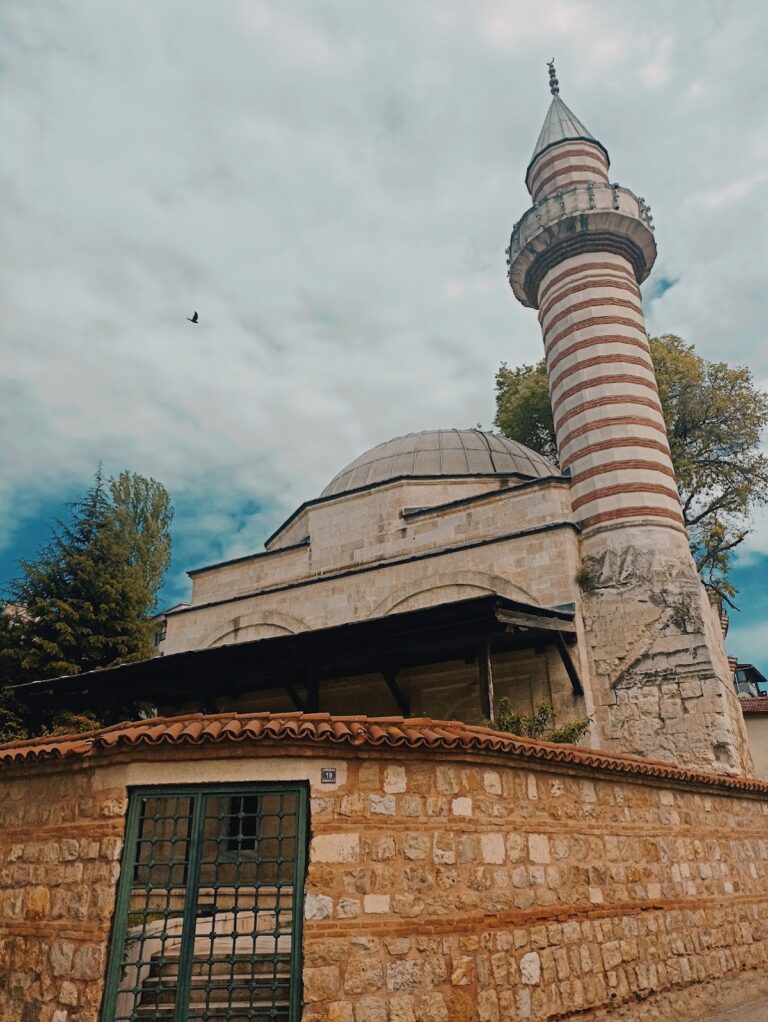
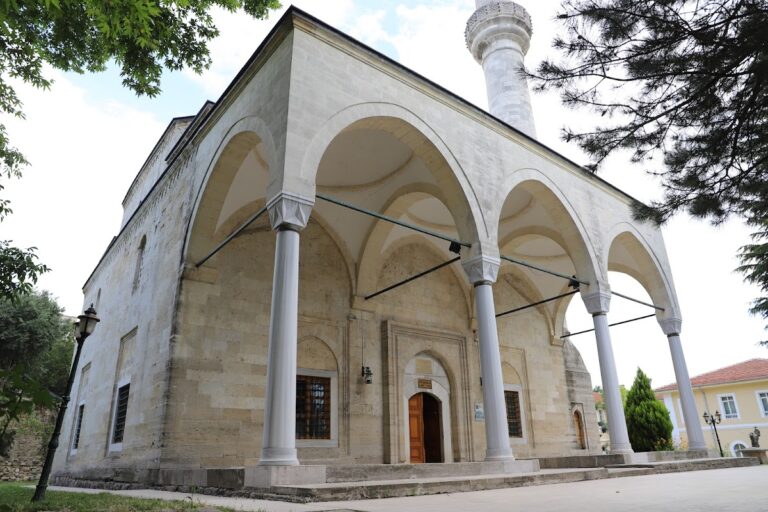
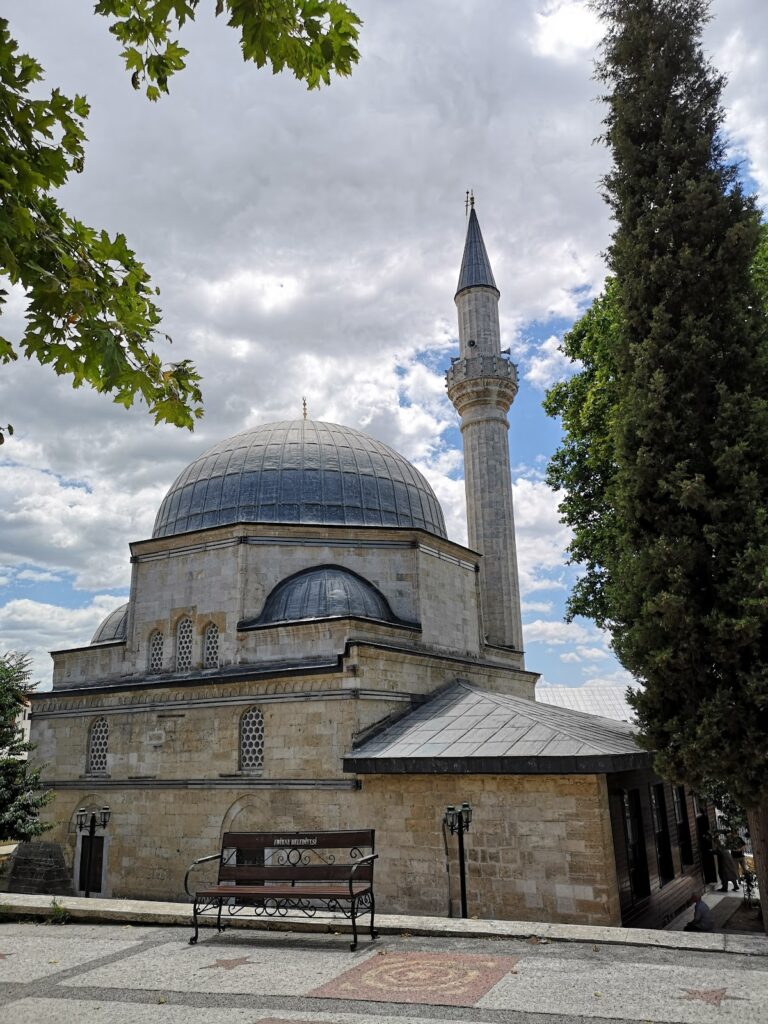
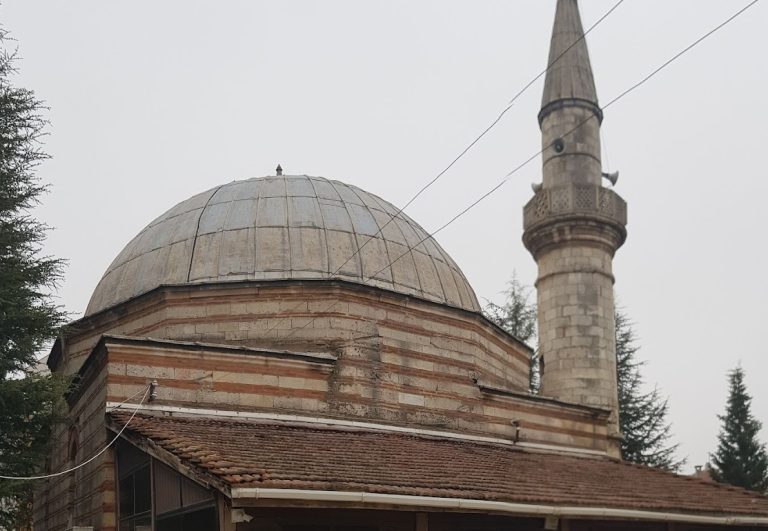
The mosque occupies the lower level of a two-level garden or courtyard, while its attached hazire, a cemetery beside a mosque or religious complex, lies on the upper level. The building has a near-square rectangular plan. Its walls combine brick, roughly dressed stone, and finely cut stone, giving the structure a varied masonry surface. The arrangement places the prayer building and cemetery within the same two-level complex.
Windows and Minaret
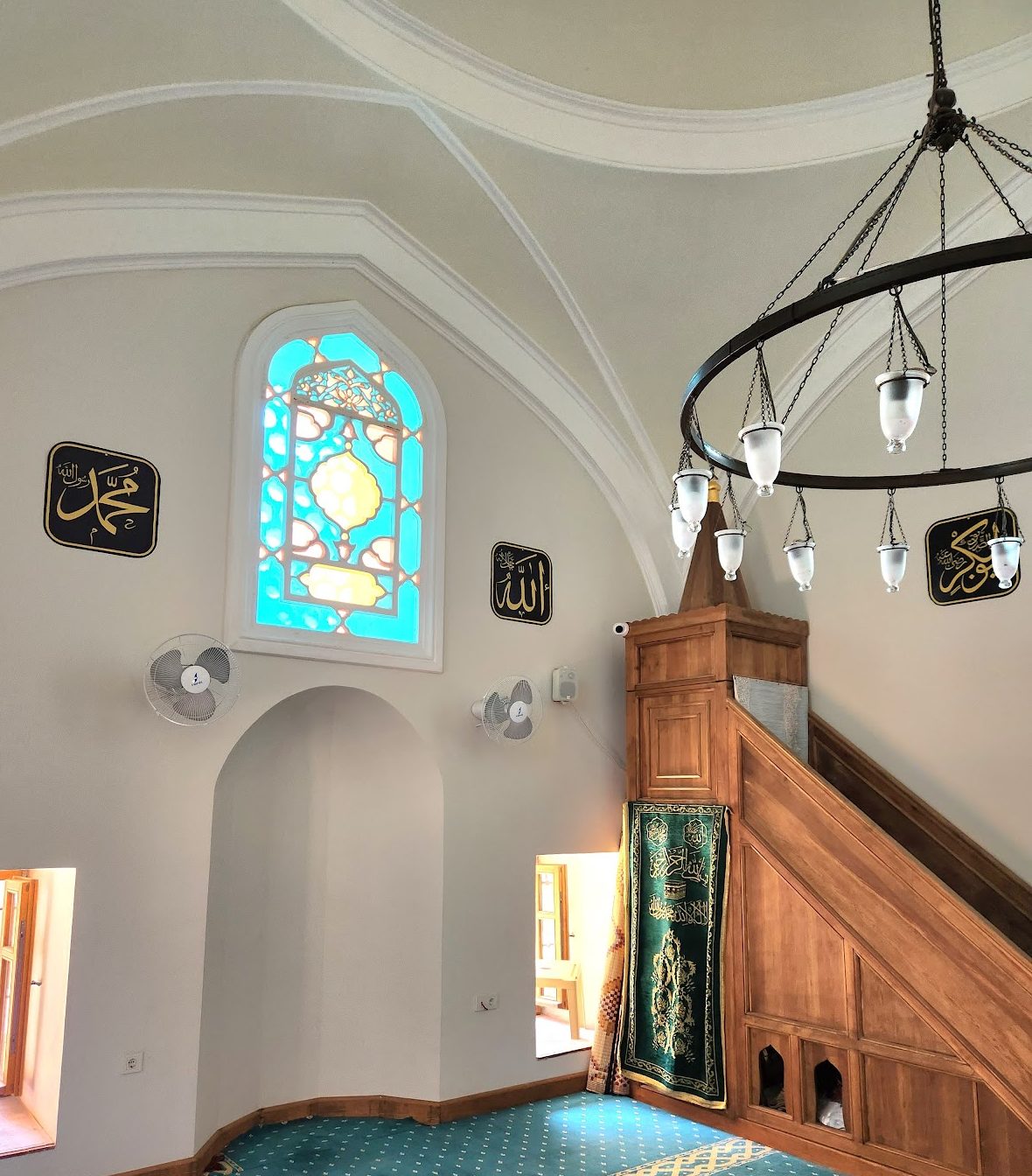
Each side wall and the qibla wall, the wall facing Mecca toward which Muslims turn during prayer, contains three windows arranged in two tiers. The upper row has stained-glass decoration. A single minaret completes the mosque’s surviving architectural features.
Hazire and Tombs
The upper-level cemetery contains the graves of Merzifonlu Kara Mustafa Pasha, an Ottoman grand vizier, and Melek Ibrahim Pasha, a vizier. Their tombs remain part of the mosque complex and connect its religious setting with the burial of senior Ottoman officials.