Mor Loozor Monastery: A Syriac Orthodox Monastic Complex in Türkiye


Site at a Glance
- Rating
- 4.5
- Popularity
- Very Low
- Country
- Turkey
- Primary era
- Medieval
- Eras represented
- Classical, Medieval
- Civilizations
- Byzantine
- Site type
- Religious
- Remains
- Monastery
On this page7 sections
History
Mor Loozor Monastery is a Syriac Orthodox monastery near Mercimekli in southeastern Türkiye, within the historic Tur Abdin region. Dedicated to Mor Lazarus the Edessan, a fourth-century ascetic and bishop of Harran, its oldest parts may date to the fifth or sixth century, although proposed foundation dates extend from the fifth to the eighth century. The monastery may have been founded or renewed on the remains of a Zoroastrian temple, a place of worship belonging to the ancient Iranian religion associated with the ritual use of fire.
Foundation Traditions
The monastery’s beginnings are associated with two traditions. One attributes its foundation to Mor Lazarus during his time as bishop of Harran. Another says that Mor Shemʿun d-Zaite, also known as Simeon of the Olives, transferred Lazarus’s bones to the site. Shemʿun may instead have refounded the monastery while serving as a bishop between 700 and 734. These accounts place the monastery within the long religious history of Tur Abdin, a highland region known for Syriac Christian monasteries and communities.
After the region came under Islamic rule after 640, monastic life appears to have continued at Mor Loozor. Stylite practice, in which an ascetic lived on top of a column or tower as an act of religious devotion, continued there into the eighth century. Monks appear to have taken turns living as recluses above the ground, maintaining an ascetic tradition associated with the monastery.
Later Monastic History
Around 1500, the monk Sergius of Hah copied the Prayer Book of Monks at Mor Loozor Monastery. The manuscript links the site to the continuing literary and religious work of its monastic community.
After standing in ruins for many years, the monastery was renovated in 1866. It is now abandoned, and vandalism, graffiti, and illegal excavations have damaged parts of the complex. Treasure hunters have caused particularly serious damage since 2008. In 2021, Mor Loozor Monastery was included in UNESCO’s Tentative List as part of the heritage area called “Late Antique and Medieval Churches and Monasteries of Midyat and Surrounding Area (Tur Abdin).”
Remains
Enclosure and Courtyard
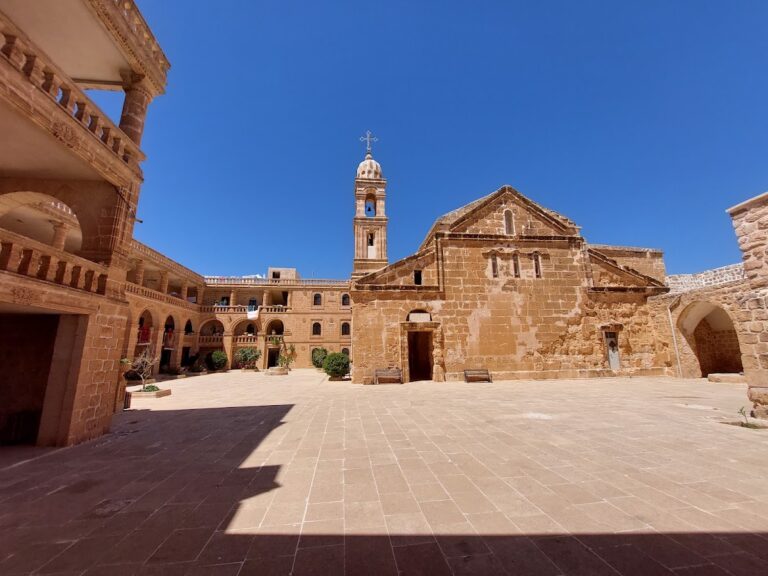
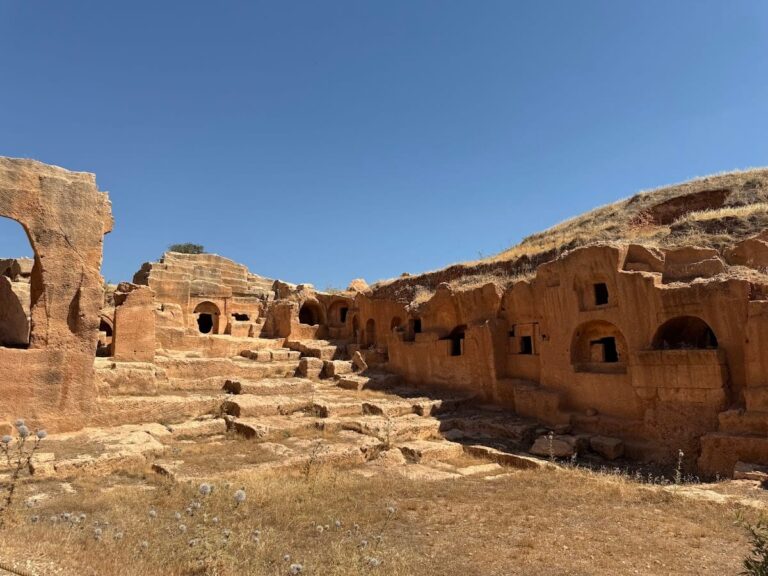
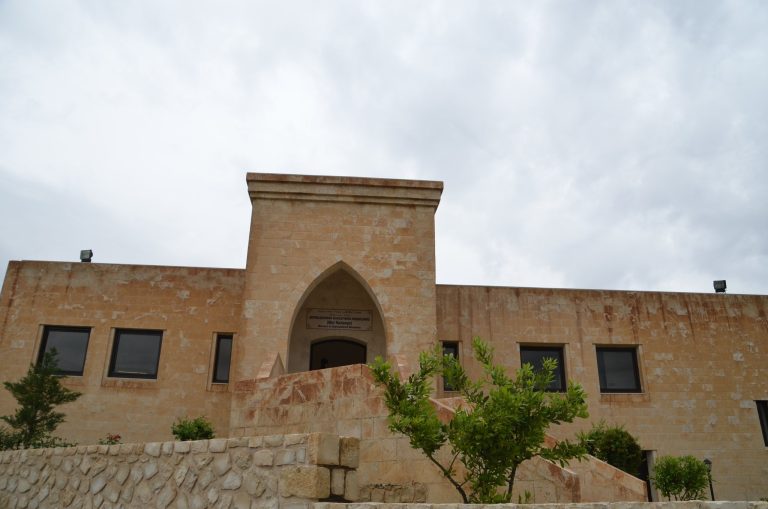
Mor Loozor Monastery stands on a hill close to Mercimekli, formerly known as Habsnas or Habsus, near Midyat. The village had a close relationship with the monastery. The complex has a square plan, with built structures along its west, north, and east sides. A roughly three-metre-high enclosure wall surrounds the site and is constructed from cut stone. Within it, the central courtyard organizes the surviving buildings and the seclusion tower.
Enclosure Wall
The enclosing wall forms the monastery’s principal outer boundary. Its cut-stone construction and substantial height remain visible despite the complex’s partly ruinous and deteriorating condition. Sections of the monastery buildings also survive within the enclosure.
Seclusion Tower
The central courtyard contains a tower associated with stylite practice. Its upper portion has collapsed, while approximately seven metres remains. The structure is built from masonry rather than from one monolithic or composite column. It is wider than most comparable columns and has a channel at ground level for collecting and discharging water.
The tower corresponds to a description in the Life of Shemʿun, although its inscribed construction date differs from the chronology given in that work. It may therefore have replaced Shemʿun’s original tower. The surviving structure is the only high-column seclusion tower among the monasteries of Tur Abdin. Continued deterioration threatens this rare surviving example of solitary ascetic architecture in the region.