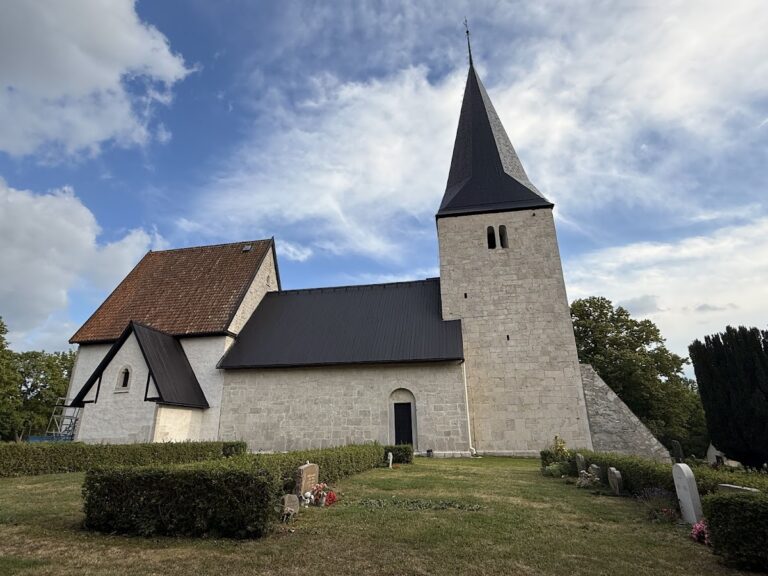
Silte Church: A Medieval Parish Church on Gotland


Site at a Glance
- Rating
- 4.5
- Popularity
- Very Low
- Country
- Sweden
- Primary era
- Medieval
- External website
- Open
- Eras represented
- Medieval, Early Modern, Modern
- Civilizations
- Swedish
- Site type
- Religious
- Remains
- Church
On this page14 sections
History
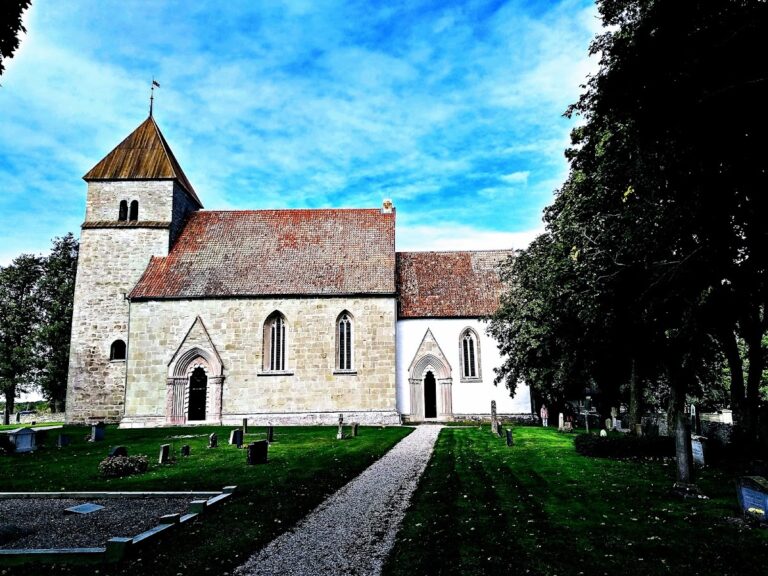
Silte Church is a rural medieval church in Sweden, whose present stone building dates entirely from the thirteenth century. It stands in southwestern Gotland and belongs to Silte parish in the Diocese of Visby within the Church of Sweden. The building has retained much of its medieval character and is described as almost unaltered.
Wooden predecessor and stone church
Restoration work in 1971–1972 revealed the remains of an earlier stave church beneath the floor. A stave church was a medieval wooden church built around upright timber posts and frames. This predecessor was approximately a century older than the present masonry church, and the imprint of its gable survived in the later church’s triumphal arch, the arch separating the nave from the choir.
The present church developed in several thirteenth-century stages. The choir was built around the middle of the century, followed slightly later by the nave, apparently through the work of the same building workshop. The tower seems to have been added toward the end of the century. The choir’s early Gothic design belongs to a medieval architectural style associated with pointed arches, articulated vaults, and an increasingly vertical emphasis.
Later alterations and care
The church was renovated in 1902, and most of its furnishings, including the pews, date from that work. A later intervention affected the organ, which was renovated in 1985 by J. Künkels Orgelwerkstatt of Lund. The 1971–1972 restoration, directed by architect Leif Olsson, also brought the earlier wooden church to light and clarified the relationship between the two buildings.
Remains
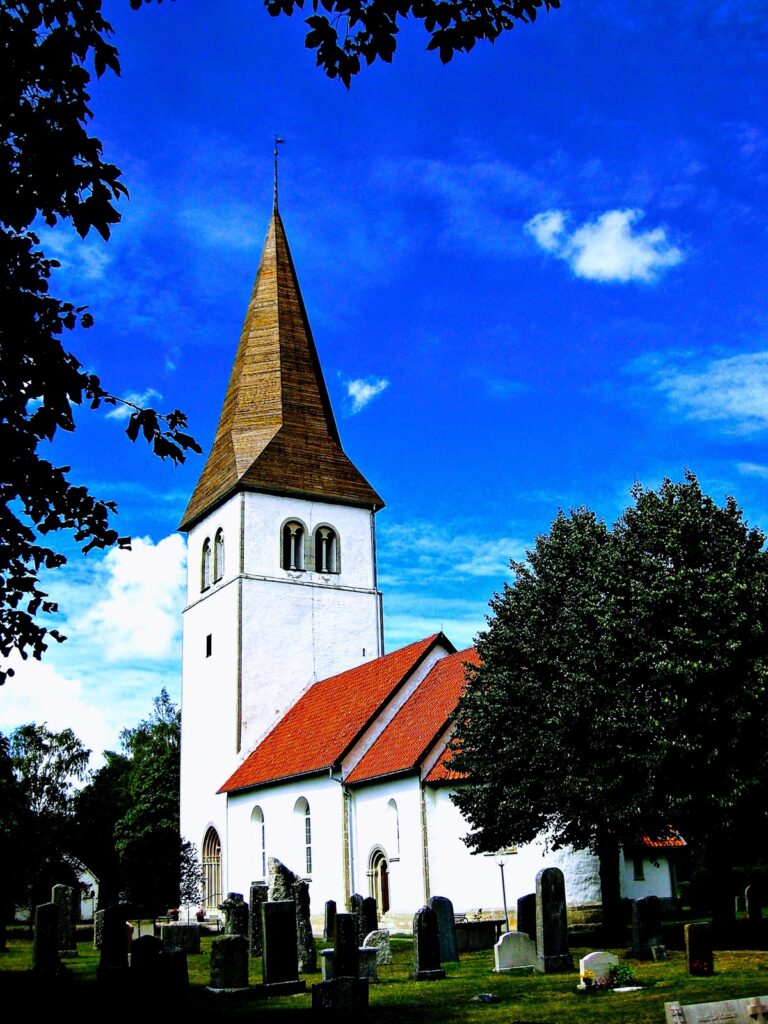
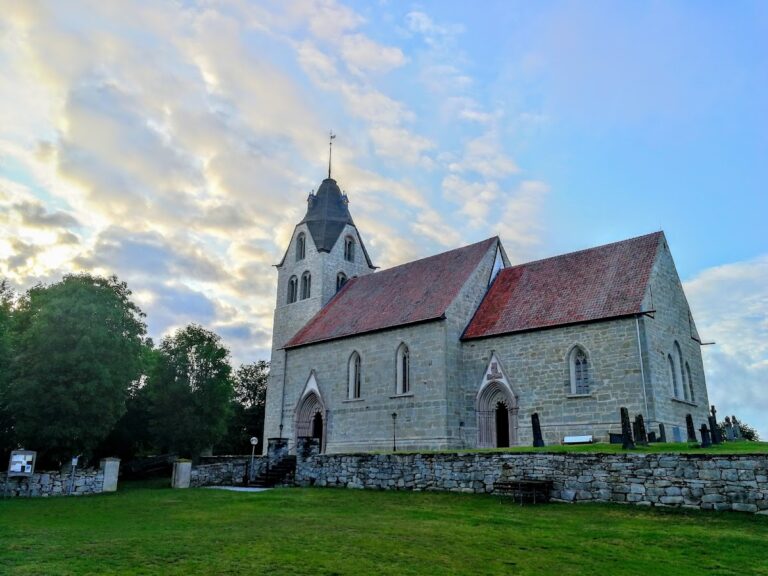
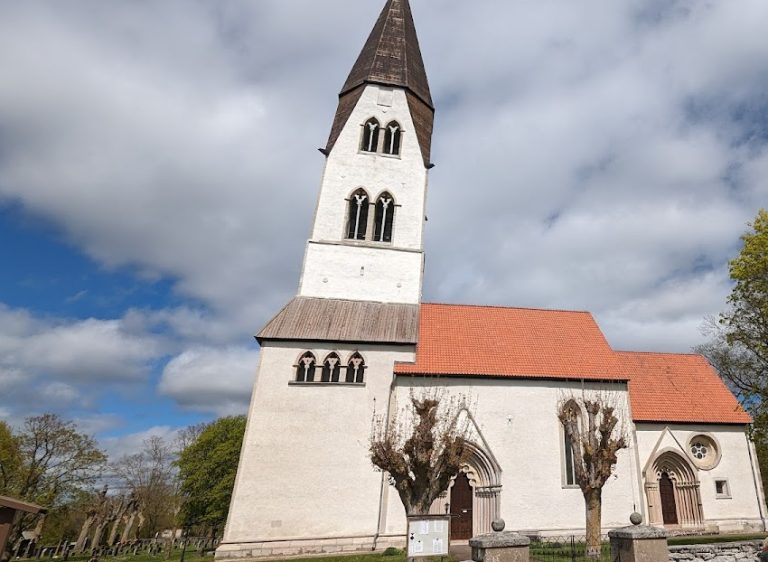
Silte Church is a sandstone masonry building composed of a rectangular nave, a narrower straight-ended choir to the east, and a western tower. Its white-plastered façades are framed at the corners by dressed limestone surrounds arranged in alternating colours. The narrow, round-arched windows retain their original openings, while the tower’s sound openings contain varied carved stone details.
Medieval building
Choir
The choir is the oldest part of the surviving stone church and dates from the middle of the thirteenth century. Its early Gothic design is expressed in the slightly pointed arches of the triumphal arch and tower arch, as well as in its vaulted interior. The choir has a groin vault, formed by the crossing of two barrel vaults, a group of three windows in the eastern wall, and a smaller window on the south side. One choir window preserves original stained-glass panes from the period of construction.
Nave
The nave was added somewhat later, apparently by the same workshop that built the choir. It is covered by two tent vaults, whose surfaces rise toward a central point or ridge, separated by a broad transverse arch. Its south portal has a tympanum, the space above the doorway, decorated with carved loop ornaments. The portal also carries carved ornament in Norse style, a Scandinavian medieval form characterized by interlaced and animal-inspired designs.
Western tower
The tower appears to have been built toward the end of the thirteenth century. It stands at the west end of the church and contains a tower room with a high tent vault. An octagonal spire crowns the tower, although its pinnacle was lost at an unknown date. The tower portal opens on the west, completing the church’s three entrances alongside the south portals of the nave and choir.
Paintings and furnishings
Wall paintings
Wall paintings from four periods survive inside the church. The earliest, made around the time of construction, are purely ornamental. Paintings from around 1300 on the nave’s west wall show Saints Philip, Paul, Peter, James, and Bartholomew. Close by are scenes of the Passion of Christ, the suffering and death of Jesus, dating from the middle of the fifteenth century. Another group on the south wall of the nave dates from 1495.
Altarpiece
The altarpiece, the decorated structure behind the altar, is regarded as unique in style on Gotland. Its painted outer wings show the Virgin Mary and Saint Michael the Archangel. Their reverse sides carry an Annunciation scene. These paintings date from around 1500, while the central panel contains thirteenth-century wooden sculptures representing the Last Judgment, the Christian image of Christ judging the living and the dead.
Baptismal font
The baptismal font is older than the present stone church. Dating from the late twelfth century, it was carved by the sculptor Master Sigraf and is richly decorated with scenes from the childhood of Jesus. The font is the vessel used for the Christian rite of baptism and preserves evidence of the church’s religious furnishings before the thirteenth-century building was completed.
Later interior furnishings
The pulpit dates from the middle of the eighteenth century and has no canopy. Most of the other furnishings, including the pews, come from the 1902 renovation. The organ was probably built in 1900 by either A. V. Lundal of Stockholm or Åkerman & Lund Orgelbyggeri, and it was renovated in 1985.
Churchyard building
A masonry parish granary stands at the northwestern corner of the churchyard. Built in 1853, it was a communal storage building associated with the parish and forms part of the surviving architectural setting of Silte Church.