Øye Stave Church: A Reconstructed Medieval Parish Church in Norway


Site at a Glance
- Rating
- 4.6
- Popularity
- Very Low
- Country
- Norway
- Primary era
- Medieval
- External website
- Open
- Eras represented
- Medieval
- Civilizations
- Norwegian
- Site type
- Religious
- Remains
- Church
On this page8 sections
History
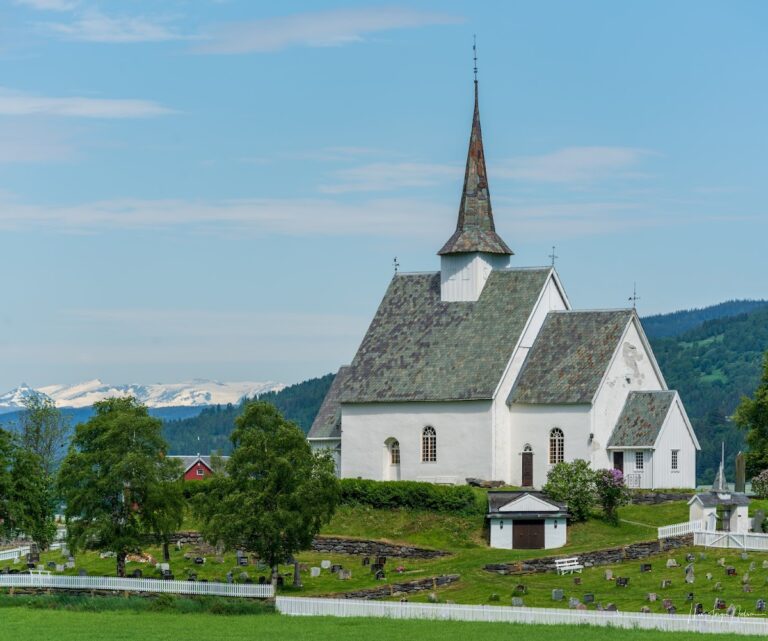
Øye stave church is a medieval wooden parish church in Norway, probably built around 1180–1200 in the stave-church tradition. Its earliest surviving documentary mention dates from the fourteenth century. Formerly Catholic, it became Evangelical Lutheran after the Reformation and now belongs to the Church of Norway in Øye Parish, Valdres Deanery, and the Diocese of Hamar.
The medieval church and its relocation
The first church stood on level ground beside Lake Vangsmjøse, about 400 metres northwest of the present Øye Church. Its setting exposed the building to decay because the ground was boggy, while the nearby River Rødøla flooded almost every spring. Local tradition even tells that coffins sometimes rose to the surface. By the 1660s, the old church was reportedly in poor condition. It was demolished in 1747 and replaced by a new church about 400 metres to the southeast.
Rediscovery and reconstruction
During renovation of the replacement church in 1935, workers discovered 156 pieces of the demolished stave church beneath its floor. The material included upright posts, foundation pillars, framing members, and decorative elements, although the reason for storing them there was unknown. The find led to plans for rebuilding the medieval church.
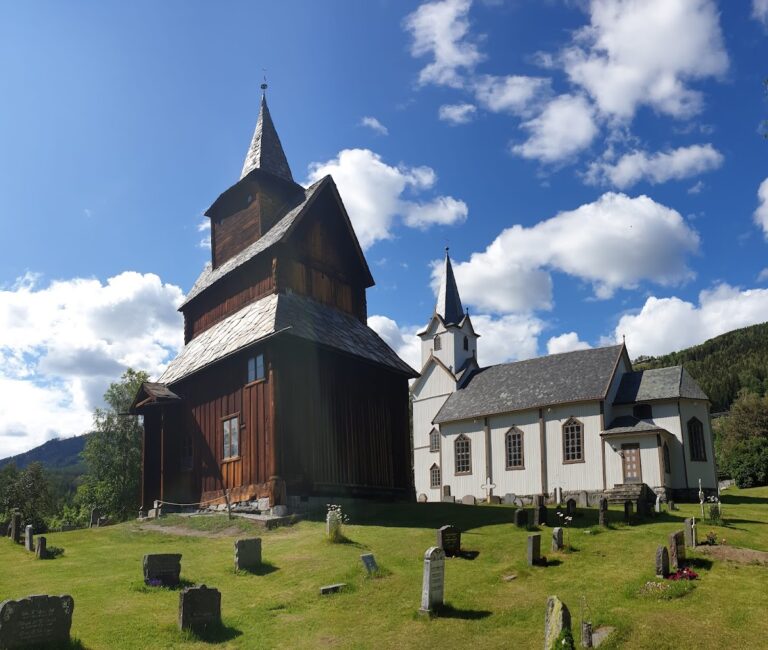
Architect Ole Øvergaard prepared a reconstruction proposal in 1950. Work took place during the 1950s, using many recovered pieces together with additional material from the restoration of Heddal Stave Church and newly made elements. Because the former site remained unsuitable for construction, the reconstructed church was placed about 100 metres north of the present Øye Church. Bishop Alexander Lange Johnson consecrated it on 1 August 1965. Øye Stave Church remains an active parish church, with space for about 30 people, and has automatic protection as a Norwegian cultural-heritage site.
Remains
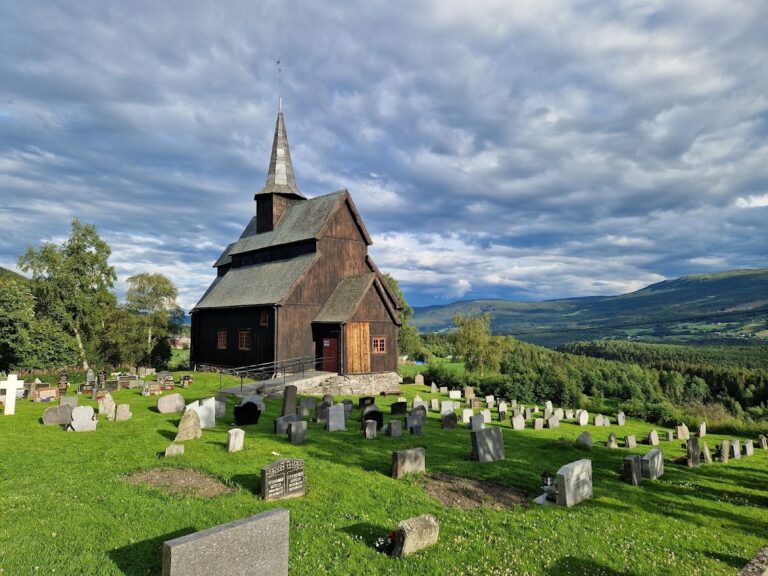
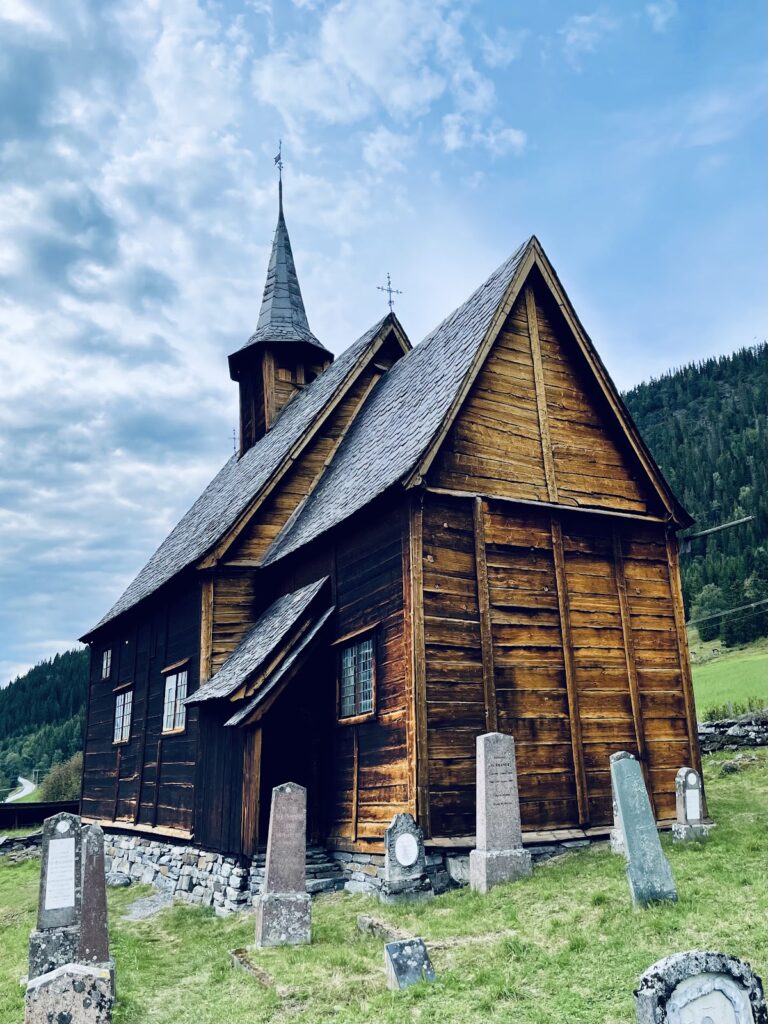
The present building is a small, brown wooden long church reconstructed around a load-bearing timber framework. A stave church is built from upright posts joined to horizontal beams, usually on a stone foundation. At Øye, the frame rests on a rubble-stone base and consists of foundation beams, corner posts, and upper framing members. Three free-standing posts support the vaulted ceiling. Four other surviving posts indicate that the original church probably had a roof turret, mentioned in several seventeenth-century references. The turret itself was not rebuilt because its exact form is unknown, leaving those posts without a structural role.
Portals
West portal
The west portal was reconstructed from surviving fragments and carries several interlaced dragons. This decorative motif is also associated with the former Wang Stave Church and the stave churches at Rennebu, Ringebu, and Vågå. The design resembles the older north portal of Urnes Stave Church. The portal probably dates from the second half of the thirteenth century. Its upper end was rebuilt in a keyhole shape like the Urnes portal, although a formerly straight termination is considered more likely.
Chancel-screen portal
A second portal forms part of the interior chancel screen, the partition separating the sanctuary around the altar from the main body of the church. Its two columns are decorated with vines and leaves. Two lions probably stood above them originally, in a design comparable to features at Lom, Borgund, and Eidsborg, but the lions were not reconstructed. This portal is probably later than the west portal and may have been made during an alteration to the church.
Historic furnishings
The church contains a thirteenth-century wooden crucifix showing Christ, probably once positioned above the chancel screen. Other medieval furnishings include a simple chandelier, a doorbell, and a baptismal font carved from one piece of wood and dated to the fourteenth century. Some furnishings removed from the old church in 1747 were transferred to the replacement church and later returned to the reconstructed stave church.