Ahi Elvan Mosque: A Fourteenth-Century Mosque in Ankara


Site at a Glance
- Rating
- 4.9
- Popularity
- Low
- Country
- Turkey
- Primary era
- Medieval
- Eras represented
- Medieval
- Civilizations
- Ottoman
- Site type
- Religious
- Remains
- Mosque
On this page6 sections
History
Ahi Elvan Mosque is a fourteenth-century mosque in Ankara, Türkiye, built by members of the Ahi Brotherhood during the second half of the century. The Ahi Brotherhood was a medieval Anatolian fraternity that combined religious, ethical, social, and craft-related functions. The mosque is regarded as evidence of the brotherhood’s presence in fourteenth-century Anatolia under the protection of local beys, who were regional rulers or military-political authorities.
Foundation under Ahi Elvan
The mosque was built in Koyunpazarı Neighborhood, in Ankara’s Ulus district, under the leadership and direction of Ahi Elvan, who lived from 1331 to 1389 and led the brotherhood in the Ankara area. Its foundation connects the building with the urban and religious activity of the Ahi Brotherhood during the medieval period.
Fifteenth-century additions
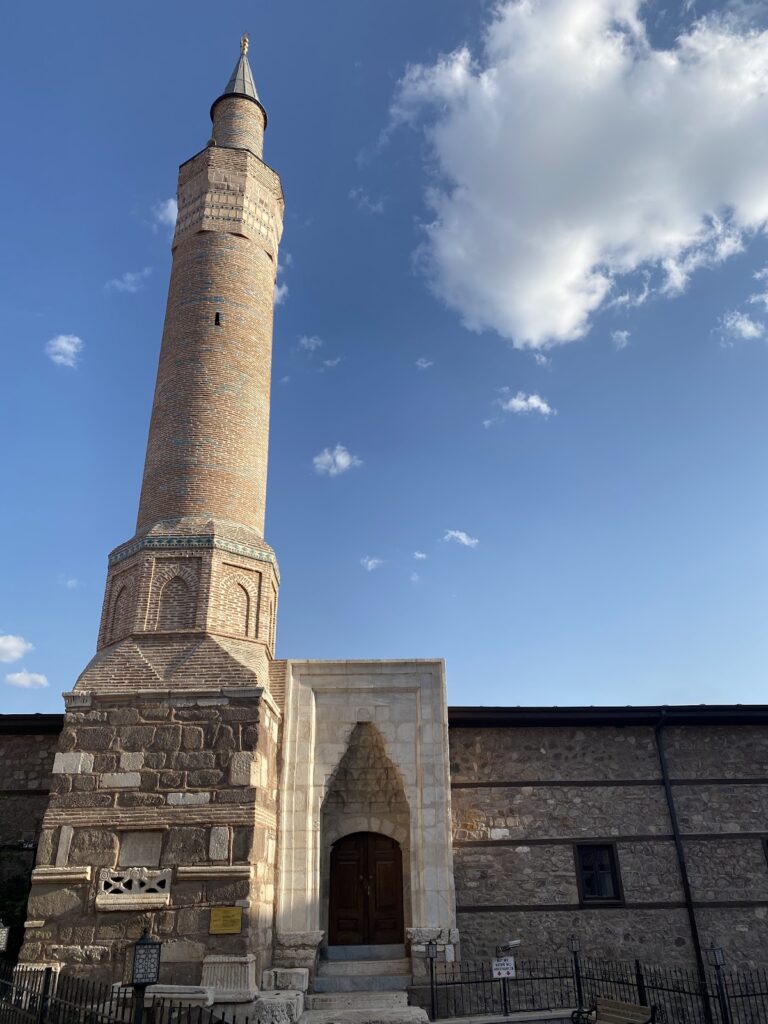
The minaret was completed in the early fifteenth century. Work on the mosque’s wooden minbar, or pulpit, also began in the early fifteenth century. The minbar and the window shutters were first used in the mosque in 1413. The minbar is no longer used there and is preserved in the collection of the Ankara Ethnography Museum.
Remains
Plan and structure
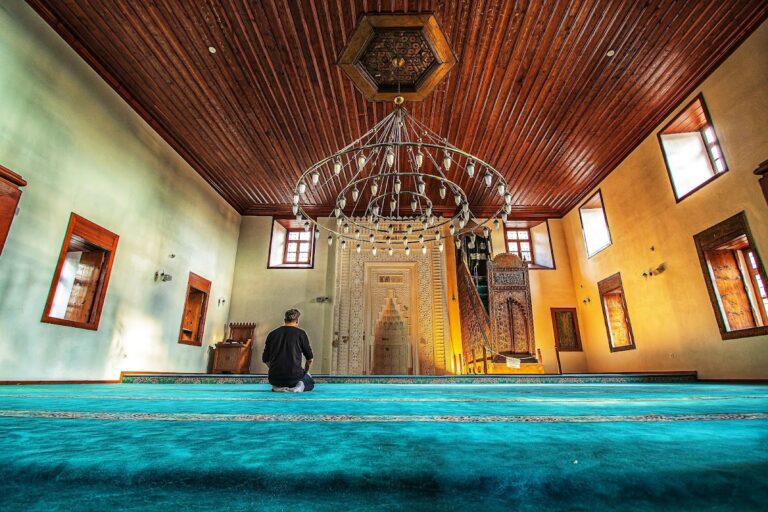
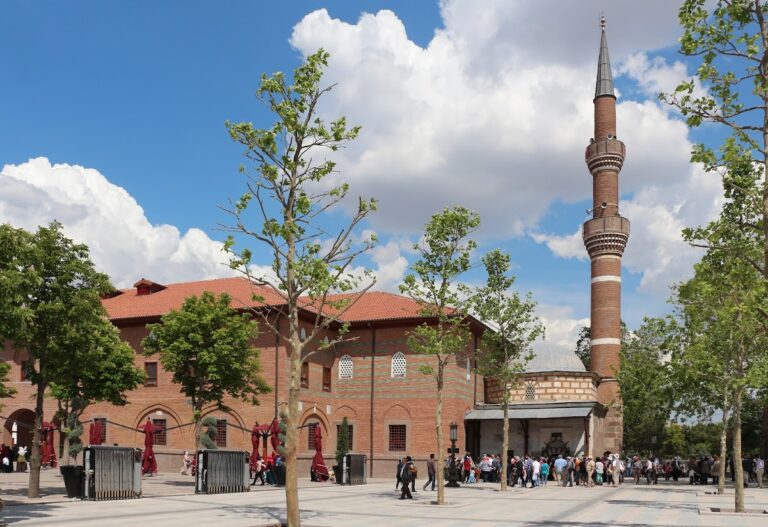
Ahi Elvan Mosque has a rectangular plan and was built mainly from stone, brick, and wood. Stone forms the foundations, while the walls are made of brick. Wood is the principal material used for the interior elements. A flat ceiling rests on 12 wooden pillars with marble capitals, arranged in three rows of four. A balcony occupies only the northeastern wall of the mosque.
Minaret and woodwork
The minaret is built of brick, and its lower section has a square plan. The wooden minbar is made of walnut and carries pentagonal carved motifs characteristic of Seljuk woodworking traditions, which strongly influenced medieval Anatolian architecture and woodwork. The window shutters were produced with a curved-cutting technique associated with Anatolian woodworkers and were first used in the mosque in 1413. The minbar is preserved at the Ankara Ethnography Museum rather than inside the mosque.