Stenkyrka Church: A Medieval Parish Church on Gotland


Site at a Glance
- Rating
- 4.3
- Popularity
- Very Low
- Country
- Sweden
- Primary era
- Medieval
- External website
- Open
- Eras represented
- Medieval
- Civilizations
- Unclassified
- Site type
- Religious
- Remains
- Church
On this page8 sections
History
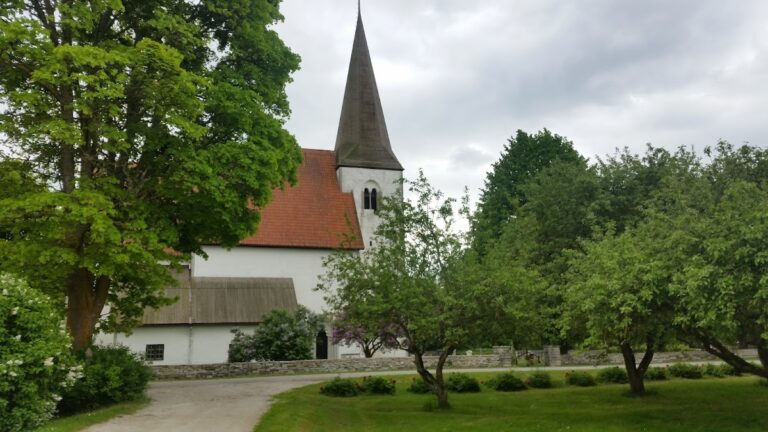
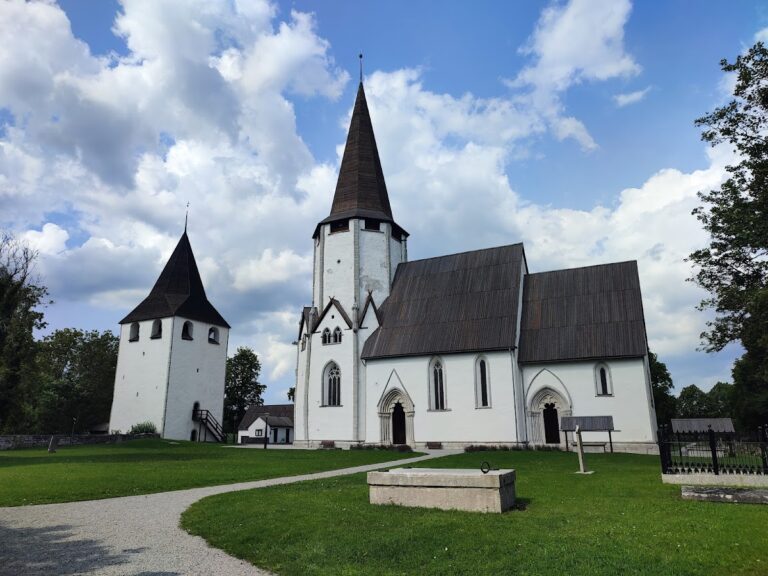
Stenkyrka Church is a medieval church in Sweden, belonging to the Church of Sweden and the Diocese of Visby. Its present building dates mainly from the 13th century and combines Romanesque and Gothic elements. The church stands within a place whose name means “stone church,” suggesting that an early stone building was unusual enough to give the settlement its name.
Early church tradition
The medieval Gutasaga, an account of Gotland’s history and traditions, says that Lickajr the Wise built one of the island’s earliest churches at Stenkyrka. Local tradition identifies it as the first church in northern Gotland. If the account is correct, this first building was almost certainly made of wood. Remains later found beneath the present church show that a small Romanesque church followed, with a nave, choir, and tower.
Thirteenth-century rebuilding
The early Romanesque church was gradually replaced from the middle of the 13th century. Work began with the choir and continued with the nave, which was inaugurated in 1255 by the bishop of Linköping, probably Lars I. This rebuilding created the main body of the church that survives today.
Medieval tower and later changes
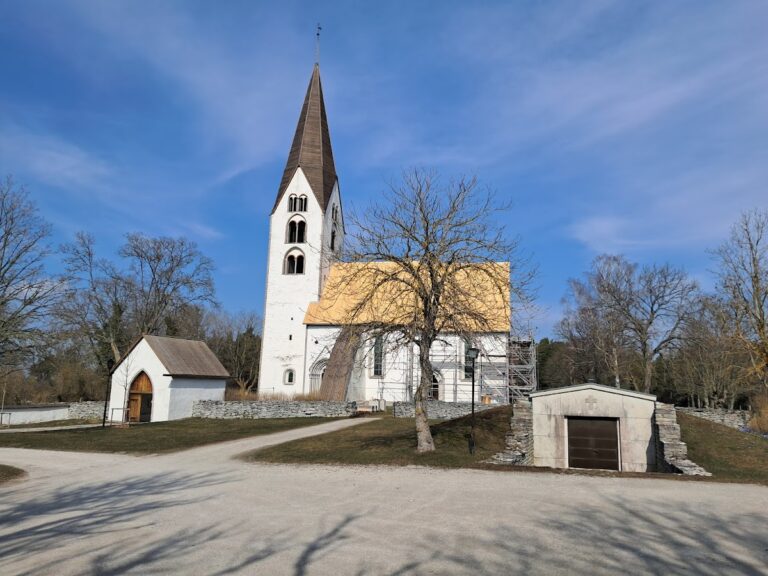
The large tower was added in the 14th century and was modelled on three Visby city churches that have since been destroyed. Most of the furnishings now inside the church date from after the Reformation, the 16th-century movement that created Protestant churches and changed worship and church interiors. The building was restored in 1954–55 under the direction of the architect Rolf Bergh. After an arson fire in the tower caused mainly smoke damage, a second restoration followed in 1979–80.
Remains
Building and entrances
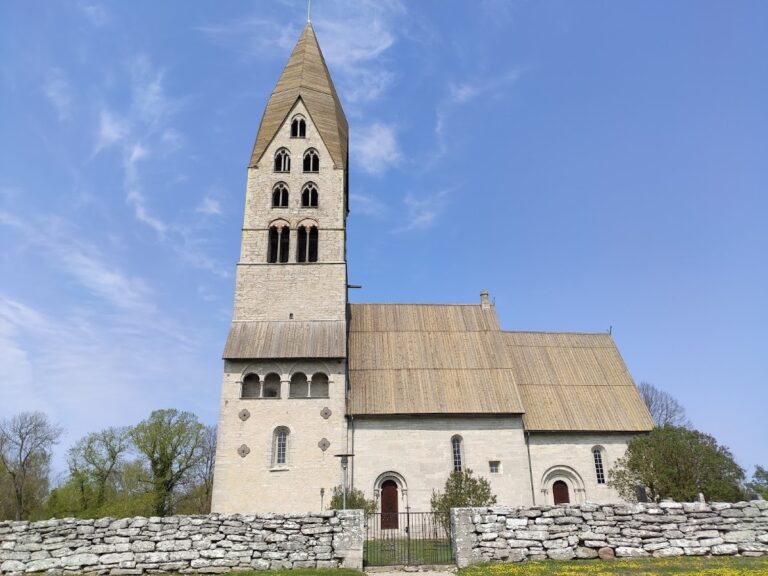
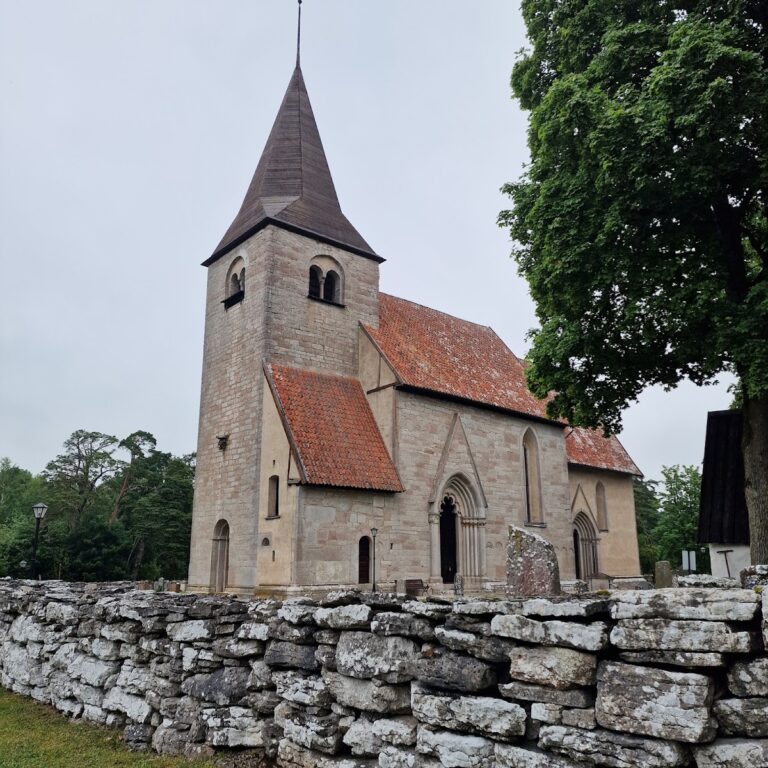
The present church consists of a nave, choir, and a large tower that dominates the building. The tower has been described as one of the finest church towers on Gotland. Two simple Romanesque portals open on the south side, while a Gothic portal, using the pointed-arch style associated with later medieval architecture, is set in the western side of the tower. The earlier Romanesque church survives only through archaeological remains beneath or within the present structure.
Medieval wall paintings
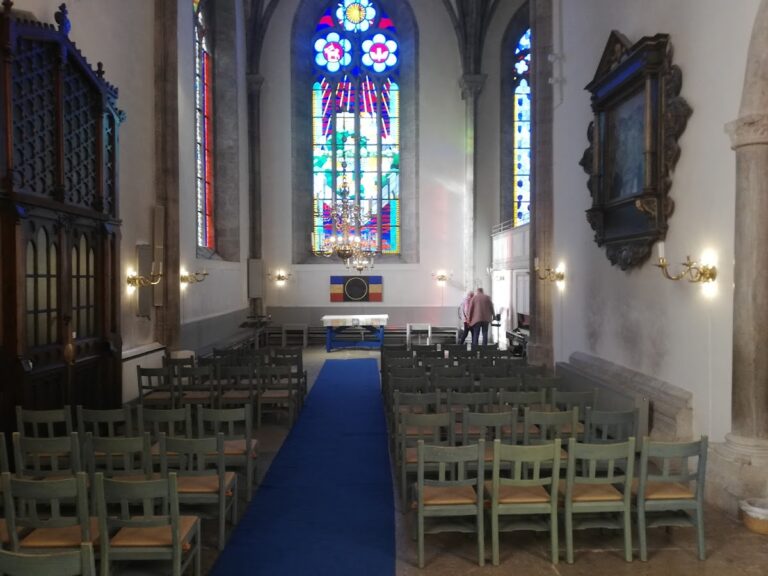
The interior contains medieval murals from three periods. The oldest paintings, made in the middle of the 13th century, are mainly ornamental. They include an ashlar pattern, painted to resemble blocks of cut stone, on the arch between the choir and nave. Later 13th-century decoration shows imaginary or mythical creatures, drapery, and imitation marble, including imitation marble in the tower vault. Large parts of the original mural scheme have been lost. Paintings from the end of the 14th century depict biblical figures and scenes, while 18th-century paintings show the five wise virgins.
Furnishings and commemorative stones
A baptismal font made in the 12th century by the master known as Majestatis stands in the centre of the nave. The church also contains a finely carved 14th-century triumphal cross, a large cross traditionally placed at the boundary between nave and choir. It now hangs on the north wall with images of Mary and John dated 1702. In the choir, the gravestone of Licnatus of Stenstu, who lived in the second half of the 12th century, is dated to 1200 and is identified as the oldest dated gravestone on Gotland.
The sandstone altar dates from 1688, and the pulpit belongs to the latter half of the 17th century. Its pulpit clock was made in 1805–06. Two brass chandeliers date from the middle of the 19th century, and several memorial plaques are also preserved inside the church. Beside the church stands a Gotlandic picture stone, a carved monument associated with the island’s earlier medieval and pre-Christian traditions, showing a scene of human sacrifice.
Most of the pews derive from the period of Danish occupation. Their surviving landscape paintings on the doors were added by J. N. Weller in 1783–84, giving the post-Reformation interior another layer of later decoration.