Steinkirche Scharzfeld: A Cave Church and Archaeological Site in Germany


Site at a Glance
- Rating
- 4.6
- Popularity
- Low
- Country
- Germany
- Primary era
- Medieval
- External website
- Open
- Eras represented
- Medieval
- Civilizations
- Carolingian
- Site type
- Religious
- Remains
- Church
On this page8 sections
History
Steinkirche Scharzfeld is a cave near Scharzfeld, a locality of Herzberg am Harz in Germany, whose human use reaches from the late-glacial Paleolithic to a medieval church phase. During excavations in the 1920s, its finds were regarded as the oldest archaeological material discovered in Lower Saxony.
Prehistoric Use
Between approximately 15,000 and 8,000 BC, reindeer hunters used the cave as a resting place in a late-glacial environment. Later groups also stopped there for short periods. Mesolithic forest hunters used it around 5,000 BC, while people of the pre-Roman Iron Age, the period before Roman influence in the region, were present around 500 BC.
Church and Cemetery
From the ninth century, the cave served as a church space. A cemetery developed on the forecourt, and approximately 100 people were buried there during the medieval period and as late as the sixteenth century. Coins found in the burial area date this activity. The cave was last mentioned in 1586 and then gradually fell from view.
A local tradition connects the church with Boniface, an eighth-century Christian missionary associated with the conversion of parts of Germania. According to the tradition, he carved the cave from the rock with a wooden hammer and baptized pagans in the nearby Oder River. This account belongs to the site’s later religious tradition rather than its securely established archaeological history.
Legends and Later Archaeology
Another legend links Steinkirche Scharzfeld with the nearby Unicorn Cave. It tells of a wise old woman who lived in the cave during pagan times and advised people as a fortune-teller. A black-robed monk and Frankish warriors supposedly drove her away, while a unicorn protected her. She then joined a community of witches. The monk is said to have vanished into a pit, whose discovery led to the story of the Unicorn Cave.
Excavations of the cave floor and the outer forecourt took place from 1925 to 1928. They brought prehistoric and medieval evidence into archaeological study and gave the site an important place in the early investigation of Lower Saxony’s past.
Remains
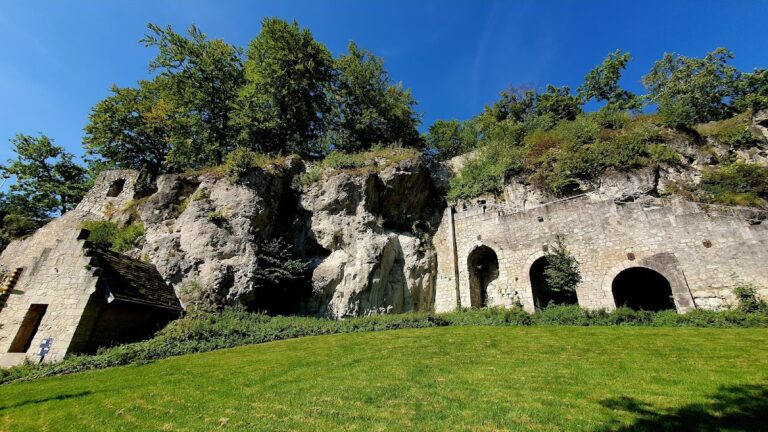
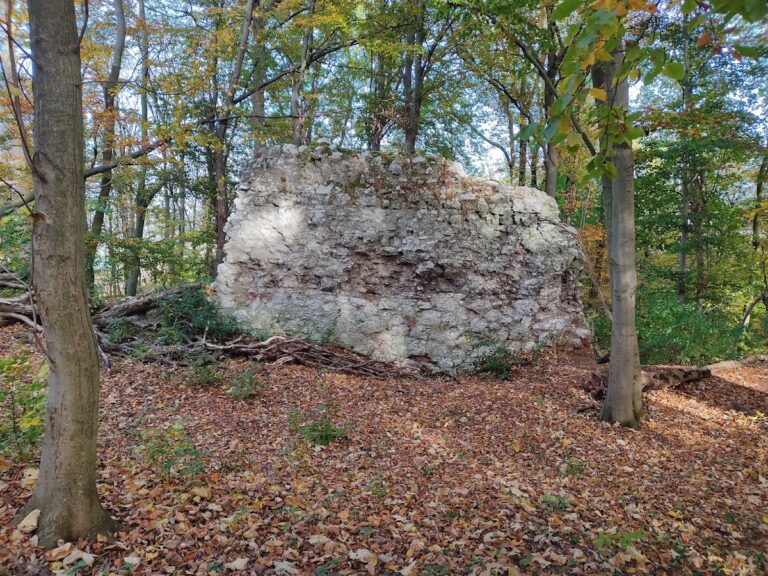
Steinkirche Scharzfeld is a round-arched cave formed in dolomite, a carbonate rock similar to limestone. It is approximately 28 metres long, 6 to 8 metres high, and 6 to 8 metres wide. The cave lies at about 290 metres above sea level on the south-southwestern slope of the Steinberg, a hill approximately 341 metres high above Scharzfeld, between the Bremke and Mönche valleys.
Cave and Church Features
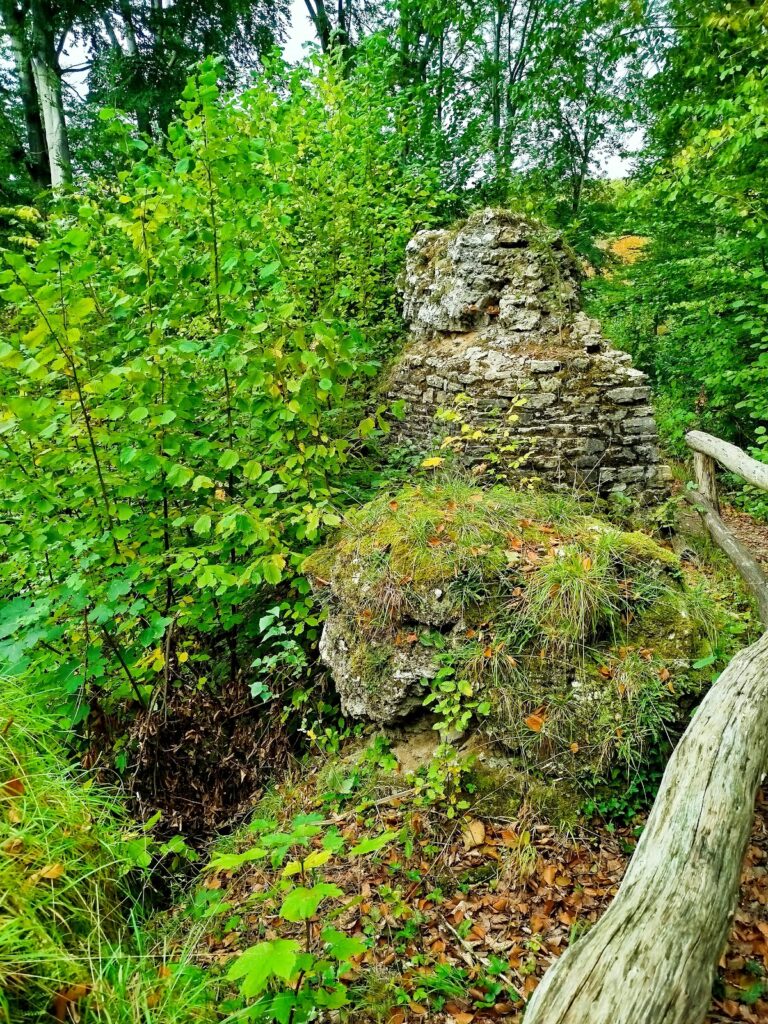
The former religious use is reflected in features cut directly into the rock. A pulpit was carved beside the entrance, while a niche in the stone served as an altar. An extension once closed the entrance. Its foundation remains and fragments of roof tiles preserve evidence of this addition.
Medieval Cemetery
The cemetery occupied the ground immediately in front of the cave. Most graves held people in wooden coffins. One burial directly before the rock-cut pulpit was cut into the stone substrate as a stone grave and contained the skeleton of a woman.
Archaeological Finds
The excavations recovered Paleolithic flint knives, a bone needle, and animal bones. Comparisons with similar material from France associated these finds with reindeer hunters. Together, the objects provide physical evidence for the cave’s late-glacial use.
The cave lies within the Steinberg near Scharzfeld nature reserve and forms part of the Harz Nature Park.