Oude Kerk Ede: A Gothic Cross-Shaped Church in the Netherlands


Site at a Glance
- Rating
- 4.5
- Popularity
- Low
- Country
- Netherlands
- Primary era
- Medieval
- External website
- Open
- Eras represented
- Medieval, Early Modern, Modern
- Civilizations
- Dutch, Holy Roman Empire
- Site type
- Religious
- Remains
- Church
On this page15 sections
History
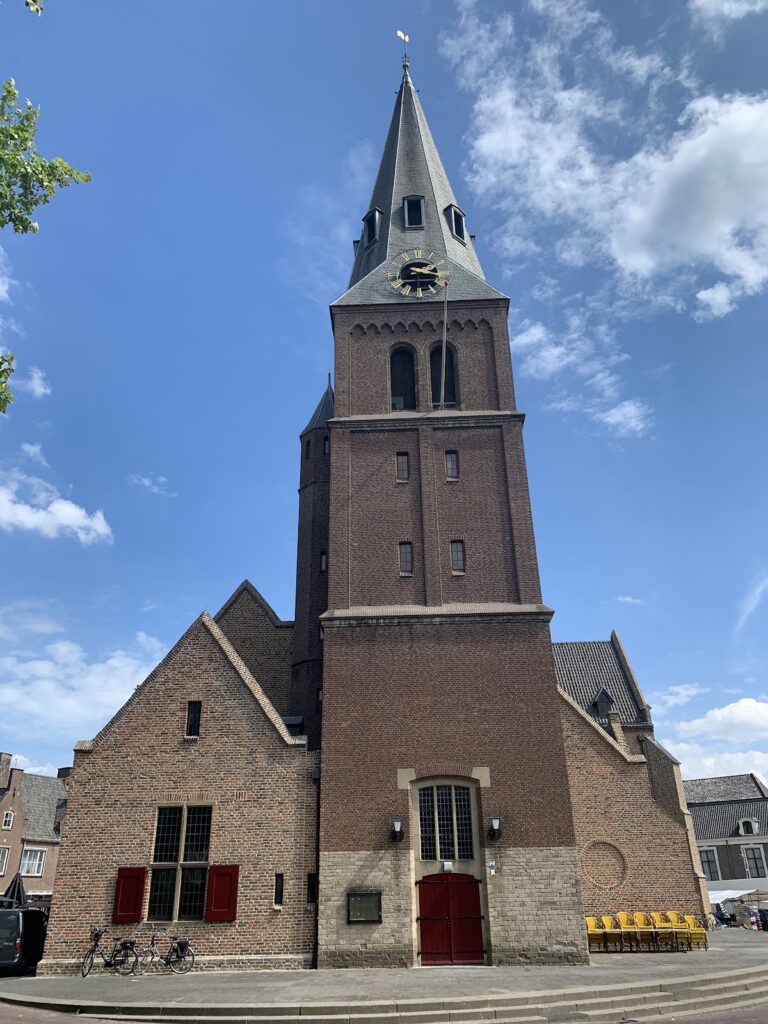
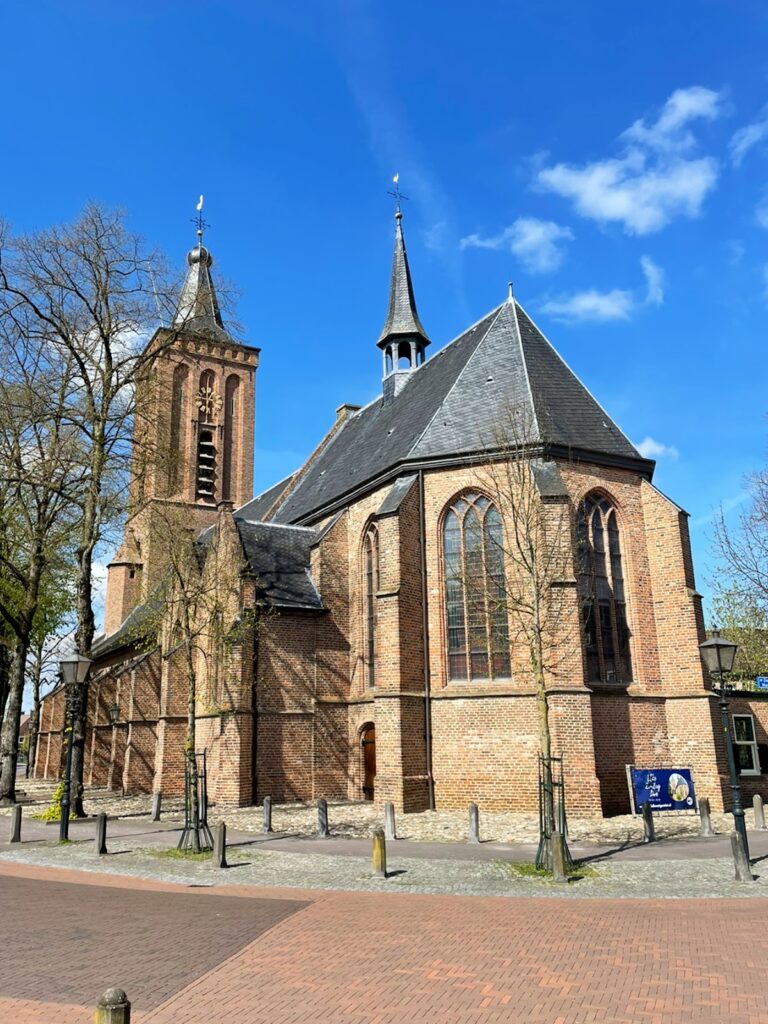
The Oude Kerk is a Gothic cross-shaped church in the Netherlands, originating around 1200 as a small stone hall church dedicated to John the Baptist. A wooden predecessor may have occupied the same site. Its substantial medieval building was erected when Ede was still a small village, making the church unusually large in relation to its early settlement.
Medieval origins and rebuilding
During the fourteenth century, the nave was extended and the present church tower was built. War damage destroyed the church in 1421. The rebuilding that followed included the construction of the choir in the form that largely survives today. Further parts of the church were rebuilt around 1470, establishing much of the medieval structure associated with the present building.
Fire, restoration, and Protestant use
Lightning struck the tower in 1635, setting it completely alight. Its spire fell onto the roof of the church and destroyed much of it. Restoration continued for several years and included alterations to the building. Construction of the present vaults in the nave and southern aisle began in 1643.
The church remained a place of Christian worship after the Reformation and is now owned by the Hervormde Gemeente van Ede, a local Reformed Protestant congregation affiliated with the Protestant Church in the Netherlands. The tower belongs to the municipality of Ede. The building is used for services on Sundays and Christian feast days, as well as for organ concerts and choral performances.
Twentieth- and twenty-first-century conservation
A major restoration from 1963 to 1967 gave the church a symmetrical form through the construction of a northern aisle. The work also restored the small towerlet at the crossing and brought together surviving grave stones that had previously been dispersed through the interior. The vaults and walls were repaired during another restoration in 1994.
The tower clock faces were renewed in 2007, and the church square was renovated in 2008. The surrounding low walls were removed, gravel was replaced with paving and planting, and twelve apostle statues that had previously been removed from the walls were returned. In 2009, defective underfloor heating was replaced and asbestos was removed. The church is a protected national monument, registered as Rijksmonument 14452.
Remains
The Oude Kerk survives as a Gothic cross-shaped church built of tuff stone and brick. Its plan combines the lengthwise nave with a transept, forming a crossing at their intersection, while the choir occupies the eastern end. The building incorporates earlier Romanesque fabric, later medieval rebuilding, seventeenth-century alterations, and major twentieth-century restoration.
Exterior and medieval fabric
Tower
The lower section of the tower is largely built of tuff stone, a light volcanic rock formed from compacted ash and other volcanic material, and probably dates from the fifteenth century. The tower was heightened with brick in the seventeenth century after the earlier fire and rebuilding history. Carved consoles and small crowns at its two front corners recall the pre-Reformation period. Before the sixteenth-century iconoclasm, when religious images were destroyed or removed during the Protestant Reformation in the Netherlands, these features carried statues of John the Baptist and Saint Barbara. The consoles are now empty. The tower also contains a carillon of 51 bells, and its clock faces date from 2007.
North wall and aisle
A Romanesque north side wall remains in its original condition. Romanesque architecture was the medieval style that preceded Gothic building and is associated with massive walls and rounded arches. The earlier arrangement of this side is uncertain, including whether the church once had a northern aisle. The present northern aisle was constructed during the 1963 to 1967 restoration, giving the church its current symmetrical form.
Crossing towerlet
A small towerlet stands above the crossing of the nave and transept. It was restored during the 1963 to 1967 work and forms part of the church’s surviving roof and tower composition.
Interior furnishings and burials
Grave slabs
The interior contains 37 grave slabs, with the oldest dating from the fifteenth century. Until the nineteenth century, prominent local residents were commonly buried inside the church. The last burial was that of the bailiff Van Meurs in 1822. The graves were cleared during the restorations of the 1960s, and the surviving stones were assembled within the church.
Oak pulpit
An oak pulpit carved in 1674 remains inside the church. Its date places it within the period when the building was being used and altered as a Protestant place of worship after the seventeenth-century fire.
Musical instruments
Organ
The church’s organ was built in 1877 by the Van Dam organ-building firm of Leeuwarden for a church in Nieuwe Niedorp. It was installed in the Oude Kerk in 1967, restored and enlarged by the Pels firm with the organist Feike Asma as adviser, and renovated by Van Vulpen in 2020 and 2021.
Carillon
The tower carillon was installed in 1987 with 47 bells, including the three existing ringing bells. Two large and two small bells, tuned in B-flat and E-flat, were added between 1998 and 2000, bringing the total to 51. Boudewijn Zwart is the carillon player; Henry Groen previously held the position of municipal carillon player of Ede.