El Mechouar Mosque: A Zianid Religious and Cultural Landmark in Tlemcen
Site at a Glance
- Rating
- 4.7
- Popularity
- Very Low
- Country
- Algeria
- Primary era
- Medieval
- Eras represented
- Medieval, Early Modern
- Civilizations
- Ottoman
- Site type
- Religious
- Remains
- Mosque
On this page6 sections
History
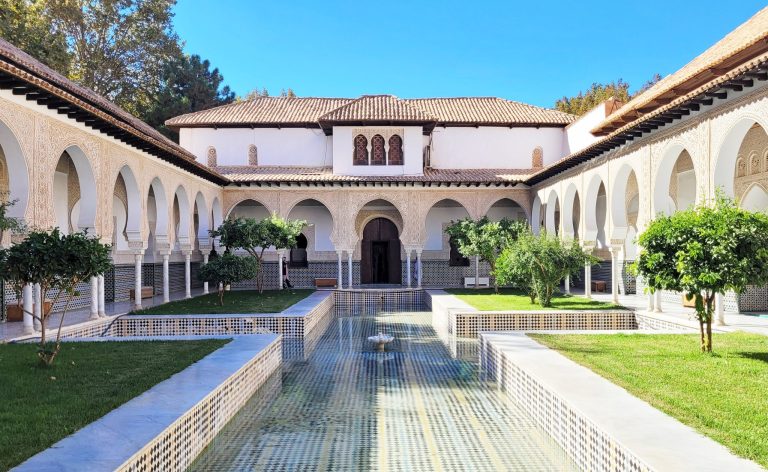
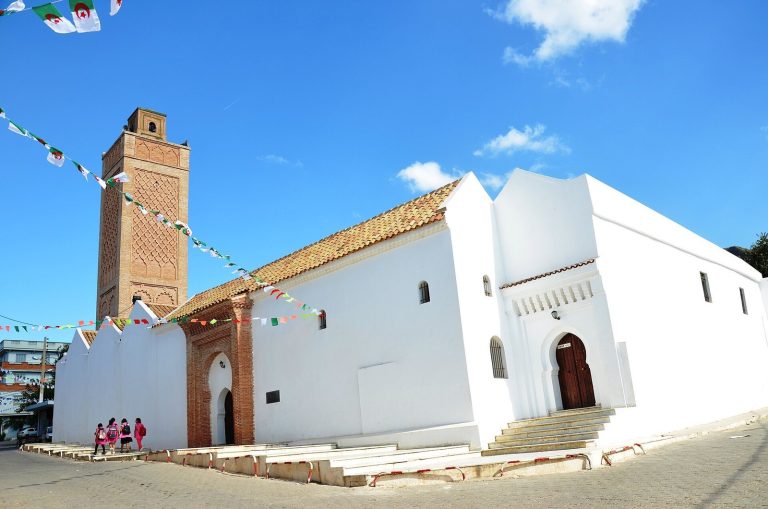
El Mechouar Mosque is a Zianid religious monument in Tlemcen, Algeria, founded in the early fourteenth century by the Zianid prince Abu Hammu Musa I after the construction of the castle. It formed part of El Mechouar Palace and the larger citadel, a complex central to the history of the medieval Kingdom of Tlemcen.
The Zianid citadel and palace
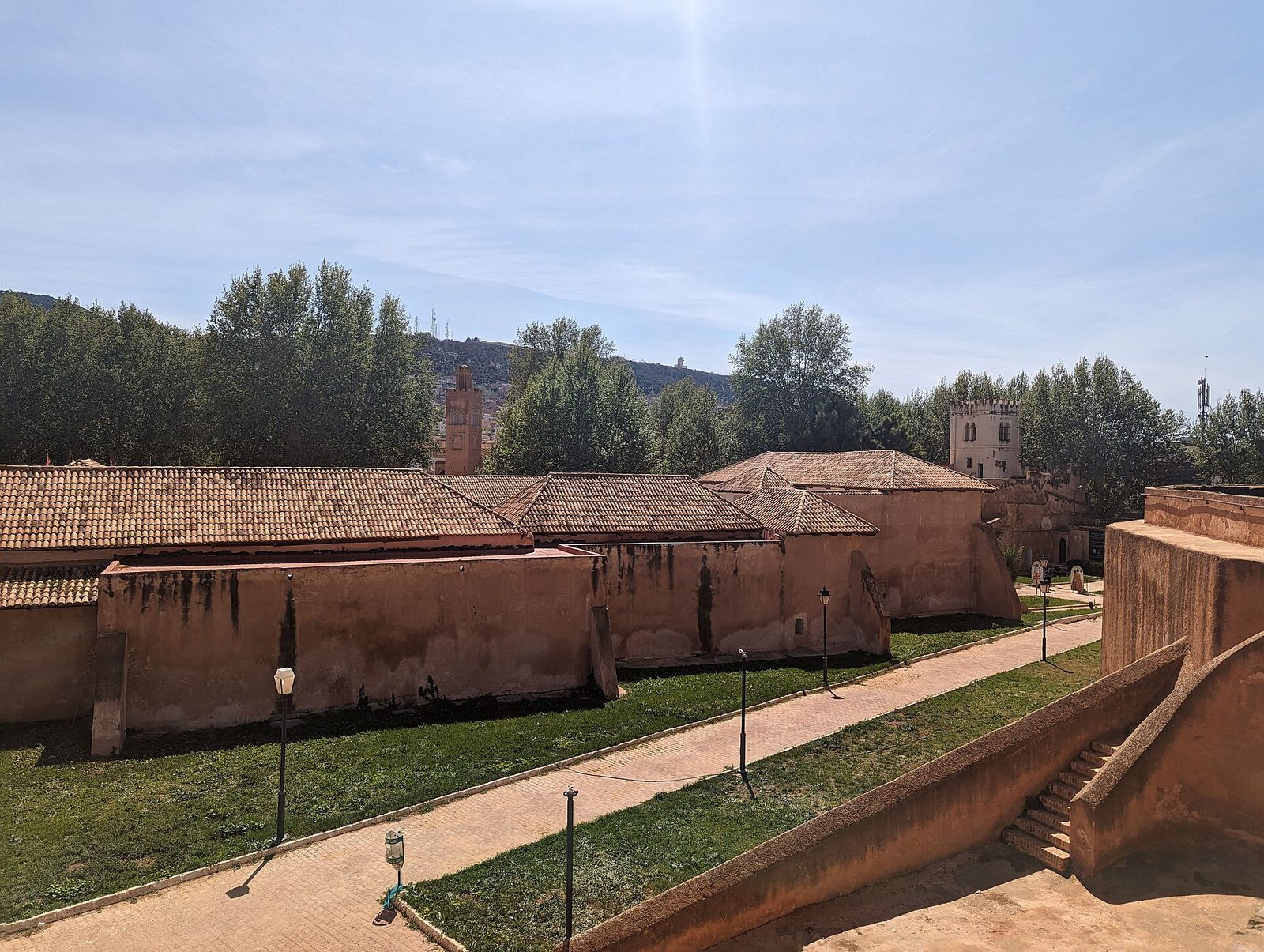
The citadel was built by Yaghmurasen and later became the official residence of the Zianid kings of Tlemcen. The fortified complex occupied about four hectares within a square enclosure. Its buildings were described as imposing, with very high wings and luxuriant gardens, reflecting the importance of the palace and citadel within the kingdom.
Founded within this royal setting, the mosque also became an important centre of intellectual life. Generations of religious scholars taught and studied there. Its historical and cultural associations contributed to the recognition of Tlemcen as Capital of Islamic Culture in 2011.
Ottoman and colonial transformations
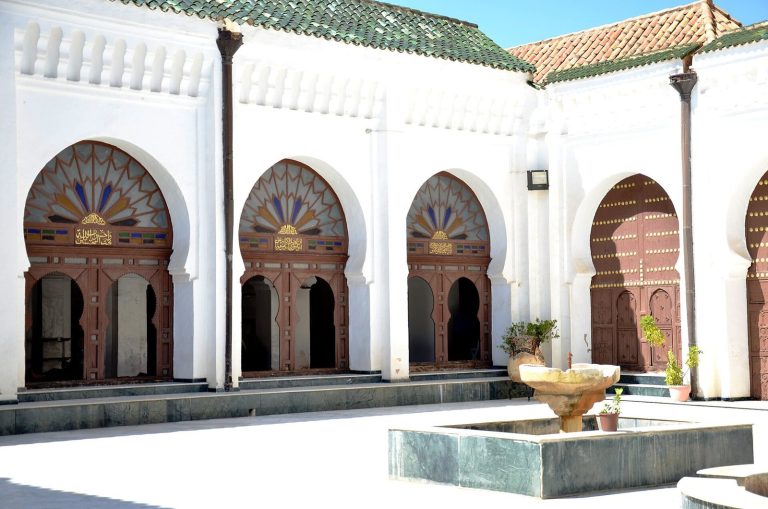
The mosque was altered several times during the Ottoman period. These interventions changed the original plan and destroyed its interior decoration. In 1840, during the French colonial period, the building was converted into a church, and its original roof was removed. Tlemcen and the building subsequently became a centre of Christianity.
The building was later looted and converted into a warehouse serving a military hospital. Following Algerian independence in 1962, it returned to its original function as a mosque and later became a museum. Algeria classified the mosque among its historical sites and monuments under heritage legislation enacted in 1967 and published in 1968.
Remains
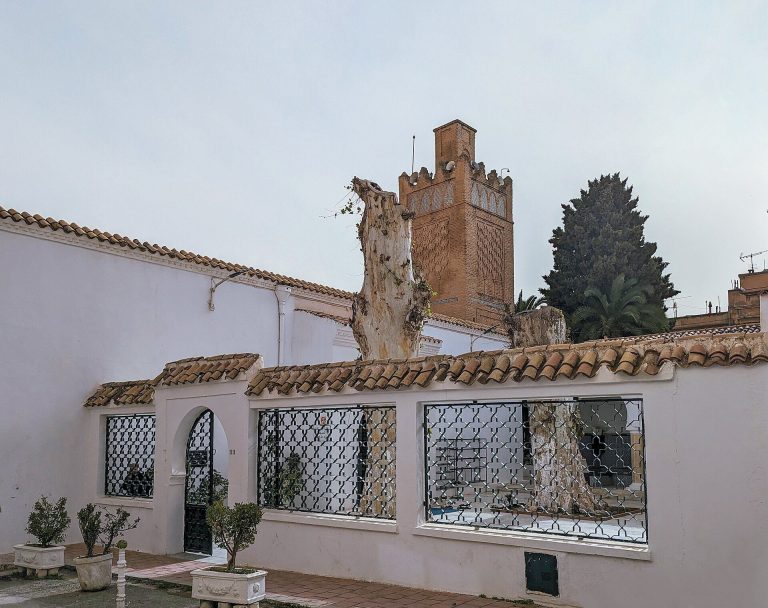
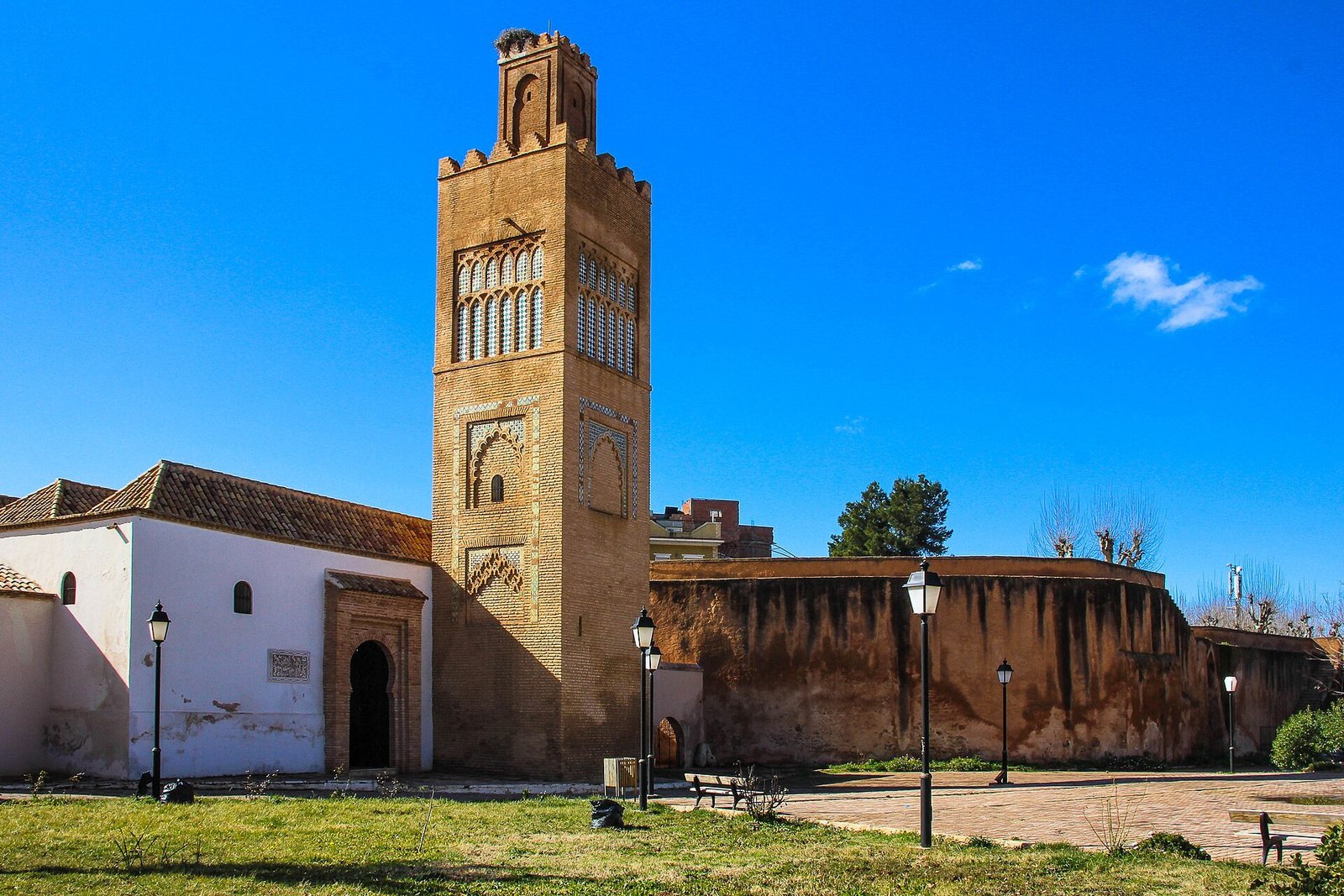
The surviving complex combines a stone, brick, and plaster-mortar mosque with a fortified enclosure. The mosque’s exterior decoration is concentrated in brickwork and ceramic plaques, while ceramic mosaic with lustred decoration appears inside. The minaret is the surviving element that retains the original form of the Zianid mosque, while the surrounding enclosure preserves the defensive setting of the palace and citadel.
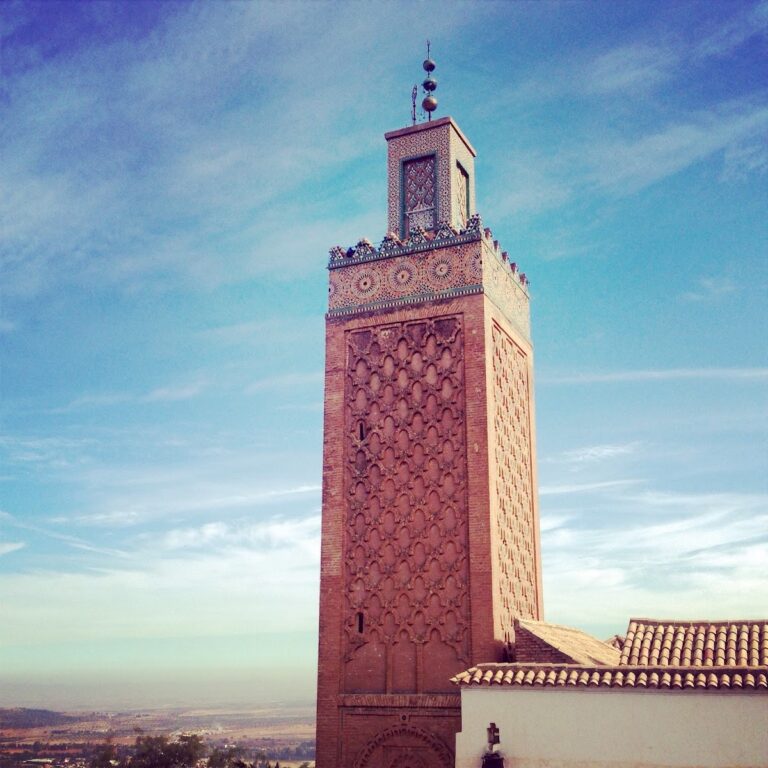
The original Zianid minaret
The minaret is a square or quadrangular tower with two levels, crowned by a lantern-like structure. Its four facades are decorated with brickwork and zellige, glazed ceramic tilework arranged in geometric patterns. On the lower section, a rectangular panel is surrounded by lustred zellige squares, whose metallic-looking surfaces frame an interlaced lobed arch and additional tilework at the corners.
The southern facade carries a six-lobed arch with a shaped border. Above it, a second panel contains lobed arches framed by lustred zellige squares. Each facade of the upper section has a rectangular frame with two superimposed arches formed by five large interlaced arches. Serrated crenellations crown the shaft, and the lantern includes a closed horseshoe arch.
Two inscriptions appear on the minaret. One gives the formula “Happiness and success.” The other is a prayer addressed to God as confidence, hope, and protector, ending with a request that its writer’s actions be sealed with good. The minaret’s style is associated with Hammadid and Almohad traditions, two medieval North African architectural influences. Its two-level arrangement differs from the three-level minarets of Kairouan and Sfax, while its decoration gives special prominence to inscriptions and lustred zellige.
The fortified enclosure
The surrounding citadel retains a square fortified enclosure with walls approximately five metres high. The walls were originally built in rammed earth and were later repaired in stone during the colonial period. A passage for soldiers runs along the top of the enclosure, preserving evidence of its defensive function.