San Tommaso Apostolo: Butera’s Mother Church in Sicily
Site at a Glance
- Rating
- 4.9
- Popularity
- Very Low
- Country
- Italy
- Primary era
- Medieval
- External website
- Open
- Eras represented
- Medieval, Early Modern, Modern
- Civilizations
- Italian, Kingdom of Sicily, Spanish
- Site type
- Religious
- Remains
- Church
On this page21 sections
History
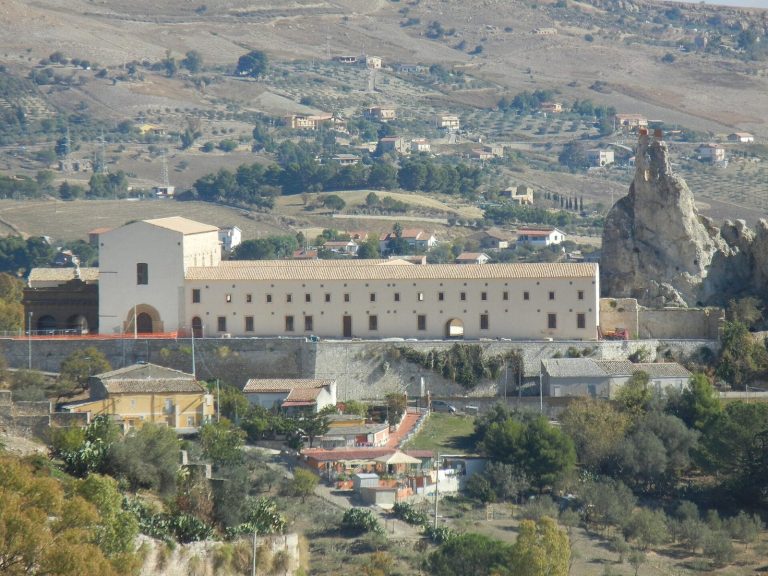
San Tommaso Apostolo is the Mother Church of Butera, Italy, begun in 1185 and completed in the sixteenth century. The title identifies it as the town’s principal parish church, and the building belongs to the Roman Catholic rite and the Diocese of Piazza Armerina. Its long construction history places the church within the religious and architectural development of Sicily from the late twelfth century into the early modern period.
Foundation and completion
Construction started at the end of the twelfth century and continued until the church was completed in the sixteenth century. Its consecration is also dated to the sixteenth century. The church became a parish in 1500, with Don Francesco Di Martino serving as its first parish priest.
Parish history and relics
A restoration undertaken by the faithful is dated to 1829, a year still shown beside the secondary entrance. The church was later thought to have been raised to the rank of minor basilica, partly because papal coats of arms appear inside and outside the building. The limited number of relevant decrees found in the parish archive, however, left San Tommaso Apostolo in its present status.
An inscription beside the sacristy records the arrival of relics associated with several saints. These include the heads of Saint Ursula and Saint Sophia, the arm of Saint Mauro, relics of Saint Callistus, and bones of Saint Anastasius.
Modern restoration and consecration
The church underwent restoration and liturgical adaptation in 2004. New fixed furnishings, including the altar, ambo, and baptismal font, were installed during the work. Bishop Michele Pennisi of the Diocese of Piazza Armerina consecrated the church on 14 May 2004, when Don Giulio Scuvera was parish priest.
Don Giulio Scuvera held the parish priesthood from 1 September 1984 until his death on 23 July 2011. Since 8 September 2011, the parish priest has been the Butera-born archpriest Don Filippo Ristagno.
Remains
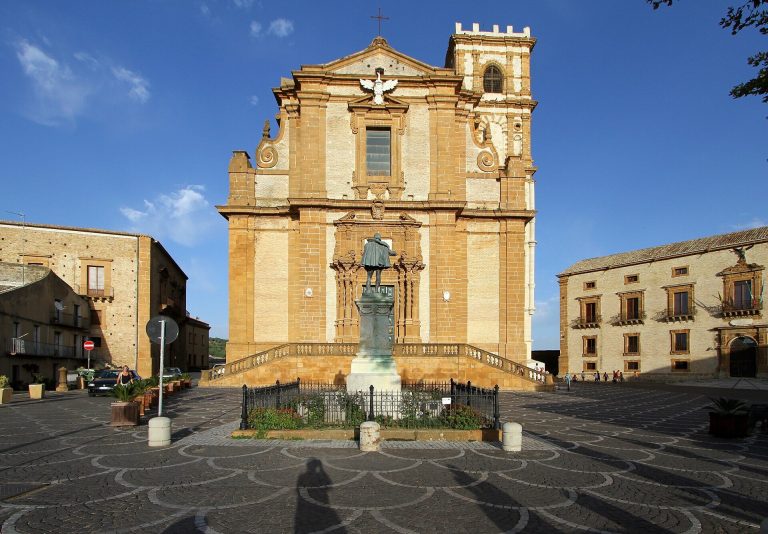
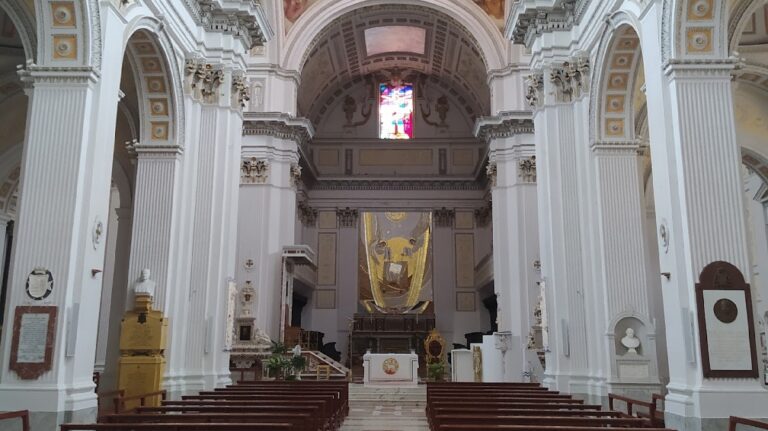
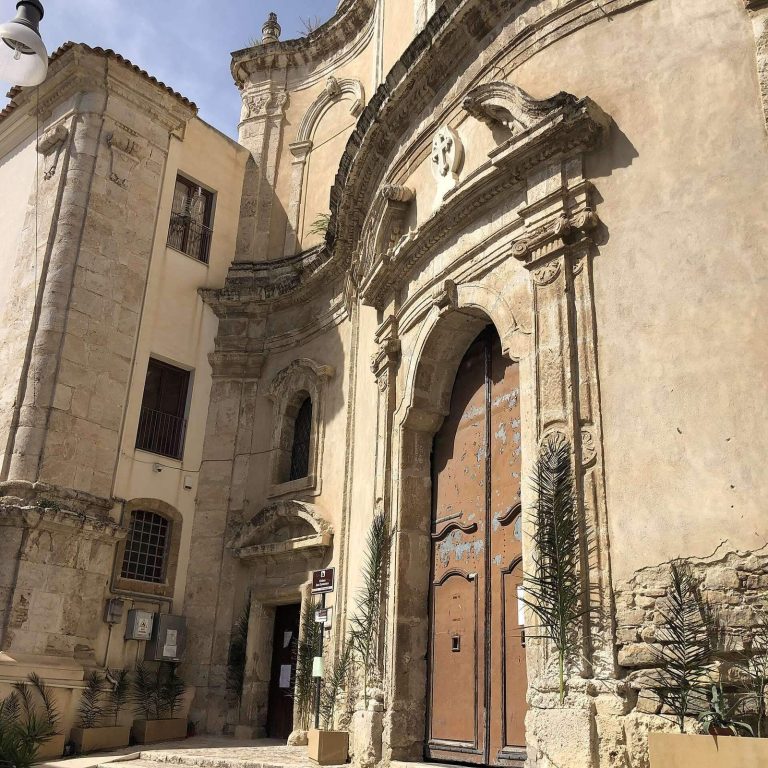
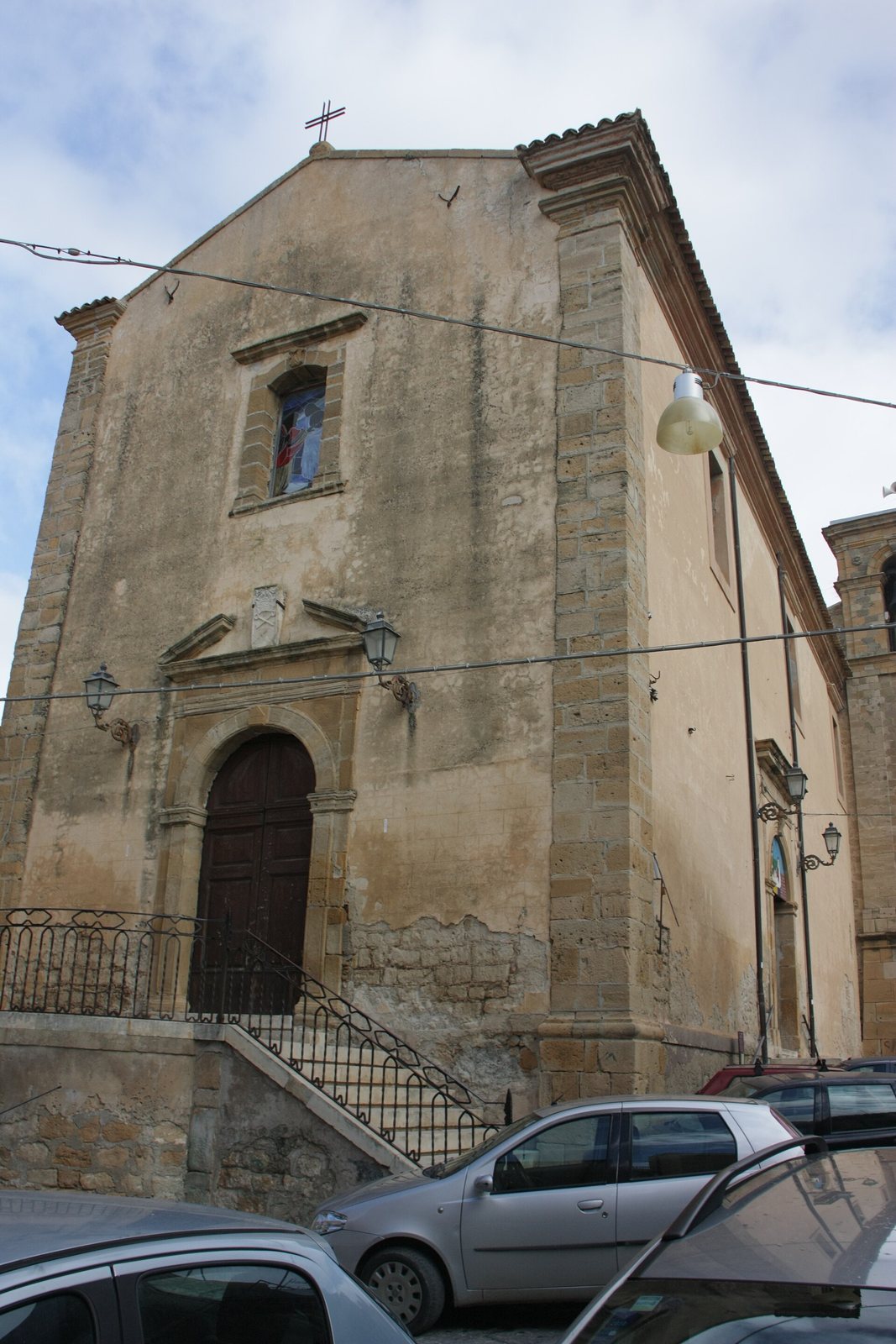
San Tommaso Apostolo stands in northern Butera as a compact stone-masonry building with a Latin-cross plan. Its long single nave is crossed by a shorter transept, while the nave and transept are covered by continuous semicircular barrel vaults. A broad dome rises over the crossing, the point where the nave and transept meet. Three entrances serve the building, with two on the central facade and another on the northeast side elevation.
Facade and entrances
Principal portal
The main entrance has a semicircular arch and a projecting half-capital at its center. A papal coat of arms surmounts the portal, which is approached by a double-flight staircase. The exterior’s compact mass and stone construction give the facade a strongly unified form.
Secondary entrance
The secondary entrance is reached by a rectangular staircase. The date 1829 beside it identifies the restoration carried out by the faithful in that year.
Interior structure and ornament
Nave and vault decoration
Inside, pilasters and balusters articulate the perimeter. Their composite capitals are painted white and blue. Beneath the vault, a spiral ornament runs along the frieze above lunettes decorated with candelabra motifs. The vault itself contains interlaced ornament between painted scenes, Rococo-style rosettes, and a lilac palmette frieze. The rosettes alternate with brackets bearing egg motifs, while related ornament continues across the frieze and the niches. The decoration applied to the upper surfaces within the vault niches forms an extrados treatment, meaning ornament on the outer or upper surface of a vault.
Crossing and high altar
The pilasters beside the high altar have composite capitals and also perform a structural role. The central altar decoration includes a pediment and a geison, a projecting cornice in the upper part of an architectural composition. Before the transept, a relief of the papal coat of arms occupies the center of the vault, framed by ribbons and cartouche ornament.
Transept niches
Niches on either side of the transept contain the Crucifix on the right and the Risen Christ on the left. They also hold statues of Our Lady of Sorrows, a title for Mary associated with her grief at Christ’s suffering and death, and Our Lady of the Resurrection. Decorative columns frame the niches.
Paintings and devotional furnishings
Painted decoration
Domenico Provenzano painted the scenes on the central nave vault, the transept, and the high altar. The subjects include Jesus and the Samaritan Woman, Isaac with Esau and Jacob, Eve’s expulsion from earthly paradise, God creating Adam and Eve, the Transfiguration of Christ, the Raising of Lazarus, the Sacrifice of Abraham, and Moses with the Ten Commandments. The curved triangular surfaces supporting the dome, called pendentives, contain the Four Evangelists.
The church also contains paintings from the seventeenth, eighteenth, and nineteenth centuries. The seventeenth-century high-altarpiece by Filippo Paladini depicts the Assumption of the Virgin. A fifteenth-century painted-panel triptych represents the Apostles Thomas and Peter together with Our Lady of Grace, while a fourteenth-century painted-panel triumphal cross shows the Crucified Christ overcoming sin and death.
Stucco, marble, and choir
Giovanni Maienza executed the stucco work. Marble ornaments the altars, and alabaster medallions beside the high altar depict the Sacrifice of Abraham, Melchizedek, and Joseph being sold by his brothers. A wooden choir with stalls accompanies the central altar on both sides. One stall bears the date 10 March 1954.
Organ and treasury
Historic organ
An eighteenth-century organ stands on the left side of the church.
Sacred objects and relics
The treasury contains cases, reliquaries, chalices, a censer, and monstrances. A reliquary is a container for relics, while a monstrance is a vessel used to display the consecrated Eucharistic host. Among the treasury’s historic objects are an eighteenth-century silver processional cross and a twelfth-century Limoges enamel cross, made within the medieval enamel tradition associated with Limoges.
Floor and liturgical furnishings
Floor restoration
The floor was restored in 2000. Earlier cement-grit tiles were replaced with white Carrara marble slabs that extend into the apse. Cement-grit balustrades regarded as having little artistic value were removed during the 1980s.
Altar and ambo
During the 2004 adaptation, the altar changed from a rectangular form to a quadrangular design extending toward the four cardinal directions. It is made of white Extra or Statuario Carrara marble and yellow Oriental marble. Its lower base forms a cross and also functions as a large white cube, while its four projecting corners represent a base reaching toward the summit.
The ambo uses the same white Carrara and yellow Oriental marbles. It rises nearly two metres from its base and evokes the empty tomb of Christ’s Resurrection. A bronze eagle supports the eagle-shaped lectern from which biblical readings and the Gospel are proclaimed.