Evliya Kasim Pasha Mosque: An Ottoman Mosque in Edirne


Site at a Glance
- Rating
- 5
- Popularity
- Very Low
- Country
- Turkey
- Primary era
- Medieval
- External website
- Open
- Eras represented
- Medieval
- Civilizations
- Ottoman
- Site type
- Religious
- Remains
- Mosque
On this page6 sections
History
Evliya Kasim Pasha Mosque is an Ottoman mosque in Edirne, Turkey, founded and built by Kasım Pasha in 1478–1479. It belongs to Sunni Islam and reflects the religious and architectural development of the Ottoman period. Kasım Pasha, also known as Evliya, meaning “saint,” served as a vizier under the sultans Murad II and Mehmed II.
Kasım Pasha and the Ottoman administration
Kasım Pasha held the office of beylerbey of the Ottoman Rumelia Eyalet, the empire’s administrative province covering much of its European territories. A beylerbey was a senior provincial governor who commanded an eyalet. Kasım Pasha also commanded Ottoman forces under Mehmed II and Bayezid II, both Ottoman sultans. The mosque’s adjoining hazire, a small cemetery attached to a religious institution, contains his tomb.
Flooding, abandonment, and preservation
The mosque’s position beside the Tundzha River repeatedly exposed it to flooding. It ceased to be used for worship or visits in 1950. An artificial levee later built to protect Edirne from floods separated the building from the city and further disrupted access.
During the 2010s, the governor of Edirne sought measures to prevent the mosque’s deterioration. Proposals to move the levee or relocate the mosque to a safer site were rejected by the responsible public authorities. After regional drainage works addressed the flooding problem, restoration began in late 2024, with completion expected by late 2026.
The upper part of the minaret was destroyed in the earthquake of 1908. This damage, together with the effects of flooding and prolonged disuse, forms part of the building’s modern history and explains the importance of the current restoration campaign.
Remains
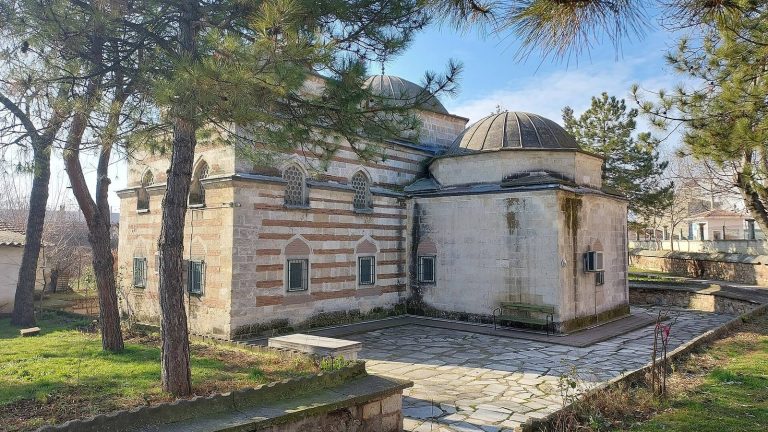
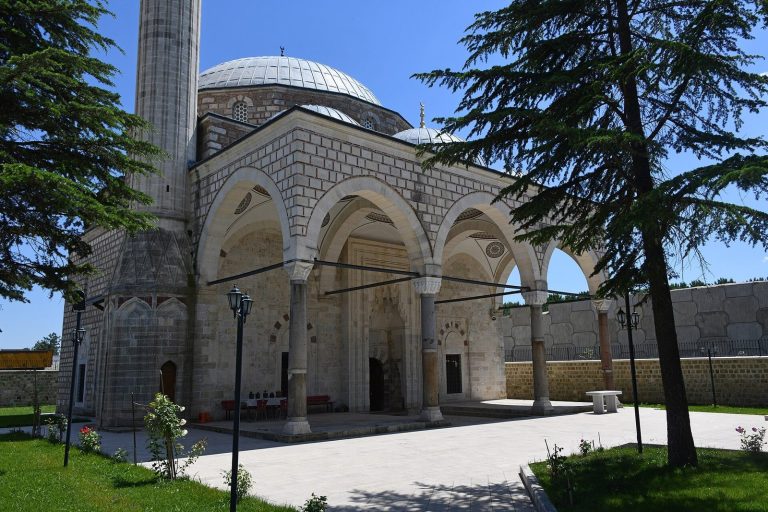
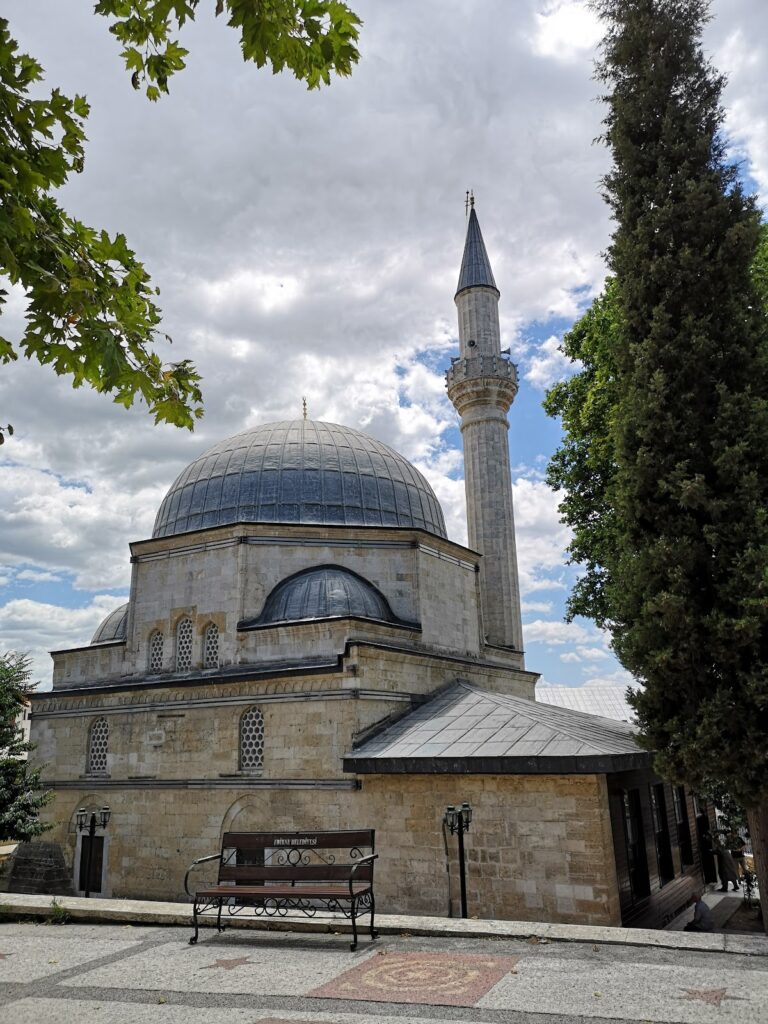
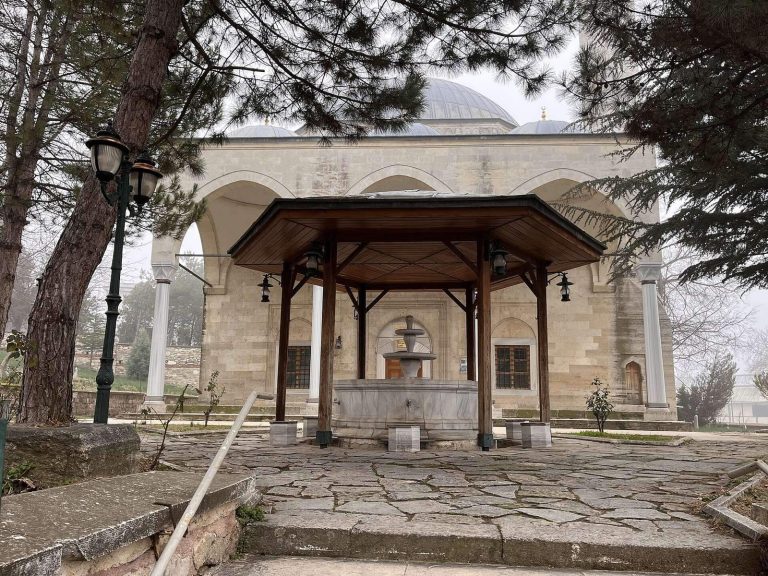
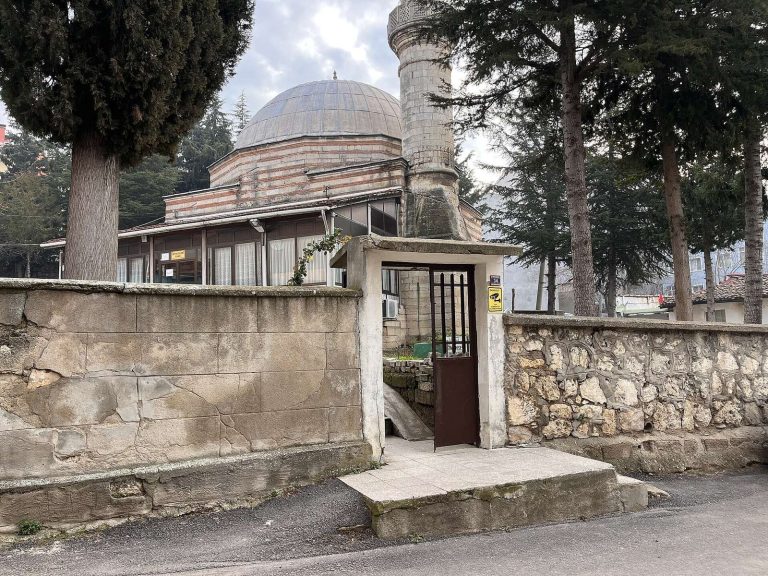
Evliya Kasim Pasha Mosque stands south of Edirne in the Kirişhane district, on the northern bank of the Tundzha River and within a green area. The building has a square plan, carefully dressed stone walls, one main dome, and a single minaret. Its entrance porch has not survived.
Structure and exterior details
The north-facing facade contains the principal entrance and an exterior mihrab, a niche on an outside wall indicating the direction of prayer. Two windows flank the mihrab, while a three-line Ottoman Turkish construction inscription appears above the entrance. Each of the other three facades has four windows arranged in two rows. The lower rectangular windows are set into niches topped by arched gables, each with a small carved five-pointed star, and the upper windows are arched. A sundial occupies the center of the west wall.
River access and adjoining cemetery
A stone staircase once connected the mosque with the river. Its 14 steps allowed people arriving by water to reach the building, but only two steps remain. The mosque’s adjoining hazire contains the tomb of Kasım Pasha, linking the surviving religious structure with the burial place of its founder.