Village church Hornow: Church of St Martin in Germany
Site at a Glance
- Rating
- 4.8
- Popularity
- Very Low
- Country
- Germany
- Primary era
- Medieval
- External website
- Open
- Eras represented
- Medieval, Early Modern, Modern
- Civilizations
- German, Holy Roman Empire, Kingdom of Prussia, Margraviate of Brandenburg
- Site type
- Religious
- Remains
- Church
On this page13 sections
History
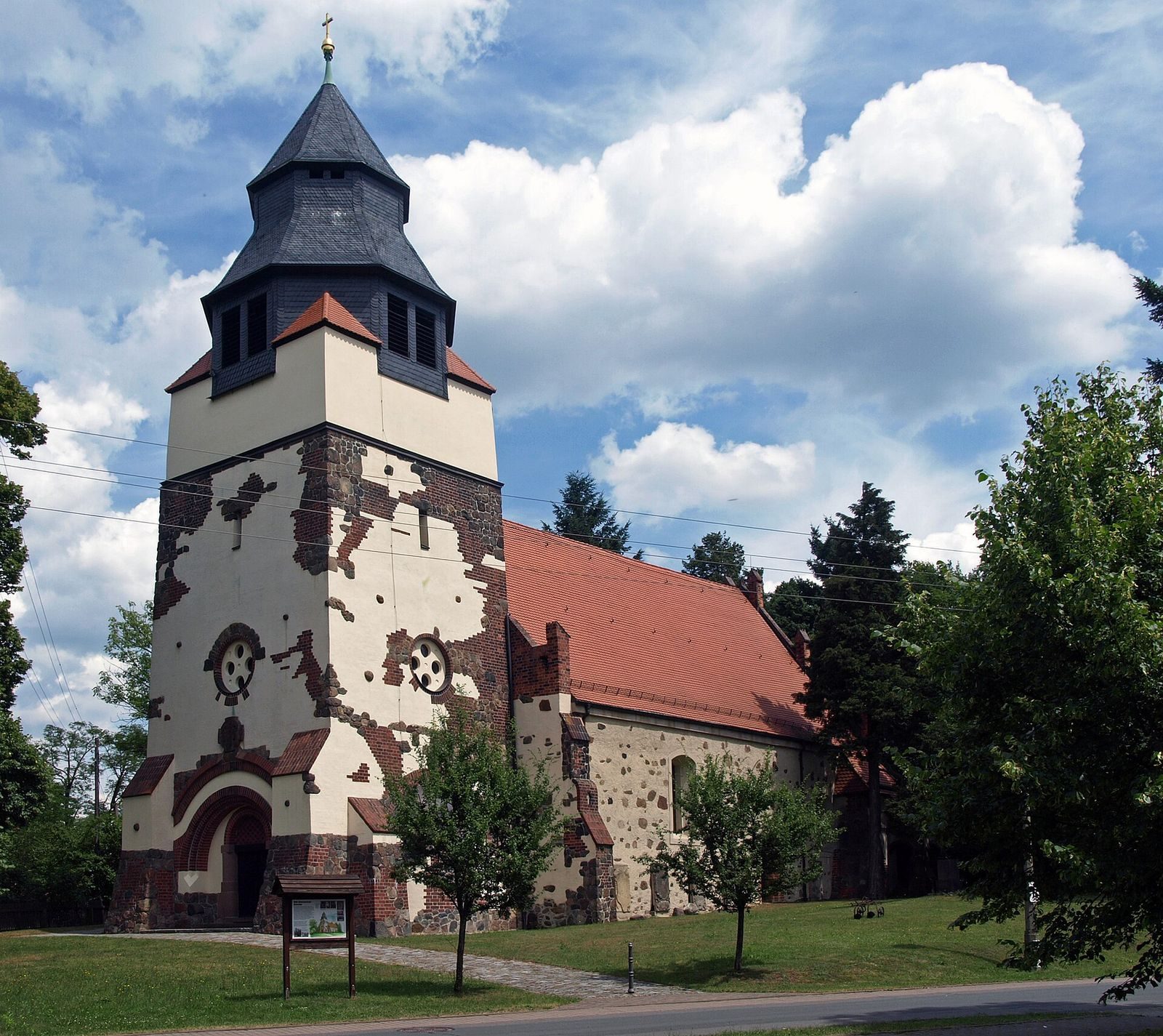
Village church Hornow is the Protestant Church of St Martin in Hornow, a district of Spremberg, Germany. The present church dates from the beginning of the fifteenth century, while an earlier church building at Hornow is mentioned in a copy of the Meissen diocese church register from 1495.
Medieval origins
The early fifteenth-century building established the church’s principal form as a place of worship for the local community. Its dedication is to Martin of Tours, a fourth-century Christian bishop who became one of the most widely venerated saints in Western Christianity.
Alterations and parish history
The church was renovated around the eighteenth century. During the mid-nineteenth century, its windows were enlarged with segmental arches, and the east gable was renewed. A rectangular tower was added to the building in 1902.
Village church Hornow belongs to the Spree-Malxe-Tal parish in the Cottbus church district, within the Protestant Church of Berlin-Brandenburg-Silesian Upper Lusatia. Before the Senftenberg-Spremberg church district was dissolved on 1 January 2020, the church belonged to that district. On 1 January 2024, the Hornow parish joined the parishes of Bohsdorf, Klein Loitz, Reuthen, and Wadelsdorf to form the Spree-Malxe-Tal overall parish. The church has legal protection as a monument.
Remains
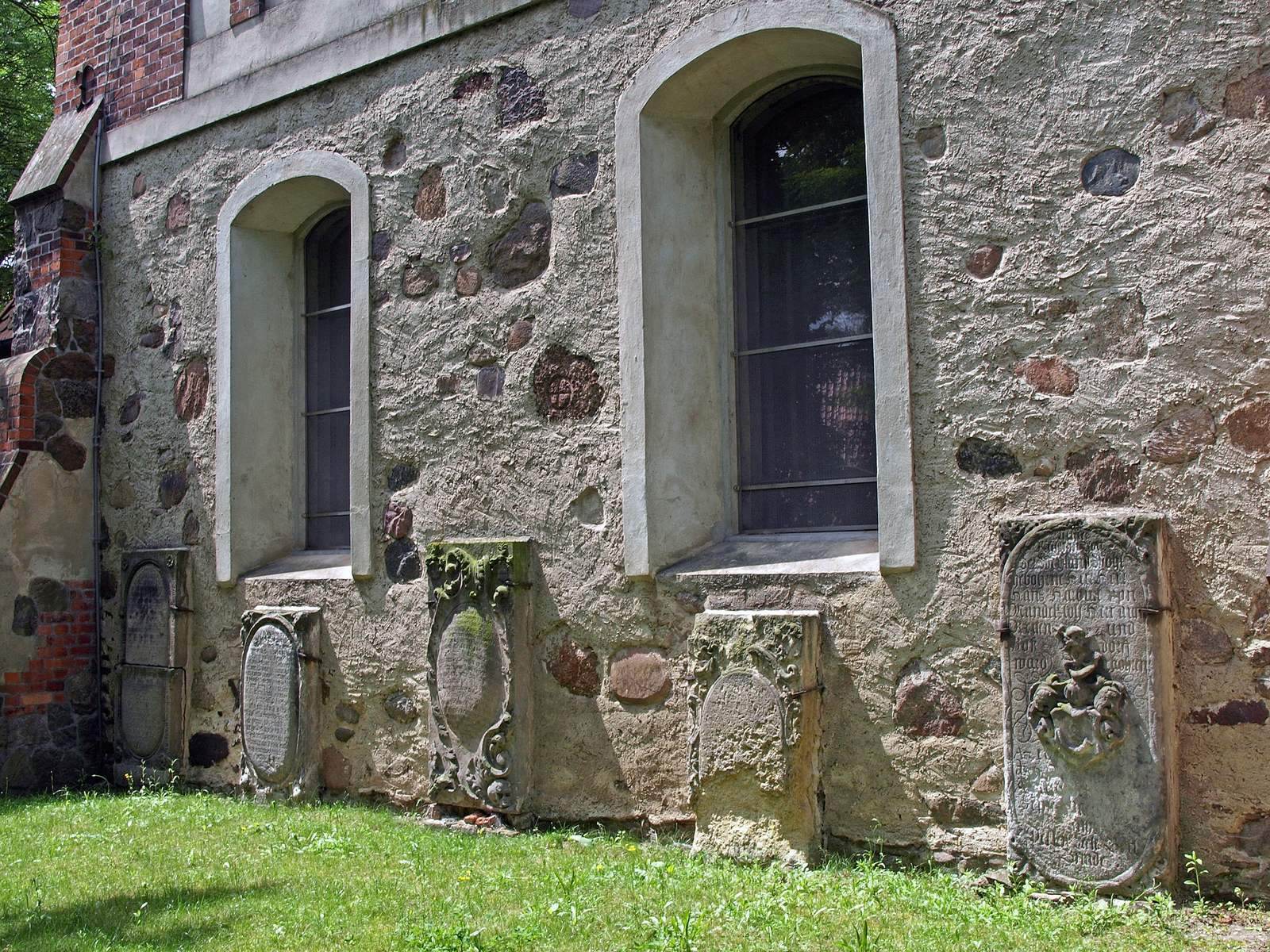
The church is a rectangular hall built from a mixture of fieldstone and brick masonry. Its rectangular tower stands alongside the main building, while a northern extension accommodates a sacristy and an elevated Baroque seigneurial gallery, an area reserved for a local lord, patron, or other high-status worshipper. Additional eighteenth-century seigneurial galleries are situated on the north and south sides of the church.
Altar and baptismal furnishings
Wooden altarpiece
The wooden altarpiece dates from 1581 and forms an architectural composition with strapwork decoration, a Renaissance and Baroque motif resembling interlaced strips, together with lateral columns. Three vertically arranged paintings show the Last Supper, the Crucifixion of Jesus, and the Resurrection. The side niches contain paintings of the Annunciation and the Nativity. Halved eagles form the altar cheeks, the side elements flanking the altar or altarpiece, and resemble those in the Church of the Cross at Spremberg.
Altar and baptismal features
The altar itself dates from 1588. A Baroque wooden baptismal font was transferred to the church from the demolished village church at Wolkenberg. The interior also contains a wooden baptismal angel from 1736, a carved angel designed to hold or present a baptismal bowl; it was reworked in 2007.
Organ and galleries
Organ
The organ was made in 1883 by Wilhelm Sauer, an organ builder from Frankfurt (Oder).
Seigneurial galleries
The eighteenth-century galleries on the northern and southern sides, together with the gallery in the northern extension, form the church’s elevated seating areas for local high-status worshippers. The northern extension also contains the sacristy.
War memorials
Entrance hall memorial
The entrance hall was arranged as a memorial to Hornow’s fallen inhabitants. It contains heraldic shields and banners bearing the names of fallen people from Hornow, Wadelsdorf, and Bohnsdorf. Plaques beside the altar commemorate those killed in the German-Danish War, the Austro-Prussian War, and the Franco-Prussian War.
Cemetery monument
A monument in the cemetery commemorates inhabitants of Hornow killed in the Second World War. Its inscription identifies the dead as victims of that war and states that men from throughout Germany found their final resting place there. The associated grave field contains one French and 86 German soldiers who died in the Hornow area between 13 and 18 April 1945.