Monastero di Sant’Anna: A Dominican Enclosed Women’s Monastery in Italy
Site at a Glance
- Rating
- 4.5
- Popularity
- Very Low
- Country
- Italy
- Primary era
- Medieval
- External website
- Open
- Eras represented
- Medieval, Early Modern
- Civilizations
- Kingdom of Naples, Spanish
- Site type
- Religious
- Remains
- Monastery
On this page7 sections
History
Monastero di Sant’Anna is a Dominican enclosed women’s monastery in Nocera Inferiore, Italy, whose complex originated in 1282 within a Gothic religious setting. Pietro of Nocera, bishop of Capaccio and a counsellor of Charles II, purchased a house and adjoining land where chapels dedicated to Saint James and Santa Maria delle Grazie already stood. Perna became the first prioress, the woman who headed the community of nuns.
Foundation and Angevin prosperity
The monastery was dedicated to Saint Anne and placed within the Dominican Order, a Catholic order associated with preaching and religious study. Its enclosed form of religious life kept the nuns within a restricted community and ordinarily limited their contact with the outside world. The monastery and Nocera prospered during the Angevin era, the period of Angevin dynastic rule in southern Italy that included Charles II and Joanna I of Naples. In the second half of the fourteenth century, two German nuns lived in the community. They were daughters of Bamberlenger, chamberlain to Queen Joanna I.
Fifteenth-century restoration and artistic development
By 1435, the convent had suffered damage. A papal bull issued by Pope Eugene IV, who held the papacy from 1431 to 1447, promised indulgences to people who contributed to its restoration. The fifteenth-century fresco cycle may have been created after this appeal. The monastery’s artistic heritage also includes a fourteenth-century Crucifixion, whose possible connection with the painter Roberto d’Oderisio is linked to the entry of a probable relative of the artist into the monastery during that century.
Baroque rebuilding and later additions
Deterioration and earthquake damage led to extensive restoration and alteration in 1685 and 1686. The adjacent basilica was remodeled at the nuns’ expense in 1685 and consecrated on 13 December 1691 by Domenico Maria Marchesi, a Dominican master of theology and bishop of Pozzuoli. The anniversary of the basilica’s dedication was permanently assigned to 20 October, and the consecration inscription promised an indulgence of 40 days to Christians who visited it annually on that date.
The monastery’s religious network expanded in 1792, when its dependency, the church of Sant’Anna a Fiano, was inaugurated. That church is now a parish church of Nocera Inferiore. The community’s later artistic connections include the Solimena family. Angelo Solimena’s Coronation of Sant’Anna dates to 1689, Francesco Solimena’s Madonna of the Rosary to 1728, and Orazio Solimena is credited with a 1772 Adoration of the Magi and an Annunciation. The works were also connected with the nuns: Francesco’s painting was donated by Abbot Ciccio to his nieces in the convent, while Orazio’s Adoration of the Magi was dedicated to his sister, who was a nun there.
Remains
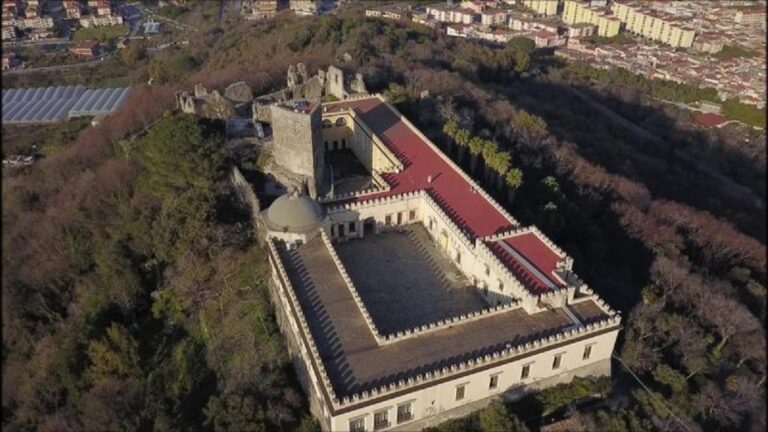
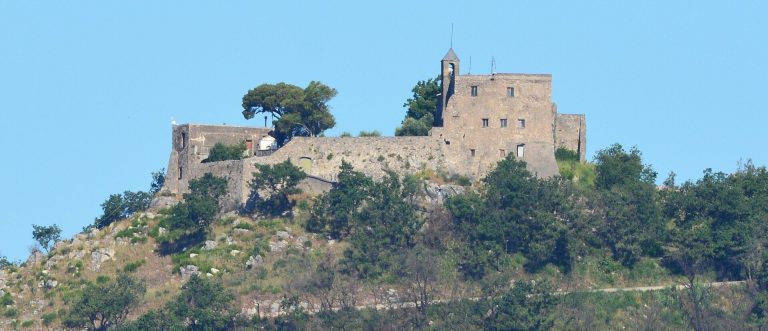
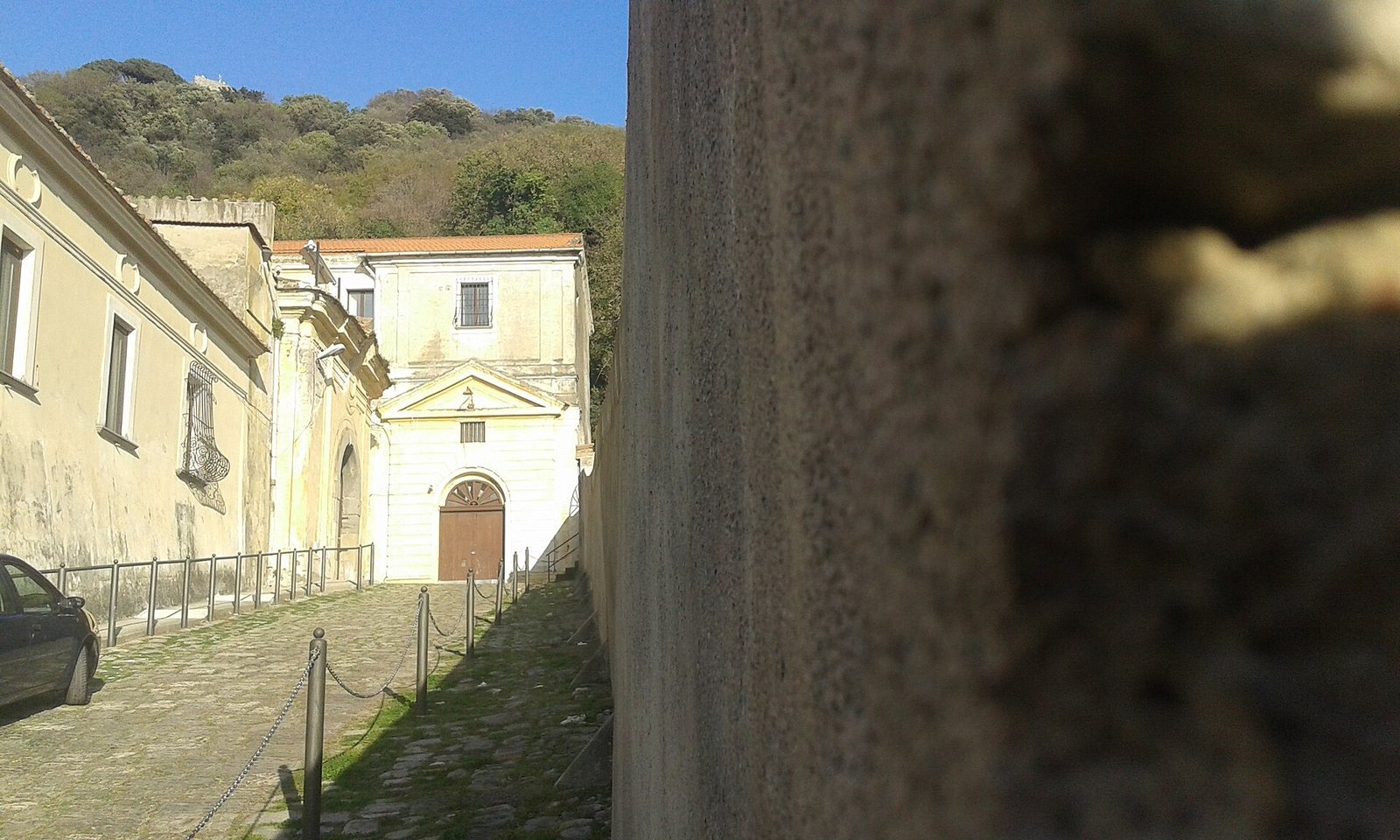
Monastero di Sant’Anna occupies the western side of Parco hill, where the complex was originally isolated from the urban center and attached to the hill’s western slope. A short uphill lane with ancient stone paving leads to the entrance, whose doorway is on the left. High walls enclose the gardens and buildings of the large ecclesiastical complex. Their scale reflects the long sequence of changes made to the monastery. The small church retains traces of its original Gothic construction in the entrance courtyard, sections of the monastery, and the church portal, although the 1685 to 1686 remodeling covered and reshaped its Gothic volutes in the Baroque manner.
Medieval and Renaissance remains
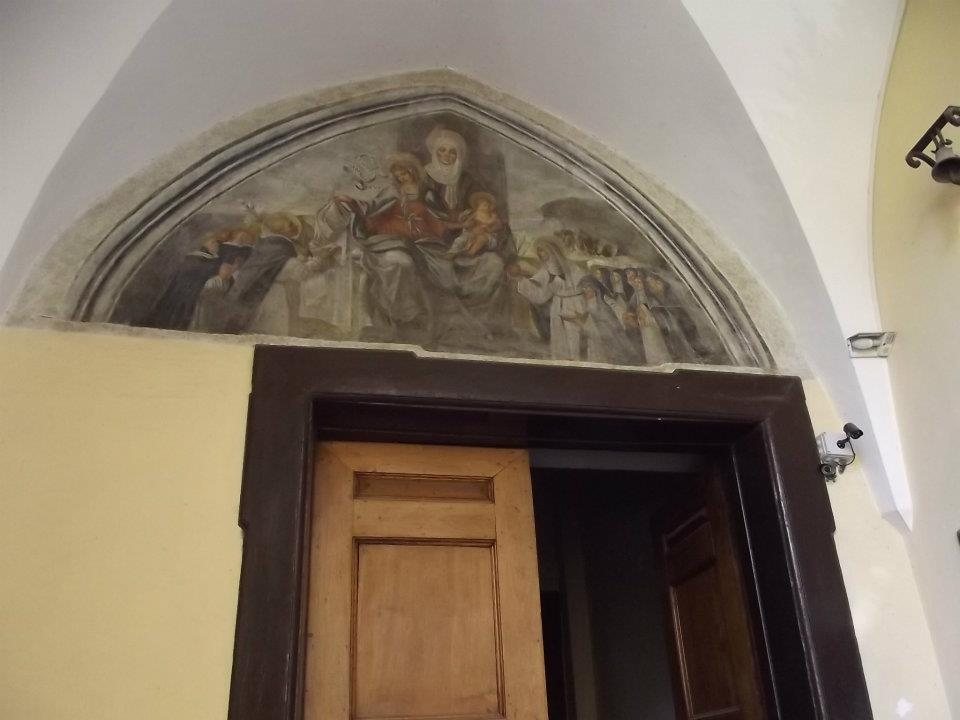
A fourteenth-century Crucifixion is preserved in the wheel room, the enclosed convent space where a rotating service window allowed objects to pass between the nuns and the outside without direct contact. Its attribution to Roberto d’Oderisio remains possible rather than certain. In the small room to the right of the basilica, a fourteenth-century Annunciation survives within the remains of a funerary monument bearing the arms of the Capograssi family. A fifteenth-century fresco cycle occupies a small room beside the church. Painted in fresco, a technique using pigment on fresh plaster, it includes a Crucifixion, scenes of Saint James and the miracle of the hanged man, a Madonna and Child surrounded by saints, and a Sant’Anna Metterza, an image of Saint Anne with Mary and the Christ child. A nun discovered the paintings accidentally. On the exterior of the church, a lunette, a semicircular painted area, is attributed to Andrea Sabatini and dates from the early sixteenth century.
Seventeenth- and eighteenth-century paintings
The church preserves the 1660 Miracle of the Painting of Saint Dominic in Soriano, probably painted by Chiara Villani, likely a fellow nun. Its signature translates as “Sister Chiara Villani made this, 1660.” The Baroque paintings associated with the Solimena family remain part of the church’s interior. Angelo Solimena’s 1689 Coronation of Sant’Anna occupies the high altar, the principal altar of the church. Francesco Solimena’s 1728 Madonna of the Rosary carries a dedication to the monastery’s nuns, while Orazio Solimena’s attributed works include the 1772 Adoration of the Magi and an Annunciation.