Süleymaniye Mosque, Edirne: An Ottoman Mosque Built in 1548
Site at a Glance
- Rating
- 4.9
- Popularity
- Very Low
- Country
- Turkey
- Primary era
- Early Modern
- Eras represented
- Early Modern, Modern
- Civilizations
- Ottoman
- Site type
- Religious
- Remains
- Mosque
On this page9 sections
History
Süleymaniye Mosque in Edirne, Türkiye, is an Ottoman mosque commissioned and built in 1548 by Süleyman Paşa, a vizier, or senior Ottoman government official, during the reign of Sultan Suleyman the Magnificent. Also called Süleyman Paşa Mosque or Süleymaniye Camii, it remains an active place of Islamic worship and represents Ottoman architecture in central Edirne.
Earthquake damage and rebuilding
An earthquake damaged the mosque in 1751. Its waqf, a charitable religious endowment whose revenues could support a mosque, rebuilt the building three years later. The upper part of the minaret, above the şerefe, or balcony, had later become distorted. It was demolished and reconstructed in 1862.
War, flooding, and later restoration
The mosque suffered severe damage in 1877 during the Russian occupation and from flooding caused by overflowing rivers. Repairs were carried out with assistance from Sultan Abdul Hamid II by a commission led by the provincial treasurer Mehmet Efendi. The building reopened for worship in 1899.
Further flood damage eventually forced another closure. Restoration began in 2011, and the mosque reopened in 2019 after an eight-year campaign. During the work, an unexploded mortar round and an artillery shell were found approximately half a metre below ground level. These objects probably dated from the Balkan Wars. After restoration, the mosque was in good condition and continued to serve worshippers.
Remains
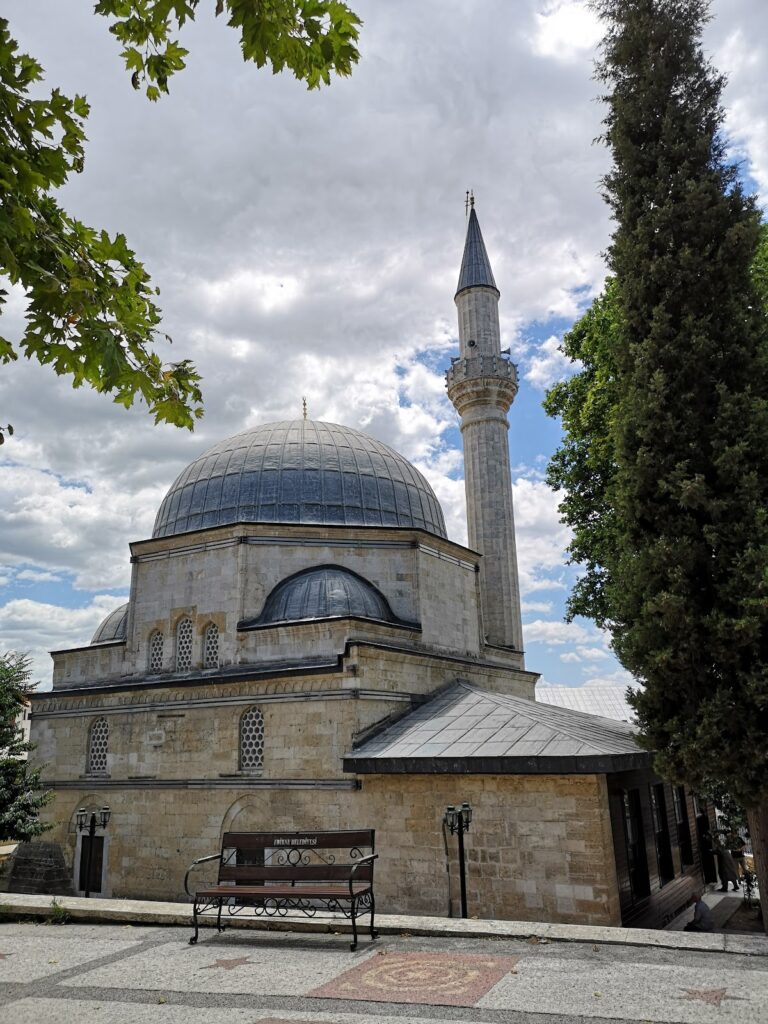
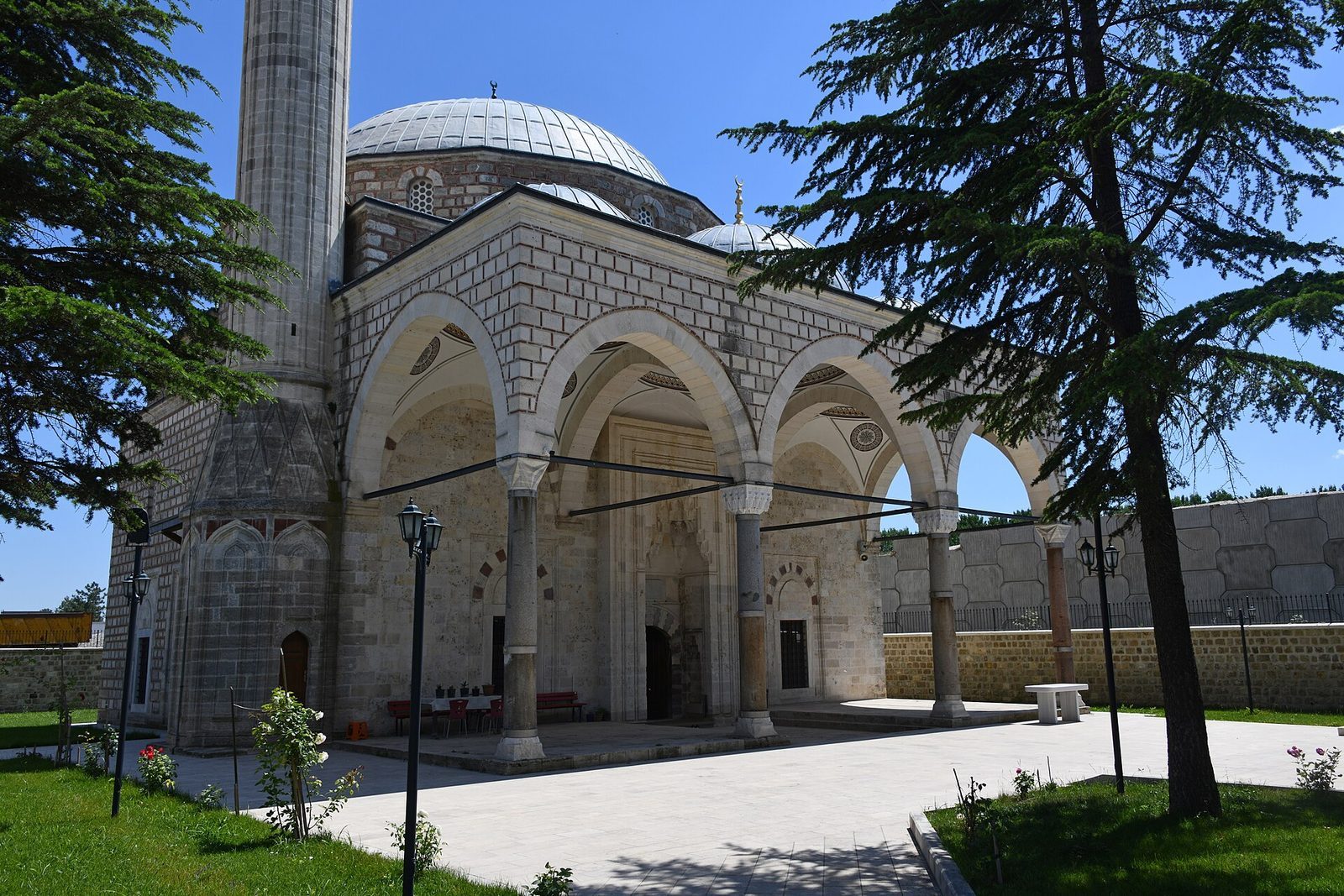
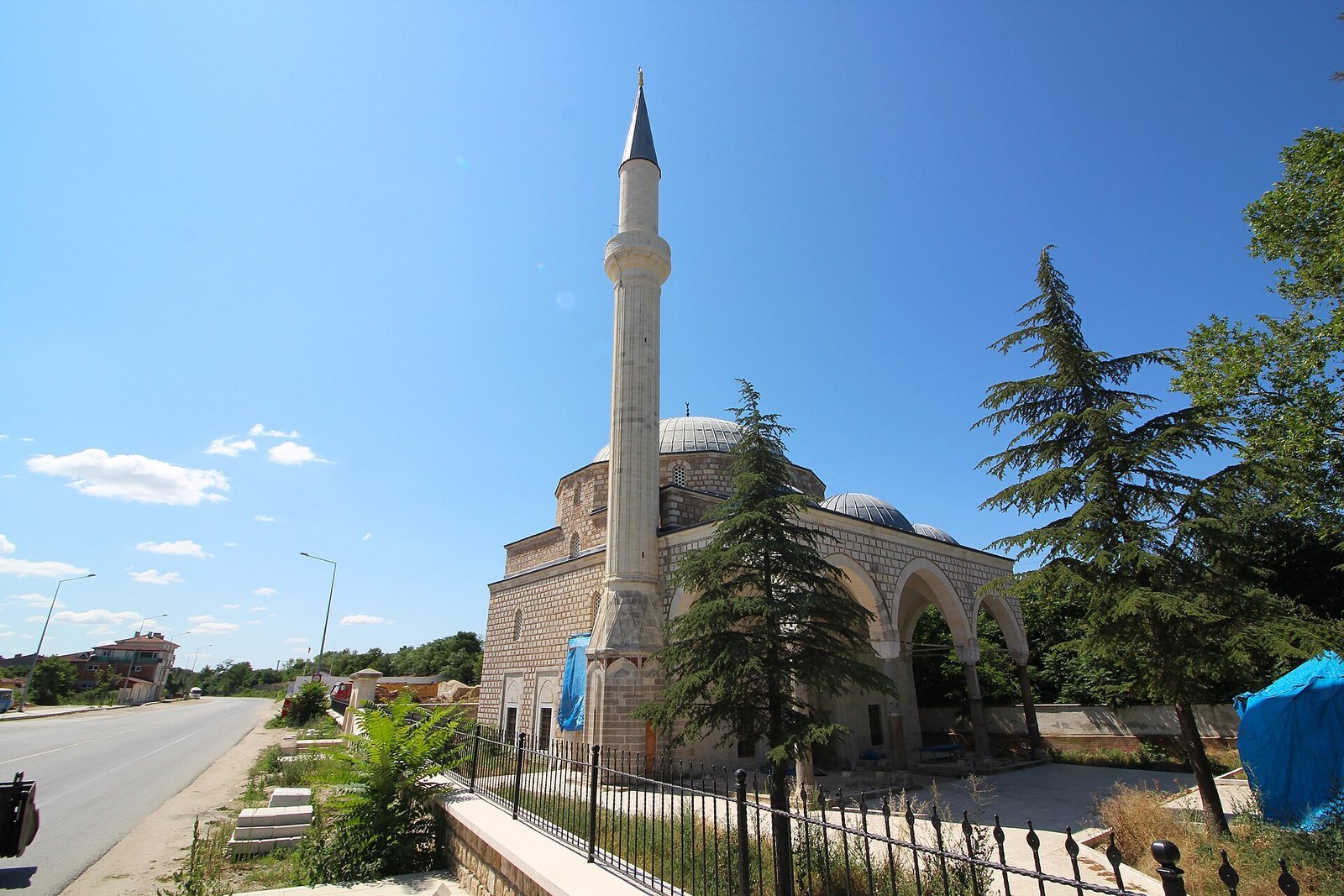
Built on level ground, Süleymaniye Mosque has a square plan organized around a prayer space and a northern entrance portico. Its principal Ottoman features include a single minaret, a domed portico, a sixteen-sided drum with round-arched windows, and a prayer niche and pulpit in marble.
Prayer hall and interior features
Prayer space
The mosque’s sixteen-sided drum contains eight round-arched windows. At the prayer end, the mihrab, the niche indicating the direction of Mecca, has an upper section shaped like an oyster shell. A plain marble minbar, the raised pulpit used for the Friday sermon, stands to its right.
Portico and minaret
Last-prayer portico
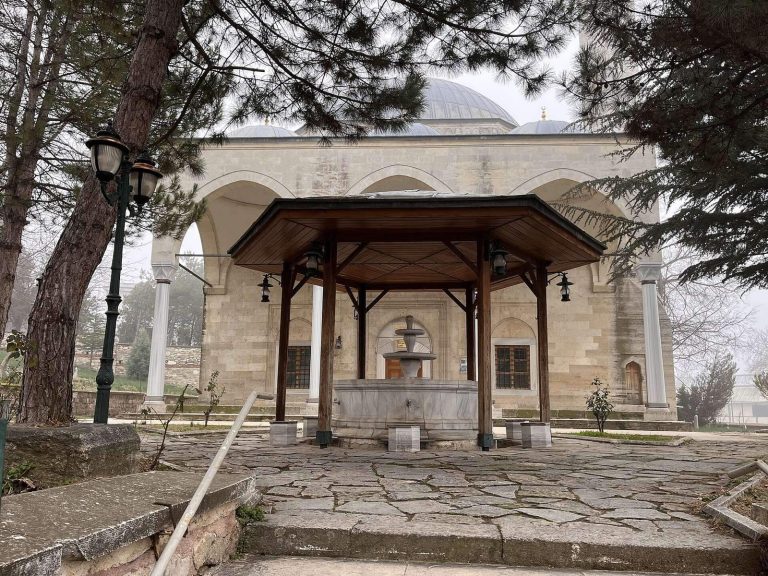
The last-prayer portico rests on four columns and is crowned by three domes. It forms the mosque’s covered outer entrance space and belongs to the building’s surviving Ottoman architectural composition.
Single minaret
A single minaret rises at the mosque’s northern corner. Its upper section above the balcony was rebuilt in 1862 after the earlier portion became distorted.