Saint Peter’s Church: A Romanesque Parish Church in Retignano, Italy
Site at a Glance
- Rating
- 4.4
- Popularity
- Very Low
- Country
- Italy
- Primary era
- Medieval
- External website
- Open
- Eras represented
- Medieval, Early Modern, Modern
- Civilizations
- Grand Duchy of Tuscany, Italian, Republic of Lucca
- Site type
- Religious
- Remains
- Church
On this page9 sections
History
Early church and parish foundation
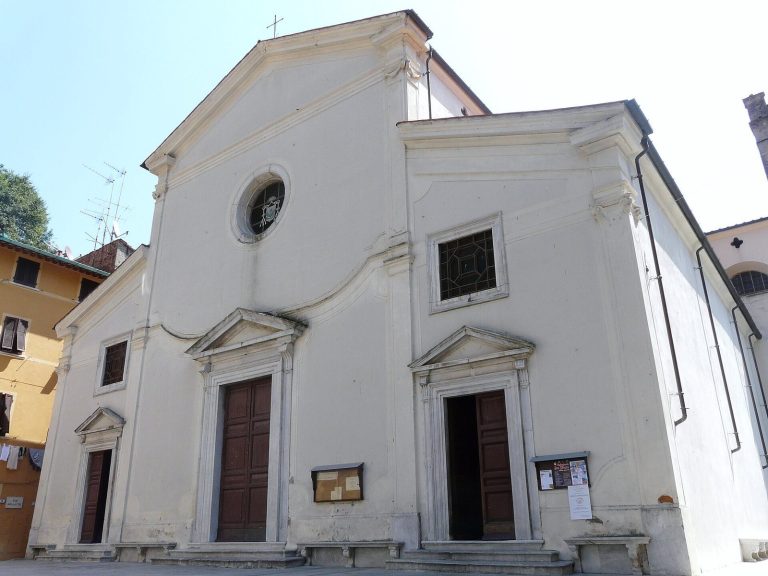
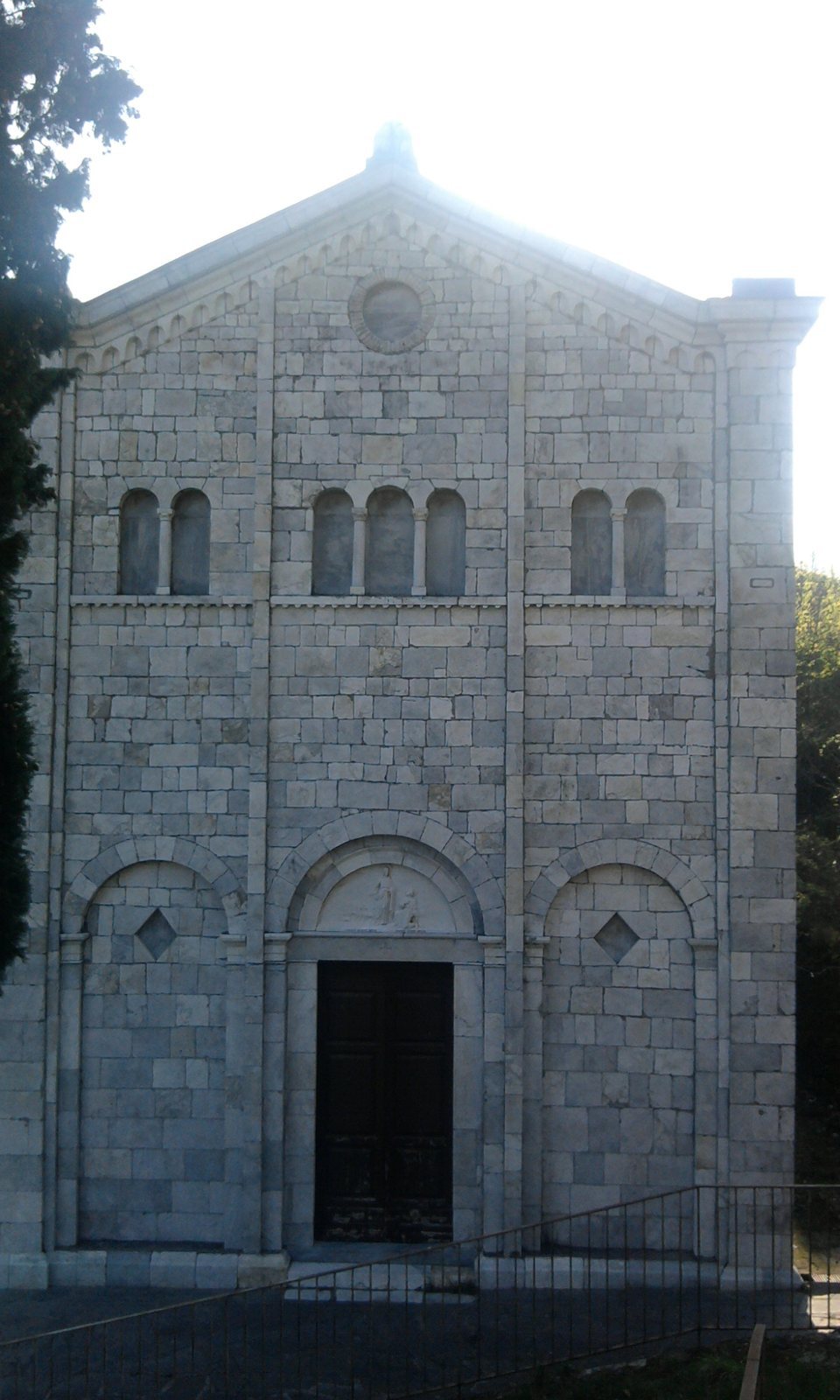
Saint Peter’s Church is a Catholic church in Retignano, Italy, within the municipality of Stazzema and the Archdiocese of Pisa. Dedicated to Saint Peter, traditionally regarded as one of Jesus’s apostles and the first bishop of Rome, it has a Romanesque character and was founded before or during the eighth century. The original building was small and faced the valley. During the thirteenth century it was enlarged and turned toward the west, and it became a parish church in the fourteenth century. A parish is a local Catholic community served by clergy.
The church’s administration changed in the late eighteenth century. By a decision dated 18 July 1789, Pope Pius VI transferred it from the Diocese of Lucca to the Diocese of Pisa. This affiliation continues within the Catholic Church’s territorial structure, with an archdiocese serving as a major jurisdiction headed by an archbishop.
Renaissance and early modern alterations
Between 1525 and 1530, the rear of the church was extended with a circular apse, the rounded termination behind the altar, and single-light windows. A single-light window has one vertical opening. The roof was damaged in 1581, after which the roof, floor, rectory, and parish priests’ tomb were repaired or restored. Work on the tomb was completed in 1588. The attached bell tower was built between 1599 and 1616, while later seventeenth-century work placed two tabernacles in the side altars. A tabernacle is a structure used to house consecrated Eucharistic elements.
Nineteenth- and twentieth-century changes
Shortly before Italian unification in 1861, the church underwent substantial modernization. The work removed the last important historic elements of the side facades. A design by the architect Andreotti of Pietrasanta was not carried out because funds were insufficient. The sacristy was restored in 1902, and marble stairways were added during the 1950s. Some registers were also moved to the upper floor.
A liturgical organ made by Ferdinando Serassi of Bergamo was installed above the main entrance on 5 October 1890. The Serassi family were prominent Italian organ builders. The instrument cost 3,700 lire, was tested by Enrico Barsanti, a professor at the University of Pisa, and was probably older than its installation date. A polychrome-marble choir gallery was built to accommodate it.
Recent damage and changing interpretation
At the beginning of the third millennium, bad weather damaged the single-light windows and the interior walls. Old drawings were later found for a proposed restoration and raising of the church. The abandoned design envisaged a row of columns along the new upper level, intended to draw attention away from the old Romanesque windows, which had already been blocked. The village also experienced several thefts in the early twenty-first century, including the church’s 1734 Annunciation painting in 2009.
Remains
Church structure and surviving medieval elements
Standing at approximately 436 metres above sea level, the church retains a Romanesque architectural character despite later rebuilding. The original fabric is represented by a blocked side entrance, the original door, and blocked single- and double-light windows. A double-light window has two openings separated by a central column or mullion. The building now has three symbolic naves associated with the late nineteenth-century modernization. At the rear, the circular apse added between 1525 and 1530 remains with its single-light windows, some of which were later blocked and whose surviving historic openings were damaged by bad weather in the early third millennium. The facade has a rose window dated approximately to 1562 or 1563.
Altars, fonts, and sacred furnishings
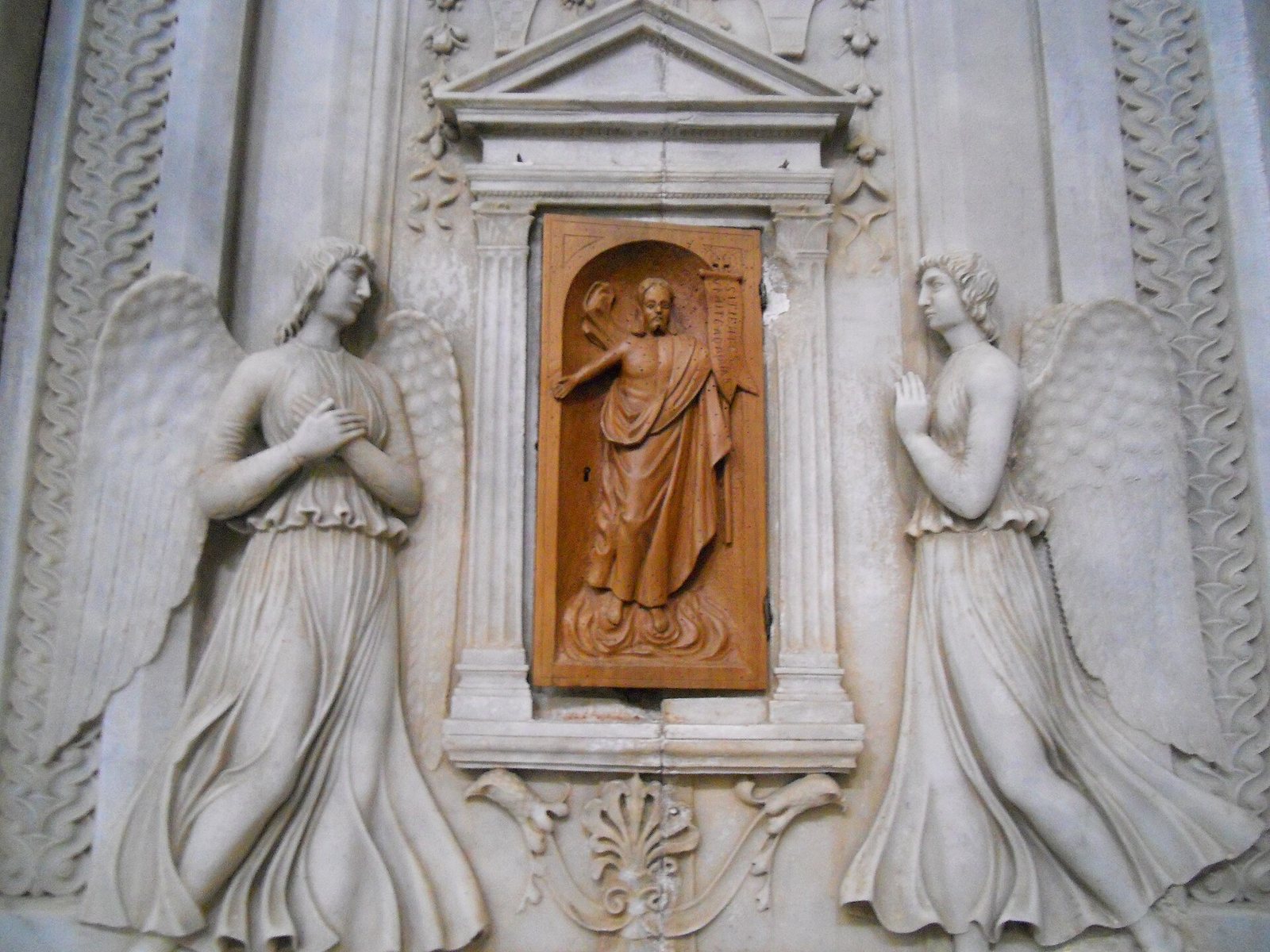
Two late-fifteenth-century marble altar back panels survive inside the church. One, dated 1486, is attributed to Lorenzo Stagi or artists of his generation. Stagi was a Renaissance sculptor and architect from Pietrasanta whose workshop circle produced regional marble works. An inscription records the panel’s restoration in 1640. The second retains an early-sixteenth-century arrangement with candelabra and grotesque motifs on its pilasters and architrave, while its central niche contains a 1734 marble Glory of Angels altarpiece. Latin plaques beneath both altars record restoration in 1680 by Prior Agostino Pancetti and Giovanni Battista de’ Tognini.
The two tabernacles now placed in the side altars were designed and made in 1480 by Lorenzo Stagi and his pupils, who completed the work toward the end of the century. The year 1486 is engraved on the altar. A sixteenth-century chalice-shaped holy-water font is attributed to the Stagi school of Pietrasanta. The church also preserves a processional cross made entirely of silver, dating from approximately a century earlier. Its baptistery was made by Vincenzo Tedeschi of Seravezza, and its baptismal font by Giovanni Sarzanese. Both, like the facade rose window, date from approximately 1562 or 1563.
The 1734 Annunciation by Tommasi was formerly positioned above the right-hand tabernacle. On 16 August 1964, Antonio Angioni, auxiliary bishop of Pisa, crowned it with a gold crown in connection with deliverance from wartime danger. The painting had been especially revered during the two world wars before it was stolen in 2009. The sacristy preserves marriage, death, and baptismal registers, some dating from the late fifteenth century.
Bell tower
The bell tower is 15.22 metres high and measures 4.86 metres on each side. Its walls combine white marble blocks with internal stone rubble. Its relatively modest height was attributed to insufficient funds at the beginning of construction. At approximately 6 to 7 metres above the ground, four double-light openings are supported by central white-marble columns. The column on the side adjoining the church is missing. Two bells date from 1510 and 1570 to 1571, although both were consecrated in 1843. A third bell was added and blessed on 26 November 1961 by Ugo Camozzo, Archbishop of Pisa. In 1964, Camozzo inaugurated the electrical control panel that synchronizes the bells.