San Bernardino: A Baroque Church in Sinalunga, Italy
Site at a Glance
- Rating
- 4.5
- Popularity
- Very Low
- Country
- Italy
- Primary era
- Early Modern
- External website
- Open
- Eras represented
- Medieval, Early Modern, Modern
- Civilizations
- Grand Duchy of Tuscany, Republic of Siena
- Site type
- Religious
- Remains
- Church
On this page11 sections
History
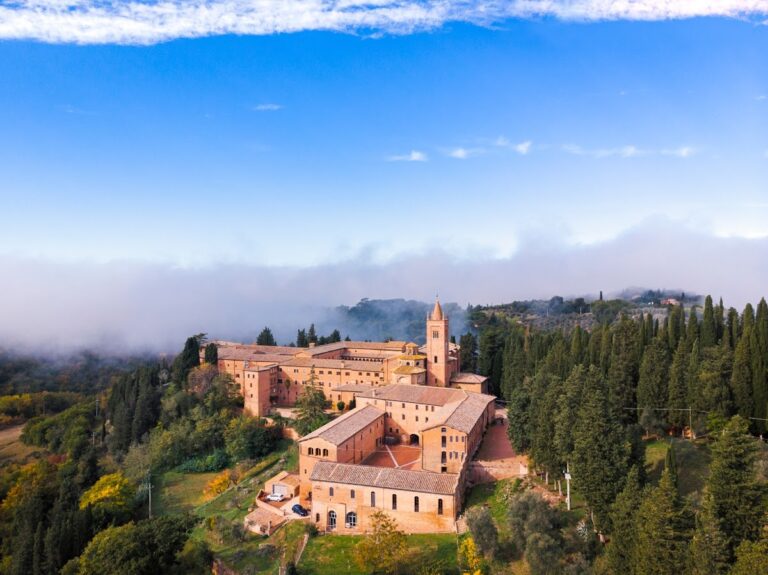
San Bernardino is a Roman Catholic church in Italy, located outside Sinalunga in the Poggio Baldino area. Mariano Sozzini, a Sienese jurist, commissioned the church and its adjoining convent in 1449, dedicating them to the Annunciation. The complex stands at approximately 400 metres above sea level and is affiliated with the Order of Friars Minor, the Franciscan religious order founded by Saint Francis of Assisi.
Foundation and Marian devotion
Around 1460, Blessed Pietro Fratangioli of Trequanda lived in the convent and donated the Madonna of the Refuge, an icon attributed to the Sienese painter Sano di Pietro. The Orlandini family later commissioned a chapel for the icon in 1532. The church was eventually rededicated to Saint Bernardino of Siena, a fifteenth-century Franciscan preacher and reformer whose preaching promoted devotion to the name of Jesus.
Baroque transformation and later restoration
During the eighteenth century, the church underwent a radical Baroque restoration. This work gave the interior its elaborate stucco decoration and reshaped the appearance of the earlier foundation. Further interventions in the nineteenth and twentieth centuries included the rebuilding of the Orlandini Chapel in Neo-Renaissance style and the construction of a new bell tower.
Remains
San Bernardino combines a stone facade and portico with a Baroque interior arranged around a single nave, side chapels, and a raised presbytery. Renaissance and later features remain together within the building, including the chapel dedicated to the Madonna of the Refuge and a group of fifteenth-century Sienese paintings.
Facade and main interior
Portico and facade
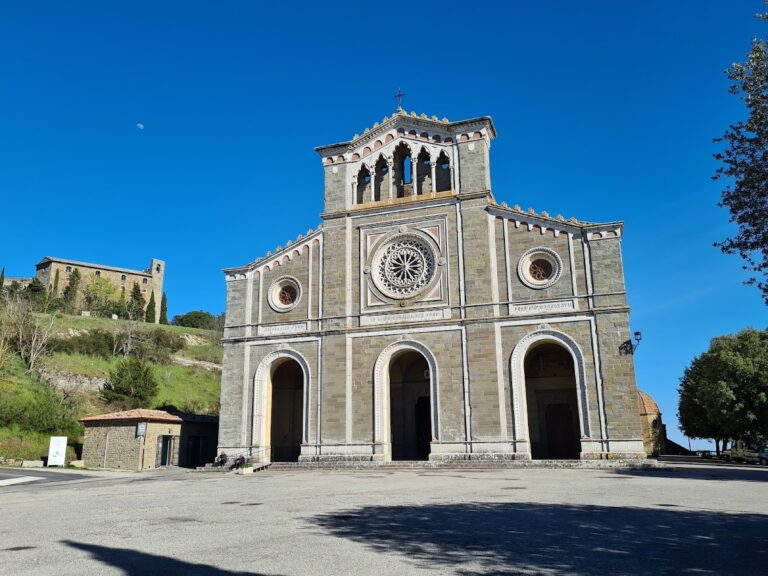
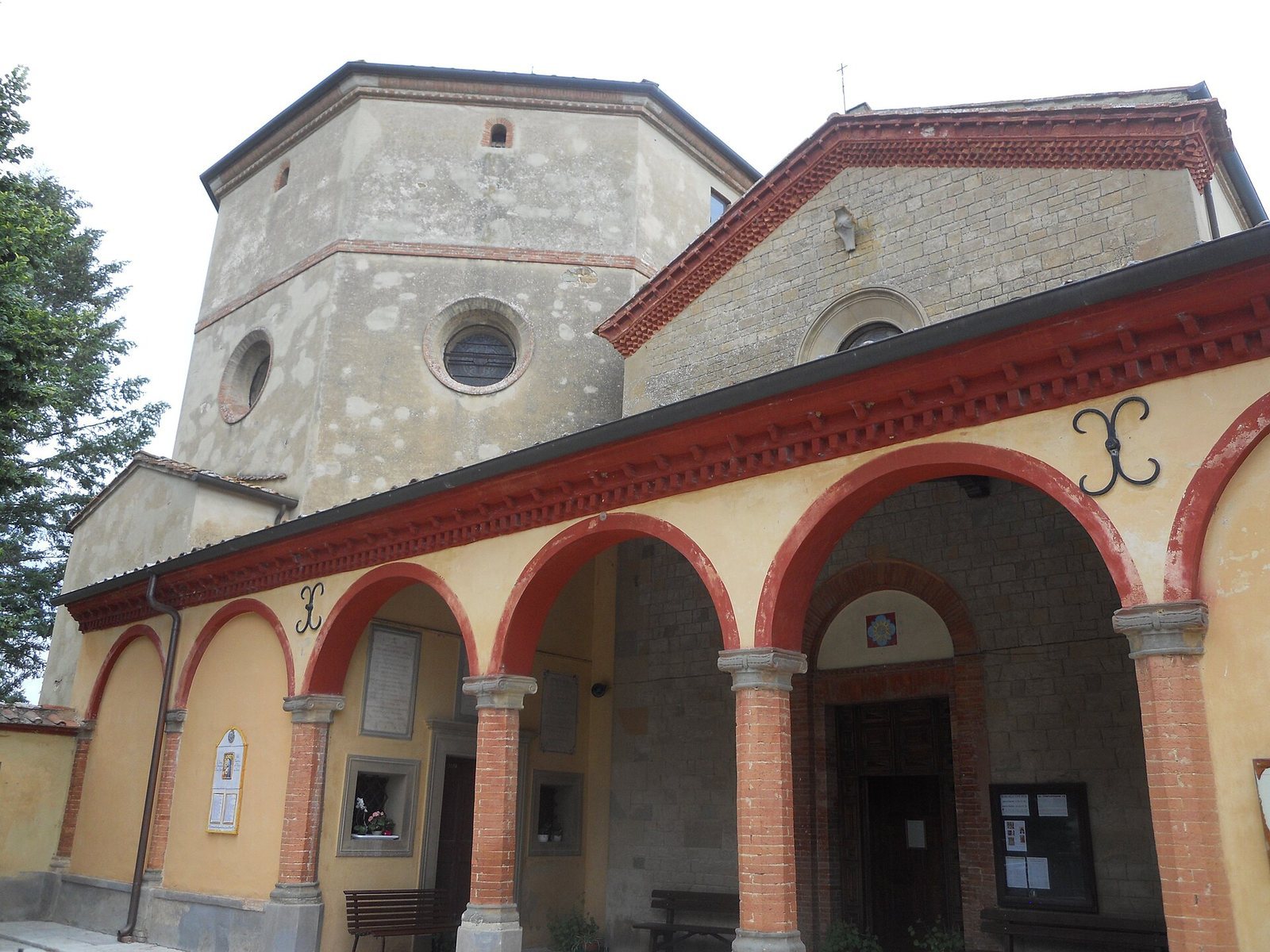
The stone facade is preceded by a portico with three round-headed arches. Two blind arches stand on each side. The arches rest on octagonal brick piers with Ionic capitals carved from pietra serena, a grey Tuscan sandstone widely used in Renaissance and later architecture. Higher on the facade, a splayed oculus contains a polychrome window depicting Saint Bernardino.
Nave and presbytery
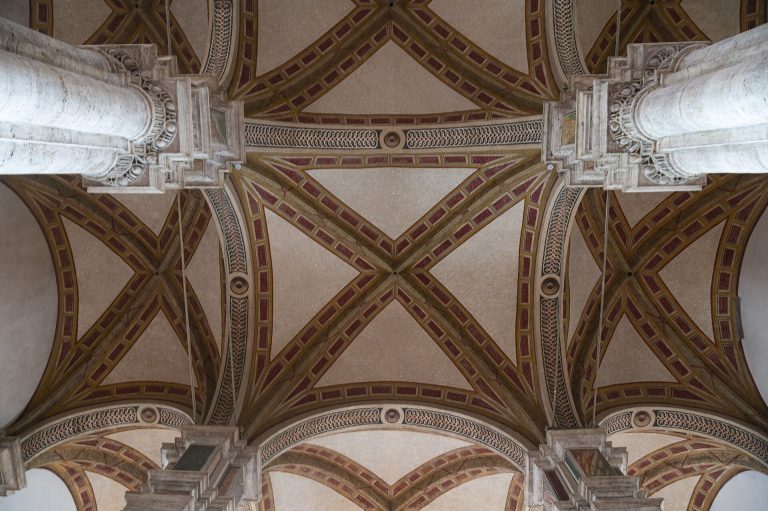
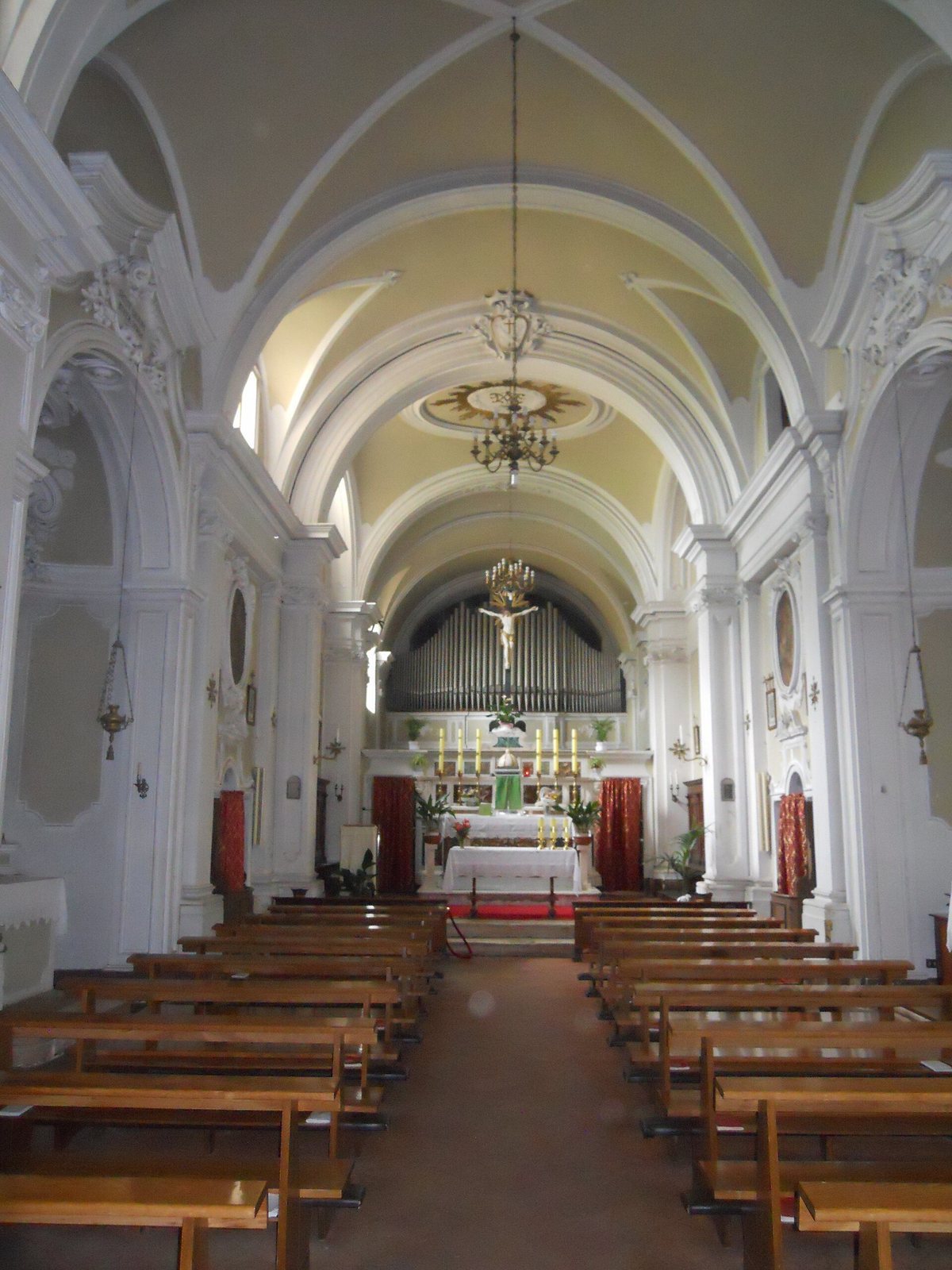
The Baroque interior has a single nave divided into five bays. The first and third bays are covered by cross vaults, formed by the intersection of two barrel vaults. The second and fourth bays have barrel vaults with lunettes, curved openings or recesses along their sides, while the fifth bay has a sail vault, a domed vault formed between supporting arches.
The fifth bay forms the presbytery and is raised by several steps. Its high altar is made of polychrome marble and is surmounted by a wooden Crucifix. Behind it, the rectangular apse contains a carved wooden choir. A pipe organ built in 1927 by the Aletti Brothers stands on the gallery against the rear wall of the apse, above the choir.
Chapels and paintings
Side chapels
The church contains three side chapels, each with a polychrome wooden statue of Saint Bernardino above its altar. The first chapel on the right is dedicated to the Sacred Heart of Jesus and has a rectangular plan. At the second bay, two semicircular chapels face the nave, with the Chapel of Saint Francis of Assisi on the right and the Chapel of the Madonna on the left. A confessional opens in each side wall of the two middle bays.
Chapel of the Madonna of the Refuge
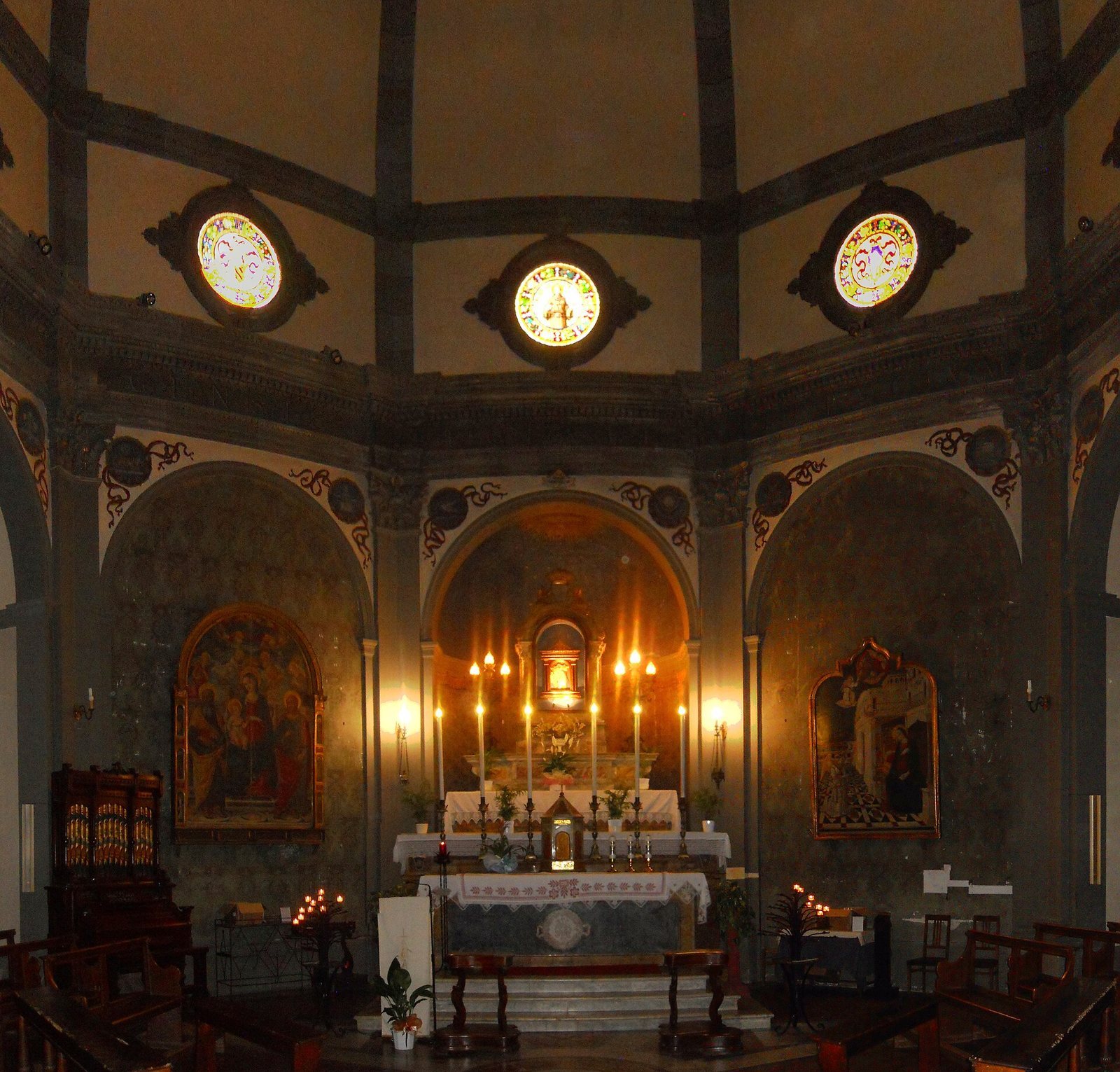
An arch in the left wall of the first nave bay gives access to the Chapel of the Madonna of the Refuge. Reconstructed in Renaissance style between 1854 and 1858, the chapel has an octagonal plan and an octagonal dome without a lantern, a small structure or opening rising above a dome. A marble altar against the rear wall houses the venerated icon attributed to Sano di Pietro. Two facing niches contain nineteenth-century side altars dedicated to Saint Bernardino of Siena and Saint Anthony of Padua.
Renaissance paintings
The chapel’s side walls hold several important paintings from the Renaissance tradition of Siena. They include Benvenuto di Giovanni’s Annunciation, dated 1470, and Guiduccio Cozzarelli’s Baptism of Christ, dated approximately 1483. Cozzarelli also painted the Coronation of the Virgin with the Child between Saints Simon and Jude Thaddeus in 1486. A Blessing Christ by Sano di Pietro completes the group.