Sint Genovevakerk (Breugel): A Gothic Roman Catholic Parish Church
Site at a Glance
- Rating
- 4.5
- Popularity
- Very Low
- Country
- Netherlands
- Primary era
- Medieval
- External website
- Open
- Eras represented
- Medieval, Early Modern, Modern
- Civilizations
- Duchy of Brabant, Dutch, Habsburg, Holy Roman Empire
- Site type
- Religious
- Remains
- Church
On this page9 sections
History
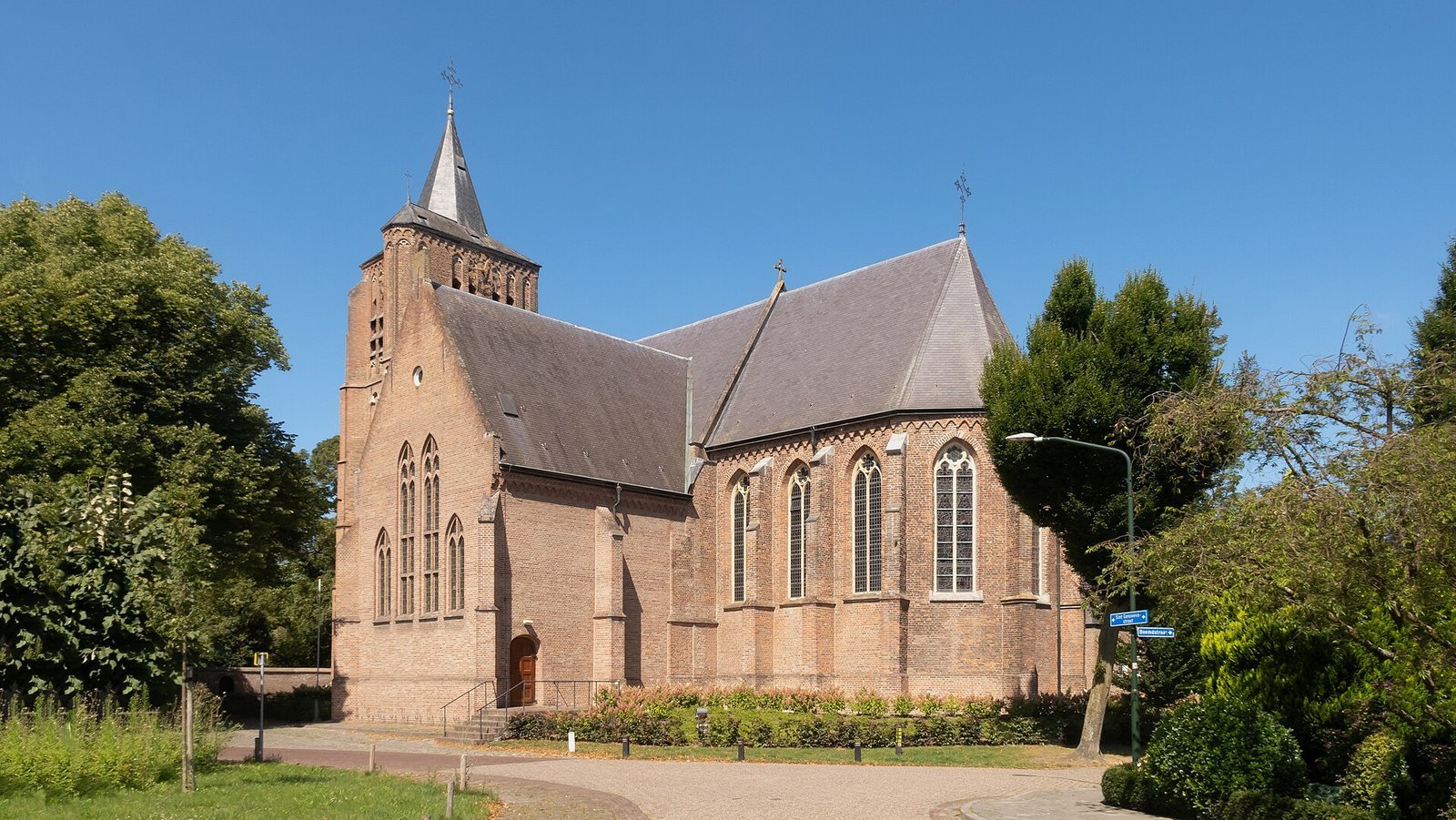
Sint Genovevakerk is a Roman Catholic parish church in Breugel, Netherlands, dedicated to Genevieve of Paris, a fifth-century Christian saint traditionally associated with the protection of Paris. The church was built during the second half of the fifteenth century in the Gothic period and remains connected with a local tradition that Genevieve once lived in Breugel.
Construction and early changes
The church’s nave and choir were renewed around 1580, possibly after an arson attack. A relic of Genevieve is kept inside the church, which also contains several images of the saint. The oldest of these images date from the late nineteenth century. A well associated with Genevieve once stood beside the water, and local tradition attributed various miracles to it. The well was filled in during the seventeenth century.
Protestant use and Catholic return
From 1648 to 1799, Sint Genovevakerk served a Protestant congregation. It was then returned to the Catholics in a neglected condition. On 9 November 1800, the church tower’s 25-metre-high spire was blown down. A much lower replacement was installed in 1821, the same year in which the church was restored. The transept was demolished in 1822 after becoming structurally unsafe.
Restoration and later history
The transept was rebuilt in 1960, when the entire church also underwent restoration. A further alteration followed in 1978. Sint Genovevakerk has been protected as a Dutch national monument since 17 September 1968. During the Second World War, the German occupying authorities seized the church’s bells in 1942. The bell Salvator returned in 1945 and was rehung, but it was found to be cracked. The present bells were installed in 1950.
Three stained-glass windows were added to the chancel in 1893. They were produced by Stalins & Janssens of Antwerp from designs by L.C. Hezenmans of ’s-Hertogenbosch. In 2007, the pipe organ built in 1854 was restored by Verschueren, improving its playing action and voicing. On 2 April 2018, a sacrament altar from the Heilig Hartkerk in Boxtel was blessed in the church, and a baptismal font from Sint-Oedenrode was installed.
Remains
Gothic structure and memorials
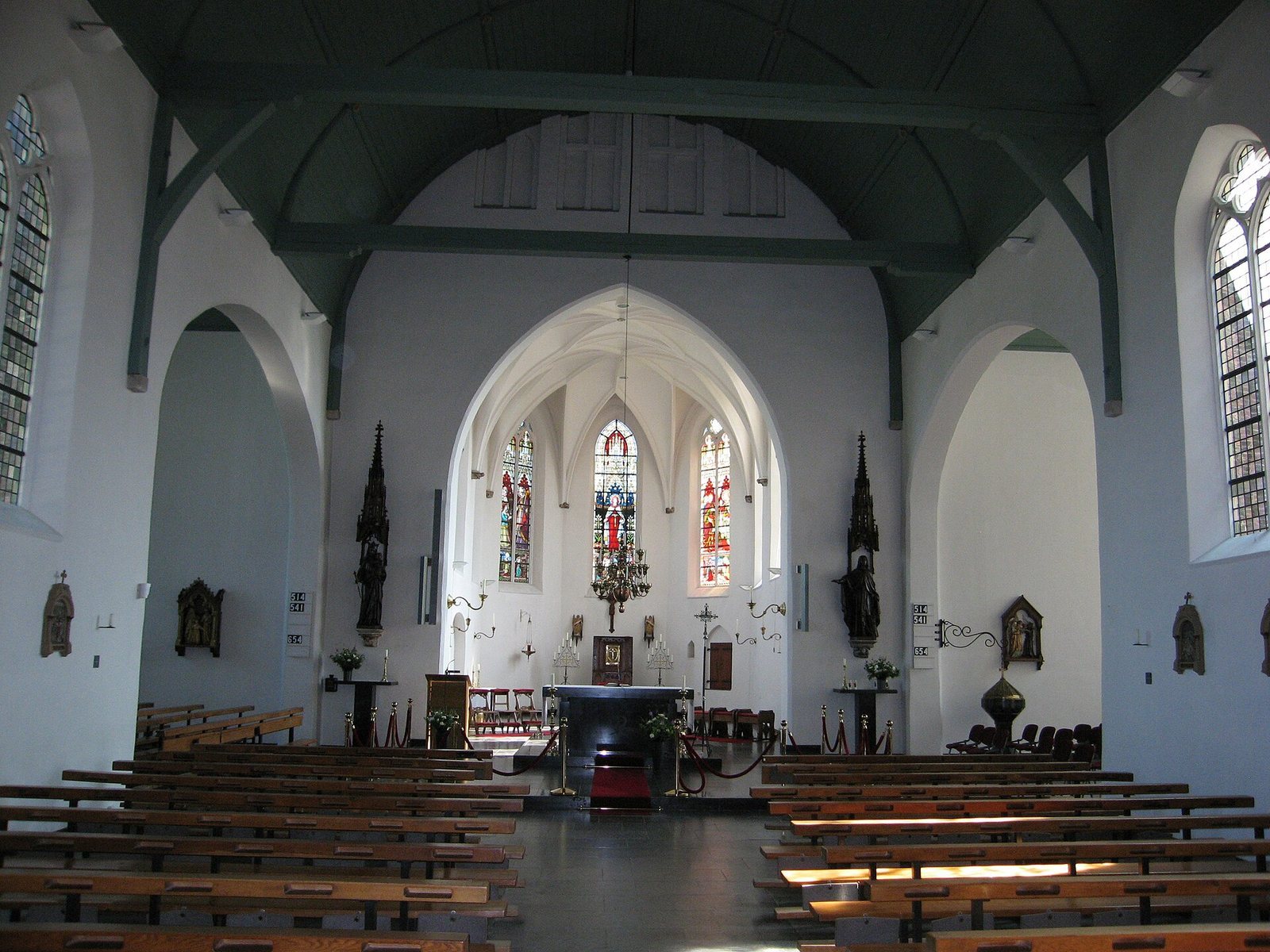
Sint Genovevakerk is a well-preserved Gothic brick building near the Dommel River, on its right bank. Its layout consists of a single nave, a choir, and the transept rebuilt in 1960. The choir is covered by a net vault, a ribbed vault whose intersecting ribs form a net-like pattern. The ribs rest on corbels carved with human figures and foliage.
The tower porch contains two armorial tombstones. One, dated 1558, commemorates Lambertus Aertsz van Culenborch and his wife Elysabeth. The other, dated 1569, commemorates Jenneken Aelbert Lambertsdr. Behind the church stands a Sacred Heart statue, while the adjoining cemetery includes a Calvary hill, a Christian devotional feature representing the hill of Christ’s crucifixion.
Stained glass and images of Genevieve
The church has both clear-glass windows and three stained-glass windows in the chancel devoted to Genevieve. The left window shows her receiving from Bishop Germain, or Germanus of Auxerre, a cross that she must wear around her neck. Genevieve and her mother Gerontia appear below. The central window presents Genevieve with a tower symbolizing strength and purity, while the lower scene shows her with Attila the Hun. The right window depicts Genevieve with Clovis I and his wife Clothilde; beneath them, Genevieve revives a child who has drowned in a well. The church’s relic of Genevieve and its images of the saint add material expression to the local tradition surrounding her.
Bells and pipe organ
The two present bells are S. Maria, which weighs 325 kilograms and measures 82 centimetres in diameter, and S. Genoveva, which weighs 600 kilograms and measures 98 centimetres. The cracked Salvator was made by Jasper Moer in 1529, weighed 250 kilograms, and measured 57 centimetres in diameter. The larger earlier bell was made by Mexius Petit in 1756, weighed 670 kilograms, and measured 103 centimetres in diameter.
The pipe organ was built in 1854 by Johannes Vollebregt of ’s-Hertogenbosch. It has a main division and a lower positive, and its case is decorated with elaborate wood carving. The 2007 restoration improved the instrument’s playing action and voicing.
Later furnishings
The sacrament altar installed in 2018 came from the Heilig Hartkerk in Boxtel. The baptismal font installed at the same time came from Sint-Oedenrode, adding furnishings with origins in other Dutch churches to the interior of Sint Genovevakerk.