Bro Church: A Medieval Lutheran Church on Gotland
Site at a Glance
- Rating
- 4.4
- Popularity
- Very Low
- Country
- Sweden
- Primary era
- Medieval
- External website
- Open
- Eras represented
- Medieval, Early Modern
- Civilizations
- Unclassified
- Site type
- Religious
- Remains
- Church
On this page13 sections
History
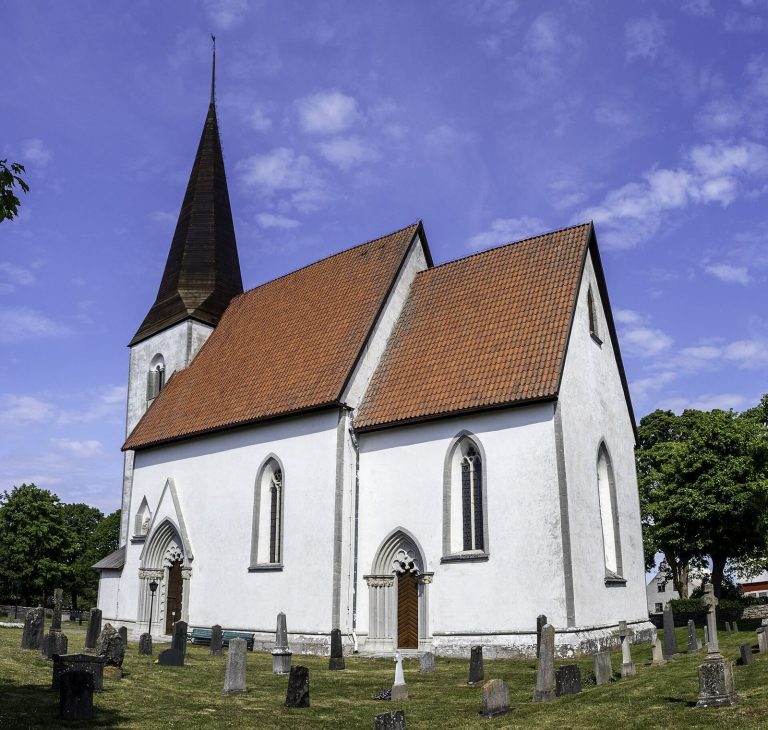
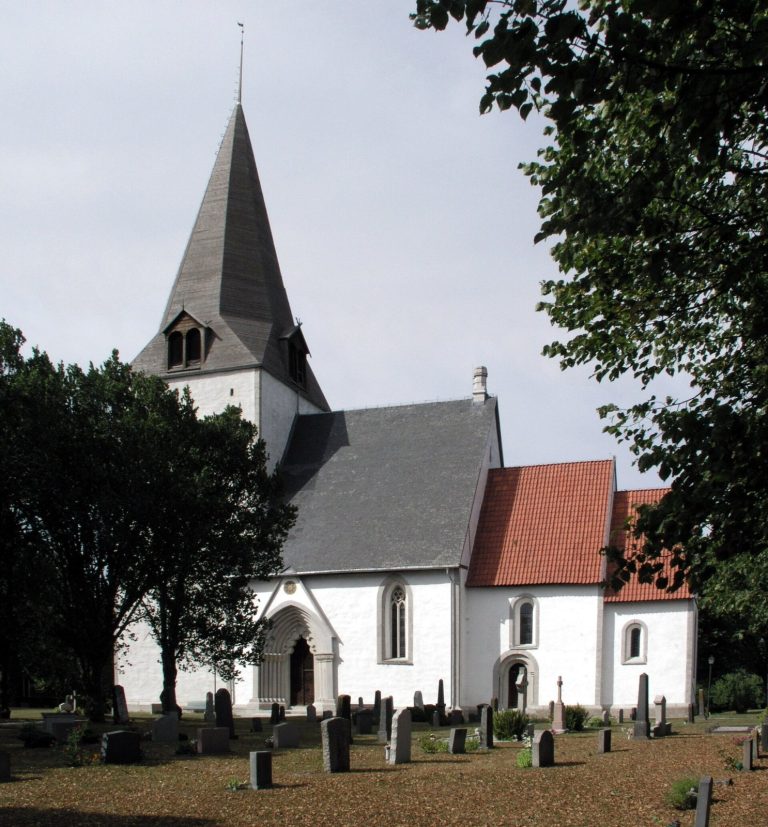
Bro Church is a medieval Lutheran church in Sweden, located at Bro in the central-western part of Gotland. Its present limestone building was begun in the early thirteenth century and combines Romanesque and Gothic phases, with later Baroque additions. The church belongs to Väskinde parish in the Diocese of Visby, an ecclesiastical administrative district of the Church of Sweden.
Before the stone church
The church probably stands on an ancient pre-Christian sacred site. A nearby well is traditionally regarded as a sacrificial well, while the surrounding landscape contains numerous ancient remains, including picture stones dating from the fifth century. Picture stones are decorated prehistoric or early medieval monuments especially associated with Gotland.
A first Christian church was probably built here during the twelfth century. It was likely a stave church, a medieval wooden building formed around a framework of upright timbers, but nothing of it survives. Construction of the present stone church probably began in the early 1200s.
Medieval rebuilding
The tower belongs to the 1240s and survives from an early Romanesque stone building. During the middle of the thirteenth century, its earlier Romanesque apse was replaced by a Gothic apse with a straight termination. A new nave followed toward the end of the century, creating the main medieval structure visible today.
Interior furnishings and decoration were added progressively during the same period. The exterior has undergone no major changes since the Middle Ages, helping Bro Church remain one of the best-preserved medieval churches on Gotland.
Later alterations
In 1686, attempts to repaint the older wall paintings caused some damage. Further changes came during the Baroque era, a European artistic and architectural period associated with elaborate ornament and dramatic forms. The pulpit and altarpiece belong to this later phase, while the church bell dates from the fifteenth century.
Remains
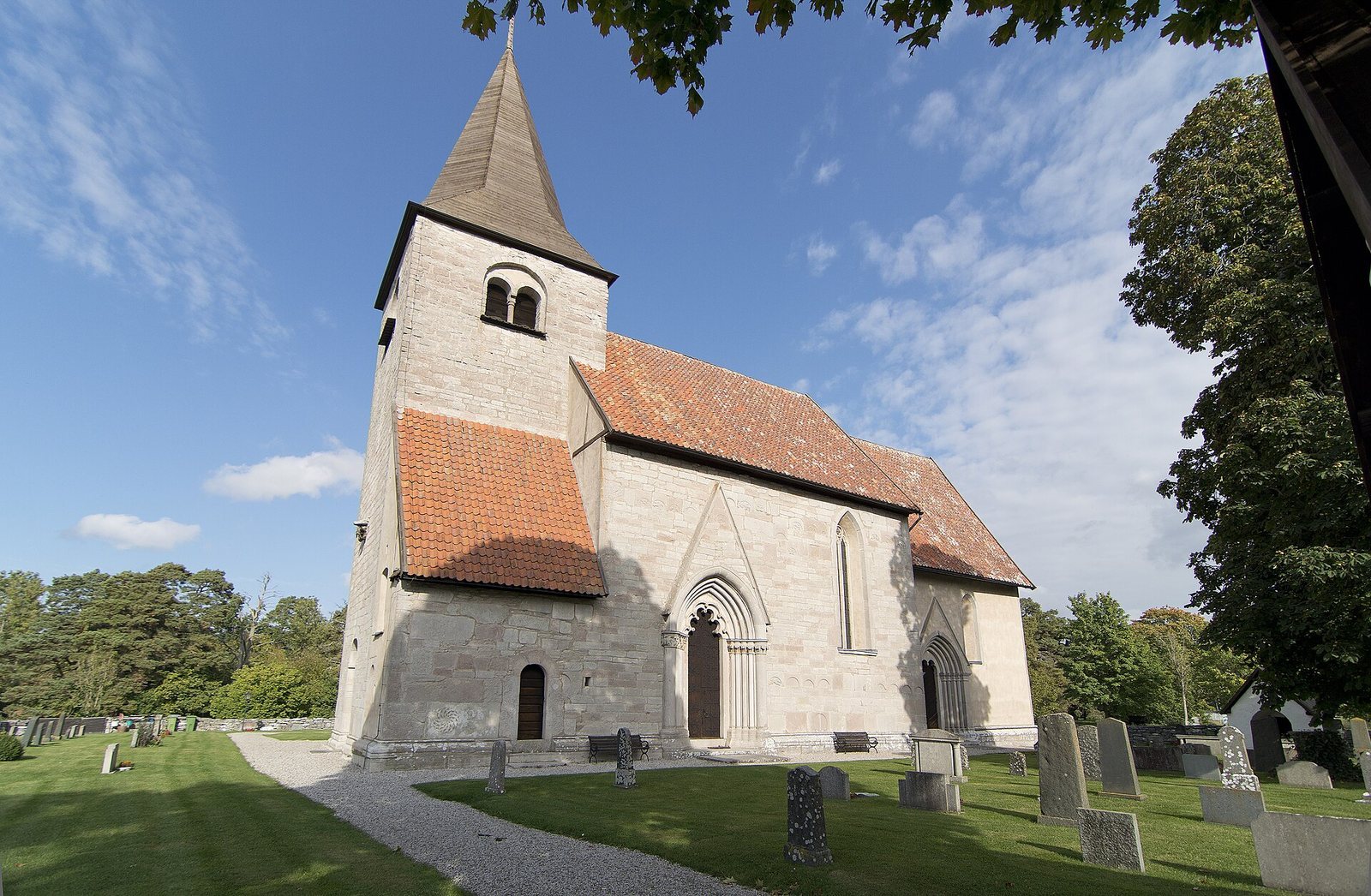
Bro Church is built of limestone and brings together a sturdy late Romanesque tower, a high Gothic nave, and a Gothic apse. Its broad nave vaults extend to the walls rather than resting on supporting pillars. The apse has a straight end, a form associated with churches on Gotland. Romanesque friezes from the earlier church were incorporated irregularly into the exterior walls, and older picture stones were also built into the masonry.
Exterior architecture
Tower and medieval wall fabric
The tower is a surviving late Romanesque structure dating from the 1240s. Its sturdy form contrasts with the taller Gothic parts of the church. The exterior also preserves reused material from earlier phases, including Romanesque carved friezes and considerably older picture stones set into the limestone walls.
Nave and apse
The high Gothic nave was built toward the end of the thirteenth century. Its broad vaults reach the walls without intermediate supporting pillars. The apse, rebuilt in the middle of the thirteenth century, terminates in a straight form rather than a semicircle.
South portal
The richly carved south portal, a monumental doorway, has capitals depicting episodes from the childhood of Christ, the Resurrection, and Hell on one side. The opposite side is covered with intricate foliage carving.
Interior decoration and furnishings
Wall paintings
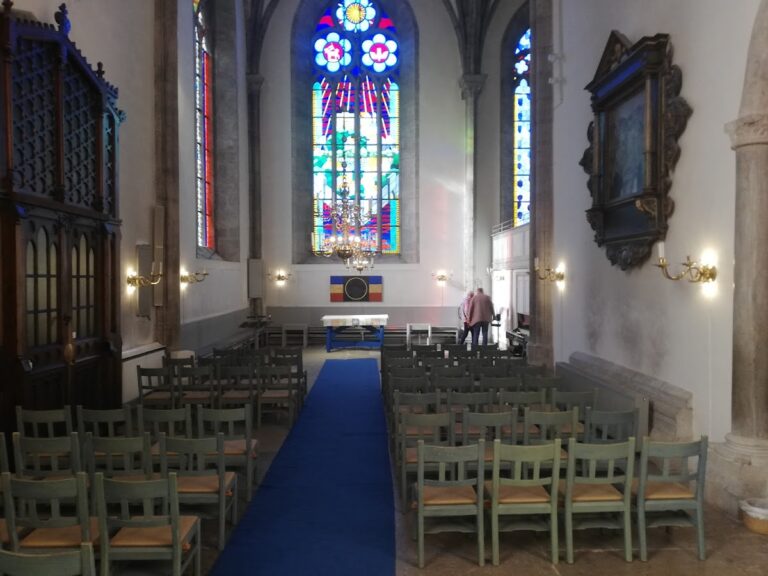
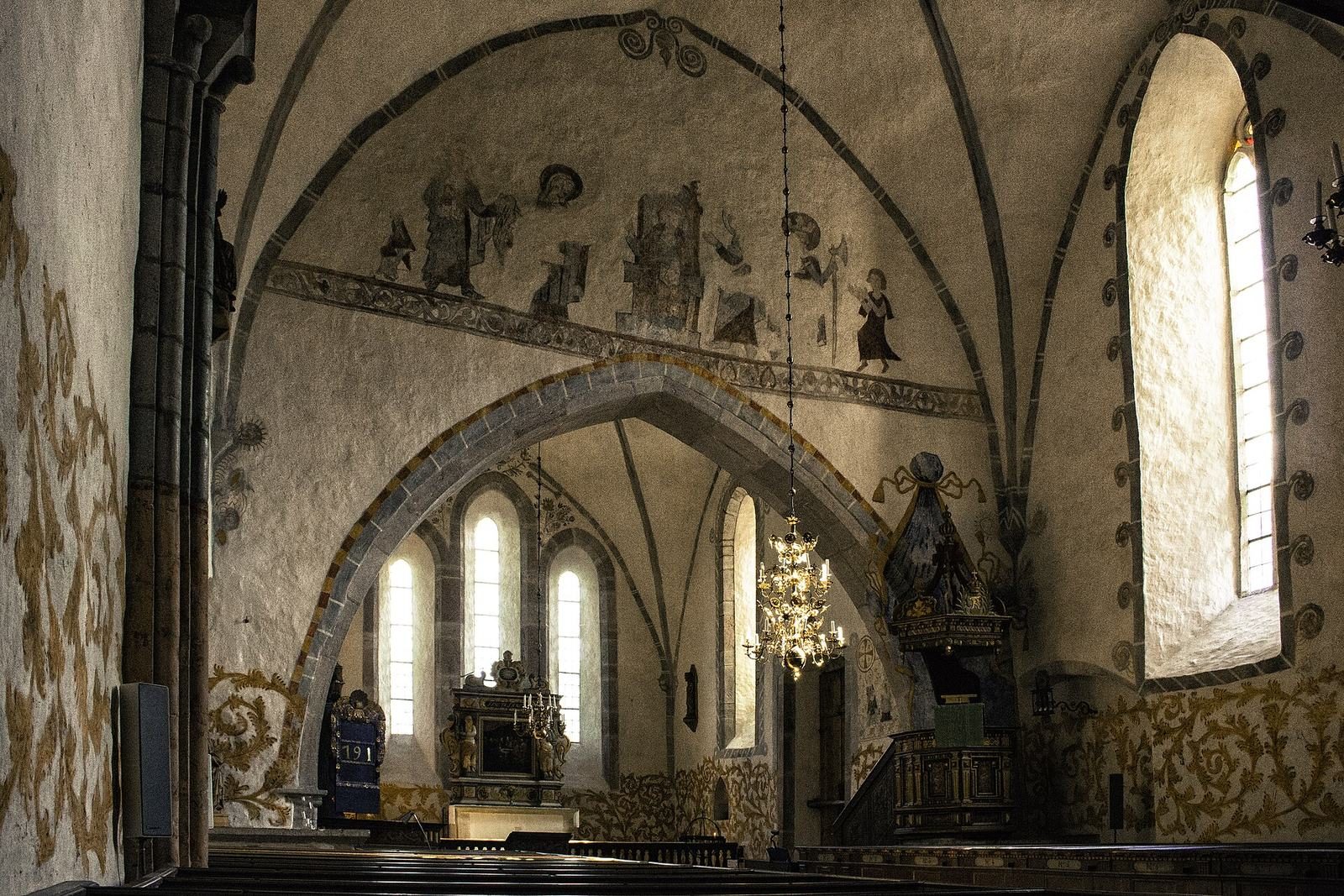
Wall paintings cover much of the interior. The original medieval decoration includes scenes from the Passion of Christ and an image of Christ in Majesty, showing Christ enthroned in glory. Parts of these paintings were later covered with acanthus motifs and other decorative designs, and repainting in 1686 damaged some of the older work.
Baptismal font and surviving sculpture
The church retains its original Romanesque baptismal font, attributed to Sigraf, the name used for a medieval stone sculptor or workshop associated with ecclesiastical sculpture. The font dates from around 1175 to 1210. Of the earlier medieval wooden sculptures, a triumphal cross from the middle of the twelfth century survives. A triumphal cross is a large cross traditionally placed at the boundary between the nave and chancel.
Baroque furnishings
The pulpit and altarpiece were added during the Baroque era. The altarpiece includes a representation of the Last Supper, adding a later artistic layer to the medieval interior.