Alskog Church: A Medieval Rural Church on Gotland
Site at a Glance
- Rating
- 3.7
- Popularity
- Very Low
- Country
- Sweden
- Primary era
- Medieval
- External website
- Open
- Eras represented
- Medieval, Modern
- Civilizations
- Swedish
- Site type
- Religious
- Remains
- Church
On this page14 sections
History
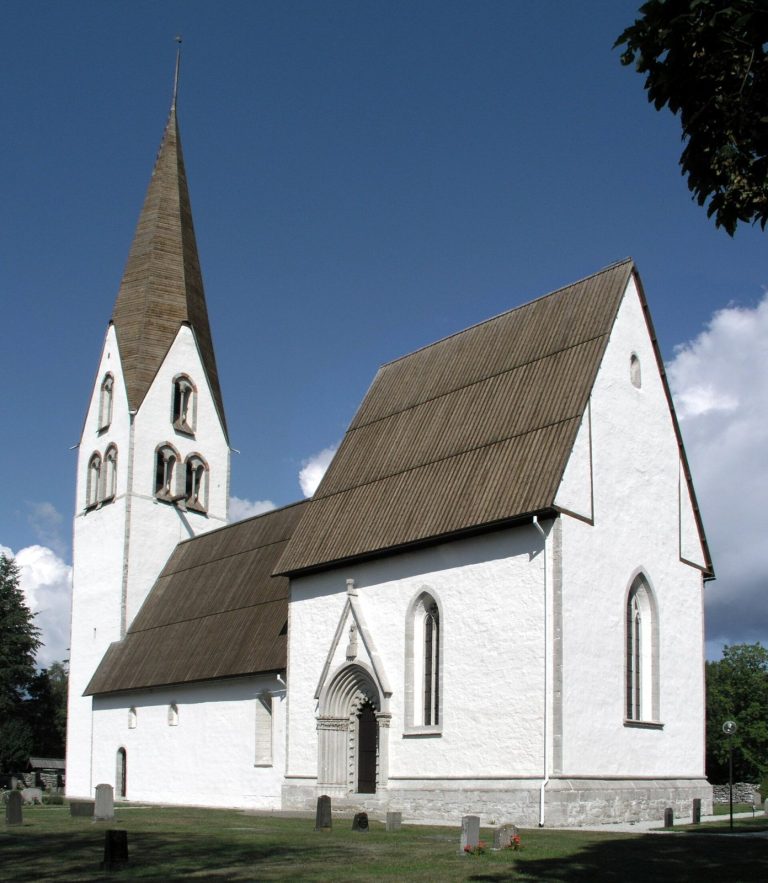
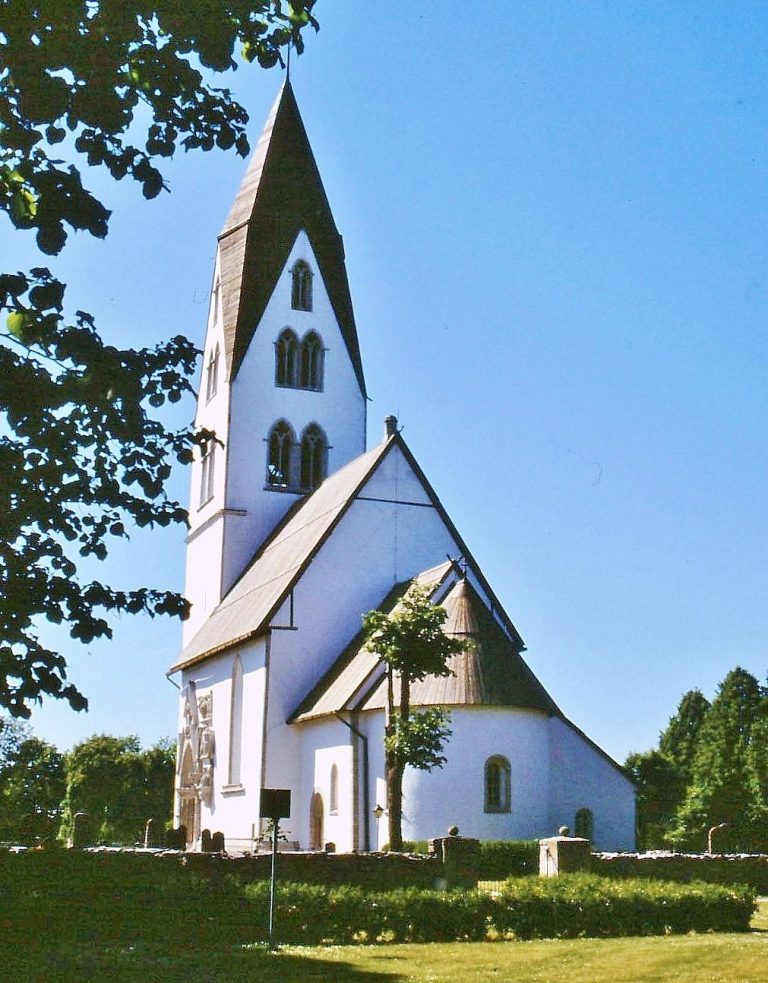
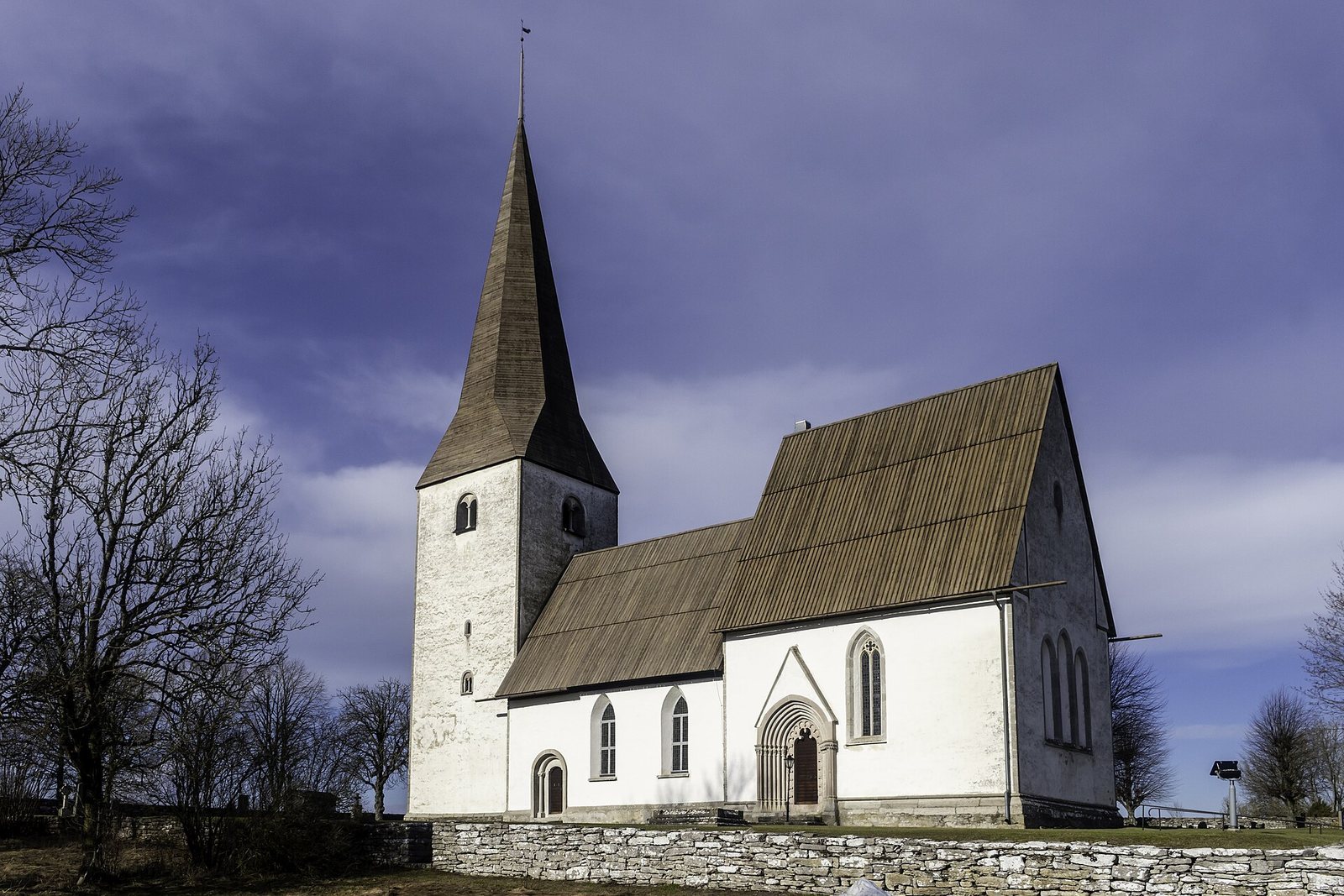
Alskog Church is a medieval church in Sweden, on the island of Gotland, with earliest fabric from the late twelfth or early thirteenth century. Originally Catholic, it is now affiliated with the Church of Sweden, Sweden’s Evangelical Lutheran national church, in the Diocese of Visby, and belongs to Garde parish. Its surviving fabric records several medieval building phases, including a major enlargement around 1300.
Early medieval church
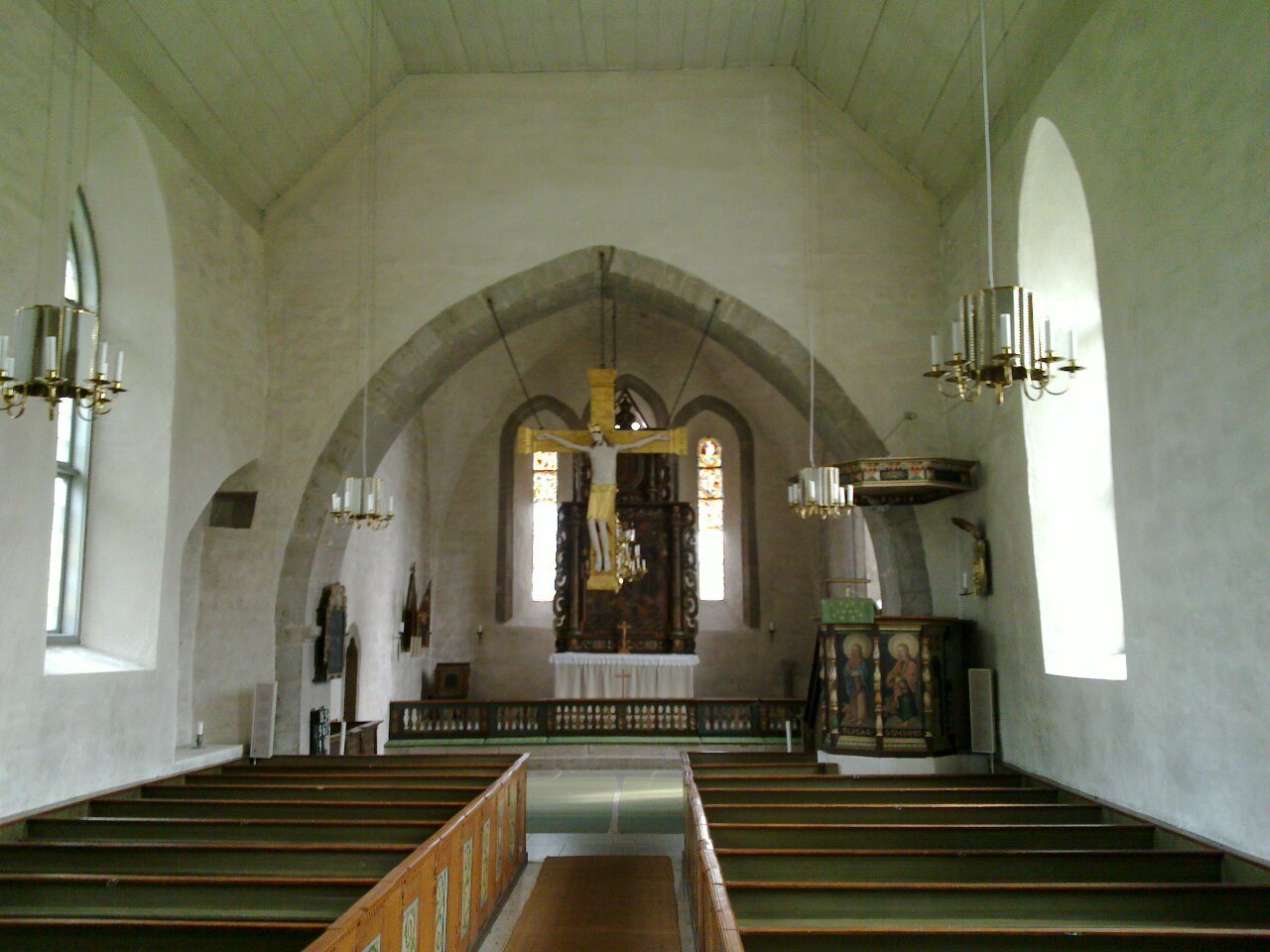
The nave represents the earliest construction phase and dates from the late twelfth or early thirteenth century. During the thirteenth century, a tower was added to the west. The triumphal cross, a large crucifix traditionally placed between the nave and chancel, dates from around 1200 and is believed to have come from an earlier church on the same site.
The enlargement around 1300
A substantially larger choir and a vestry were added around 1300. This work probably formed part of an unrealized plan to rebuild the entire church as a larger Gothic structure. Gothic architecture was a medieval style associated with pointed arches, ribbed vaults, height, and light. At Alskog, only the eastern part of the proposed rebuilding was carried out, leaving the earlier nave and the enlarged eastern end as distinct elements of the church.
Later history and preservation
Few changes were made after the Middle Ages. Several windows were added and new pews installed during the nineteenth century. The church was renovated in 1964–1965 according to plans by the architect Karl Erik Hjalmarson. Its furnishings also preserve later layers of history. The pulpit was made in 1586 after the Reformation, the sixteenth-century religious movement that established Protestant churches in much of northern Europe and ended Catholic ecclesiastical control in territories that adopted it. It is among the oldest pulpits on Gotland.
Two embroidered alms bags made in Istanbul in 1775 were brought to the church by the priest at the Swedish legation there. He was the son of a pastor of Alskog Church, linking the objects to the local clerical community as well as to a wider early modern setting.
Remains
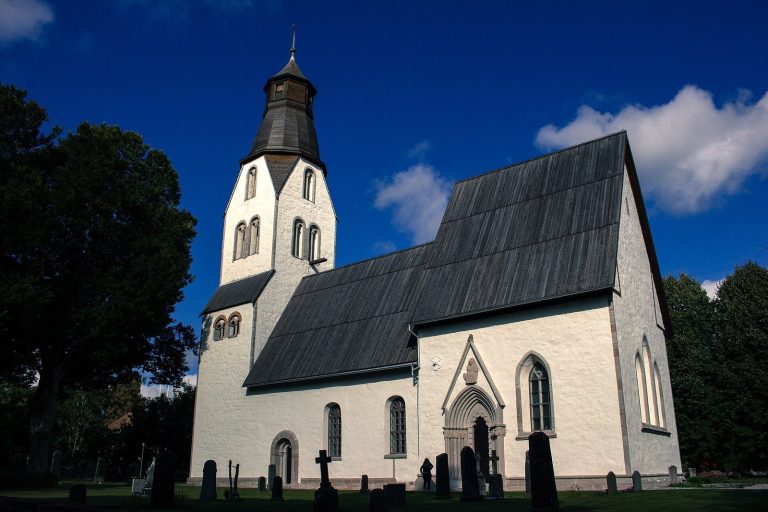
Alskog Church is a medieval rural saddle church, a church type characterized by a distinctive saddle-shaped roof form. Its single-aisled nave, later provided with a vaulted ceiling, is joined to a larger choir and a vestry at the eastern end. The building retains medieval portals, sculpture, stained glass, baptismal furnishings, and later altar and pulpit elements.
Medieval building fabric
Nave and choir
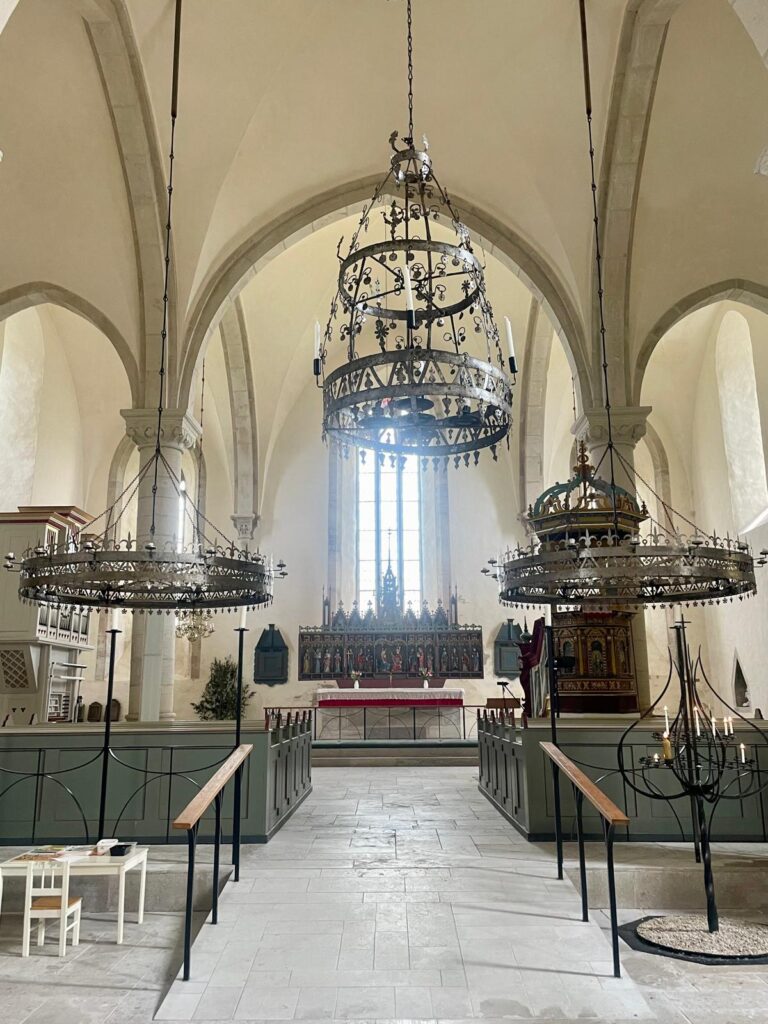
The nave is divided into two parts by two central columns. It originally had no vault, but a vaulted ceiling was introduced during the later medieval period. The choir is larger than the nave and is connected to the vestry, reflecting the substantial eastern enlargement carried out around 1300. Three adjoining windows in the choir’s east wall retain stained-glass panels from around 1300. The panels depict scenes from the life of Jesus.
Tower and portals
The choir and nave retain their original southern portals. The nave’s southern entrance has an unusual sculpted decoration attributed to Master Globus, the conventional name for an unidentified medieval sculptor or workshop. The western tower has a portal on its west side, whose design has similarities to the tower portal of Visby Cathedral, the cathedral church of the Diocese of Visby.
Interior furnishings and sculpture
Baptismal font and medieval sculpture
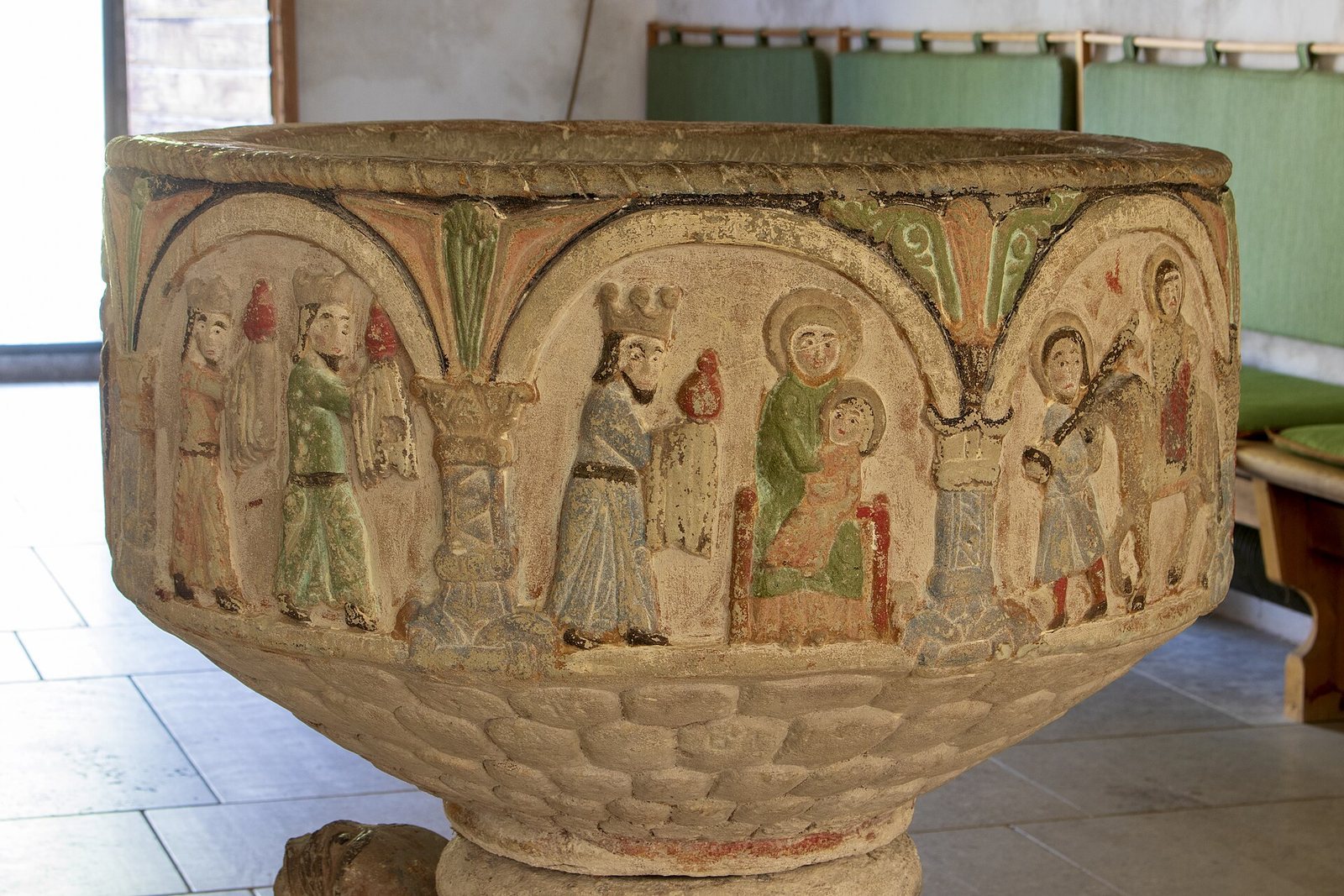
A richly carved baptismal font from the early thirteenth century stands inside the church. Its scenes depict episodes from the childhood of Jesus, and substantial traces of the original coloring remain. Several separate medieval sculptures also survive from a fourteenth-century retable, an ornamental structure or panel placed behind an altar.
Altarpiece, pulpit, and alms bags
The altarpiece dates from 1759, while the pulpit was made in 1586. The two embroidered alms bags made in Istanbul in 1775 add an early modern textile element to the interior. Their connection with a former Alskog pastor’s son gives them a particular association with the church’s history.
Burial monument and churchyard entrance
Grave-chest monument
The church contains the image-rich stone grave-chest monument designated SHM 5038. A grave chest is a decorated stone monument associated with burial. On Gotland, examples of this type occur in both pre-Christian burial grounds and churches, with known examples dating from the sixth to the twelfth century.
Eastern churchyard portal
The churchyard wall has a well-preserved medieval portal on its eastern side. It forms part of the surviving medieval enclosure around the church and preserves the character of the site’s historic boundary.