Eljaröd Church: A Medieval Lutheran Church in Sweden
Site at a Glance
- Rating
- 4.6
- Popularity
- Very Low
- Country
- Sweden
- Primary era
- Medieval
- External website
- Open
- Eras represented
- Medieval, Early Modern, Modern
- Civilizations
- Danish, Swedish
- Site type
- Religious
- Remains
- Church
On this page7 sections
History
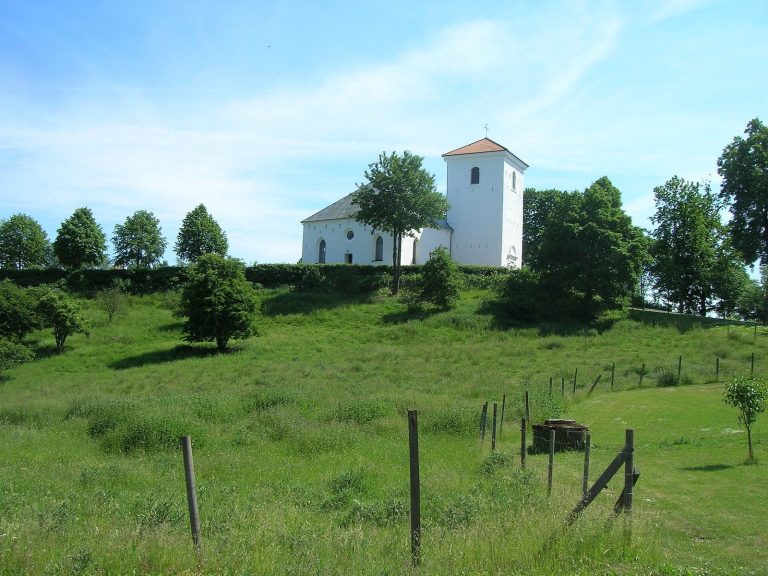
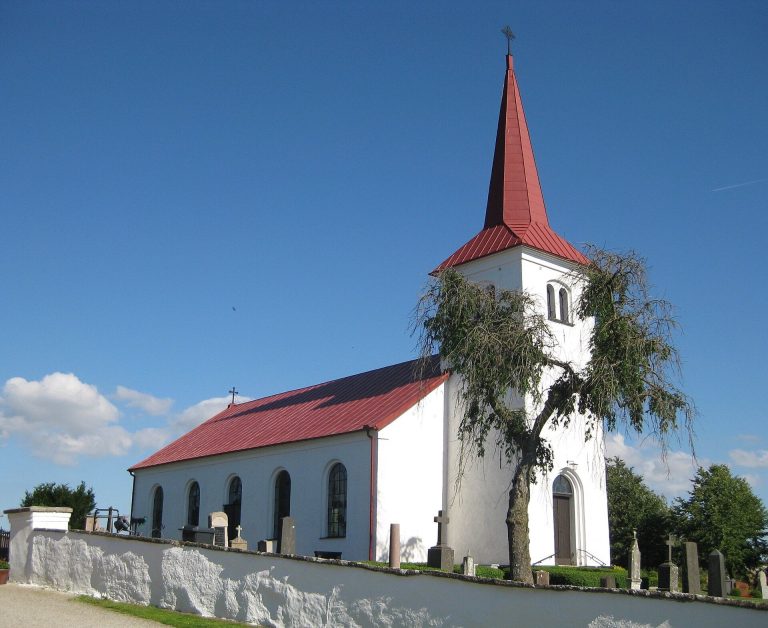
Eljaröd Church is a Lutheran church in Sweden, founded in the twelfth century and dedicated to Saint Gertrude. It stands in Eljaröd and belongs to the Brösarp–Tranås parish of the Diocese of Lund within the Church of Sweden. A wooden church probably occupied the site before the present building. Its construction date remains uncertain: 1149 has been proposed, while most researchers place its erection in the late twelfth or early thirteenth century.
Medieval development
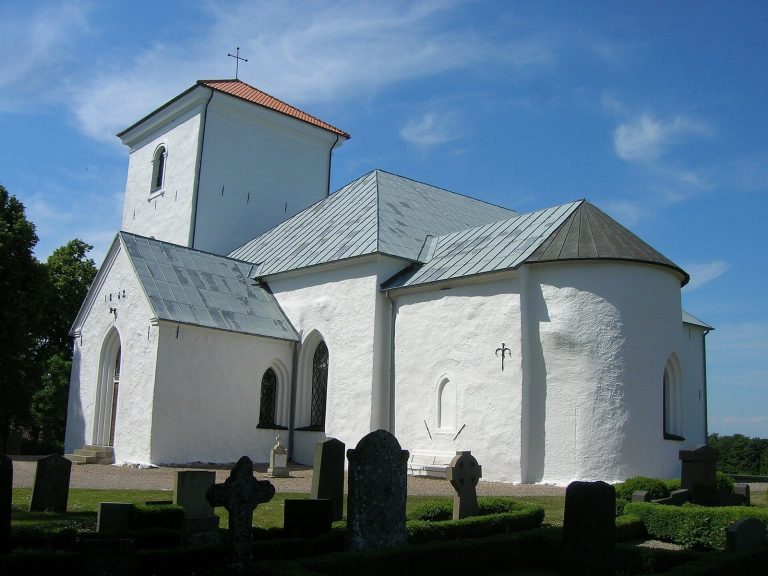
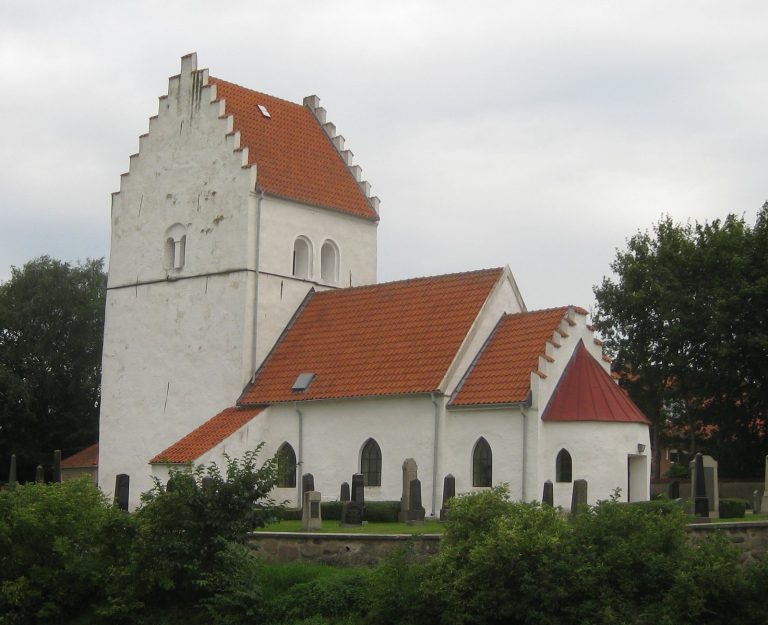
The original church comprised a nave, chancel, and apse, and its early brick construction places it among the rare examples of early brick ecclesiastical architecture in Skåne. During the Middle Ages, the original arched vaults in the nave and chancel were replaced by cross vaults supported by stone pilasters. A porch was built before the southern entrance and was demolished in 1719. The western bell tower was erected during a later phase and subsequently received windows and a portal.
Alterations and modern use
During the eighteenth century, the church walls were coated with white plaster, covering the medieval frescoes. The upper part of the bell tower was rebuilt in 1870 to a design by the architect J. F. Obom, and a spacious sacristy was added on the eastern side in 1875. New windows and electric heating were installed in the early 1950s.
A church organ was installed in 1895 and replaced in 1929 by an instrument from the A. Mortensson Organ Factory. Anders Persson built a mechanical organ installed in 1972, and a modern choir organ was added in 2008. Renovation work that year uncovered two ancient tombstones beneath the floor and fragments of medieval frescoes on the arches. The paintings were covered again with plaster, while the former mortuary was converted into an accessible toilet, a boiler room, and a parish staff room.
Remains
Medieval church fabric
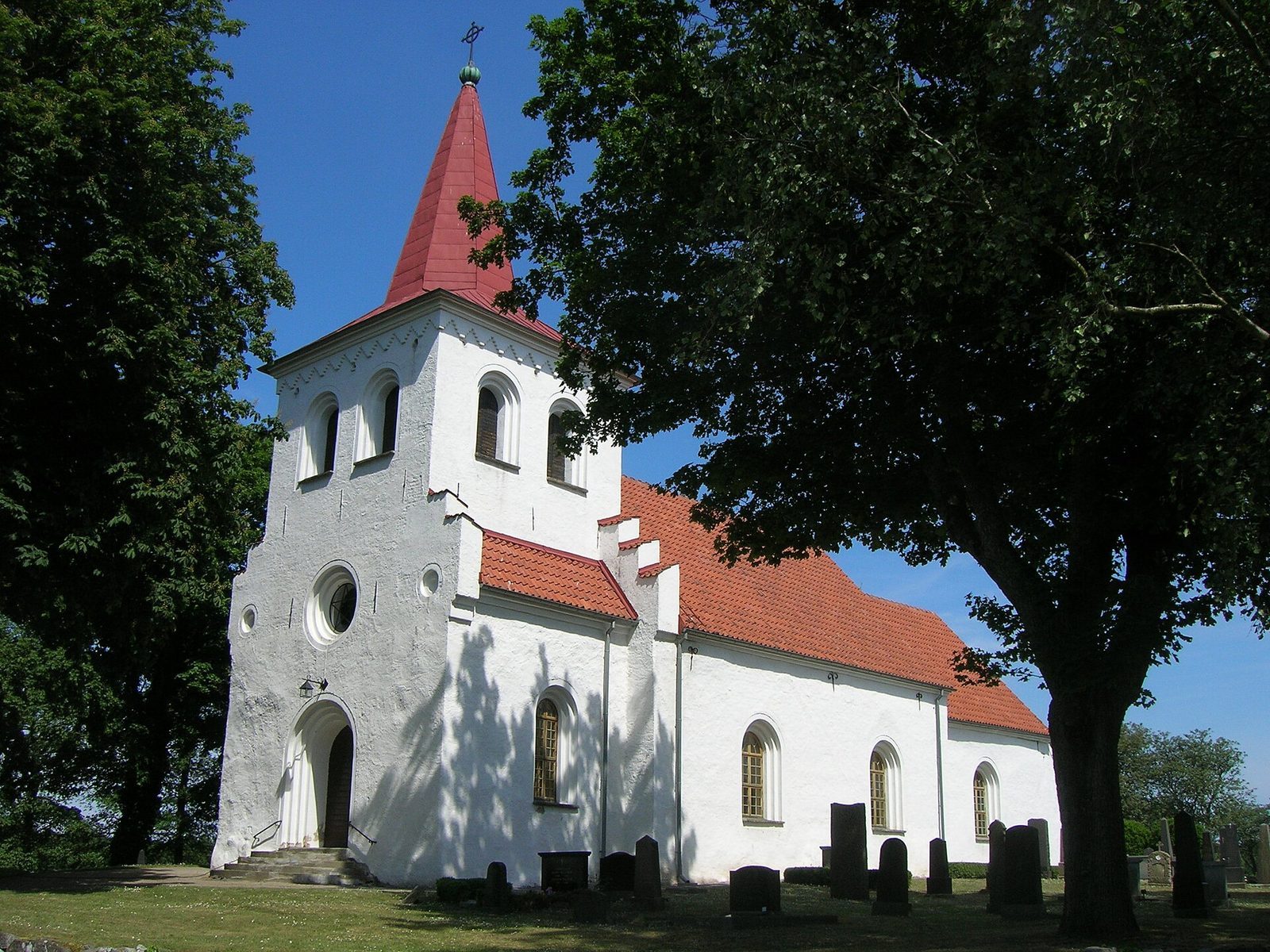
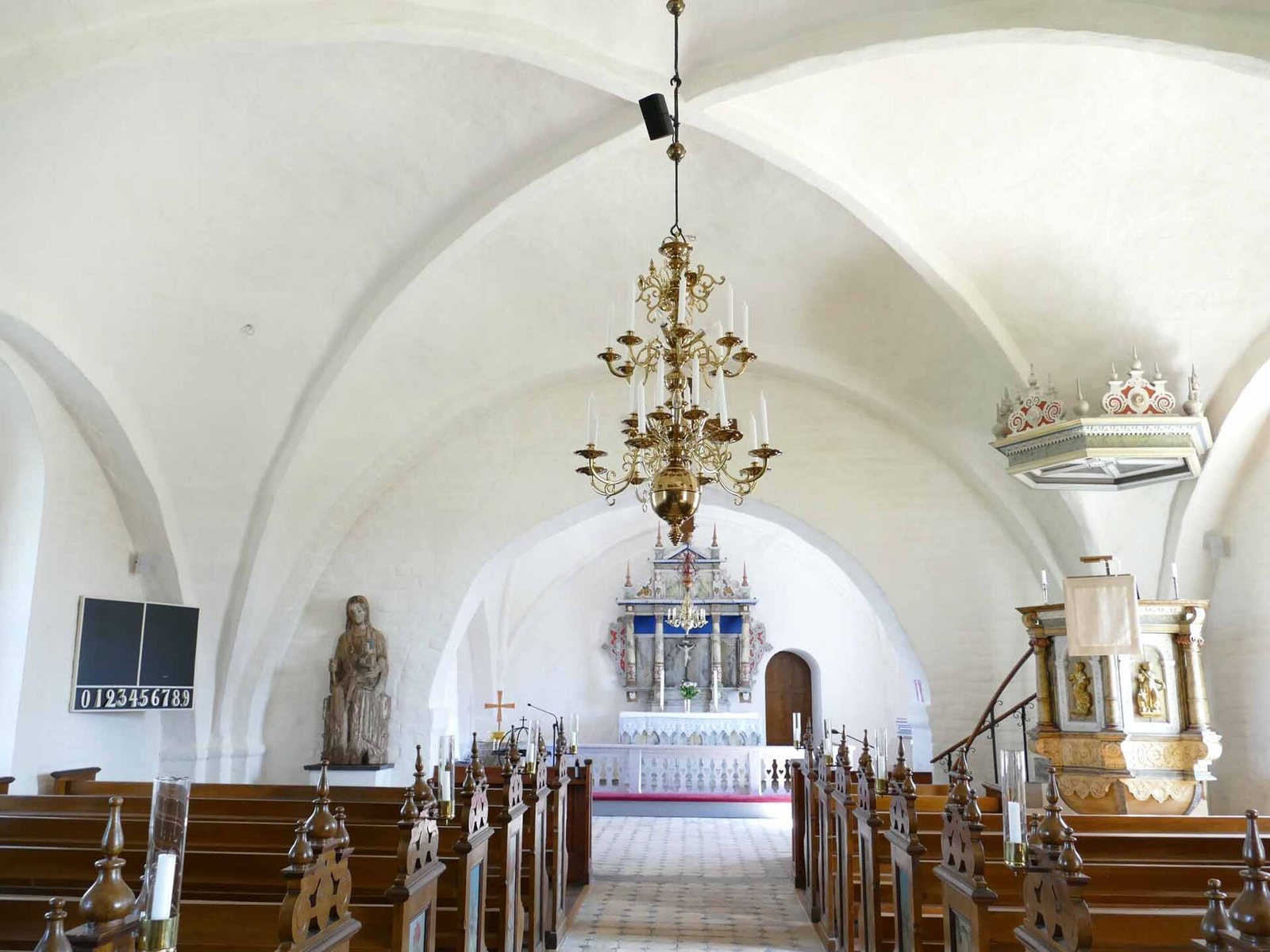
The church is built on a grey-stone foundation and retains the basic arrangement of nave, chancel, and apse. Its early brick construction is an important physical feature. The original spaces had arched vaults, later replaced in the medieval period by cross vaults carried on stone pilasters. The west gable was decorated with two arched windows, while the original window openings that survive are pointed and Gothic in form.
Vegetal fresco ornament once covered the interior walls. Fragments remain on the arches, although they were covered again with plaster after the 2008 renovation. The same work brought two ancient tombstones to light beneath the floor, providing archaeological evidence within the church itself.
Bell tower
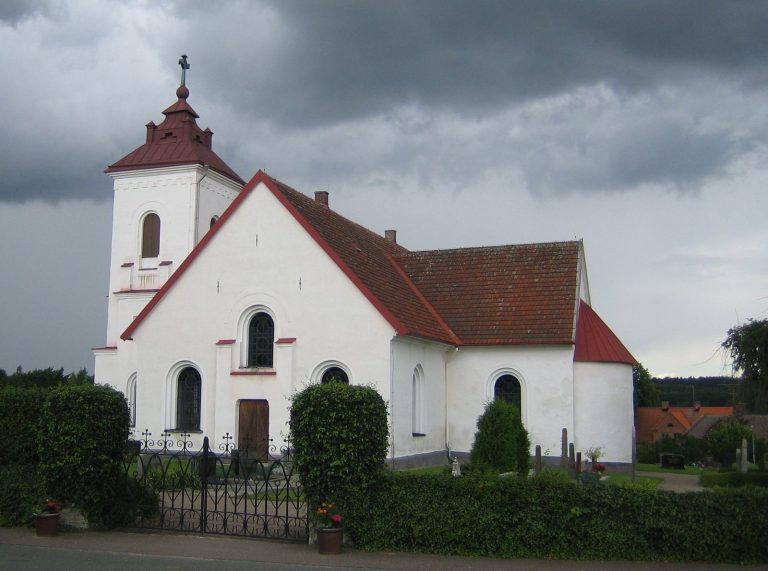
The western bell tower has windows and a portal, with a round window containing a five-pointed star above the entrance. Its upper section, rebuilt in 1870, has small arched windows fitted with wooden shutters and is crowned by a tall spire. Cast-iron bells are housed in the tower.
Sacristy and furnishings
The eastern sacristy, added in 1875, contains a decorated tombstone and a marble sculpture donated to the parish by Gunnar Nordin. The oldest interior objects include a twelfth-century wooden sculpture of the Virgin Mary holding a sceptre, a crucifix from the first half of the thirteenth century, and a thirteenth-century stone baptismal font. The Virgin sculpture returned to the parish from the Historical Museum of Lund University in 1966. That museum still holds parish sculptures of the Virgin Mary, the Virgin Mary enthroned, and a bishop.
A Renaissance-style altar and a pulpit were installed between the late sixteenth and early seventeenth centuries. The medieval church benches had doors. The case of an earlier organ also survives, decorated with nineteenth-century Rococo-style paintings by Torsten Wennerberg. The former mortuary now accommodates an accessible toilet, a boiler room, and a parish staff room.