St. Thomas Monastery, Van: An Armenian Apostolic Monastery on Lake Van
Site at a Glance
- Rating
- 4.7
- Popularity
- Very Low
- Country
- Turkey
- Primary era
- Medieval
- Eras represented
- Medieval, Early Modern
- Civilizations
- Armenian, Ottoman
- Site type
- Religious
- Remains
- Monastery
On this page6 sections
History
St. Thomas Monastery is an Armenian Apostolic monastery in Türkiye, near Altınsaç on the southern shore of Lake Van. Its church probably dates from the tenth or eleventh century, while the complex displays architectural characteristics of the tenth to thirteenth centuries. The monastery’s foundation date is unknown, but it has been associated with the reign of Gagik I Artsruni, the medieval king of Vaspurakan, a kingdom linked with the Lake Van region. The architecture has also been attributed to Manuel, an architect associated with medieval Armenian church building.
Apostolic Dedication and Medieval Use
The monastery was dedicated to the apostle Thomas, one of the Twelve Apostles of Jesus, because it was associated with relics believed to belong to him. These relics were said to have been brought from Edessa, an ancient city that became an important early Christian centre in Upper Mesopotamia. The timing and direction of their transfer remain uncertain.
St. Thomas Monastery appears in manuscripts from the fifteenth century. It also operated as a scriptorium, a monastic centre for writing and copying manuscripts, in 1339, 1457, and 1587. These references show that the complex continued to function as a religious and intellectual institution across several centuries.
Later Repairs and Decline
The monastery was altered and repaired during the early modern period. Enclosing walls were built in 1671 on the order of the monk Thomas, who died in 1690. The church interior was restored in 1581, and its exterior brickwork was repaired in 1801.
The monastery’s last monks reportedly departed during the Hamidian massacres of 1895, a period of violence against Armenians in the Ottoman Empire, when the complex was attacked by Kurdish forces. It had already been deserted before the First World War and was looted during the Armenian massacres of 1895 and again during the 1915 genocide. Afterward, it ceased to function as a religious institution. The buildings were used as a sheepfold, and the surrounding grounds served as pasture. Most associated farm buildings had disappeared by the present period, although their foundations were still visible in the 1970s.
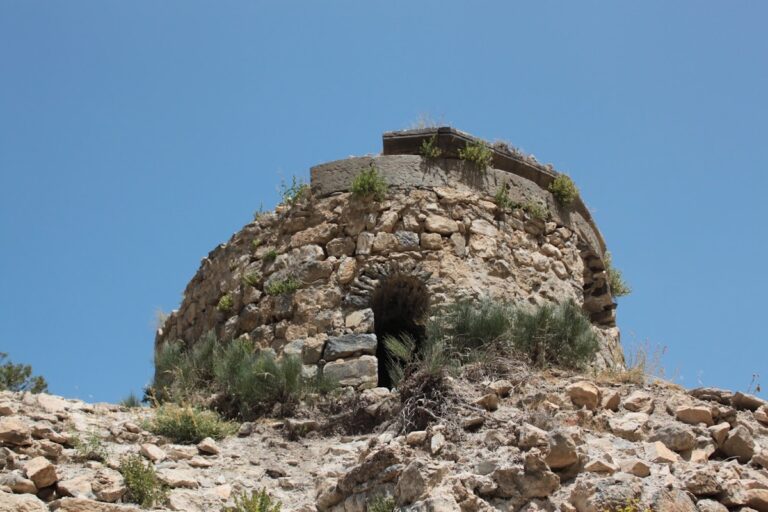
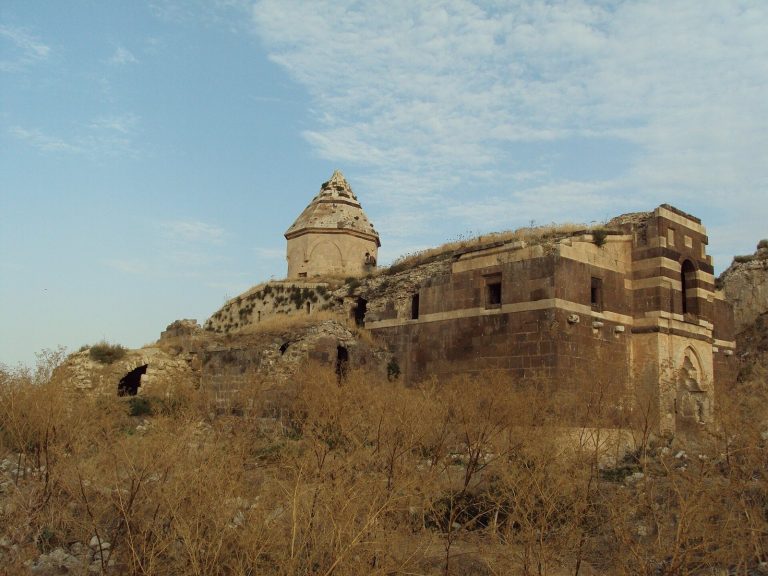
St. Thomas Monastery remains at risk of collapse. Parts of its portico roof and walls have fallen, while supporting columns have been removed or lost. The cemetery’s khachkars, carved Armenian stone cross monuments, have also suffered continuing damage. Treasure hunters have targeted the site because of beliefs about buried Armenian treasure around Armenian buildings.
Remains
Church and Portico
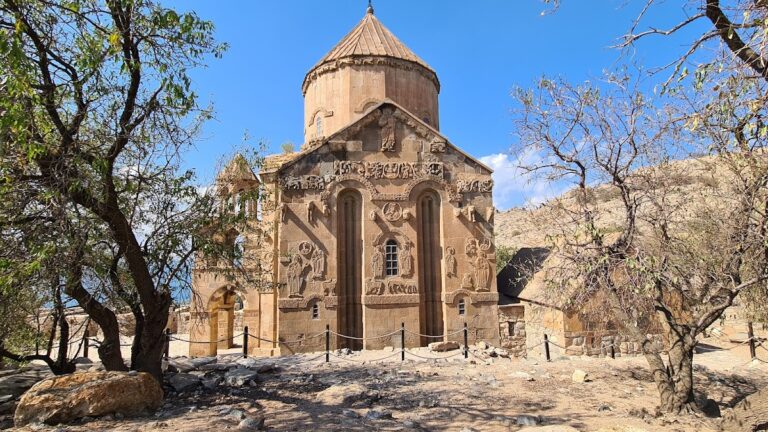
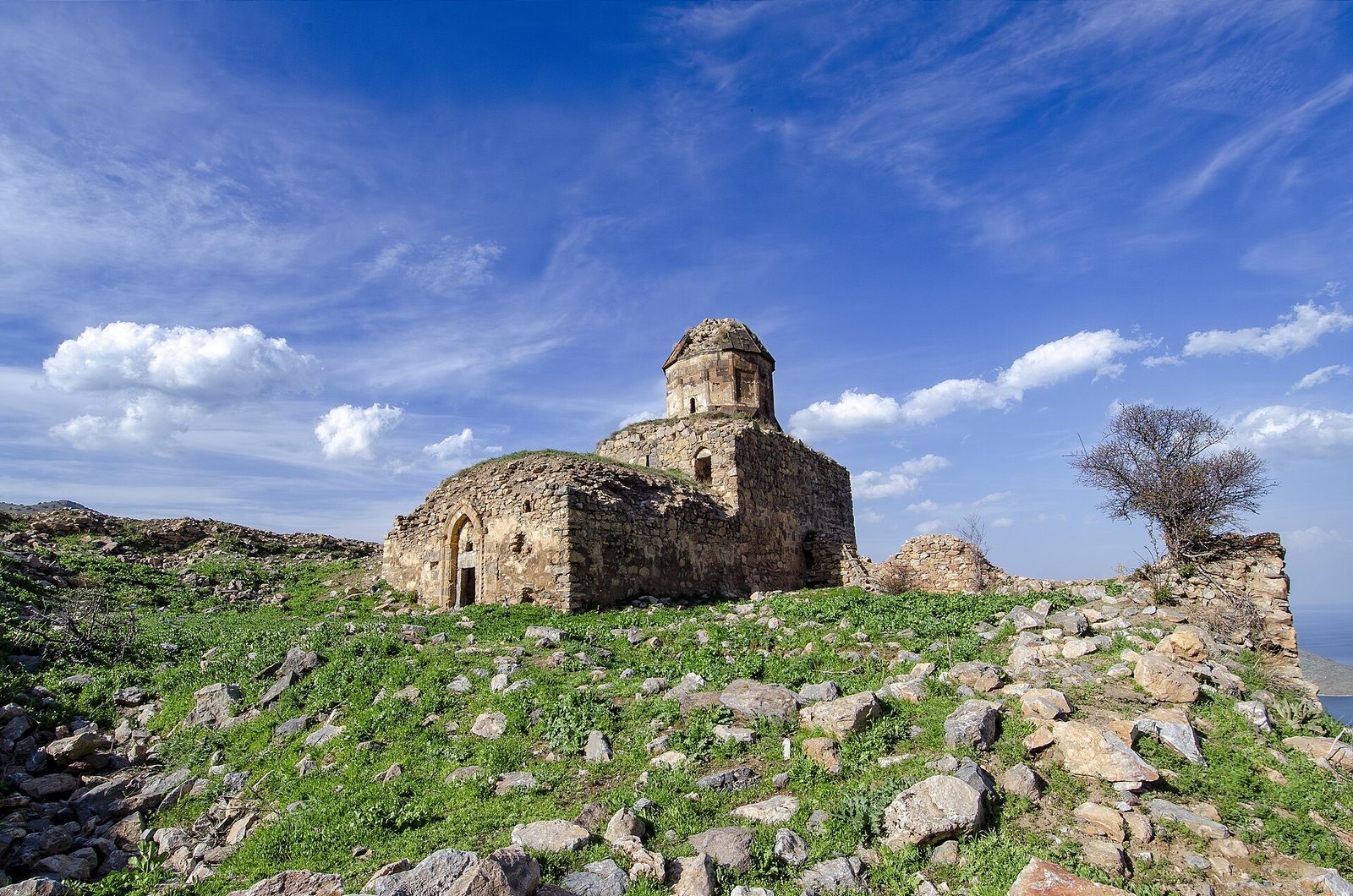
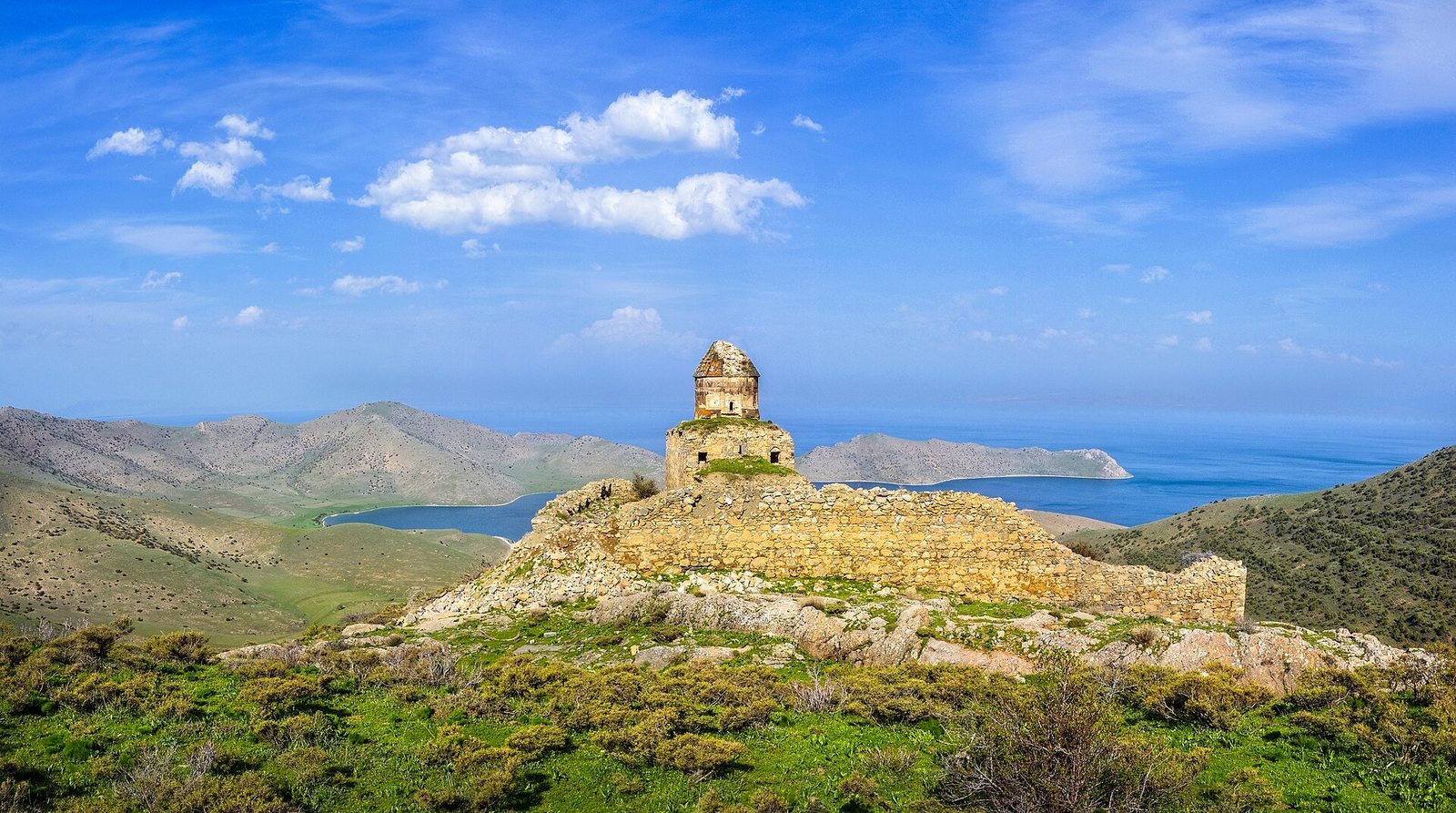
The monastery stands on a hilltop about 80 metres from Lake Van’s southern shore, at an elevation of approximately 1,900 to 2,000 metres. The church is built from finely cut stone and has a notably plain exterior. Its compact central plan takes the form of an inscribed cross, in which the arms of a cross are incorporated into a central building mass, and it has three apses. The building measures approximately 11 to 12 metres by 7 to 8.5 metres and rises about 7.5 metres. A domed upper structure crowns the church, with an octagonal dome and a twelve-sided drum.
Two side chambers flank the drum. One held the relics associated with the apostle Thomas, while two further chambers beside the western wall were dedicated to the apostles Peter and Paul. A gilded khachkar forms part of the church’s reported decoration.
The western side carries a portico measuring 9.2 metres in length. Finely cut stone forms its horseshoe arches, which rest on four complete columns and eight half-columns. These supports carried a vaulted roof. The church and portico are still standing, but both are partly ruined, and sections of the portico roof and walls have collapsed.
Enclosure and Cemetery
Enclosing walls surround the monastery. Their recorded lengths are approximately 50 metres on the south, 39 metres on the west, and 35 metres on the north. The complex was also associated with extensive lands around nearby villages, although its farm buildings have largely disappeared and survive mainly through visible foundations noted in the twentieth century.
A cemetery lies west of the monastery, approximately 100 metres away. Numerous decorated Armenian tombstones remain there, including khachkars whose carved surfaces have been damaged.