Kristi Lekamens kyrka: A Roman Catholic Church in Visby
Site at a Glance
- Rating
- 4.6
- Popularity
- Very Low
- Country
- Sweden
- Primary era
- Modern
- External website
- Open
- Eras represented
- Medieval, Modern
- Civilizations
- Swedish
- Site type
- Religious
- Remains
- Church
On this page7 sections
History
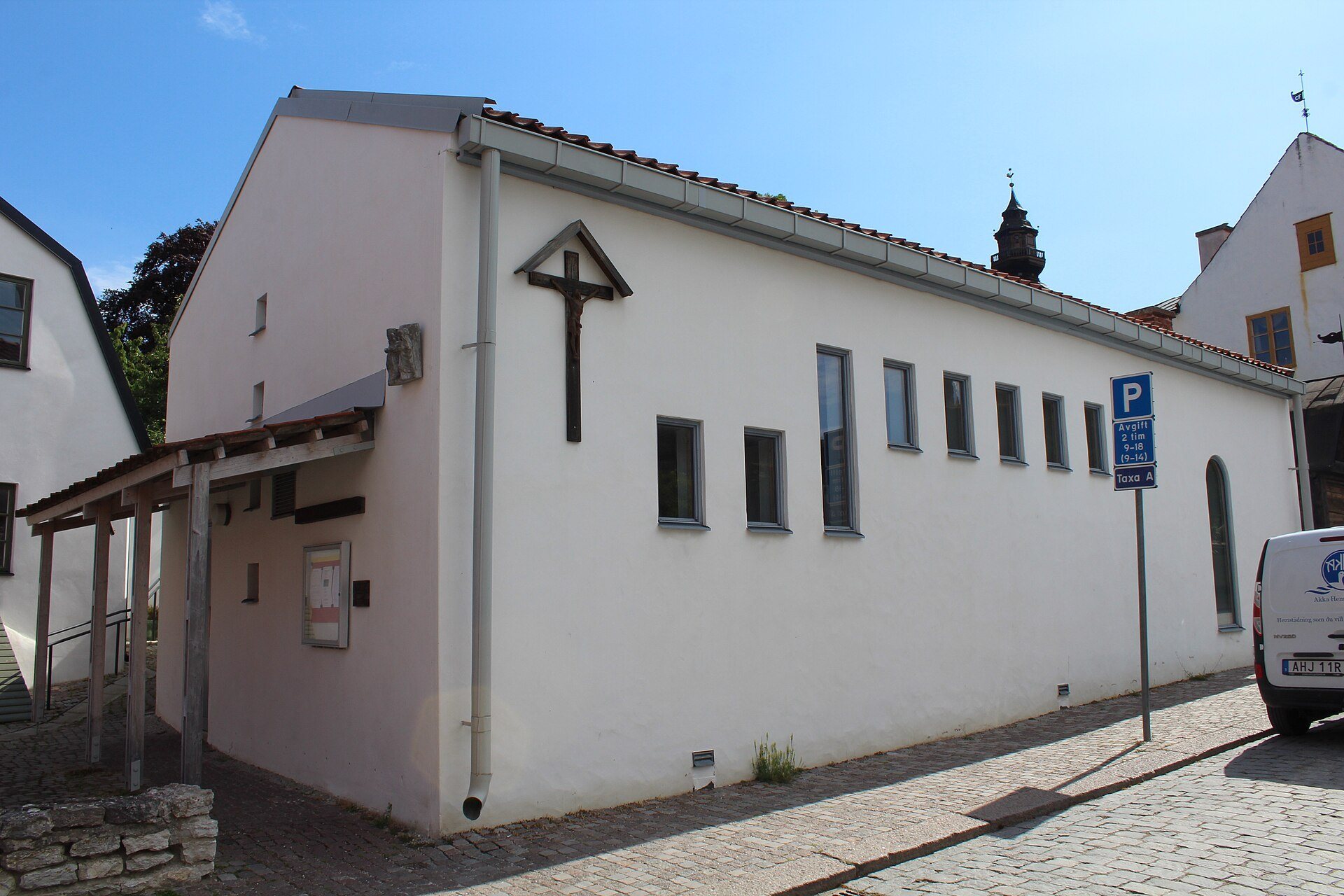
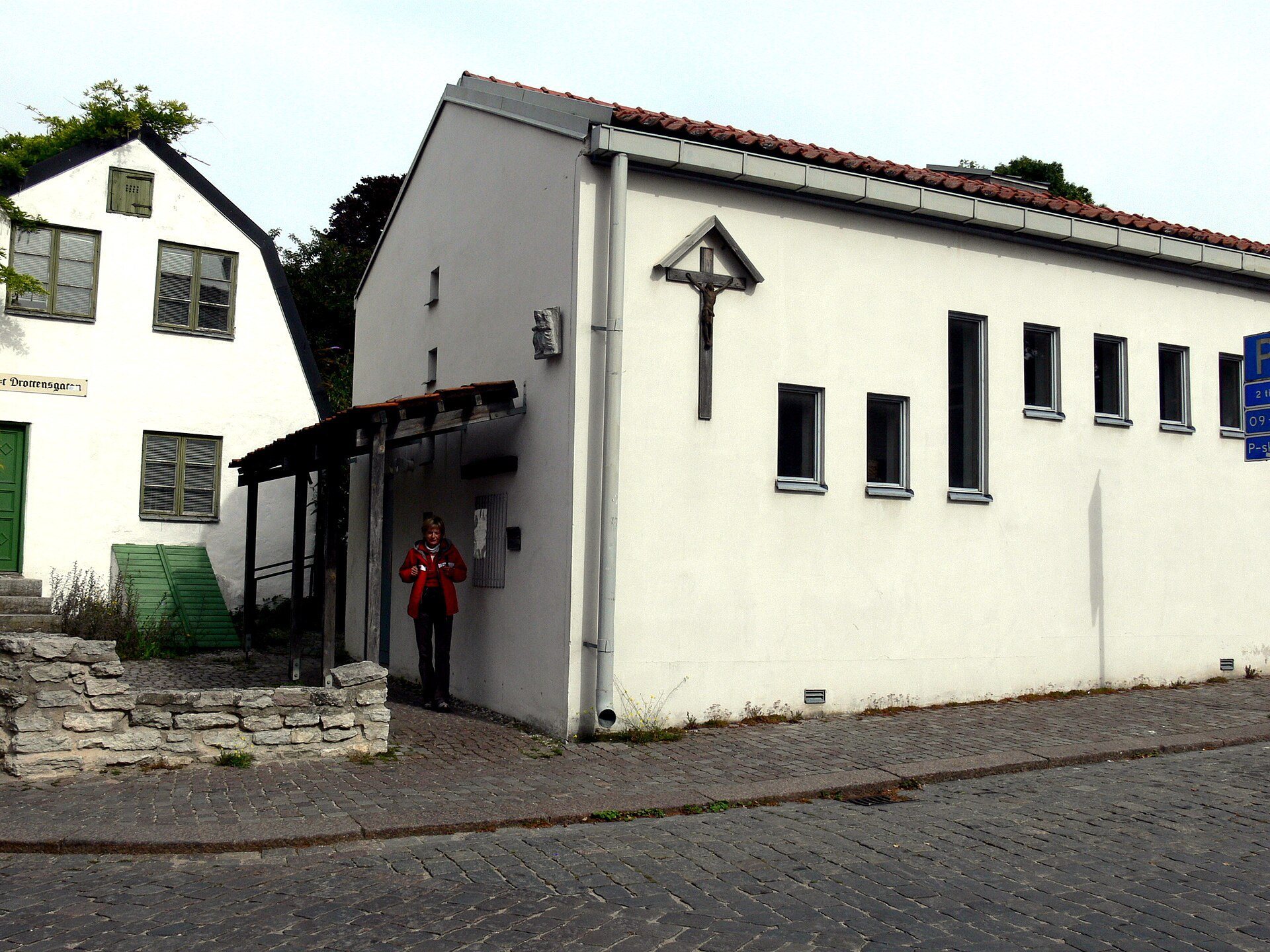
Kristi Lekamens kyrka is a Roman Catholic church in Visby, Sweden, and the only Catholic church on Gotland. It is the first Catholic church built on the island since the Middle Ages. The contemporary building belongs to the Diocese of Stockholm, the Catholic ecclesiastical jurisdiction serving the church, and stands in the northern part of Visby’s old town.
Renewed Catholic worship on Gotland
Catholic Masses resumed on Gotland in the 1920s after the Reformation, the sixteenth-century transformation that established Protestant churches in Sweden and ended the medieval Catholic institutional presence. By 1937, the chapel at Kilgränd in Visby was the principal Catholic place of worship on the island, while Masses were also celebrated in several other churches across Gotland.
The Catholic parish of Saint Nicholas was established in 1975. In 1981, a property in the Priorn 11 district was purchased for a new Catholic church, and the existing building was demolished to clear the site. The church was designed by the Gotland architect Per Erik Nilsson and constructed on medieval foundations uncovered during archaeological work in 1977. Later investigation identified a medieval basement room that was incorporated into the new building.
Consecration and enlargement
Bishop Hubertus Brandenburg consecrated Kristi Lekamens kyrka on 18 December 1982. Brandenburg led the Diocese of Stockholm from 1976 to 1998. The church soon became too small, particularly during the summer, when seasonal residents and tourists increased the congregation.
The building was enlarged in 2001, bringing its capacity to about 80 worshippers. The medieval well that had stood outside the church was brought inside and converted into a baptismal font. Bishop Anders Arborelius reconsecrated the enlarged church on 22 December 2001. The church is dedicated to the Body of Christ and serves the Catholic parish of the Body of Christ in Visby.
Renovation in the twenty-first century
A major renovation began in 2017 after moisture entered the building. Completed in 2018, the work repaired the interior and exterior ceilings, replaced the windows along S:t Drottensgatan, modernized the lighting and sound systems, renovated the sacristy, and remodeled the toilet. The church returned to use on Holy Thursday in 2018.
Remains
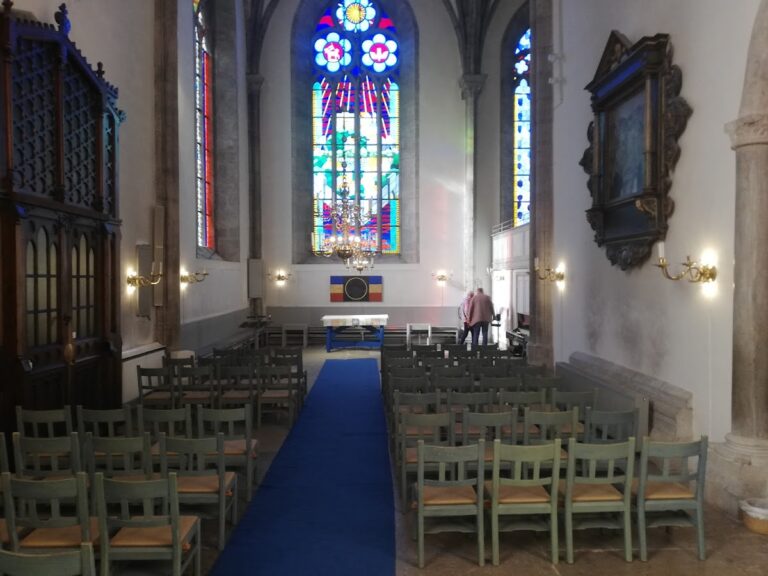
Kristi Lekamens kyrka stands beside a parish house at S:t Drottensgatan 12 and S:t Hansgatan 60. Its architecture is contemporary, while medieval foundations and reused medieval elements remain integrated into the building. The church floor lies below ground level, and parts of the earlier structure can be seen within the present church.
Medieval foundations and interior fabric
Archaeological investigations identified a medieval basement room measuring 13 by 7 metres. It was built from roughly dressed limestone bonded with lime mortar. Three walls survive to a height of 1.5 metres and form part of the church, where they are visible at a higher level. Much of the floor is also medieval, especially the area at the entrance to the chancel, the part of the church reserved for the altar and clergy. Fragments of medieval stairs are incorporated into one corner of the chancel, and a stone from the House of Mary in Ephesus was set into the steps.
Furnishings and devotional objects
Relics of Saint Clement, bishop of Rome and one of the early popes, and Saint Perpetua, an ancient martyr from North Africa, are placed in the floor beneath the altar. The medieval well brought inside during the 2001 enlargement now serves as a baptismal font. A cross on the exterior wall came from the former Catholic chapel at Kilgränd.
The tabernacle, the container in which consecrated hosts are reserved, carries an enamelled image by the Lithuanian artist Eugenijus Budrys, who also made the painting above the organ. The Passion on the crucifix in the chancel is copied from works characteristic of late medieval German art, while the statue of Mary on the medieval stairs is likewise based on a late medieval German work. Helena Nyblom created the Stations of the Cross, a sequence of devotional scenes representing Christ’s Passion; these had previously been in the Church of the Annunciation of the Blessed Virgin Mary in Stockholm.
Christer Mattsson, a glassmaker from Visby, made the glass bowl for the holy-water stoup. Ulf Hansson of Vibble made several other church vessels. The organ was built by Grönlunds Orgelbyggeri in Gammelstaden, and the bell named Maria Lauda was cast in Morjärv in 1977.