Kloster Drolshagen: A Former Cistercian Women’s Abbey in Germany


Site at a Glance
- Rating
- 4.4
- Popularity
- Very Low
- Country
- Germany
- Primary era
- Early Modern
- External website
- Open
- Eras represented
- Early Modern
- Civilizations
- Holy Roman Empire
- Site type
- Religious
- Remains
- Monastery
On this page10 sections
History
Kloster Drolshagen is a former Cistercian women’s abbey in Drolshagen, Germany, founded during the thirteenth century within the medieval Catholic monastic tradition. Cistercians followed a disciplined communal life shaped by the Benedictine tradition, with agriculture and economic self-sufficiency forming part of monastic organization. A forged charter gives 1235 as the foundation year, but the foundation is considered to have taken place somewhat later. In a document of 1248, Countess Mechthild of Sayn named herself, together with her deceased husband Heinrich III, as the founder.
Foundation and Cistercian connections
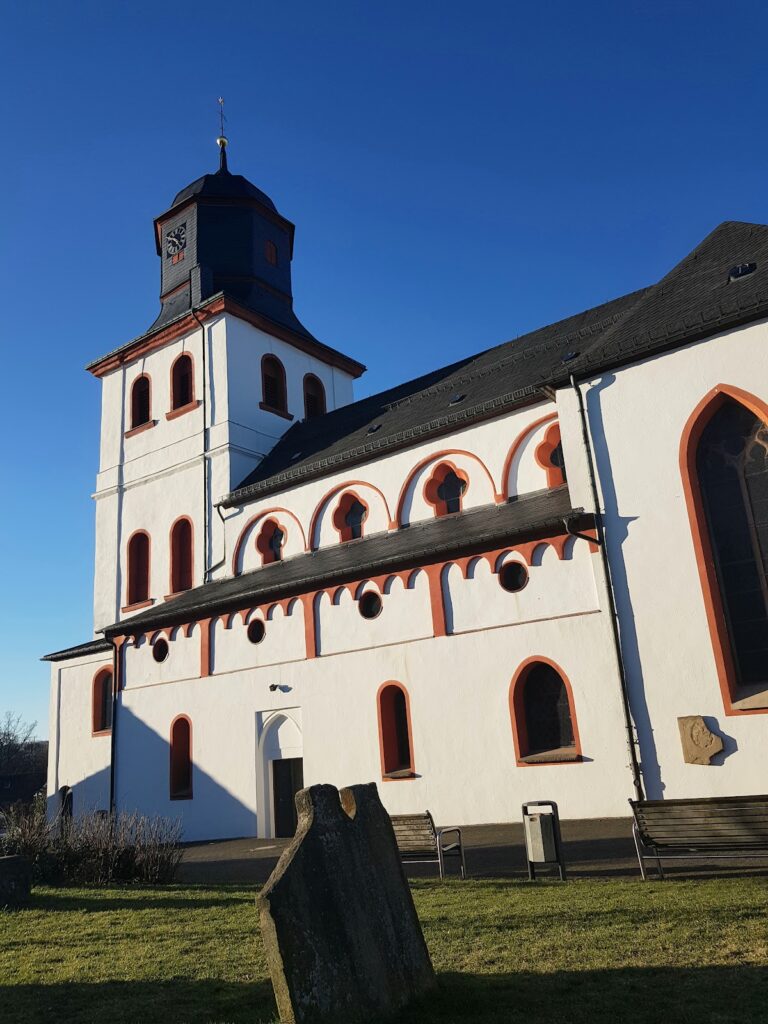
Mechthild of Sayn and the Archbishop of Cologne provided numerous endowments to secure the new abbey’s economic existence. Among them was the parish church of St. Clemens in Drolshagen, which gave the convent the right of patronage, meaning the legal right to influence the appointment of the parish priest. The church was newly built in the thirteenth century and later enlarged through extensive additions.
Drolshagen was initially the only one of Westphalia’s 19 Cistercian women’s monasteries placed directly under Cîteaux, the founding abbey and principal center of the Cistercian order. It later came under Heisterbach Abbey and maintained close relations with Marienstatt Abbey. From 1539, the abbots of Marienstatt served as permanent visitators, senior officials responsible for inspecting the abbey and supervising observance of its rules.
Medieval prosperity and monastic life
The abbey flourished during the thirteenth and fourteenth centuries. By the end of the Middle Ages, its mainly local landholdings covered about 93 hectares, while additional properties lay around Valbert, Attendorn, Förde, Kleusheim, Rhode, Wenden, Eckenhagen, Ferndorf, and several places in the Rhineland. The convent had also formerly held property in the Soest Börde and around Balve. Rhineland estates supplied wine, and the abbey owned two flour mills and several ironworks.
Until the seventeenth century, admission was reserved for daughters of the nobility, especially from the Sauerland, the Bergisches Land, and the Rhineland. The internal organization included an abbess, prioress, subprioress, cellarer, sacristan, novice mistress, organist, singer, and infirmarian. A prior and confessors came from Marienstatt Abbey. The community generally consisted of 10 to 17 professed nuns, women who had formally entered the religious community through vows, together with four or five lay sisters who carried out practical and domestic duties.
Decline and reform
During the fifteenth century, evidence of declining discipline appeared, including the involvement of a nun in relic trading in 1489. In the Reformation era, enclosure rules were relaxed and some nuns wore secular clothing. The number of religious women fell sharply. Under Abbess Walburga von Wischel, who led from 1578 to 1599, only four sisters remained, making the proper performance of choir services impossible. In 1602, Abbess Eva von Plettenberg left the abbey and adopted the Lutheran confession.
The decline ended under Abbess Angela Dorothea Knipping. The convent then consisted mainly of Westphalian noblewomen, although daughters of bourgeois families increasingly entered it, while the abbess continued to come from the nobility. Six nuns remained around 1600, and the number rose to 14 in 1686. During the Thirty Years’ War, a major European conflict from 1618 to 1648, the nuns temporarily fled to Cologne.
Rebuilding, conflict, and financial crisis
Around 1680, the monastery was rebuilt with stables and a bakehouse. Disputes with the town and parish of Drolshagen over shared use of the church also began during this period. The conflict was settled in 1763 when the parish agreed to build the convent its own church. In return, the convent surrendered all its rights in the Drolshagen church except its right of patronage. Prior Eugen Hartung was chiefly responsible for the compromise.
The abbey’s investments in mining and metal production, particularly in the Vahlberg ironworks, brought serious financial difficulties. It became increasingly indebted, sold property worth 20,000 thalers, and still retained debts of the same value. Hartung proposed moving the abbey to Röttgen hunting lodge near Bonn and replacing the nuns with members of the Franciscan Order, a Catholic mendicant order associated with the tradition of Francis of Assisi. The plan failed. Financial pressure also caused internal conflicts and led to an archiepiscopal visitation in 1792. The abbess supported dissolution at that time, but the abbey survived until the end of Electoral Cologne’s rule, the ecclesiastical principality governed by the archbishop of Cologne.
Dissolution and later public use
On 13 October 1803, the new sovereign, the Landgrave of Hesse-Darmstadt, dissolved the abbey. A landgrave was a territorial prince in the German-speaking lands. The abbess and the last four choir nuns received pensions. The remaining domestic staff comprised two male servants, two female servants, a shepherd, and a cattle boy. The archive was first housed in Arnsberg and later transferred to the State Archive in Münster.
The former monastery is now used for public purposes. Parts of the Old Monastery accommodate Drolshagen’s municipal administration, while the building also serves adult education and cultural and social events. Its changing names reflect its institutional history: it was called the “abbess and convent of St. Clemens” in 1243, the “nuns of the Grey Order of Cîteaux” in 1355, and the “abbess of the free noble convent of St. Clement at Drolshagen” in 1738.
Remains
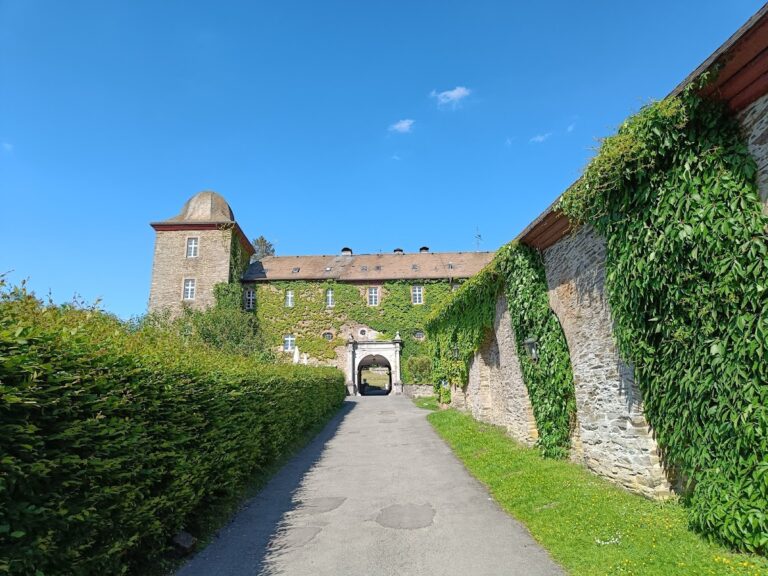
The surviving former monastery is centered on the main wing of the Old Monastery. This remaining part of the complex reflects the rebuilding carried out around 1680, when the monastery was renewed together with stables and a bakehouse. The building continues to accommodate public functions, linking the surviving historic structure with the civic life of Drolshagen.
Old Monastery
Main wing
The main wing is the surviving architectural part of the former monastery. Its present use includes municipal administration, adult education, and cultural and social events. The building therefore retains a functional connection with the community while preserving the principal surviving element of the monastic complex.
Music hall
A room in the attic is known as the music hall. It is used for meetings of Drolshagen’s municipal council, giving this upper part of the former monastery a continuing public role.
Nearby sites