Certosa di Toirano: A Carthusian Monastery in Liguria


Site at a Glance
- Rating
- 4.6
- Popularity
- Very Low
- Country
- Italy
- Primary era
- Early Modern
- Eras represented
- Early Modern
- Civilizations
- Genoese
- Site type
- Religious
- Remains
- Monastery
On this page9 sections
History
Certosa di Toirano is a former Carthusian monastery in Italy, developed as the lower house of a religious foundation that began on Mount Saint Peter in the Varatella Valley. The Carthusian Order is a Catholic monastic order known for its contemplative and largely solitary communal life, and a charterhouse is one of its monasteries. The later complex became a place of Catholic worship dedicated to Saint Peter in Chains and is located in the Certosa locality of Toirano, in the Province of Savona, Liguria.
From Benedictine abbey to Carthusian house
The history of the foundation reaches back to the Benedictine Abbey of Saint Peter of Varatella, founded in 773 by Charlemagne on Mount Saint Peter. Charlemagne was the king of the Franks and later an emperor whose rule extended across much of western and central Europe. The Benedictines, members of an older communal monastic tradition based on the Rule of Saint Benedict, abandoned the mountain in 1308. The abbey’s properties were then incorporated into the episcopal revenues of Albenga.
On 5 April 1315, Emmanuele Spinola, bishop of Albenga, transferred Mount Saint Peter and almost all its properties to the Charterhouse of Casotto. The transfer required a religious community to be established there and the offices to be celebrated. The first prior was Pierre de Garzano, a professed monk of Casotto who served in 1315. On 17 August 1321, Carthusian visitors separated the new Mount Saint Peter house from Casotto and declared it autonomous.
The monastery became involved in the divisions that affected the Carthusian Order during the Western Schism, a period when rival popes claimed authority in western Christianity. In 1381, Pope Clement VII issued a bull intended to unite the Charterhouse of Mount Saint Peter with the Charterhouse of Mombracco, but the union was never implemented. After the departure of the monks from Albenga, a priest was expected to provide religious services at the mountain church. In 1406, the general chapter of the Urbanist Carthusians urged the community to remain loyal to Pope Innocent VII of Rome during persecution by the Clementines. The Urbanists supported the pope in Rome, while the Clementines supported Clement VII at Avignon.
Relocation to Toirano
The mountain site eventually became difficult to maintain because of its harsh climate and the deteriorated condition of its buildings. In 1433, the general chapter sent the prior of the Charterhouse of Lucca to examine whether the monastery should be abandoned or rebuilt lower down, and to establish how many people its revenues could support. Visitors inspected a proposed site for a new house in 1435, but the plan was suspended the following year.
The question was reconsidered in 1495, when the Carthusian Order reassessed the community’s complaints and the urgency of moving. The monks enlarged an existing hospice lower on the hill, near Toirano and the Varatella River. On 15 August 1495, they received authorization to move there. The new charterhouse was built on land that already contained buildings belonging to the former abbey, and these structures were incorporated into the completed complex.
The Holy See and the Carthusian general chapter required the former abbey church on Mount Saint Peter to remain in use. Its roof was to be repaired, and Mass was to be celebrated there from time to time. This created a distinction between Upper Albenga, the original foundation on Mount Saint Peter, and Lower Albenga, the later house near Toirano. The lower site is now commonly known as Certosa di Toirano.
Expansion and suppression
The Toirano monastery was enlarged during the sixteenth and seventeenth centuries, reaching completion in the seventeenth century. Its church was dedicated to Saint Peter in Chains. The final prior was Grégoire Quairazzi, who held office from 1795 to 1799.
Religious orders were suppressed in 1798 with the establishment of the Ligurian Republic. The monastery closed in 1799. The French government formally decreed the suppression of religious orders and congregations on 16 August 1802, and monastic life had ended by December of that year. After the Carthusians were removed, the complex was partially dismantled between 1810 and 1814 during the First French Empire.
Remains
The relocated monastery and church
The later charterhouse occupies a lower position in the Varatella Valley, near the Varatella River on its left bank, or left side of the valley. Its buildings incorporated elements of the earlier Abbey of Saint Peter of Varatella, linking the Toirano complex physically with the older foundation on Mount Saint Peter.
Church and bell tower
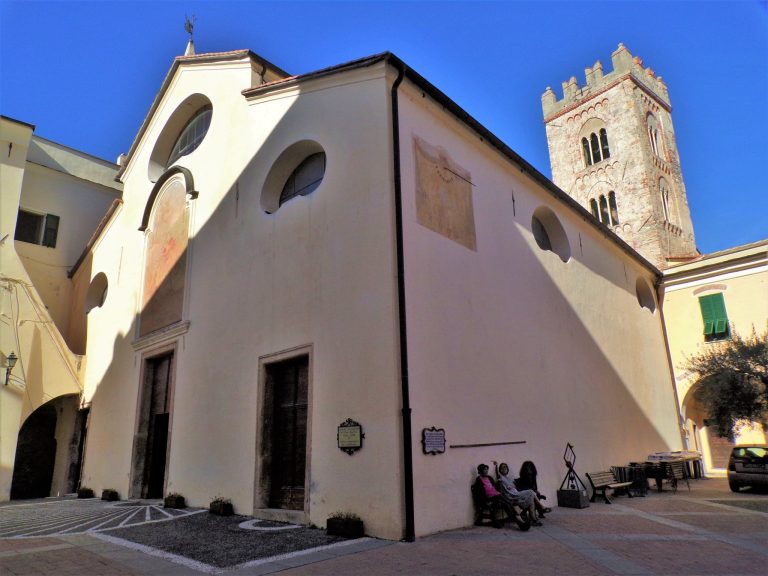
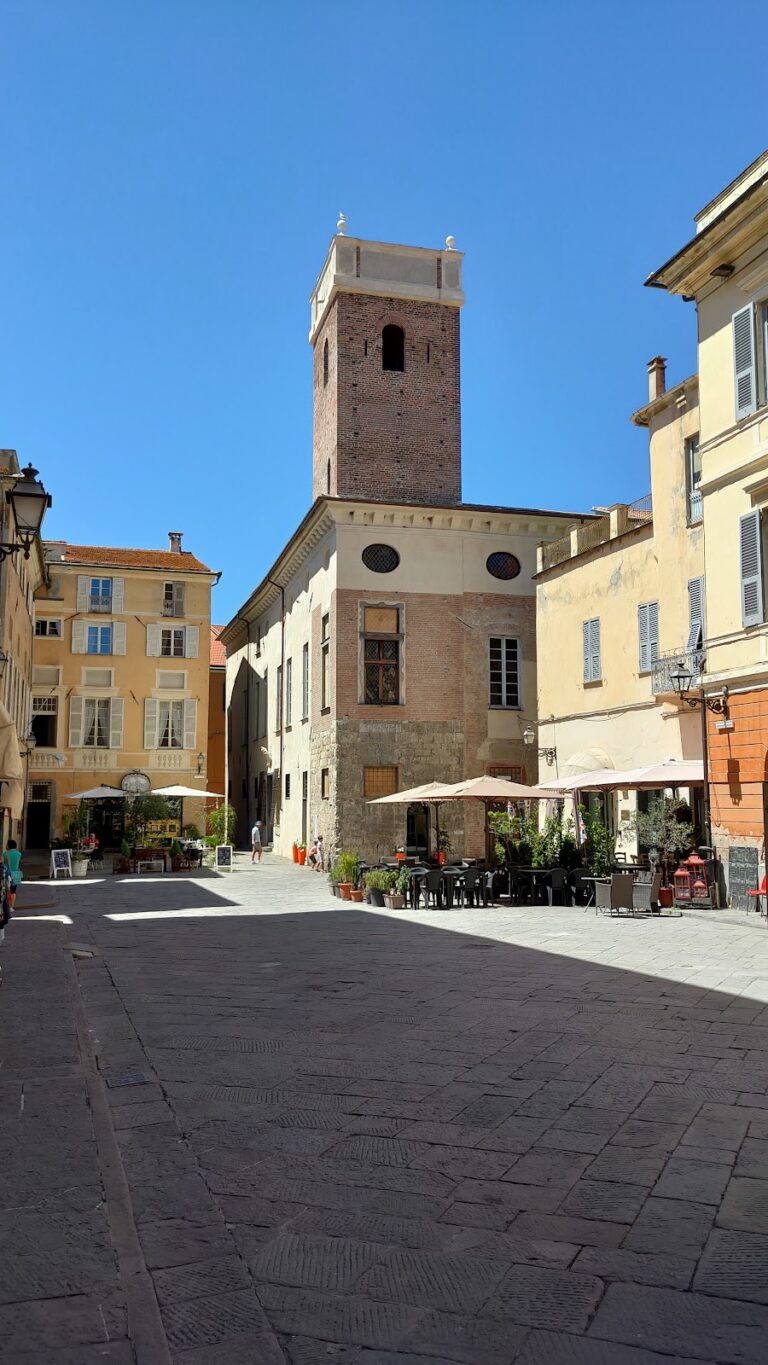
The surviving church stands beneath a bell tower and is in a semi-ruined condition. It has a single nave, and its façade faced north. The bell tower dates to 1564 and is surmounted by an octagonal dome resting on a drum. Together, the tower and the church preserve part of the religious architecture of the monastery after its relocation and later expansion.
Entrance courtyard and loggia
The entrance courtyard served as the church’s forecourt until 1627. A small Renaissance loggia stands within the courtyard and is supported by marble columns. These elements formed part of the approach to the church and survive as features of the former monastic complex.
Evidence connected with the upper foundation
The original monastery and church stood on Mount Saint Peter in the Varatella Valley. The former mountain house possessed a very old iron chain. Tradition identifies it as one of the two chains, or at least a substantial part of one, that Herod’s soldiers used to bind the Apostle Saint Peter in Jerusalem. This tradition helps explain the religious associations attached to the earlier foundation and to the later church dedicated to Saint Peter in Chains.