Church of St Saviour, Dartmouth: A Historic Church of England Parish Church


Site at a Glance
- Rating
- 4.7
- Popularity
- Very Low
- Country
- United Kingdom
- Primary era
- Medieval
- Eras represented
- Medieval, Early Modern, Modern
- Civilizations
- British, English
- Site type
- Religious
- Remains
- Church
On this page15 sections
History
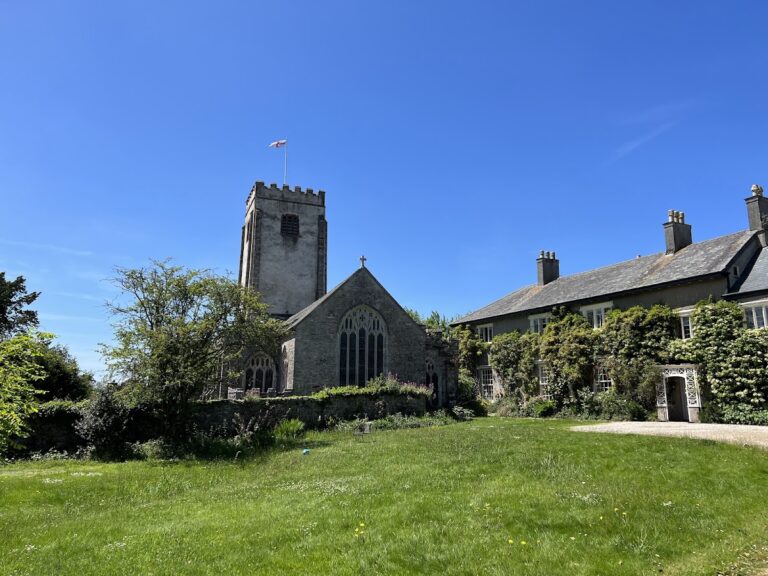
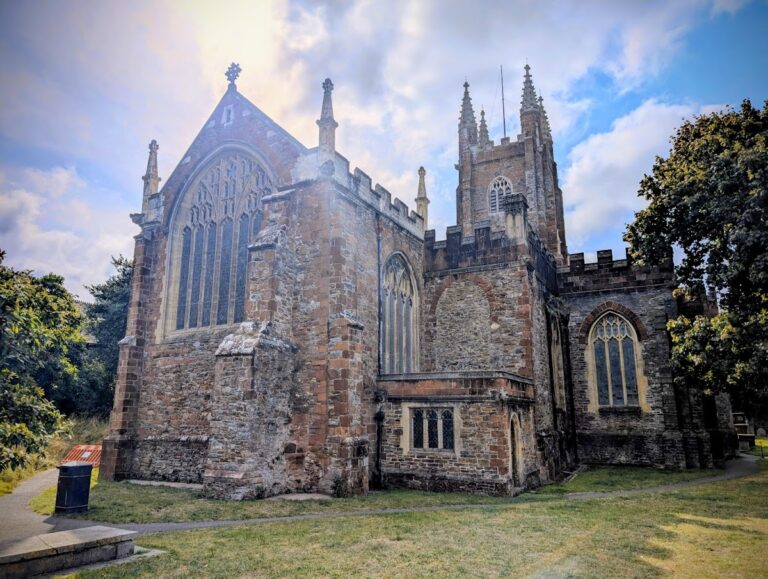
Church of St Saviour is a Church of England parish church in Dartmouth, United Kingdom, dedicated in 1372 as a chapel of ease under St Clement’s Church in Townstal. A chapel of ease served worshippers who lived too far from the principal parish church for convenient regular attendance. The church belongs to the Diocese of Exeter, within the Archdeaconry of Totnes and Deanery of Totnes, and remains dedicated to St Saviour.
Medieval foundation and rebuilding
Much of the church’s construction was funded by John Hawley, who served three times as Mayor of Dartmouth. Hawley died in 1408 and was buried in the church, linking the building closely with one of the town’s leading medieval civic figures.
The eastern end of the nave was rebuilt in the late fifteenth century, and a rood screen was installed in 1496. A rood screen is a decorated division between the nave, the main area used by the congregation, and the chancel, the part around the principal altar. The screen remains part of the church.
Civic control and seventeenth-century work
From 1585 to 1835, Dartmouth’s town corporation held the church’s advowson, the legal right to appoint or nominate its incumbent. During this period the corporation undertook major restoration and refurbishment between 1633 and 1637. Inscriptions found during later restoration record new construction in the south and north transepts in 1634, during the mayoralties of Alexander Staplehill and William Gourney respectively. Transepts are the cross-arms that project from a church’s main axis.
The church was improved again in 1842 through painting and whitewashing. The chancel and rood screen were re-gilded and ornamented. These works preceded a much more extensive sequence of nineteenth- and early twentieth-century restoration.
Restoration and continuing use
A major restoration was carried out in 1887 and 1888 by Mr Ashworth of Exeter and John Dando Sedding, an architect and church designer. A second phase, supervised by Ashworth, took place from 1893 to 1895, and a third phase was completed in 1906. The church is a Grade I listed building, the highest category of statutory protection for historic buildings in England, reserved for buildings of exceptional interest.
The parish church remains active. Its history also includes a long record of musical and mechanical equipment. Church records attest an organ in 1434 and mention a new organ in 1531 and 1532, although the fate of that earlier instrument is unknown. The present organ originated with Paul Micheau in 1789, was enlarged in 1889, and was restored and enlarged again by Michael Farley in 1996. The ring of eight bells was recast in 1938 by John Taylor & Co. of Loughborough, in the musical key of E-flat, with a tenor weighing 946 kilograms.
Remains
The surviving church is arranged around a nave, chancel, south and north transepts, and porches added or altered over several centuries. Its fabric combines medieval elements, seventeenth-century construction, and substantial restoration work from 1887 to 1906. The principal surviving features include the late medieval rood screen, the south porch with reused ironwork, the transepts with their civic inscriptions, and the later roofs, choir fittings, and north porch.
Medieval and seventeenth-century fabric
Rood screen and nave
The eastern end of the nave belongs to the late-fifteenth-century rebuilding, while the rood screen was installed in 1496 and survives in the church. Its position separates the congregation’s nave from the chancel. Later choir stalls were designed in its style, creating a visual connection between the surviving medieval screen and the restored interior.
South porch
The south porch dates from 1620. Its doorway retains fourteenth-century ironwork decorated with two leopards and large leaf scrolls, an earlier feature preserved within the later porch fabric.
Transepts
The south and north transepts contain inscriptions recording new construction in 1634. The inscription associated with the south transept names Alexander Staplehill as mayor, while the one associated with the north transept names William Gourney. Their placement preserves a direct record of the civic officials connected with the seventeenth-century building work.
Restored church interior
Roofs, choir fittings, and chancel
The restoration of 1887 and 1888 completely replaced the roofs of the nave and transepts, added a vestry for the choir, and installed new choir stalls designed in the style of the rood screen. During the final restoration phase, completed in 1906, a large painting was moved above the staircase to the west gallery and the chancel arch was opened up.
Organ
The organ has three manuals, meaning keyboards played by the hands, and 29 speaking stops, each controlling a distinct rank or set of pipes. It contains 1,708 pipes. Paul Micheau made the original instrument in 1789, pedals were added around 1840, and Bryceson Brothers of London enlarged it in 1889. Michael Farley restored and enlarged it again in 1996.
Bells and clock
Eight bells
The eight bells documented in 1895 had diameters ranging from 30 inches to 47 inches. Bells 1 and 3 measured 30 inches, bell 2 measured 31 1/2 inches, bell 4 measured 33 1/2 inches, bell 5 measured 35 inches, bell 6 measured 32 1/2 inches, bell 7 measured 41 1/2 inches, and bell 8 measured 47 inches.
Bells 1, 2, 3, and 5 were associated with W. Parnell of Collumpton and dated 1826. Bells 4 and 7 were made by Ambrose Goodling of Plymouth in 1732, while bell 6 was made by A. Gooding in 1742. Bell 8 was associated with J. Warner & Sons of the Crescent Foundry and dated 1854. The ring was later recast in 1938 by John Taylor & Co. of Loughborough.
The inscriptions preserve civic, religious, and commemorative messages. Bell 1 names Mayor E. Brooking, Justice A. H. Holdsworth, and Vicar Robert Holdsworth. Bell 3 carries the words “Prosperity to the Corporation,” while bell 4 reads “Keep peace and good neighbourhood.” Bell 7 states, “Ambrose Goodling, of Plymouth, cast us all 1732,” and is decorated with running foliage and vines. Bell 8 bears the words, “I to the church the living call and to the grave do summon all.” It was originally given by Walter Jago, and its record also names John Tracey as vicar.
Turret clock
Ambrose Hawkins of Exeter made the church’s turret clock in 1705. The mechanism has a wrought-iron frame, brass wheels and mouldings, and scroll finials on the corner posts. John Smith and Sons of Derby made its replacement in 1906, while the 1705 mechanism was retained and placed on display at the back of the church.