Cartoixa de Montalegre: A Carthusian Charterhouse in Spain


Site at a Glance
- Rating
- 4.6
- Popularity
- Very Low
- Country
- Spain
- Primary era
- Medieval
- External website
- Open
- Eras represented
- Medieval, Early Modern, Modern
- Civilizations
- Crown of Aragon, Spanish
- Site type
- Religious
- Remains
- Monastery
On this page11 sections
History
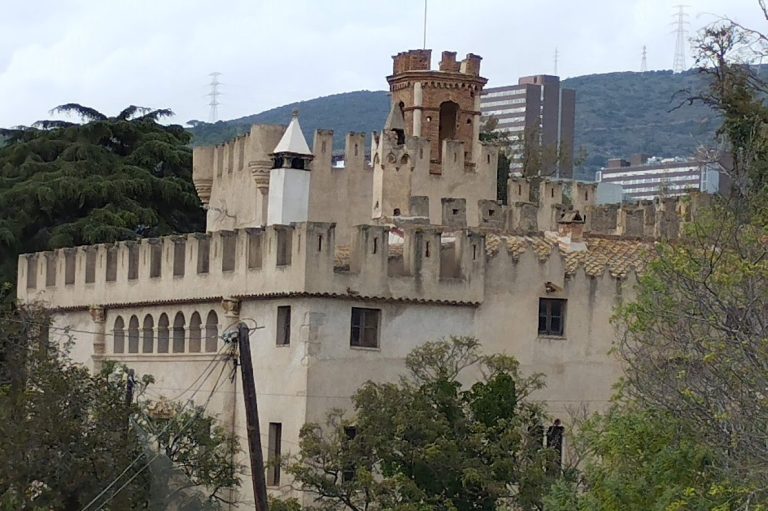
Cartoixa de Montalegre is a Catholic male Carthusian monastery near Tiana in Spain, in the Barcelona area, dedicated to Our Lady. Its present form belongs chiefly to the fifteenth-century late Gothic period, and it remains the only existing Carthusian charterhouse in Catalonia.
From Augustinian convent to Carthusian foundation
The site began in 1247 as a small convent of Augustinian canonesses. Because its isolated position proved difficult, the nuns moved to Barcelona in 1362. After several changes of ownership, the estate was acquired by the Hospital of the Holy Cross of Barcelona in 1409.
In 1415, the hospital sold the property to Dominique de Bonnefoy, prior of the Carthusian house of Valparaíso. His community required a larger and more suitable home. A papal bull issued by Benedict XIII, the Avignon antipope, authorized the transfer, allowing the neighboring Carthusian communities of Valparaíso and Saint-Paul-de-la-Mer to develop their activities together. The foundation of the charterhouse is dated 1413, while construction began in 1415 beside the former convent.
The Valparaíso community moved to Montalegre in 1415. The earlier convent was retained as the charterhouse’s agricultural and service establishment, known as the Conreria. The community of Saint-Paul-de-la-Mer joined the foundation in 1433 or 1434, and construction was completed in 1463.
War, suppression, and changing uses
Montalegre suffered severely during the War of the Spanish Succession, the early eighteenth-century conflict over the Spanish throne. Its community was also forced to leave between 1808 and 1814 during the Napoleonic period, and again between 1820 and 1824. During Barcelona’s yellow-fever epidemic of 1821, the charterhouse was used as a lazaretto, or quarantine hospital, operated by French medical personnel.
The monastery closed in 1835 as a consequence of the Mendizábal disentailment, a Spanish policy that confiscated and sold property held by religious institutions. The Carthusian community was expelled, and the complex was later used first as a military barracks and then as a hospital. It was looted and burned in the same year.
The Carthusian order began trying to repurchase Montalegre in 1867. A small community arrived to begin restoration, but the attempt to re-establish the charterhouse failed. The effort ended in 1868 after Queen Isabella II was deposed.
Return of the community
In 1901, French Carthusians settled at Montalegre after religious legislation in France expelled monks and closed Carthusian monasteries there. The new community comprised 29 fathers, meaning ordained choir monks, and 23 brothers, who were traditionally responsible for many practical tasks.
During the Tragic Week of 1909, a Civil Guard detachment was stationed beside the monastery to protect the community from possible attacks. It remained until 1915 in the building later known as the nuns’ house. At the beginning of the Spanish Civil War, the charterhouse was seriously damaged and the community dispersed. It then comprised 21 fathers and 16 brothers, and six members, including Célestin Fumet, were killed on 20 July 1936. During the war, the building served as a tuberculosis hospital.
After Francisco Franco’s forces won the Spanish Civil War, the monks returned in 1939. The former Conreria became the minor seminary of the Diocese of Barcelona, but the seminary closed in 1998 because it was no longer economically viable. The former seminary building was then transferred to the Pere Tarrés Foundation and functions as a residential holiday camp. Cartoixa de Montalegre is protected as a cultural property in Catalonia.
Remains
The surviving monastery lies near Tiana in the Maresme district of Barcelona, within the Sierra de la Marina. Its layout is organized around two adjoining cloisters, covered arcades surrounding open courtyards and providing circulation within the monastery. The buildings express the Carthusian arrangement of communal religious life combined with extensive individual solitude in separate private cells.
Cloisters and residential cells
Inner cloister
The inner cloister was completed in 1448. It forms a large, plain Gothic quadrangle measuring approximately 55 metres on each side, with stretches of three arcades supported by simple columns. The prior’s cell and 16 additional cells were arranged around this first cloister.
Carthusian cells
In 1636, the number of cells increased to 30, distributed around the two cloisters. They share the same size and general arrangement. Each private residential unit includes an Ave Maria area, formerly used as a kitchen; a cubiculum measuring approximately 7 by 4 metres, with a prayer area and table; a window opening onto a garden; and a sleeping area with a small cupboard for personal belongings. Every cell retains a chimney associated with its former kitchen function. A small room for manual work was added to the cells in 1901.
Church and service buildings
Church
The church is a narrow, elongated building in a simple late Gothic style. Constructed between 1415 and 1463, it measures approximately 35.40 metres in length and 8.40 metres in width. Its interior is divided into two choirs, one for the fathers and one for the lay brothers. The arrangement reflects the order’s distinction between ordained monks and non-ordained members, while religious services are reserved for the resident community.
Conreria
The former Augustinian convent survives as the Conreria, the charterhouse’s agricultural and service establishment. Its later history as the diocesan minor seminary and its present use as a residential holiday-camp facility belong to the building’s continuing post-monastic use.
The monastery has no guesthouse and is not open for ordinary visits. This practice is associated with preserving the monks’ contemplative solitude.
Nearby sites