San Giovannino dei Cavalieri: A Renaissance Church in Florence


Site at a Glance
- Rating
- 4.8
- Popularity
- Very Low
- Country
- Italy
- Primary era
- Early Modern
- External website
- Open
- Eras represented
- Medieval, Early Modern
- Civilizations
- Grand Duchy of Tuscany, Knights Hospitaller, Republic of Florence
- Site type
- Religious
- Remains
- Church
On this page20 sections
History
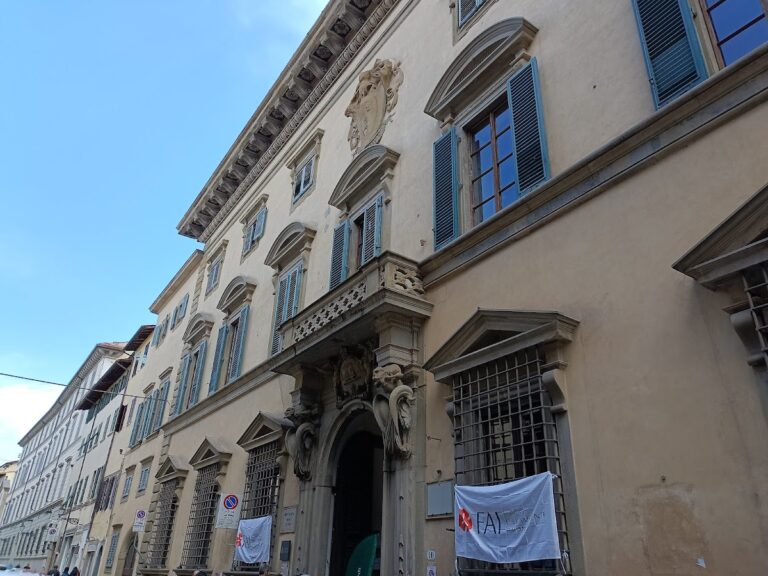
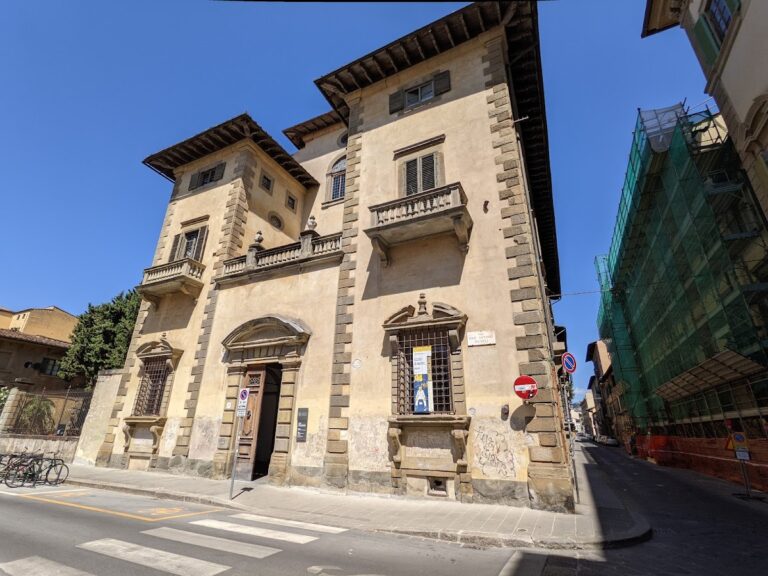
San Giovannino dei Cavalieri is a Roman Catholic church in Florence, Italy, known formally as San Giovanni Decollato, or Saint John the Baptist Beheaded. It is a Renaissance building on Via San Gallo whose present form developed through rebuilding between 1553 and 1784, with a façade added in 1699. Its history reflects the successive presence of the Celestine Congregation, a monastic community founded by Pietro da Morrone, and a Hospitaller women’s community linked to the Knights of Saint John, later known as the Order of Malta.
Celestine origins
In 1274, Pietro da Morrone passed through Florence on his way to the Second Council of Lyon, attracting strong public enthusiasm. He later became Pope Celestine V and founded the Celestine Congregation. Around fifty years after his visit, in 1326 and 1327, members of the congregation arrived in Florence.
The Celestines received an existing oratory on Via San Gallo dedicated to Saint Mary Magdalene, together with a hospice for repentant women modeled on the saint’s story. The oratory stood under the jurisdiction of the Basilica of San Lorenzo and had previously belonged for several years to the monastic community of Badia Fiorentina. Charles, Duke of Calabria and son of Robert, King of Naples, requested its transfer to the Celestines after coming to Florence to support the city against Lucca.
The monks were also called “del Murrone,” after Pietro da Morrone, and their convent and church consequently became known as San Pier del Murrone. This early phase established the site as a religious foundation connected with a distinct monastic congregation and with charitable care.
The Hospitaller women’s community
In 1392, five noblewomen sought permission to adopt the habit of the Hospitallers of Saint John of Jerusalem under an Augustinian rule. The request followed the arrival in Florence of Riccardo Caracciolo, Grand Master of the Order of Rhodes. A papal bull issued in Florence on 3 May 1392 placed the women under the Grand Master and assigned them the Hospital of San Niccolò at the end of Via dei Serragli, where they cared for pilgrims. The Hospitallers were a military-religious order dedicated to Saint John the Baptist, and their charitable work included assistance to travelers and pilgrims.
The hospital and its attached monastery, along with the nearby church of San Pier Gattolino, were partly destroyed during the siege of Florence in 1529. New fortifications were constructed at the site as part of the city’s defenses. The nuns then moved several times, first to Borgo San Jacopo, later to the Specola area on Via Romana, then to Piazza San Marco, and finally to San Salvatore di Camaldoli in Oltrarno.
Transfer to Via San Gallo
Cosimo I de’ Medici’s major restructuring of Florence’s walls affected the nuns’ establishment at San Salvatore di Camaldoli. In 1552, he permitted them to move into the Celestine convent on Via San Gallo. The Celestines were transferred to San Michele Visdomini, together with the Company of the Lombards, founded in 1545.
The nuns enlarged and modernized the church and its associated rooms. A raised choir, an elevated section that enabled members of the community to participate in the liturgy while remaining distinct from the main nave, was installed for their use. The work lasted about a year, and the church was reconsecrated on 9 April 1553 by the Bishop of Volterra under the dedication of San Nicola di Bari.
In 1562, the former Hospital of San Giovanni Decollato, also called the Hospital of the Porters or Butchers, was annexed to the convent. Its dedication to the beheaded Saint John the Baptist eventually replaced that of Saint Nicholas. The new dedication suited the identity of the Hospitaller nuns, whose order regarded John the Baptist as its patron.
Monastery, education, and confraternities
After the Celestines left in 1552, the church became part of a female monastery associated with Florence’s nobility. Maria Cristina, the illegitimate daughter of Don Antonio de’ Medici, took the veil there, and Maria Maddalena de’ Pazzi entered the monastery in 1580. The nuns also educated young women from noble families.
Several confraternities met in the church and its annexes. These included the Company of San Francesco Poverino, the Company of the Most Holy Purification of the Lombards, and the Company of the Crucifix and Saint Mary Magdalene of the Whites. The church also retained associations with the Order of Malta through its religious community, artworks, tombs, and documentary holdings.
Tradition connects a miraculous crucifix in the church with Saint Zanobi. According to the story, the crucifix was carved from the wood of a withered elm that flowered when Zanobi’s body was carried from San Lorenzo toward the new cathedral of Santa Reparata. The event is commemorated each year on 26 January with a wreath of flowers at the Column of San Zanobi in Piazza San Giovanni.
The church also commemorates Angelo Martellini, who served in the Order of Saint John Baptist of the Temple and fought in the Battle of Lepanto. Wounds received there led to his discharge from the order, although he was later permitted to retain the privileges associated with his knighthood. His nephew, Esaù Martinelli, commissioned Martellini’s tomb in 1610.
Suppression and later restoration
The monastery was affected by Grand Duke Peter Leopold’s Motu proprio of 12 March 1785, which required monasteries to adopt communal life and converted many religious houses into secular conservatories. San Giovannino consequently became a conservatory.
After Napoleon I annexed Tuscany to the French Empire in 1808, the order was suppressed and the Hospitaller nuns were incorporated into the Augustinian nuns of Santa Monaca. The convent was suppressed in the same year, and the church remained closed for worship from 1808 to 1925. In 1810 it became a subsidiary church of the parish of San Lorenzo, and in 1818 it was transferred to the Pia Casa dei Catecumeni.
The former convent and cloister, already functioning as a secular conservatory, were converted into a school under legislation enacted in Turin in 1870. During the First World War, the church itself served as a military storehouse. In 1922, administration of the church returned to the religious endowment fund. It reopened for worship on 8 December 1925 after restoration directed by the architect Ezio Cerpi, who sought to recover its sixteenth-century appearance. In 1939, it again became an autonomous parish.
In 2010, a decree by Cardinal Giuseppe Betori ended the church’s status as a parish and made it a rectory with its own rector. It now lies within the parish territory of Our Lady of the Sacred Heart, to which the former parish archive of San Giovannino dei Cavalieri was transferred.
Remains
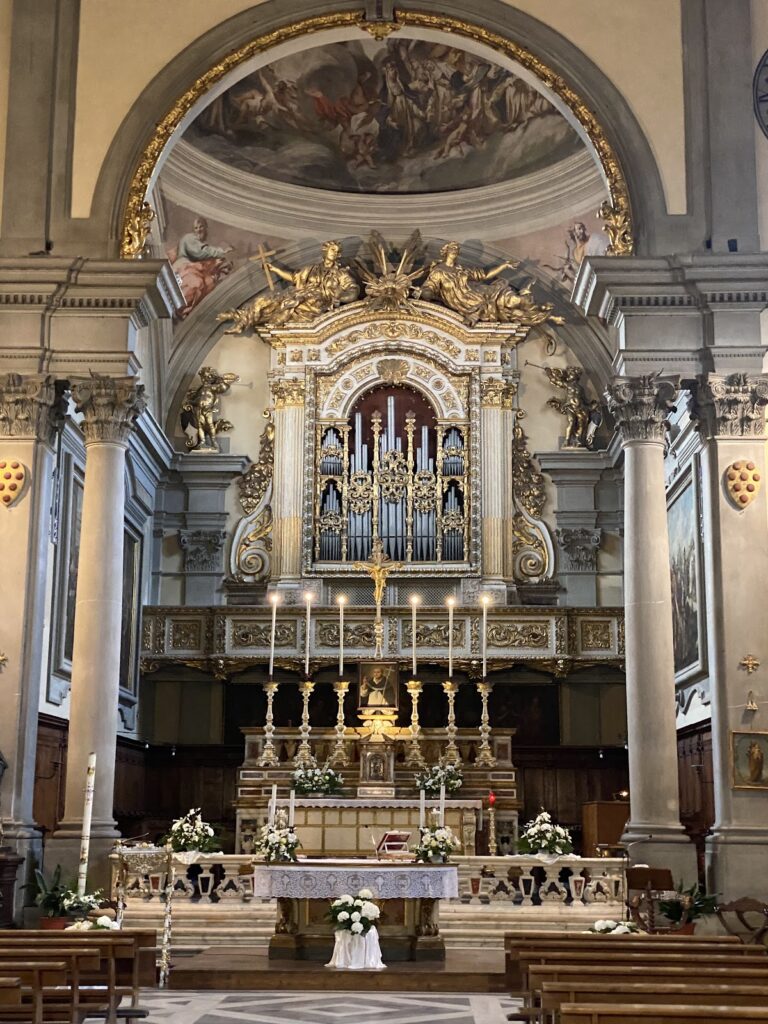
San Giovannino dei Cavalieri is organized around a Renaissance church with three naves, a vestibule at the entrance, a raised choir, side altars, a presbytery, and a counter-façade containing one of its organs. Its fabric combines timber roof construction, marble architectural elements, painted decoration, devotional works, tombs, and furnishings associated with the church’s religious communities.
Entrance and façade
Vestibule and archive
The church is preceded by a vestibule containing period wooden cupboards used for liturgical furnishings and documents. The space also housed the paper archive of the Order of Malta when it was transferred from Pisa to Florence. Largely financed by Cosimo I de’ Medici, the vestibule is an unusual example of Florentine Renaissance design. Evidence in the walls indicates that it was originally lined with a wooden bench used for meetings.
Marble entrance decoration
Above the actual church entrance, a marble pediment bears a polychrome Medici coat of arms. The façade also displays the emblem of the Knights of Malta, a white cross on a red field supported by two marble angels. These elements place the entrance within the church’s later connection to the Hospitaller community.
Interior structure and painted decoration
Naves and raised choir
The interior has three naves covered by a roof supported by timber trusses. The sixteenth-century enlargement included a raised choir for the nuns. Some of the present architectural irregularities result from the later restoration of a liturgical space that had been divided into several parts during the Napoleonic period.
Altarpieces from San Niccolò
Several altarpieces were brought by the Hospitaller nuns from the Hospital of San Niccolò. They include Bicci di Lorenzo’s Nativity, dated 1435, Jacopo Palma the Younger’s Last Supper, and Pier Dandini’s Decapitation of Saint John the Baptist. At the ends of the side naves are Michele Ciampanti’s Annunciation, created around 1475 and also associated with the name Master of Stratonice, and Neri di Bicci’s Coronation of the Virgin.
Ciampanti’s Annunciation sets simplified architecture against a detailed, luminous landscape. Its figures have a fluid character influenced by models derived from the work of Filippo Lippi. The arrangement of these works preserves the church’s connection with paintings brought from the Hospitaller foundation at San Niccolò.
Presbytery frescoes
The back wall of the presbytery contains Lorenzo Monaco’s shaped painted Crucifix with grieving figures. It is set within a unified fresco context that creates an illusion of depth. Some of the surrounding frescoes have been attributed to Gherardini and Botti.
Botti is also associated with the painted architectural framework of the dome. This framework surrounds Gherardini’s Immaculate Conception. Restoration completed in 2021 repaired the damaged integrity of the fresco. The rear-right pendentive, a curved triangular surface supporting the dome above a square or polygonal space, was completely reconstructed according to an integrating design that remains distinguishable from Botti’s original.
Counter-façade painting
Santi di Tito’s Birth of Saint John the Baptist, completed by his son Tiberio Titi and dated 1603, was acquired in connection with the sixteenth-century reconsecration. It is now placed on the right side of the counter-façade.
Tombs, crucifix, and organs
Hospitaller tombs
Two marble tombs in the church belong to the Hospitaller friars Domenico Manzuoli and Angelo Martellini. Martellini’s tomb remains in its original position in the second half of the left nave. It stands on a low stone step and consists of a grey-marble sarcophagus set on a pietra serena base with two projecting side plinths bearing Maltese crosses.
The epitaph is placed between the plinths, while the sarcophagus rests on two pairs of massive white-marble lion’s paws with carved claws and hair. Its chest is trapezoidal, and its lid ends in a form resembling a broken pediment whose central ornament terminates in a diamond point. A separate white-marble heraldic shield attached to the wall shows a rampant stag on a red field beneath a feathered crest.
Crucifix of Saint Zanobi
A crucifix with a sixteenth-century appearance is kept in a niche above a side altar on the right-hand wall, immediately beyond the vestibule. It is traditionally associated with Saint Zanobi and with the story that it was carved from the wood of the elm that miraculously flowered during the transfer of the saint’s body.
Pipe organs
A Renaissance pipe organ built by Cesare Romani in 1581 stands in a wooden case on the counter-façade. A second organ, made by the Tamburini firm as opus 446 in 1962, has electric transmission and is arranged in two opposing sections on the floor of the apse.
Former monastery and cloister
The former monastery and cloister now accommodate the Dante–Leon Battista Alberti classical and artistic high school. Their present educational use follows the nineteenth-century conversion of the former convent and cloister into a school after the religious house had become a secular conservatory.