Žehuňský Pond: A Historic Fishpond on the Cidlina River
Site at a Glance
- Popularity
- Medium
- Country
- Czechia
- Primary era
- Modern
- Eras represented
- Medieval, Modern
- Civilizations
- Holy Roman Empire, Kingdom of Bohemia
- Site type
- Infrastructure
- Remains
- Dam
On this page13 sections
History
Construction and fishery
Žehuňský Pond is a fishpond on the Cidlina River in Czechia, created between 1492 and 1497. Vladislav II Jagiellon, king of Bohemia, ordered the river to be dammed. The new water partly covered the busy route from Prague to Kłodzko. Jakub Krčín of Jelčany took part in building the dam and later constructed a number of fishponds in southern Bohemia.
The pond supported a managed fishery. In 1553 the royal court requested two wagonloads of carp and 30 pike. Three years later, a governor ordered repairs to equipment at the inlet after the fish harvest. The equipment kept fish from moving upstream, and the nearby village of Zbraň takes its name from it.
Floods and changing management
Floods damaged the pond in 1845, 1846, 1862, 1865, and 1891. The Ministry of Education and Enlightenment declared the pond and nearby meadows and wetlands a national natural monument on 8 February 1948, a Czech designation for a natural feature or area of special value. In the 1950s, the dam was rebuilt and strengthened, and the pond’s original area was reduced to improve its capacity to hold water.
From 1999 to 2006, the pond was part of the Žehuňský Pond and Žehuň Game Preserve National Nature Reserve. It is also within a Special Protection Area, a European Union designation for conserving wild birds and their habitats. Its uses include fish farming, supplying irrigation water, and flood protection.
Remains
Basin and water controls
Pond and dam
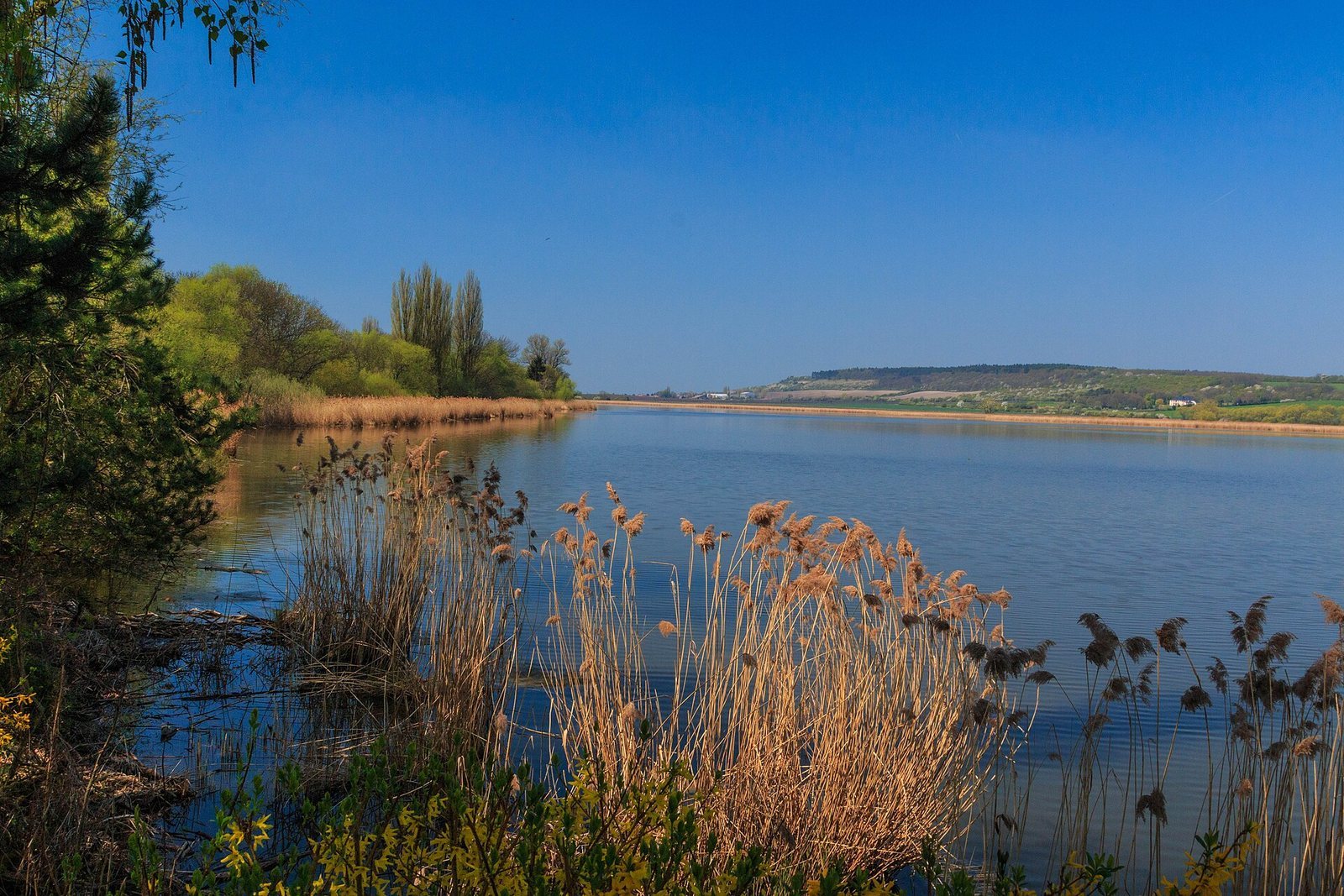
The pond covers 258 hectares, extends for 5.5 kilometres, and reaches a maximum depth of 6 metres. It lies at about 204 metres above sea level, with the Cidlina flowing into and out of the basin. Žehuňský Pond is the largest pond in the Central Bohemian Region and the ninth largest in Czechia. Its western shore meets the built-up area of Žehuň, while the southeastern shore reaches houses in Choťovice. An earthen dam, 7 metres high and 870 metres long along its crest, holds back the river.
Inlet structure
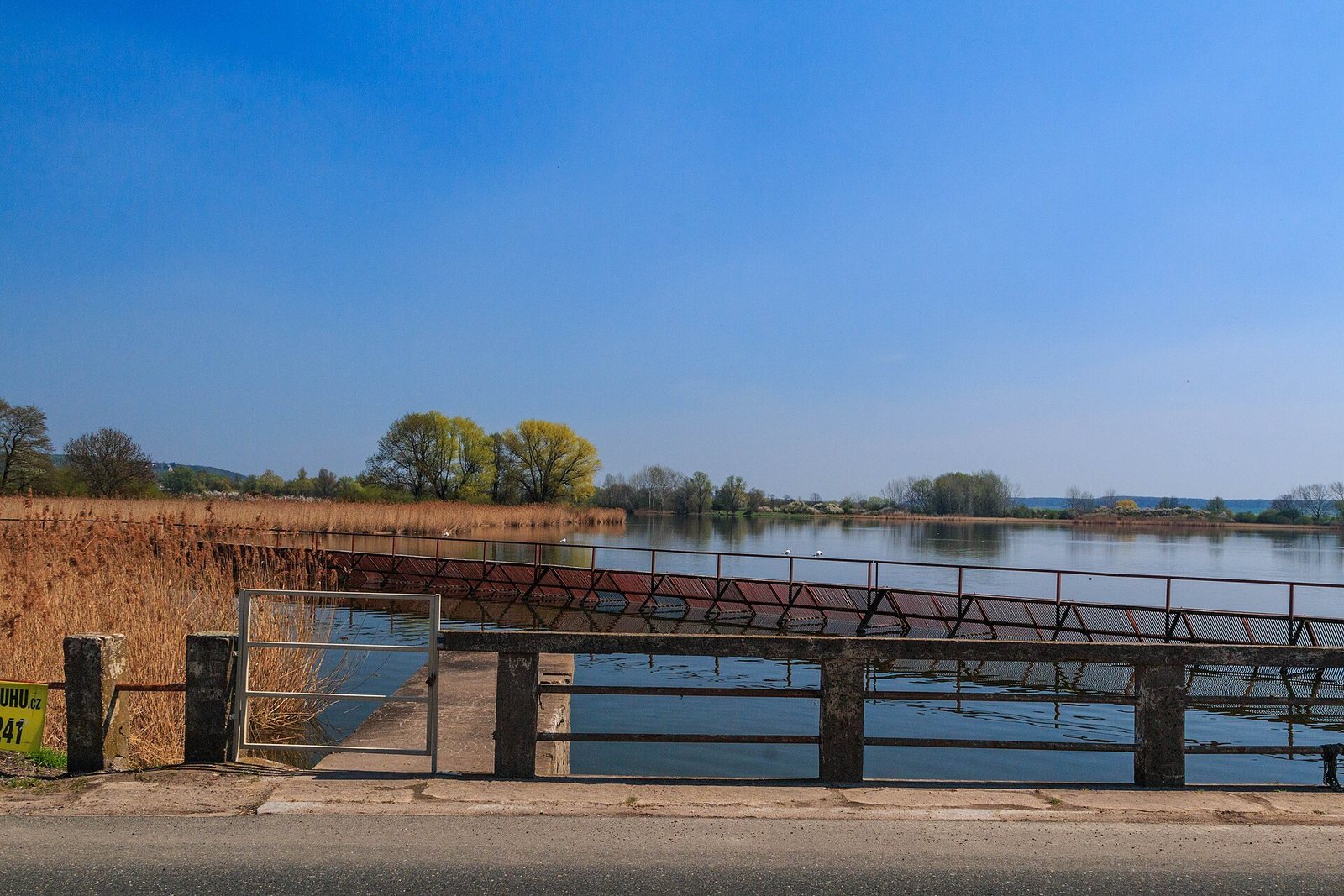
Near Zbraň, an inlet structure with two sluice gates and a spillway controls water entering from the Cidlina. The wider protected landscape includes the pond, adjoining meadows, and wetlands in the river floodplain, across the land areas of Choťovice, Končice, and Žehuň. This area lies between 202 and 206 metres above sea level.
Floodplain habitats
Aquatic plants and reedbeds
The pond’s water is rich in nutrients, and fish farming has adversely affected its ecology. Vegetation along the shallow margins is sparse outside the reedbeds, with richer growth near the inflow. Yellow water-lilies (Nuphar lutea) are prominent in the zone just beyond the shallow margin, especially near the Cidlina’s mouth; spiny naiad (Najas marina) also grows in open water. Reedbeds dominate the shallow shore. Their plants include Acorus calamus, Sium latifolium, and Cardamine dentata. The Bezděkov reedbed on the southern shore also supports Ranunculus lingua.
Meadows
Intensive farming formerly reduced the diversity of plants in meadows beside the reedbeds. Species that remain fairly common include Senecio erraticus, Allium angulosum, Thalictrum lucidum, Eleocharis uniglumis, and Lotus tenuis. More sensitive plants, including Sesleria uliginosa, Dactylorhiza incarnata, Teucrium scordium, Viola pumila, Ophioglossum vulgatum, and Triglochin palustris, are now concentrated mainly in places spared liquid-manure fertilization. Nine species in the marsh-dandelion group, Taraxacum section Palustria, grow in the meadows. Most are highly or critically endangered in Czechia, and their continued survival there is uncertain.
Wildlife
Bird habitat
The protected area provides habitat for waterbirds and other birds associated with aquatic environments. Some 145 species breed at the pond, and more than 260 species have been recorded there. Rare or threatened breeding birds include Botaurus stellaris, Ixobrychus minutus, Anas clypeata, Anser anser, Circus pygargus, Porzana porzana, Porzana parva, Panurus biarmicus, and Emberiza calandra. Birds breeding in the game preserve and on nearby steppe slopes include Pernis apivorus, Dendrocopos medius, Jynx torquilla, Ficedula albicollis, Lanius excubitor, and Sylvia nisoria; Emberiza hortulana is seen rarely.
The pond is also important to waterbirds and raptors during migration and winter. Species using it at these times include Phalacrocorax carbo, Anser fabalis, Anser albifrons, Anas crecca, Anas acuta, Mergus merganser, and Larus cachinnans. Its reedbeds hold large roosts of Hirundo rustica, Riparia riparia, and Sturnus vulgaris, with the largest flocks exceeding 100,000 birds.
Aquatic molluscs
The protected area contains 34 recorded aquatic mollusc species: 23 snails and 11 bivalves. This is 44 percent of the aquatic mollusc species known in Czechia, making the area an important site for these animals in the wider Elbe lowlands.