Nalžovice Château: A Baroque Estate in Czechia
Site at a Glance
- Rating
- 4.8
- Popularity
- Very Low
- Country
- Czechia
- Primary era
- Early Modern
- Eras represented
- Early Modern, Modern
- Civilizations
- Austrian Empire, Habsburg
- Site type
- Domestic
- Remains
- Manor House
On this page6 sections
History
Nalžovice Château is a Baroque château in Czechia, begun in the second half of the seventeenth century on the site of a medieval fortress held by local minor nobles. Kryštof Koppl of Adlesberg initiated the construction, which was completed by Mikuláš Franchimont of Frankenfeld, a Prague physician and scientist who also owned the nearby château at Kňovice.
The Baroque estate
Franchimont’s son, Antonín Alexander Franchimont, commissioned the Chapel of Our Lady of Sorrows in the château park between 1690 and 1694. Jan Václav Alsterl of Astfeld acquired Nalžovice in 1741 and continued alterations to the château between 1750 and 1760. The Hruškovský family of Hruškov and later owners, including the Schwarzenberg family, subsequently held the estate.
Occupation and post-war use
During the Nazi occupation in the Second World War, local inhabitants were expelled and the surrounding area became an SS military training ground. The SS, a Nazi organization with political, police, military, and concentration-camp functions, used the château after František Schwarzenberg’s property was confiscated. The building housed the military staff responsible for evacuating the Sedlčany region and became the seat of the highest court for SS personnel from across Europe. SS personnel sentenced to death by shooting were executed beside the wall of the château park.
After 1945, the château belonged to the Ministry of Justice. From 1952, the district national committee operated a retirement home there. After 1989, the property was returned through restitution to the last Schwarzenberg owners, while the current monument listing identifies the Central Bohemian Region as its owner. The complex continues to serve as a home for people with disabilities and is not open to the public. Nalžovice Château is entered in the central register of immovable cultural monuments of the Czech Republic.
Remains
The extensive complex occupies the southwestern part of the built-up area of Nalžovice. It includes the château, auxiliary buildings, a farmyard, and an English-style park enclosed in part by a perimeter wall. The park contains the Chapel of Our Lady of Sorrows and a manorial tomb. Its northeastern side is bounded by Road 119, which connects Dobříš and Sedlčany.
Château and farmyard
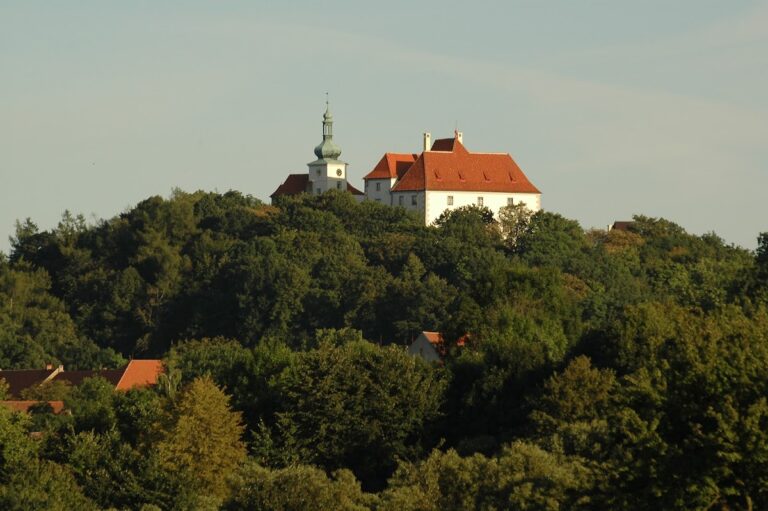
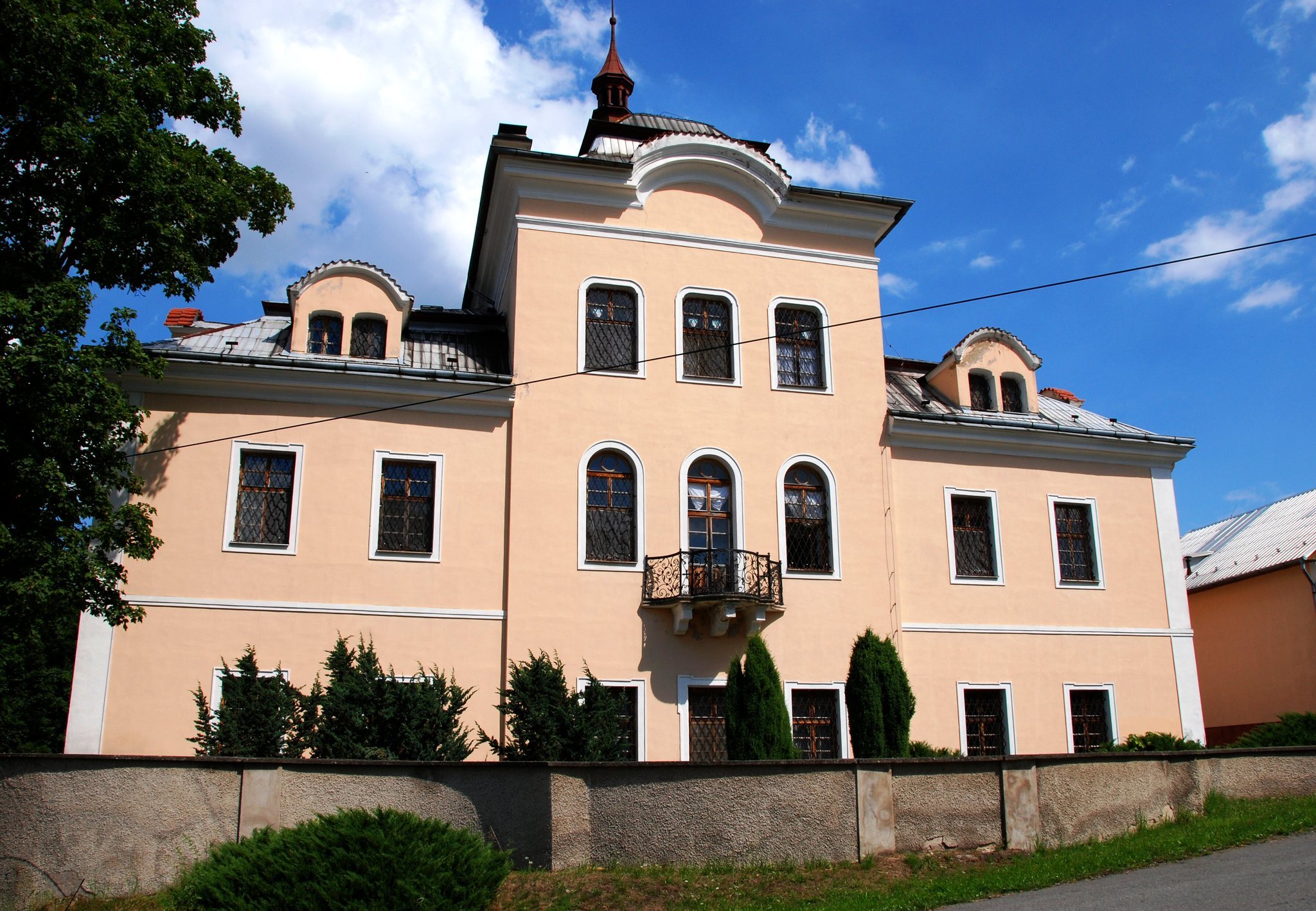
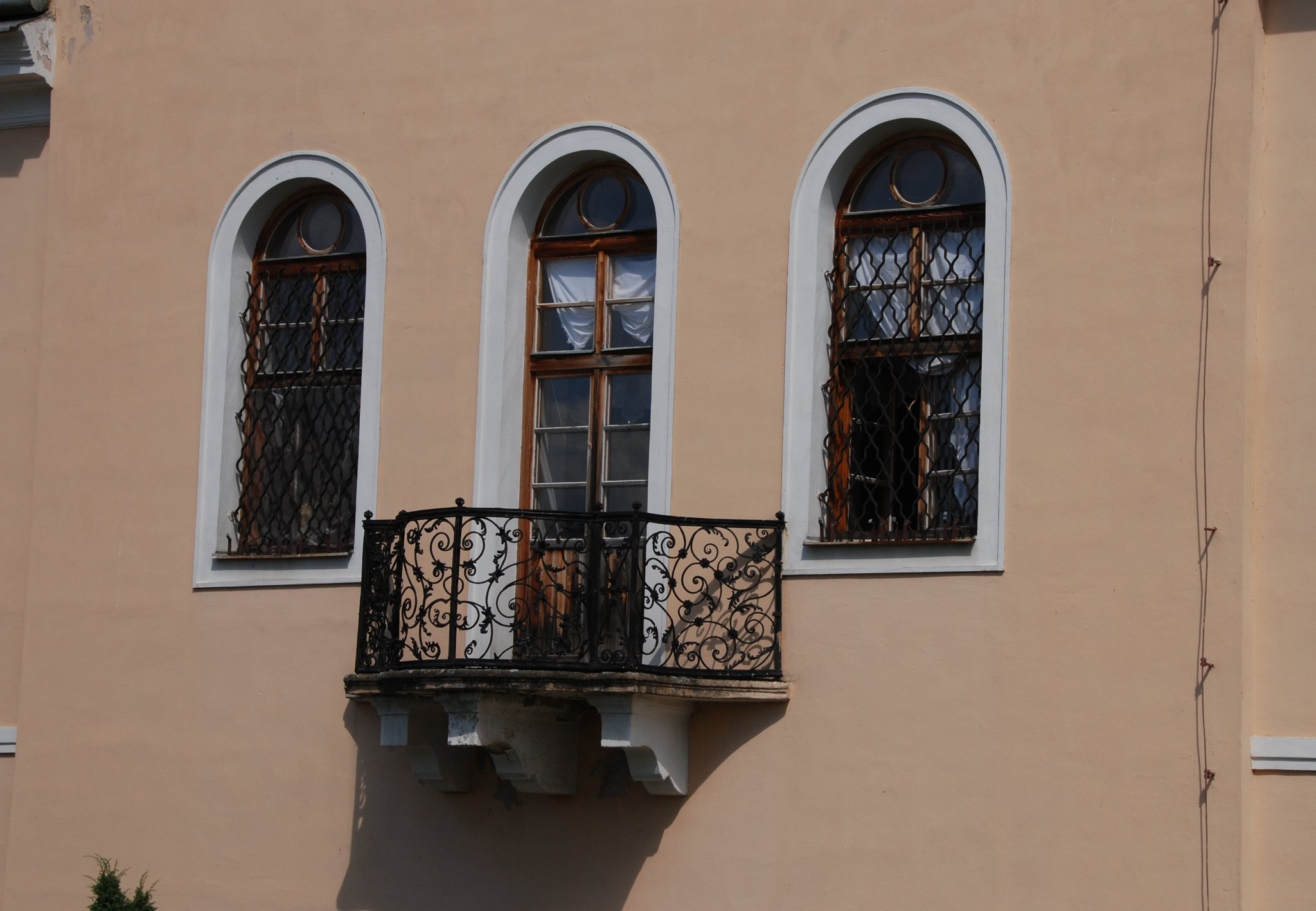
The château began as a Baroque building and was rebuilt in the nineteenth century. It is a rectangular block with a two-storey central section, a mansard roof, and a small turret. Single-storey side sections extend from the centre. The main façade, facing southwest, has seven window axes, while each side façade has six.
The farmyard contains nine structures. One house and the former granary retain very old structural cores, preserving evidence of earlier building phases within the estate complex.
Chapel and park features
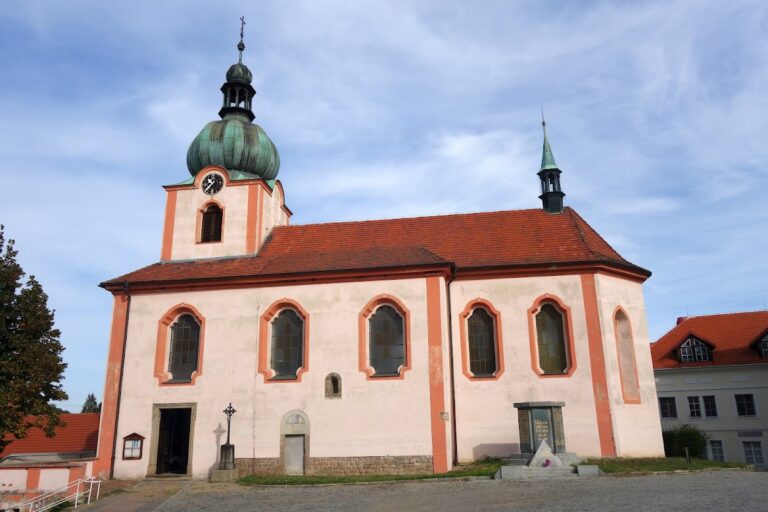
The Chapel of Our Lady of Sorrows stands northeast of the château and adjoins the manorial tomb. Originally Baroque, it belongs to the Roman Catholic parish of Sedlčany. A fire destroyed the chapel in 1823, after which it was rebuilt between 1855 and 1859.
The chapel contains paintings in the Second Rococo style, a nineteenth-century revival of the lighter decorative language associated with Rococo. Above the high altar stands a polychromed Pietà from the second half of the seventeenth century. A Pietà depicts the dead Christ held by, or mourned by, the Virgin Mary, while polychromed means painted in several colours.