Yeghishe Arakyal Monastery: An Armenian Church and Manuscript Center in Azerbaijan
Site at a Glance
- Popularity
- Medium
- Country
- Azerbaijan
- Primary era
- Medieval
- Eras represented
- Medieval
- Civilizations
- Armenian
- Site type
- Religious
- Remains
- Fortified Monastery
On this page14 sections
History
Traditions and foundation
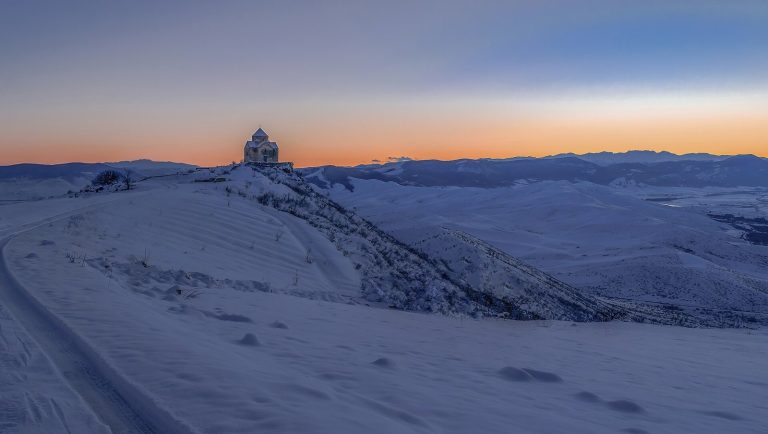
Yeghishe Arakyal Monastery is an Armenian Apostolic monastery on a forested slope of Mount Murovdag near Sugovushan, also identified as Madagiz, in Azerbaijan. It belongs to the Artsakh Diocese, a regional jurisdiction of the Armenian Apostolic Church. A pre-Christian sanctuary is thought to have occupied the site. Tradition attributes the monastery’s foundation to Vachagan III, ruler of Caucasian Albania, an ancient kingdom in the eastern Caucasus, from 487 to 510. The surviving complex was built in the thirteenth century.
The monastery’s name is traditionally connected with the transfer of Saint Yeghishe’s relics from nearby Urekavank. Yeghishe was a Christian missionary and martyr associated with the spread of Christianity in Caucasian Albania. The medieval historian Movses Kaghankatvatsi wrote that Yeghishe’s head was buried at Urekan, while his other remains were taken to the Ners-Mihr monastic brotherhood. The monastery is also called Cirviştek, a name linked to a waterfall in the gorge to its south. Another interpretation is “water is always there.”
Medieval development
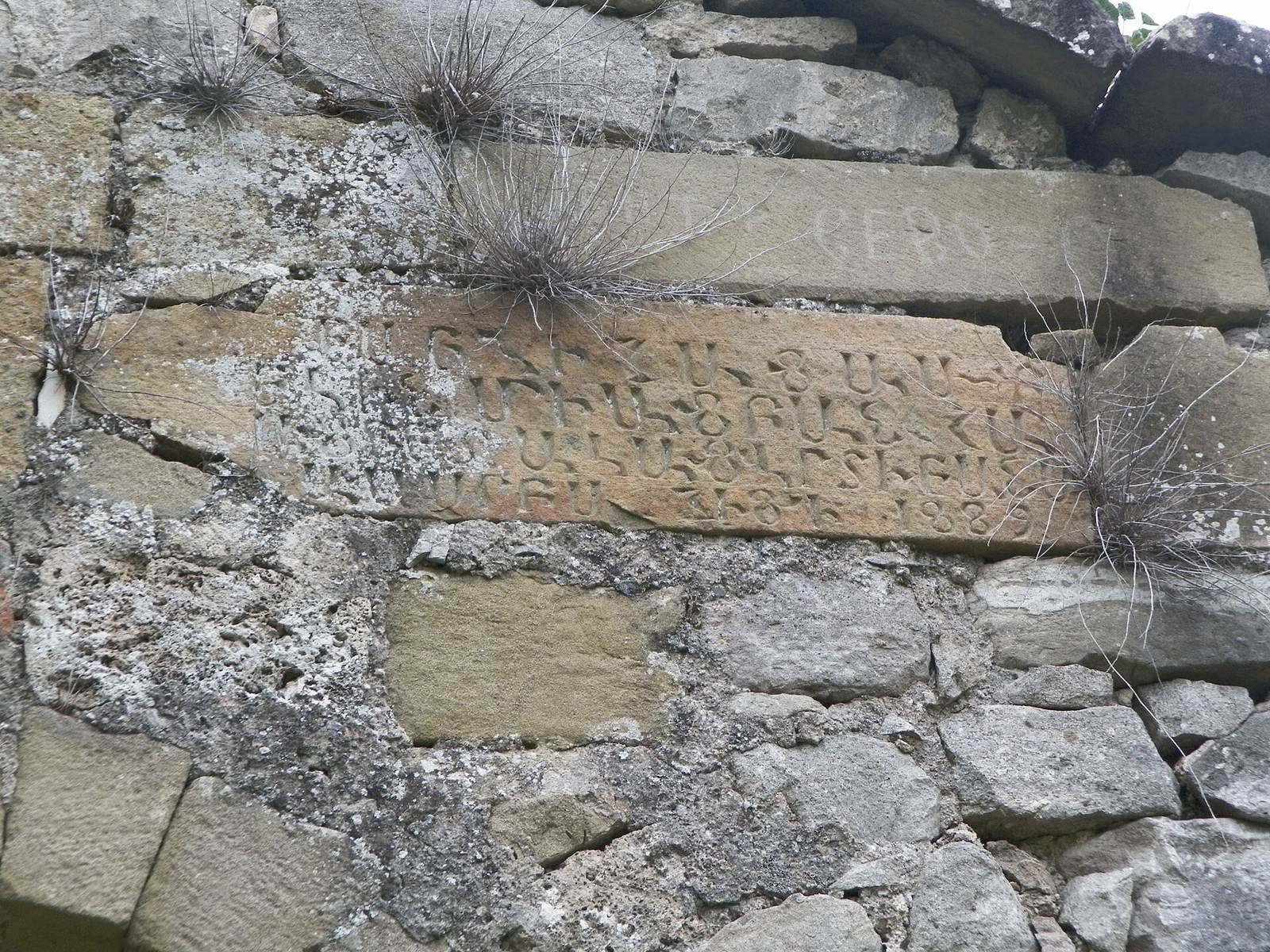
The principal church is assigned a construction date of 1165. An inscription records its rebuilding in 1264 with stones from an earlier church. The monastery’s entrance hall, or narthex, was built in 1284. In 1286, Father Simon constructed a chapel over the reputed tomb of Vachagan III; an inscription about the work survives on its northeast side. Simon was buried in the church’s narthex in 1298.
After Simon’s death, the monastery’s abbots included bishops and an archimandrite, a senior monastic cleric. Bishop Melikset, one of the abbots, was killed by Turks. The monastery served as a residence for Armenian Church bishops and developed into a center of literacy and manuscript production in eastern Armenia and the Jraberd Melikdom, the principality of Jraberd. It also became an important place of culture and learning in Artsakh.
Manuscript activity and later history
Monks continued to acquire and care for books. An elderly monk named Khachatur obtained a Gospel from another person, while the monk Petros worked on repairing and restoring manuscripts. In 1753, Melik Adam, a local princely ruler of Jraberd, bought a manuscript that had entered Turkish hands after the plundering of the Armenian monastery of Surb Amenaprkich in Nakhichevan. Written by a cleric in the Armenian community of Kaffa, the book was embellished with silver and gold embroidery by Melik Adam and donated to Yeghishe Arakyal.
Restoration and repair took place at different times. In a resolution dated 10 March 2022, the European Parliament stated that Azerbaijan had intentionally caused damage to Armenian cultural heritage in the region. It included Saint Yeghishe Church at Madagiz among Armenian churches and cemeteries that had been destroyed, repurposed, or damaged.
Remains
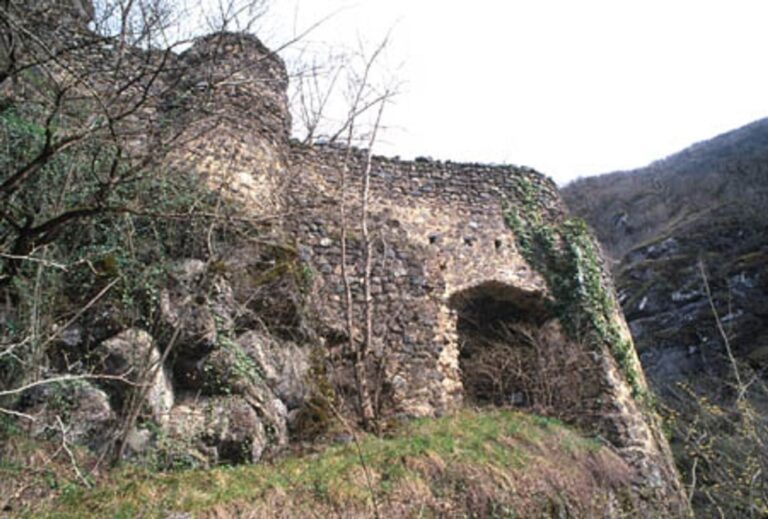
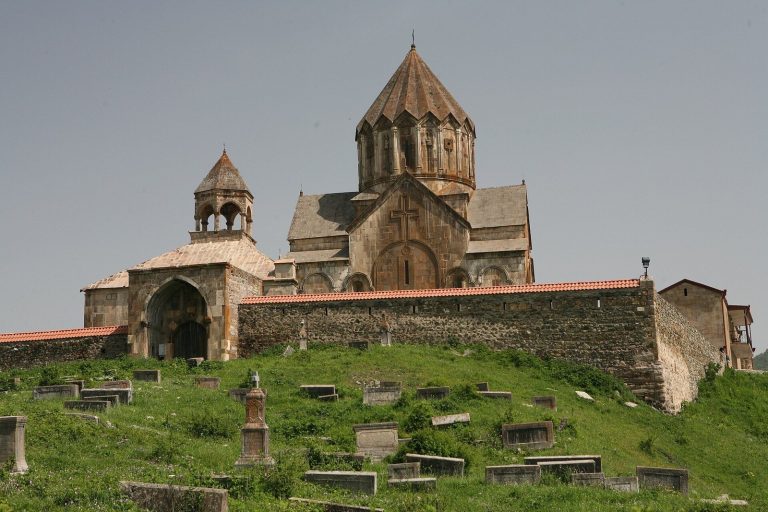
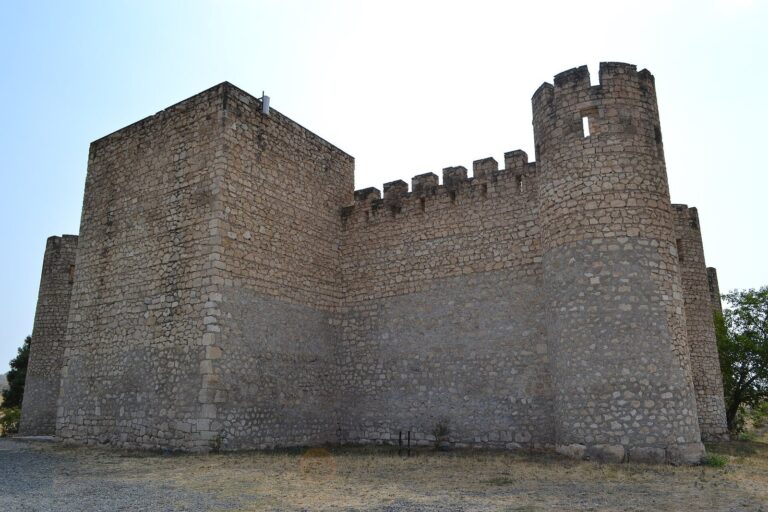
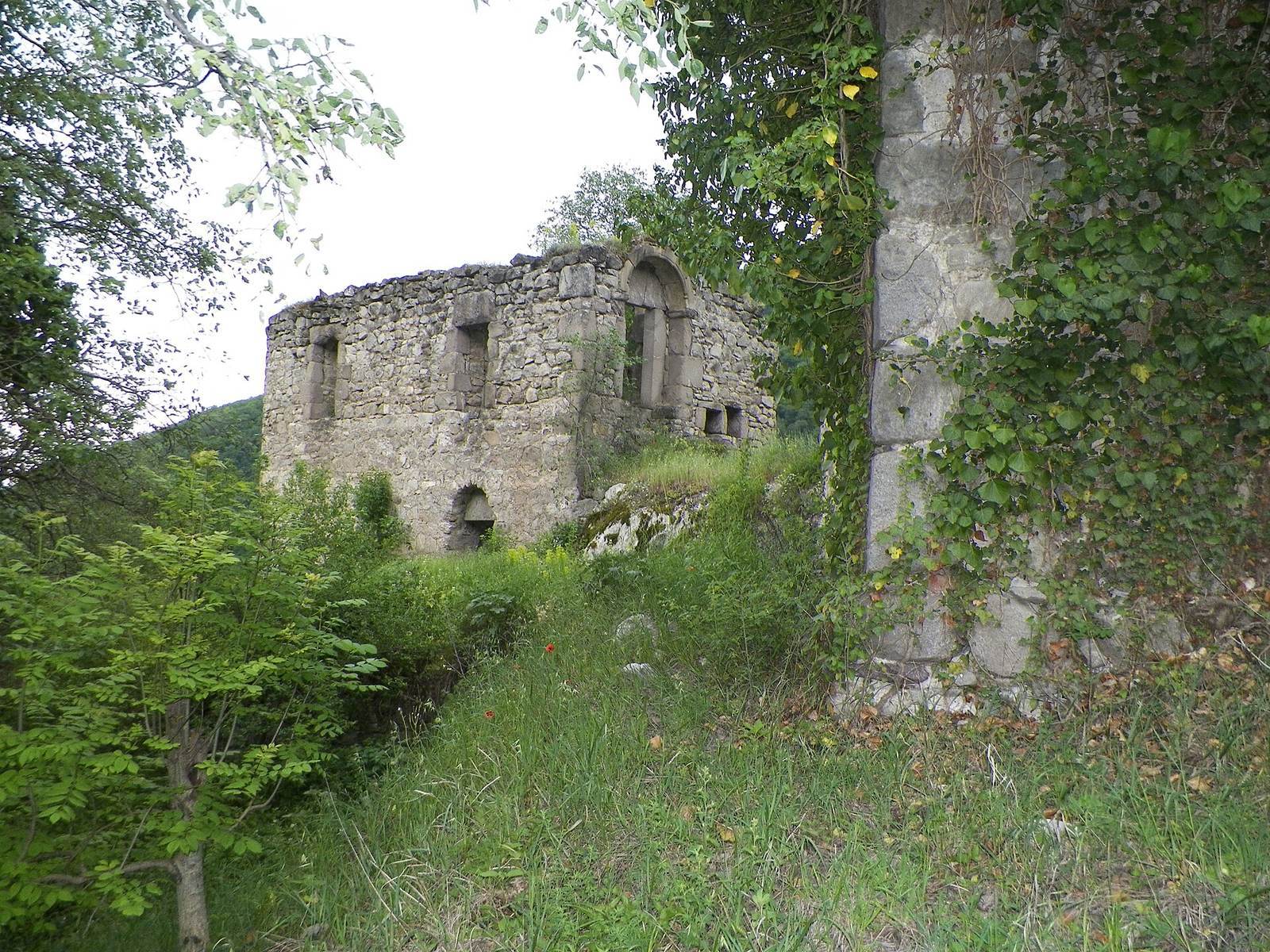
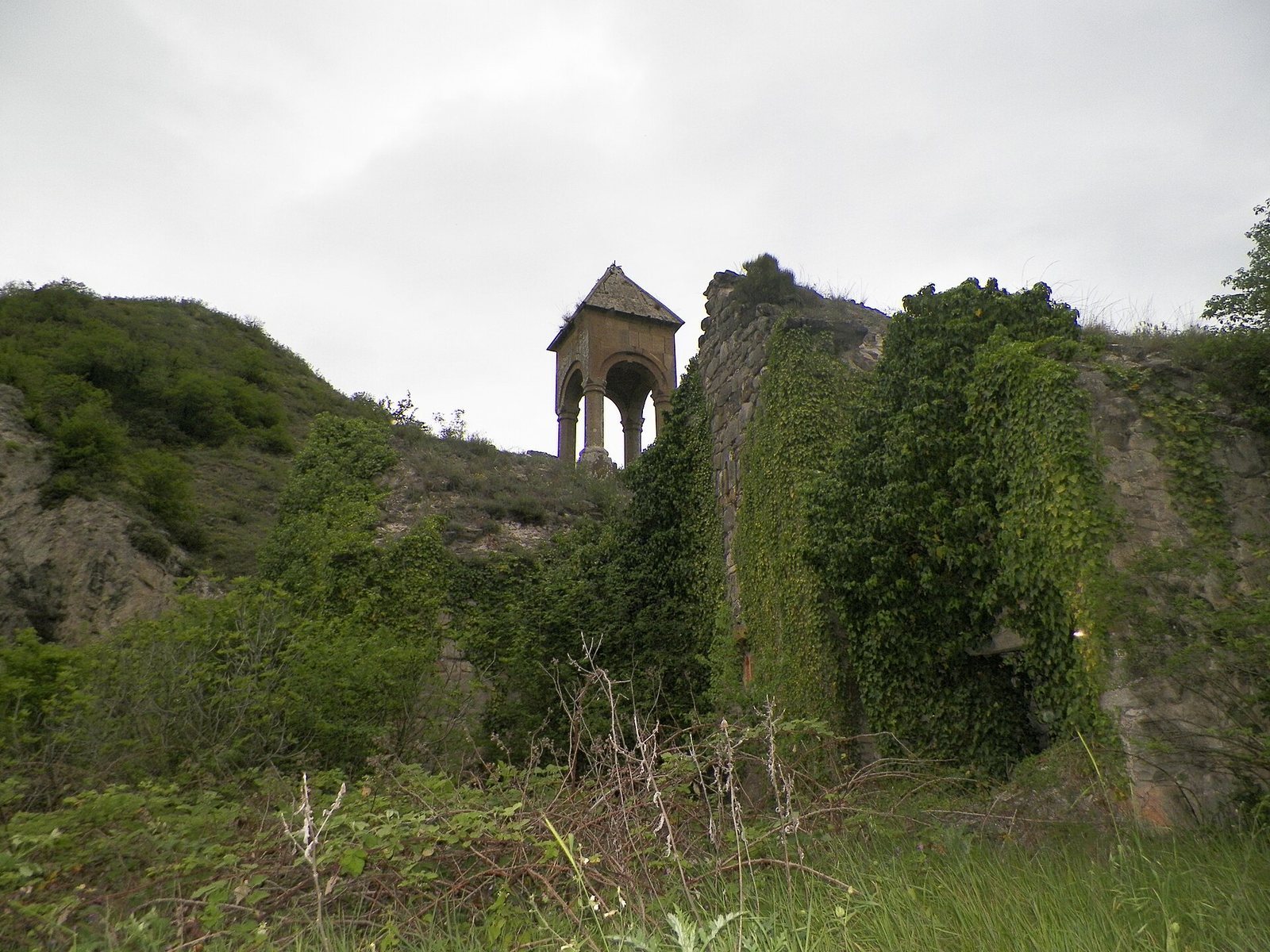
The complex stands on a mountain slope near the gorge and waterfall to its south. A steep rock face bounds the southern side, while strong walls enclose the other three sides. The remains comprise a church, an entrance hall, seven chapels, a cemetery, and the ruins of auxiliary buildings. The monastery is partly ruined, and vegetation and natural weathering have weakened its structures.
Church and entrance hall
Church
The church is a rectangular hall measuring about 10 by 5.8 metres, with entrances on its south and west sides. Its ceiling is vaulted, and the altar area is raised about 60 centimetres above the floor. The rectangular altar area has a semicircular apse, a rounded recess at the sanctuary end. Square stone blocks from an earlier period are incorporated into the masonry.
The church’s plan, the proportions of its apse, its two entrances, and its lack of supporting arches have been compared with early medieval churches of Caucasian Albania, including Gavurkale Church and the Mingachevir church complex. Architectural researcher Gulchehra Mammadova argued that the building follows the form of an earlier church whose foundations it reuses.
Narthex
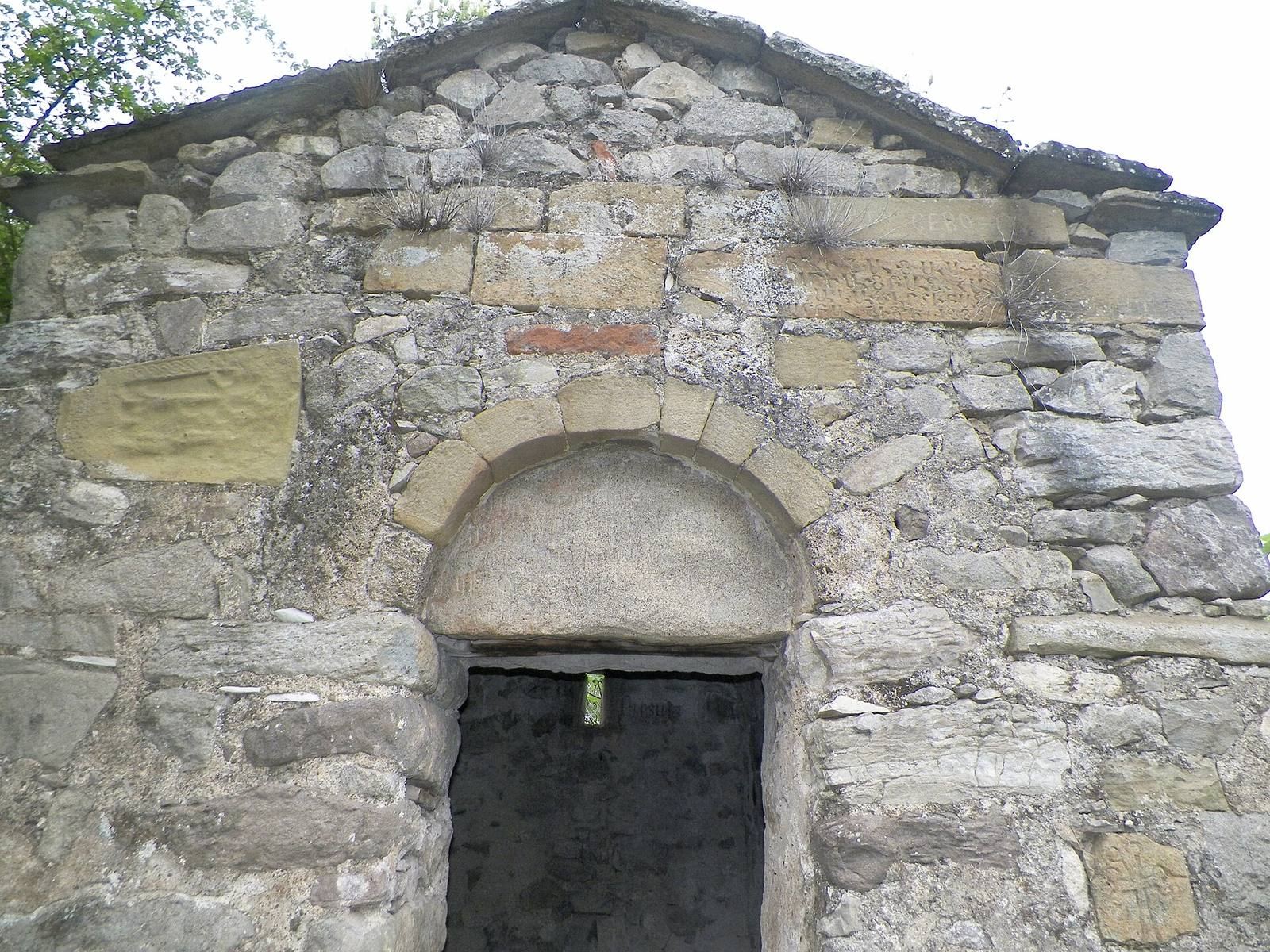
The narthex is nearly square, with a vaulted ceiling supported by two piers. An inscription above its entrance dates its construction to 1284.
Chapels and burial grounds
Chapels
Seven chapels stand at roughly even intervals on either side of the church, with three to the north and four to the south. Built from roughly shaped local stone, they were repaired at different times and mostly served as tombs. The largest chapel, south of the church, has a rectangular interior divided by a pilaster, a shallow projection from the wall. Its first section measures 3.65 by 3.70 metres and has a semicircular vault. The second section is raised 40 centimetres and contains two semicircular apses, each lit by a small east-facing window. Niches are set into its north and south walls.
The northern chapel farthest from the church has a similar two-part arrangement, but is smaller, measuring 2.72 by 4.60 metres, and its apses have no niches. These two-apsed chapels are unusual in the region. Mammadova suggested they may have been built over two tombs, with a separate altar for each burial. Among the graves associated with the chapels are those of Melik Adam of Jraberd and Bishop Melikset.
Cemetery
The old cemetery extends around the church and narthex and contains burials of monks, abbots, and prominent people. Gravestones and cross-stones, carved stone monuments bearing crosses, carry inscriptions dating from the thirteenth century and later.
Inscriptions and manuscripts
Stone inscriptions
Carved inscriptions appear throughout the complex. They record aspects of its construction and history, including the rebuilding of the principal church and the addition of the narthex and chapels.
Manuscripts associated with the monastery
A Gospel written at Shulaver in 1554 was illustrated the following year. Two books of saints’ lives and commemorations, known as Aismavurk, are associated with the monastery. The 1559 volume was written and illustrated by Atanas for Bishop Karapet. A 1561 volume, commissioned by Gukas, was written by a priest and a bishop and illustrated by Atanas. Both are now held at the Matenadaran, an Armenian manuscript research institute and repository in Yerevan, as manuscripts 4477 and 6282.
Other associated works include a Gospel written in Kaffa in 1667 for Janguli, now in Baku as manuscript 8315; a 1681 Mashtots, an Armenian liturgical service book made for Father Hakop and held at the Matenadaran as manuscript 8125; and a Gospel made for Mariam in 1682. The associated books also include a volume of sermons dated 1787 and an undated Gospel commissioned by Grigor for Simon.