Maray Qalla: An Inca Waystation and Military Base in Áncash, Peru
Site at a Glance
- Popularity
- Very Low
- Country
- Peru
- Primary era
- Medieval
- Eras represented
- Medieval
- Civilizations
- Inca
- Site type
- Military
- Remains
- Fort
On this page8 sections
History
Maray Qalla is an Inca archaeological site southeast of Yauya in Peru’s Áncash Region. The Inca, whose empire was centered at Cuzco, built it in 1450 in Inca architectural style, with construction credited to ruler Pachacútec. The site later served as a military and supply base during the conquest of the eastern Áncash highlands.
Foundation and the northern campaign
During the campaign dated 1470–1510, Pachacútec’s brother and military leader Cápac Yupanqui advanced north toward Chinchaysuyu, the northern region of the Inca realm. The Allauca Huari and Pincos lordships, part of the southeastern faction of the confederated forces, submitted without resistance. The Inca advance toward the Yanamayo River was then pushed back by forces from Conchucos, Piscopampas, and Huari.
In response, the Incas established an administrative center and military stronghold in the highlands of present-day Yauya, using it as a base for systematic sieges against Conchucan settlements. Defenders held fortresses on high ground, which made them nearly impregnable. After months of siege and the use of varied political tactics, an Inca army of about 20,000 defeated them.
Maray Qalla housed Inca troops arriving from Cuzco and served as barracks, a place to rest, and a supply base. Soldiers could replenish their provisions there without returning to Huanucopampa.
Later use and memory
After the local lordships were defeated, the Inca sovereign ordered the construction of Tambo Real de Huancabamba, a royal waystation about an hour from Maray Qalla. Smaller but more sumptuous, it was intended to provide the ruler with a place to rest on journeys to Cajamarca. Maray Qalla was abandoned in 1530.
Two leaders of the Huari lordship, Katin and Riway, died defending places that later took their names. Their resistance is still remembered by descendants in Chacas. Around 1940, parish priest and historian Santiago Márquez Zorrilla translated an ancestral account of the Inca incursion, told by a farmer from Chinlla who titled it The Inca’s Curse. Peru recognizes Maray Qalla as Cultural Heritage of the Nation.
Remains
Site layout
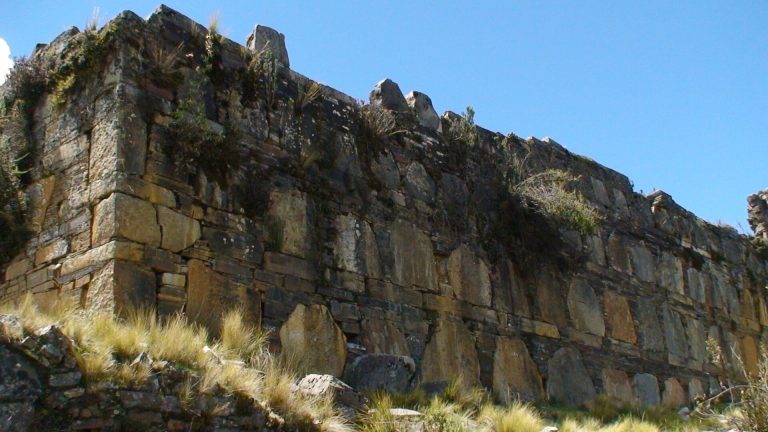
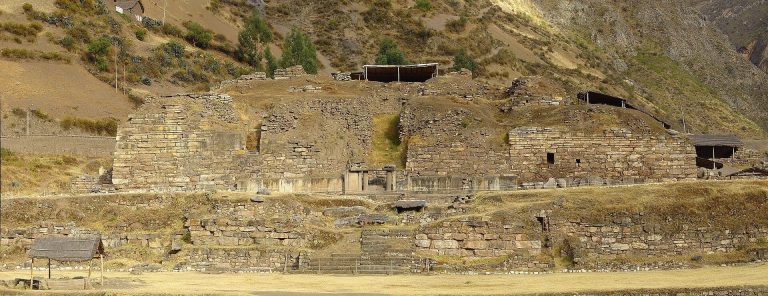
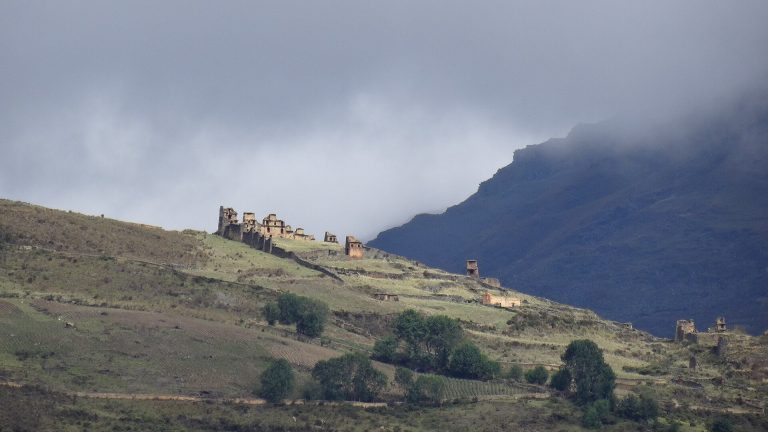
Maray Qalla occupies a strategic plateau at an elevation of 4,260 m, southeast of Yauya, overlooking five valleys. Its buildings and enclosures form a complex beside a section of the Inca road system.
Kallanka and waystation
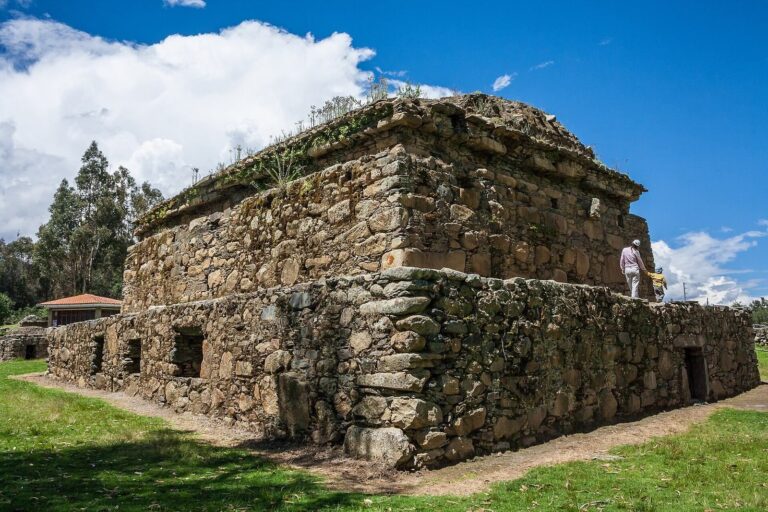
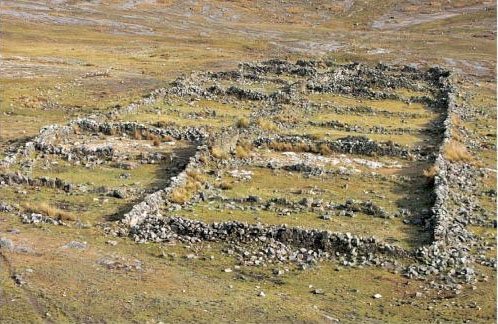
The kallanka, a large Inca hall, measures 111 m long and 56 m wide. The complex also includes a tambo, an Inca waystation. Maray Qalla is the largest Inca tambo in Áncash.
Storehouse and camelid enclosures
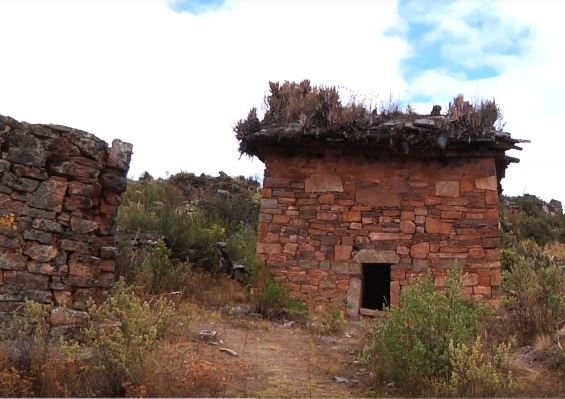
A colca, or storehouse, forms part of the complex, alongside large enclosures for Andean camelids, South American animals such as llamas and alpacas. The corrals extend for 100 m.
Inca road
The complex lies beside the Qhapaq Ñan, the Inca road system. The road is 7 m wide along this stretch.