Wat Banan: A Khmer Temple-Mountain in Cambodia
Site at a Glance
- Rating
- 4.7
- Popularity
- Low
- Country
- Cambodia
- Primary era
- Medieval
- Eras represented
- Medieval
- Civilizations
- Khmer
- Site type
- Religious
- Remains
- Temple
On this page8 sections
History
Wat Banan is a Khmer temple-mountain and archaeological site in Battambang Province, Cambodia, about 20 to 27 kilometres south of Battambang. Construction began around 1057 during the reign of Udayadityavarman II and was completed roughly a century later, in the late twelfth century, under Jayavarman VII. The temple was associated with Hindu worship, although many of its surviving sculptures are Buddhist.
Religious Foundations and Later Completion
Udayadityavarman II, who ruled from 1050 to 1066, was a Shaivite ruler. Shaivism is a Hindu tradition centred on Shiva. The temple’s Buddhist character has therefore been understood as either a reconciliation between Hindu and Buddhist traditions or the result of rebuilding during the reign of Jayavarman VII, a later Khmer king known for Buddhist patronage and major temple construction. Wat Banan was established during a period of strong devotion to deities. Worshippers came to give thanks, seek help, and pray to the divine.
Looting and Nineteenth-Century Observation
Henri Mouhot, a nineteenth-century French naturalist and traveller, visited Wat Banan in 1858. He described numerous Buddha and deity sculptures and a huge guardian statue at the entrance carrying an iron staff. The temple later suffered extensive looting, but much of the complex remains in relatively good condition. A guardian statue that had stood beside the eastern ascent was stolen and recovered by police in 2001. Wat Banan remains recognized as a cultural and natural heritage site.
Remains
The Summit Sanctuary
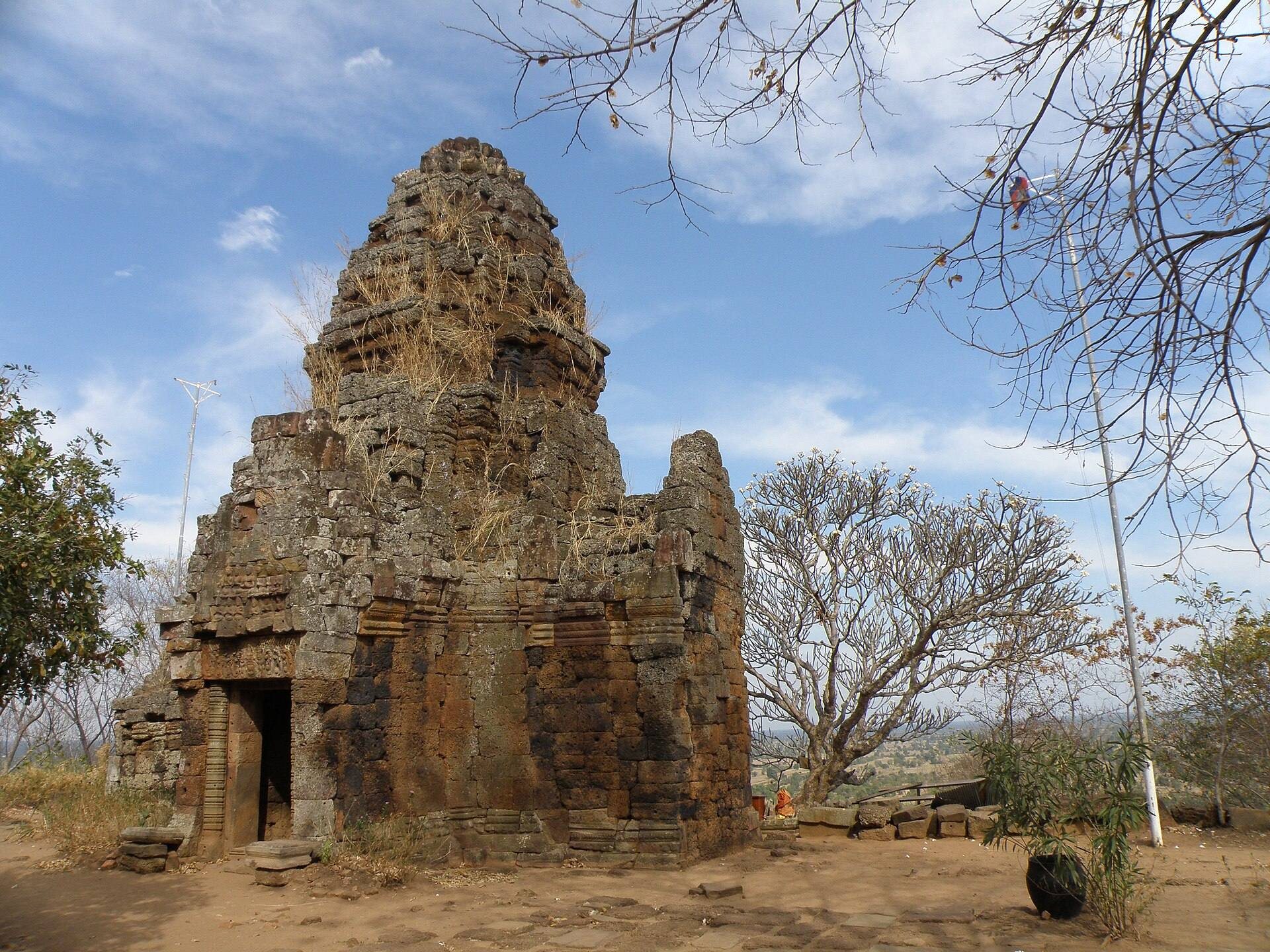
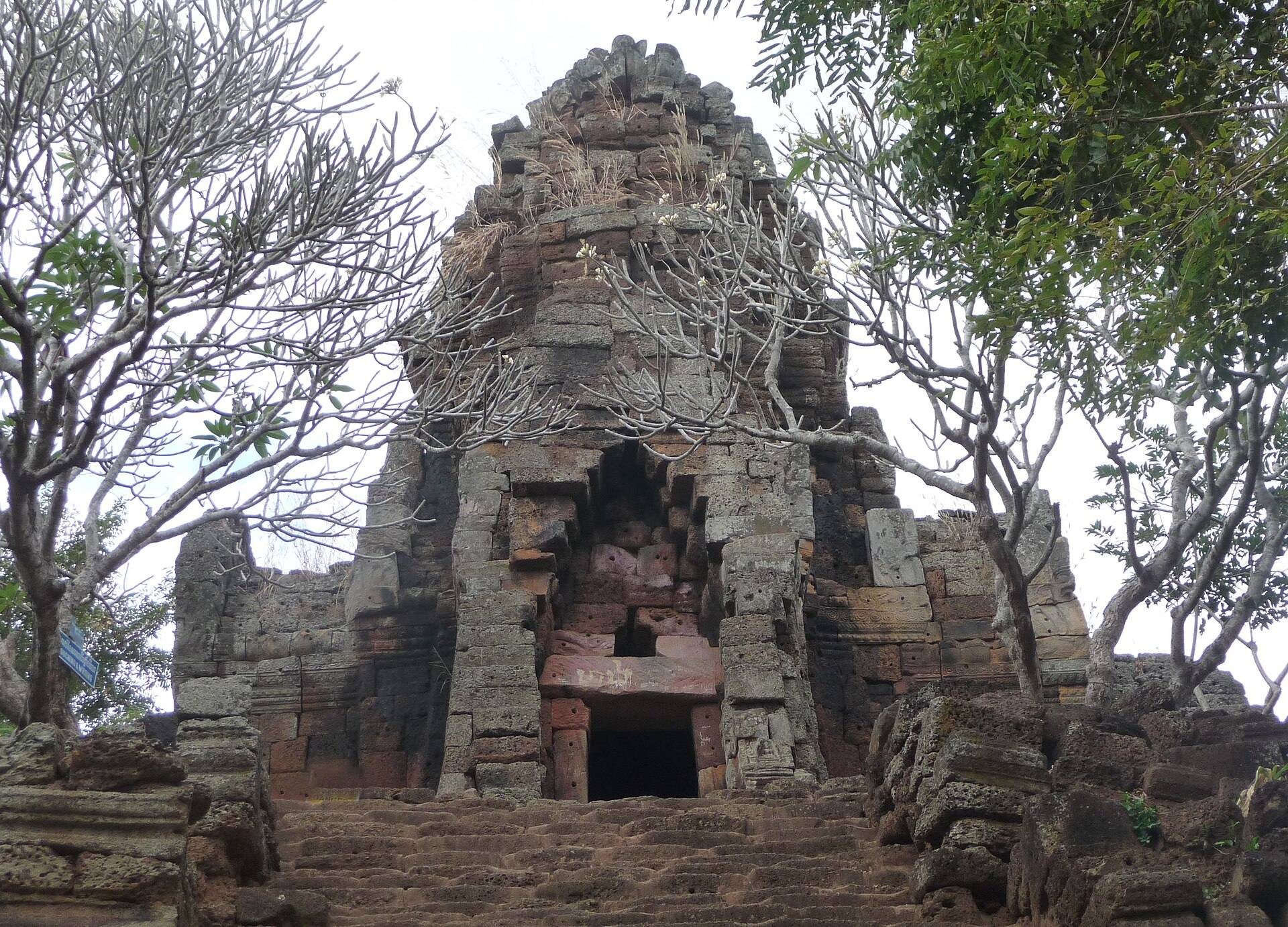
The temple stands on a mountain approximately 400 metres high. Its principal sanctuary is formed by five prasats, Khmer sanctuary towers or temple structures, with four arranged toward the cardinal directions around a larger central tower. The buildings use laterite and sandstone. Their five-tower composition has been compared with the larger five-tower arrangement of Angkor Wat. Sculptures of Buddha and other deities formerly occupied the site, including monumental guardian figures associated with the entrance. One description records giant guardians holding magical staffs, while Mouhot noted a large figure with an iron staff.
Stairway and Mountain Caves
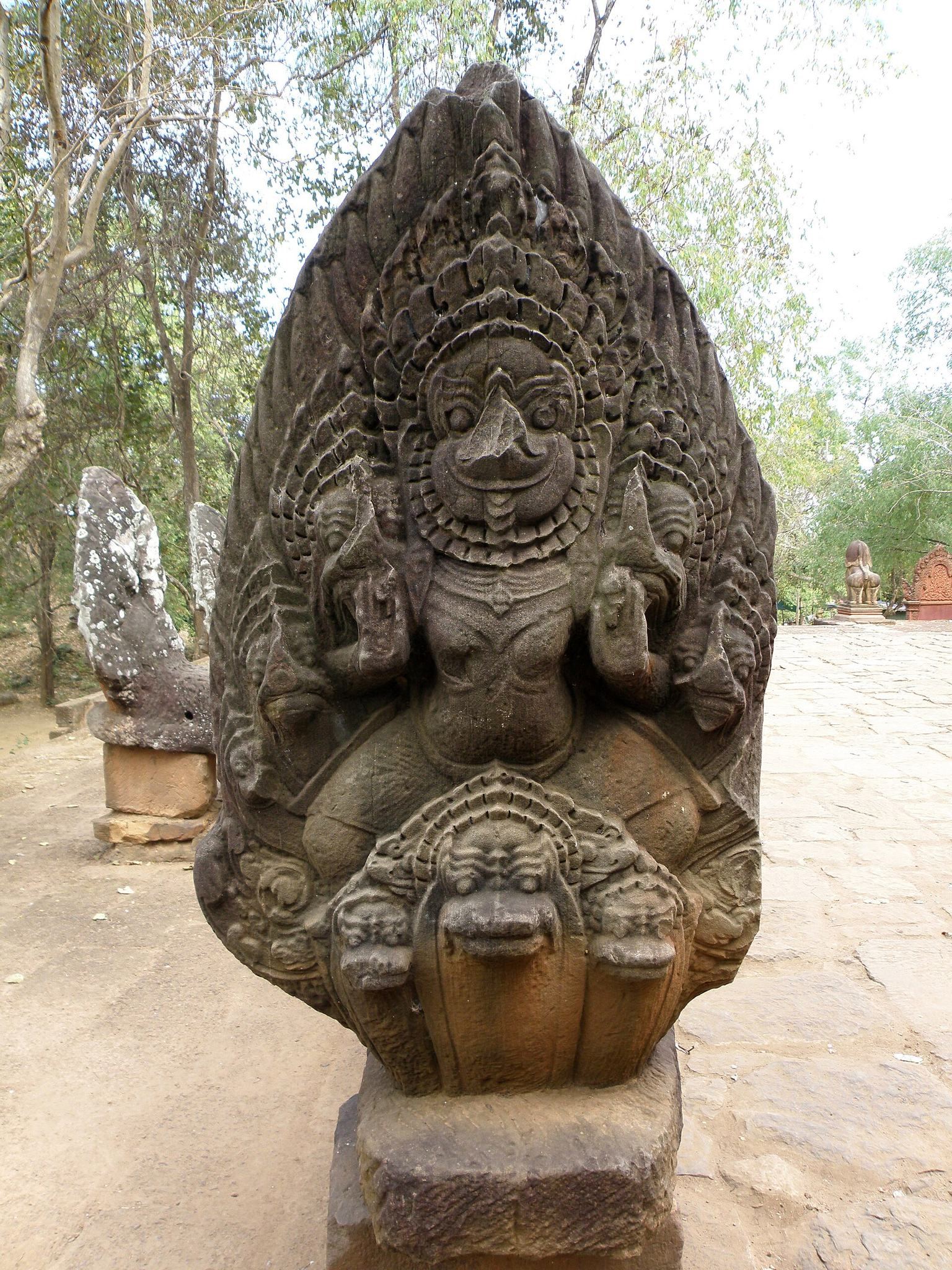
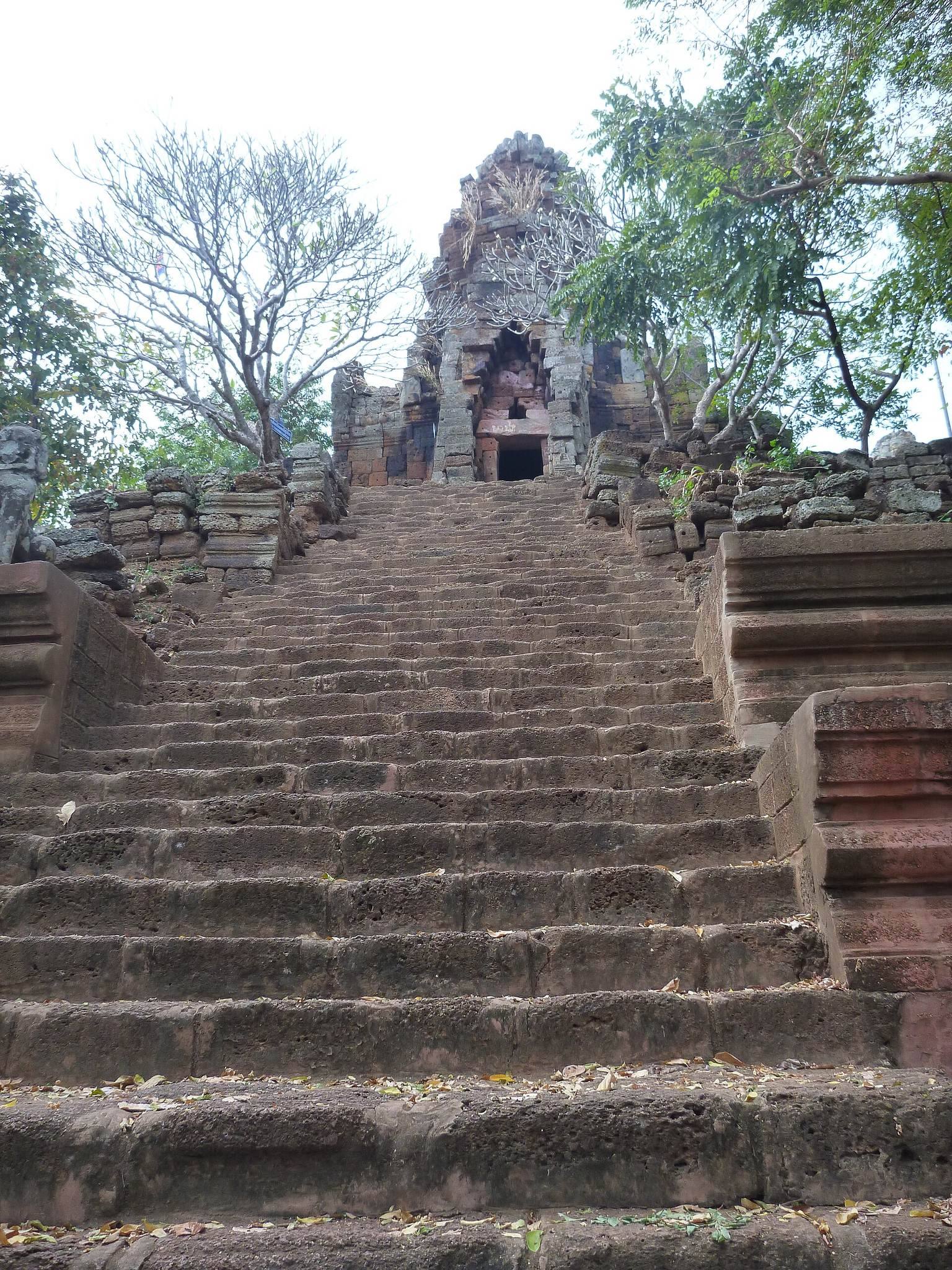
A laterite staircase of 358 steps climbs to the summit. Naga figures decorate its balustrades, and the steps are described as cut directly into the stone. A naga is a serpent being or serpent design commonly used in Khmer religious architecture. Caves occur at the foot of the mountain, while others can be reached from the temple by a further narrow staircase.
Southern Tower and Local Tradition
A southern tower is associated with a local tradition concerning an underground cavern. During festivals, coconuts were reportedly dropped into the cavern and later emerged in the Sangker River through another passage near the riverbank. The story connects the temple’s mountain setting with the river landscape below.
Reservoir and Surrounding Landscape
Near the temple are the remains of an abandoned baray, a large artificial reservoir used in Khmer water-management systems. It measures approximately 100 by 200 metres and formerly supplied water to the sanctuary. From the summit, the Sangker River winds through palm trees, rice fields, and traditional villages, while a mountain range to the south has a form likened to a crocodile.