Walewice Palace: A Palladian Country Residence in Poland
Site at a Glance
- Popularity
- High
- Country
- Poland
- Primary era
- Early Modern
- Eras represented
- Early Modern, Modern
- Civilizations
- Polish–Lithuanian Commonwealth
- Site type
- Domestic
- Remains
- Elite Residence
On this page10 sections
History
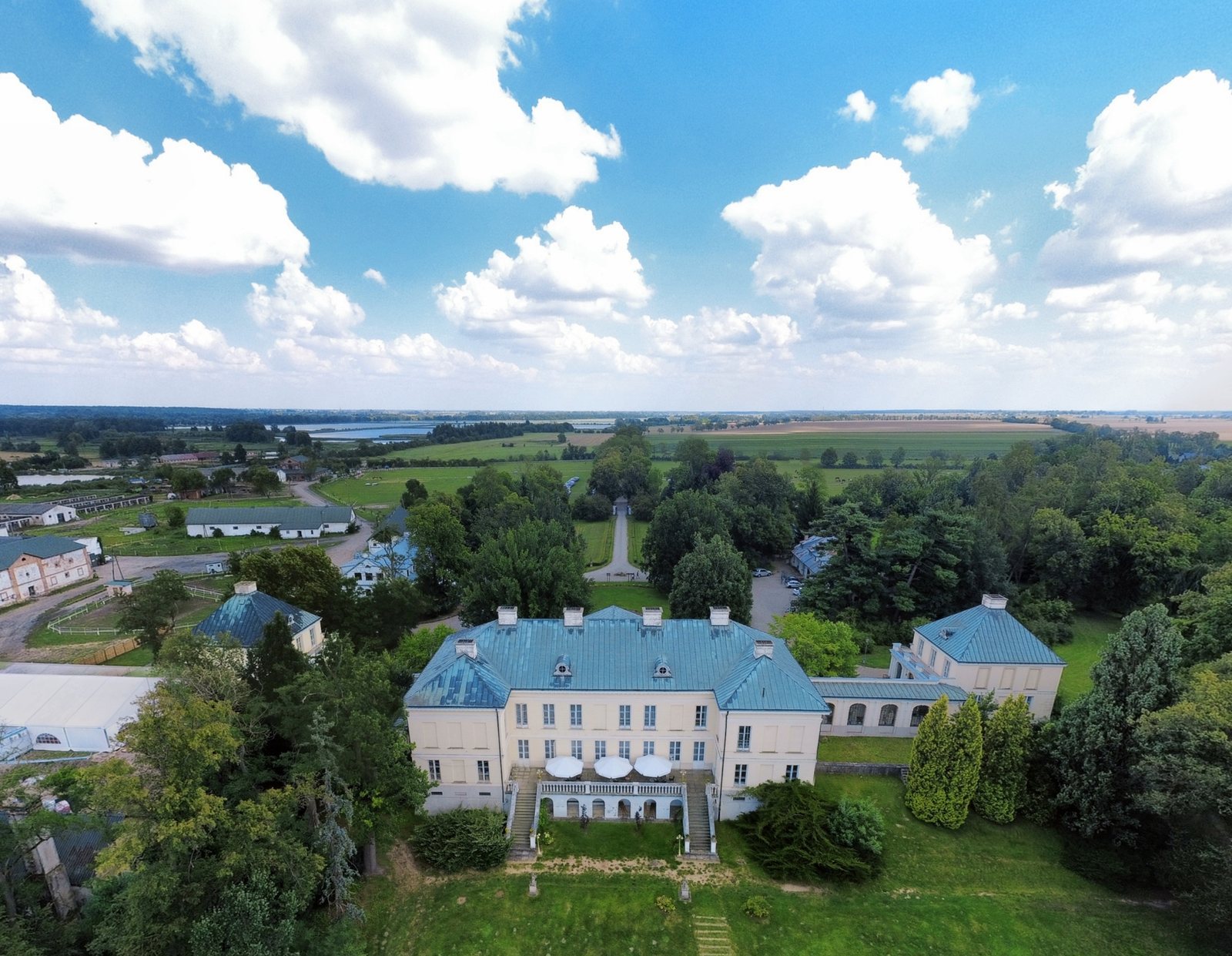
Walewice Palace is a country residence beside the Mroga River in Poland, built from 1773 to 1783 by Anastazy Walewski, a court official under Stanisław August Poniatowski, the last king of the Polish-Lithuanian Commonwealth. Its Palladian design adapts classical principles associated with Renaissance architect Andrea Palladio. Maria Walewska gave birth here to her son by Napoleon Bonaparte, a French military and political leader who became emperor.
Maria Walewska and the estate
On 4 May 1810, Maria Walewska, a Polish noblewoman associated with Napoleon, gave birth to Aleksander Colonna-Walewski. He later became French ambassador to Great Britain and foreign minister under Napoleon III, emperor of France from 1852 to 1870. Aleksander inherited the estate and sold it in 1831 to Maria’s brother, Teodor Łączyński. The property passed to the Grabiński family in the mid-nineteenth century.
The Grabiński estate
Around the turn of the twentieth century, the Grabińskis modernized and rebuilt the palace while developing a wide-ranging agricultural operation. The estate included a stud farm for Anglo-Arab horses, crosses between Arabian and Thoroughbred stock; Poland’s only Karakul sheep-breeding operation, raising a fat-tailed breed; fish farms across more than 100 hectares of ponds; and a potato-flour and starch factory.
The last owners were Stanisław Bohdan Grabiński, a papal chamberlain, or official in the papal household, and his wife Jadwiga, née Potocka. After Stanisław died in 1930, their minor children inherited the estate.
Wartime and later ownership
During the night of 9–10 September 1939, the 17th Greater Poland Uhlan Regiment fought for the palace and village during the Battle of the Bzura, a major engagement in Germany’s invasion of Poland. In 1945, the palace, horse stud, and farm passed into state ownership. Jan Grabowski became the stud’s first director. The Walewice Horse Stud now belongs to Poland’s National Support Centre for Agriculture, a government agency that administers state agricultural property; the palace belongs to Kutnowska Hodowla Buraka Cukrowego. The palace entered the register of monuments in 1962, followed by the surrounding park in 1967.
Remains
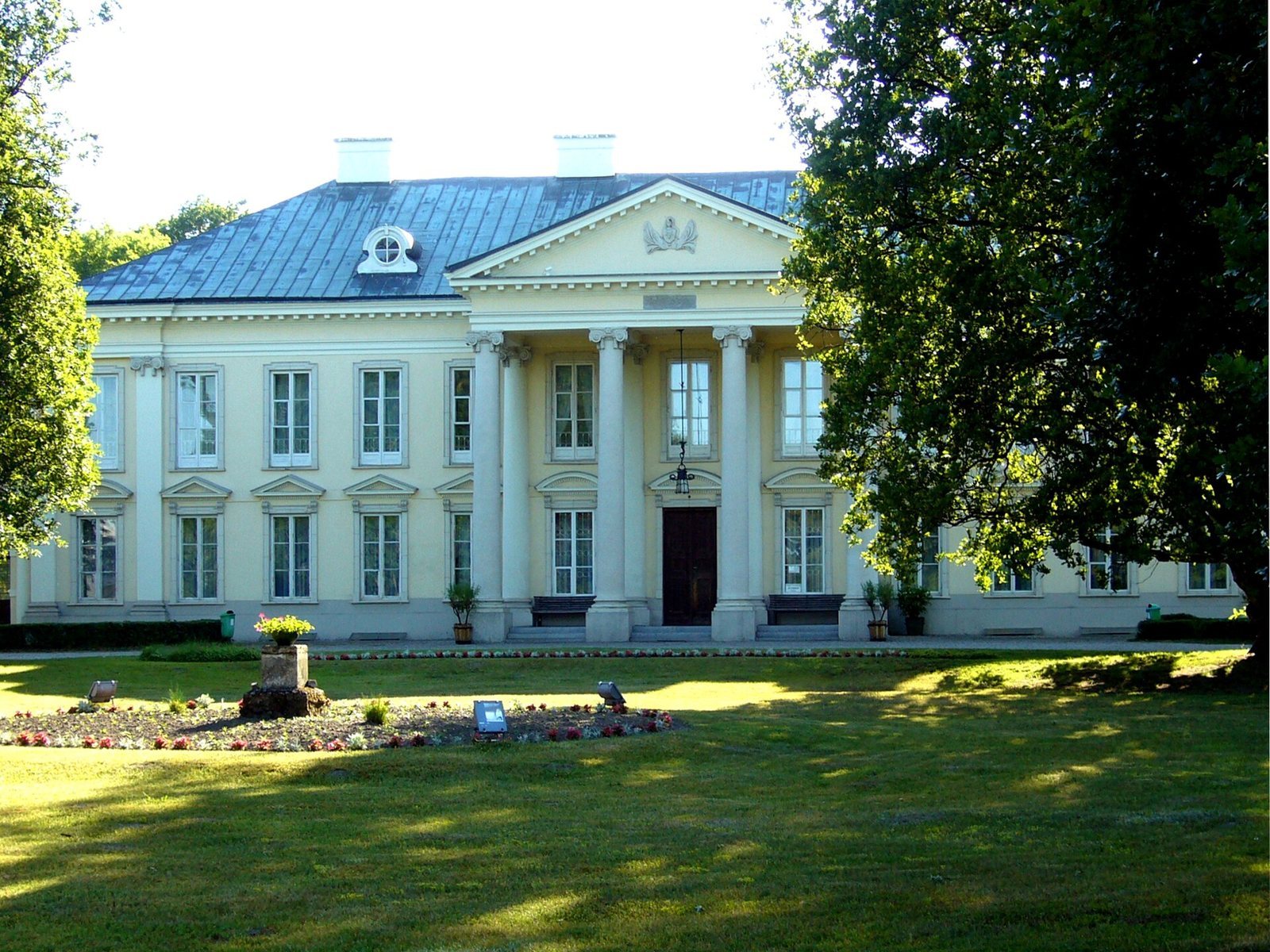
The palace stands beside the Mroga River and is arranged around a two-storey rectangular main block, with matching two-storey rectangular pavilions linked to it by galleries that turn at right angles. The principal front faces east, while the garden side has two projecting sections known as risalits.
Palace building
Exterior composition
The eastern front is dominated by a large portico built of finely dressed stone, with four columns in the Ionic order, recognizable by their scroll-shaped capitals. A triangular pediment above it bears the Pomian coat of arms, a heraldic emblem belonging to later owner Stanisław Grabiński.
Interior rooms
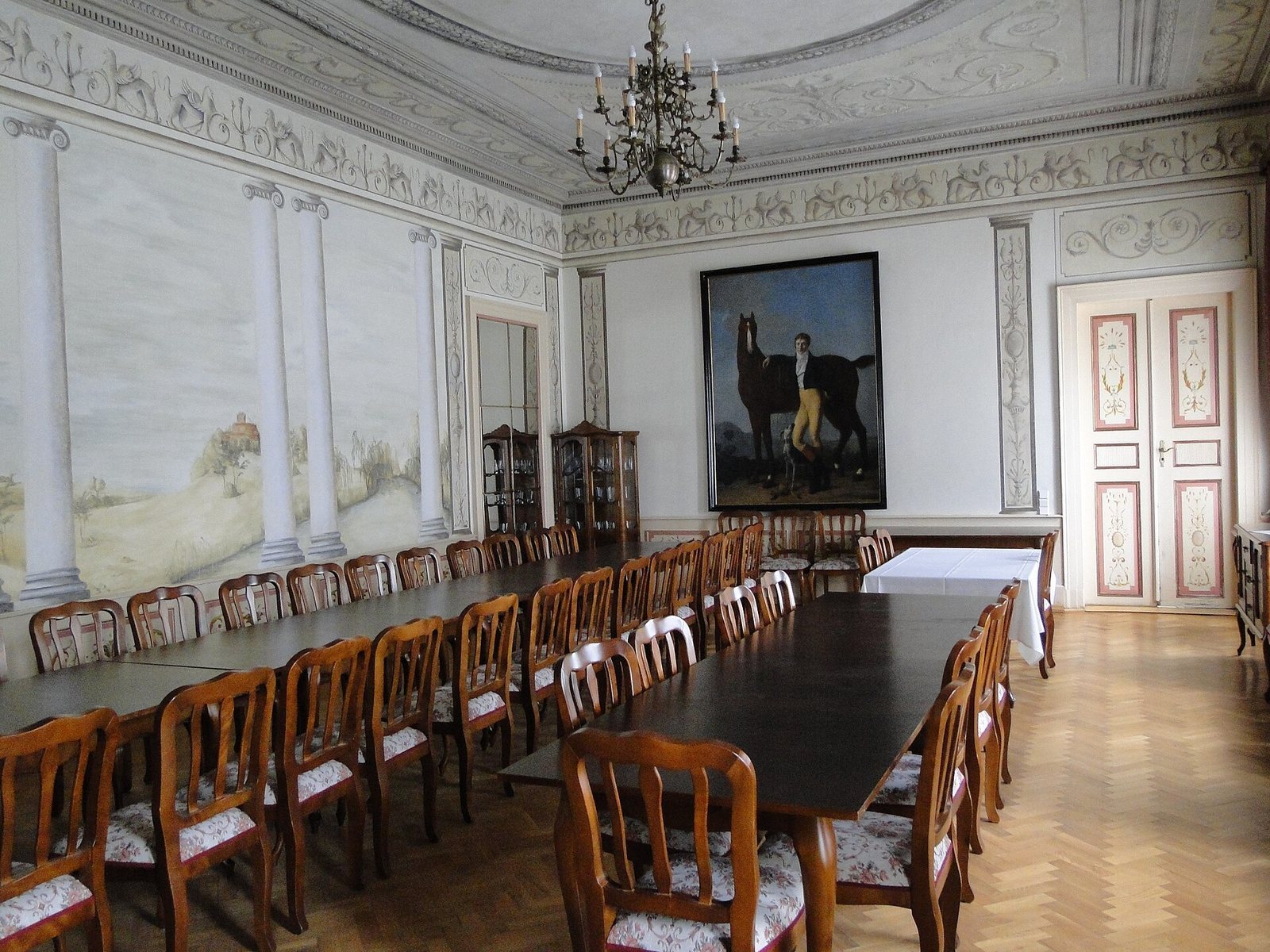
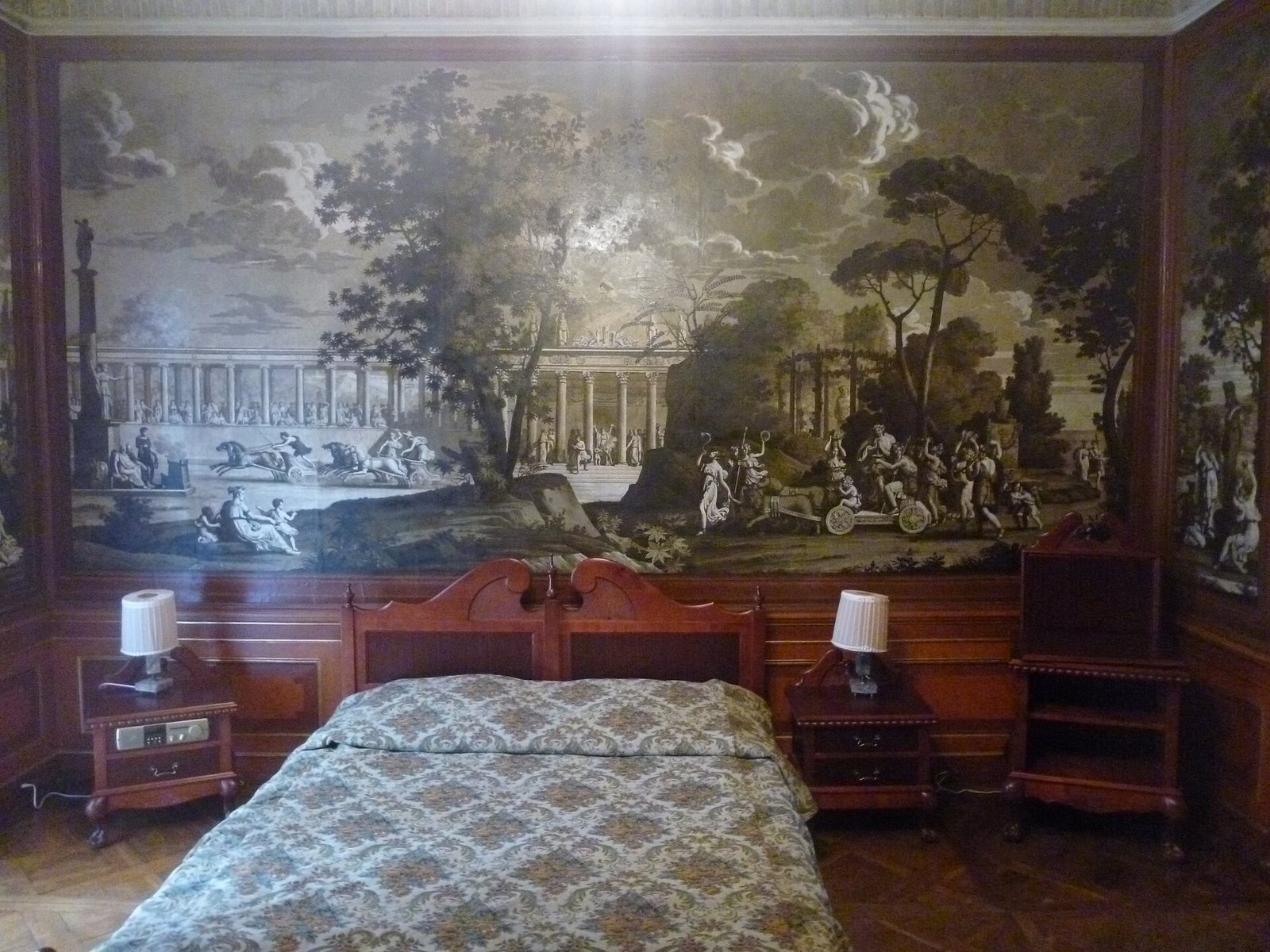
Large reception rooms contain decorative masonry fireplaces and elaborate furnishings. Some furniture and other furnishings belonging to the palace’s last owners remain inside. One pavilion retains nineteenth-century painted wallpapers decorated with mythological subjects.
Landscape park
An extensive landscape park surrounds the palace and was designed by Polish landscape architect Walerian Kronenberg. Its surviving original sandstone sculptures, in late Baroque and Classical styles, depict Mars, Venus, and Diana. Other works include two sculpted figures or busts mounted on pillars, known as herms, and a statue of an armed man in antique dress. The sculptures are associated with sculptor Johann Chrysostom Redler.
Cavalry cemetery
Near the palace, a cemetery holds Polish cavalrymen killed in the fighting, and a monument commemorates the battle.