Via Triumphalis Necropolis: A Roman Burial Ground in Vatican City
Site at a Glance
- Popularity
- Low
- Country
- Vatican City
- Primary era
- Classical
- Eras represented
- Classical
- Civilizations
- Roman
- Site type
- Burial
- Remains
- Necropolis
On this page13 sections
History
The Via Triumphalis necropolis is a Roman burial ground on the northeastern slope of Vatican Hill in Vatican City. It takes its name from its position about half a kilometre from the Via Triumphalis, a road leading to the ancient Etruscan city of Veii. The Twelve Tables, an early codification of Roman law, required burial places to be outside cities. Roman burial grounds commonly lay beyond urban areas, beside routes of communication.
Roman use
The necropolis was in continuous use for nearly three centuries. Its use ended in the fourth century, coinciding with Constantine’s order in AD 320 to build the first Basilica of St Peter.
Preservation and excavation
Successive collapses of Vatican Hill buried the burial ground, preserving it much as it had been left when its use ended. The Autoparco sector was excavated between 1956 and 1958, followed by the S. Rosa sector in 2003. Further excavation between 2009 and 2011 was directed by archaeologist Giandomenico Spinola. The preserved buildings and finds have prompted the informal comparison Roman Pompeii.
Remains
Layout and phases
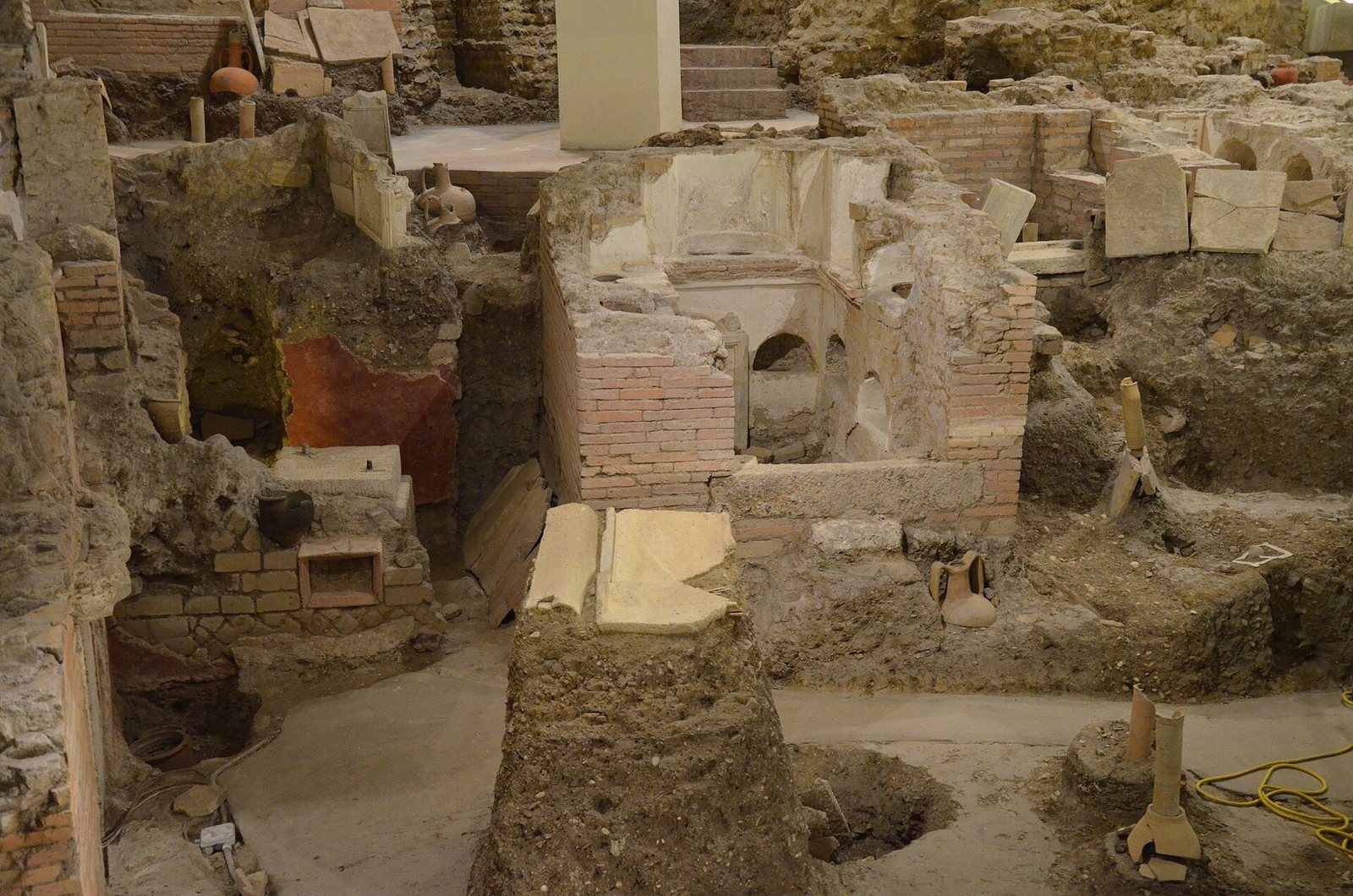
The necropolis occupies the northeastern slope of Vatican Hill, near the Circus of Caligula. It contains about 200 tombs of different dates and the remains of nearly 700 people. Its layout developed across successive levels. The first phase, in the first half of the first century AD, had relatively few funerary buildings, and cremation was prominent. Cremation predominated at the necropolis from the second century BC to the second century AD. In the second phase, which continued until the second half of the second century AD, buildings followed a more regular arrangement. Deposits and landslides heavily affected this level, almost covering its tombs. In the final phase, during the first half of the third century AD, funerary buildings became larger and the area more urbanized. This phase lay at a higher level, formed by the accumulation of deposits over the earlier phase. Walkways were installed to guide visitors through the construction phases.
Burial practices and finds
Burial practices
Clay tubes in the tombs were used to pour offerings of honey, wine, milk, or oil. A cremation platform was also found, with charcoal remains from pine cones.
Tomb surfaces and excavated objects
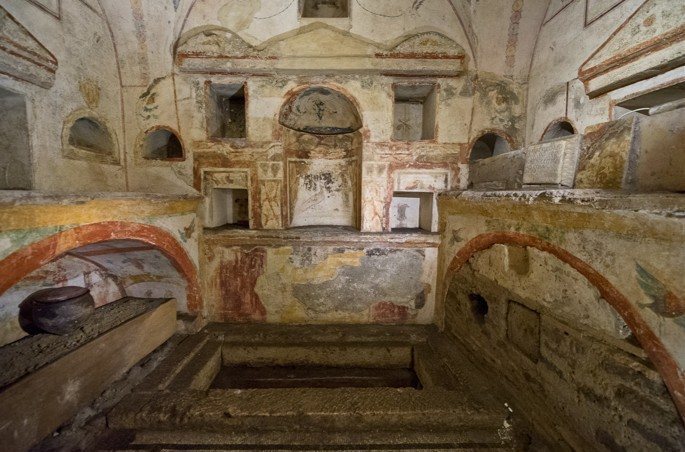
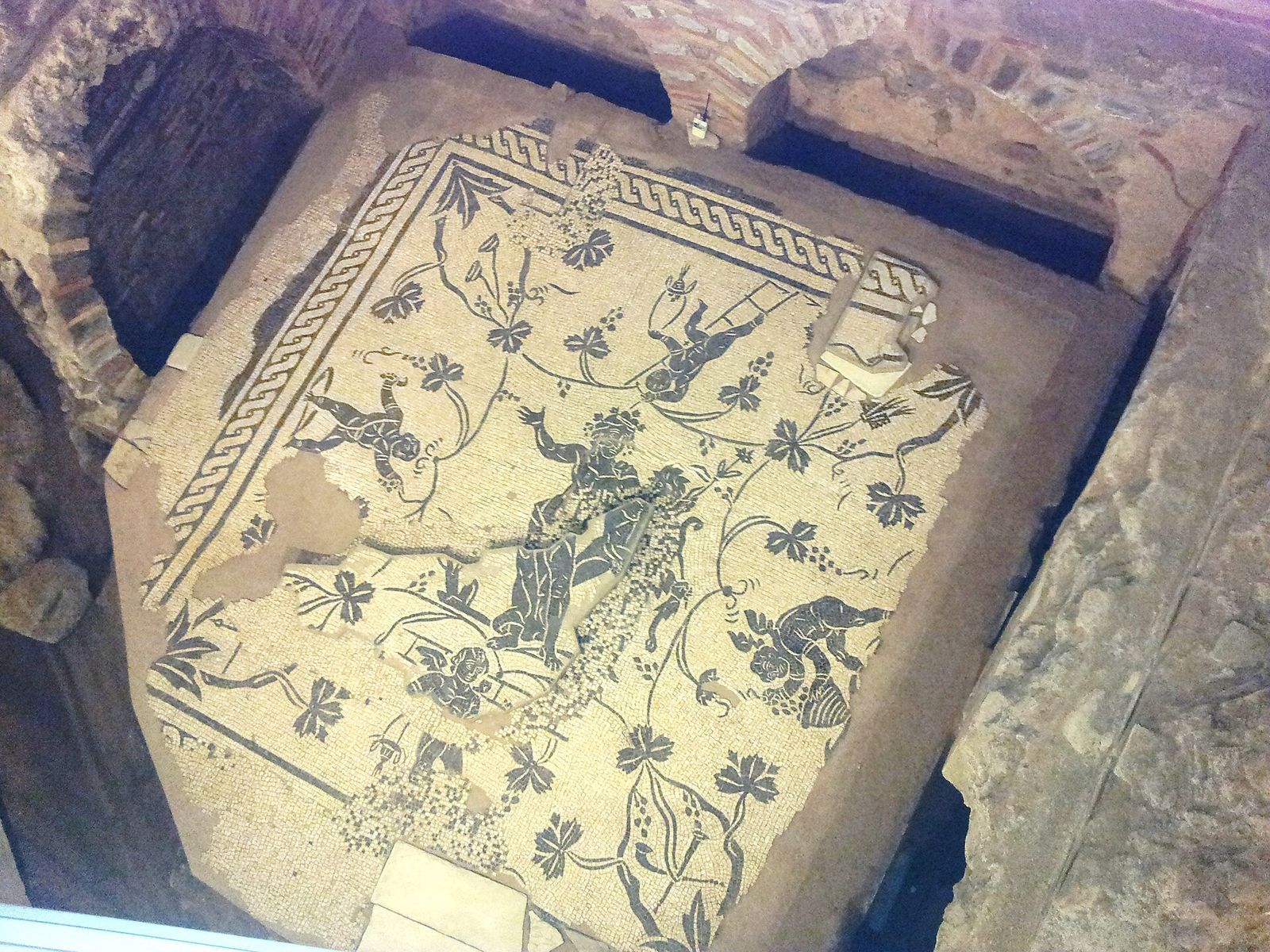
Frescoes survive among the tomb remains. Finds from successive excavations are displayed in cases and include sculptures, mosaics, plasterwork, perfume vessels, mirrors, carved grave markers, a young girl’s doll, and figures of enslaved attendants carrying lamps. Some displayed objects came from other sectors of the necropolis.
Identified monuments
Columbarium, stele, and sarcophagus
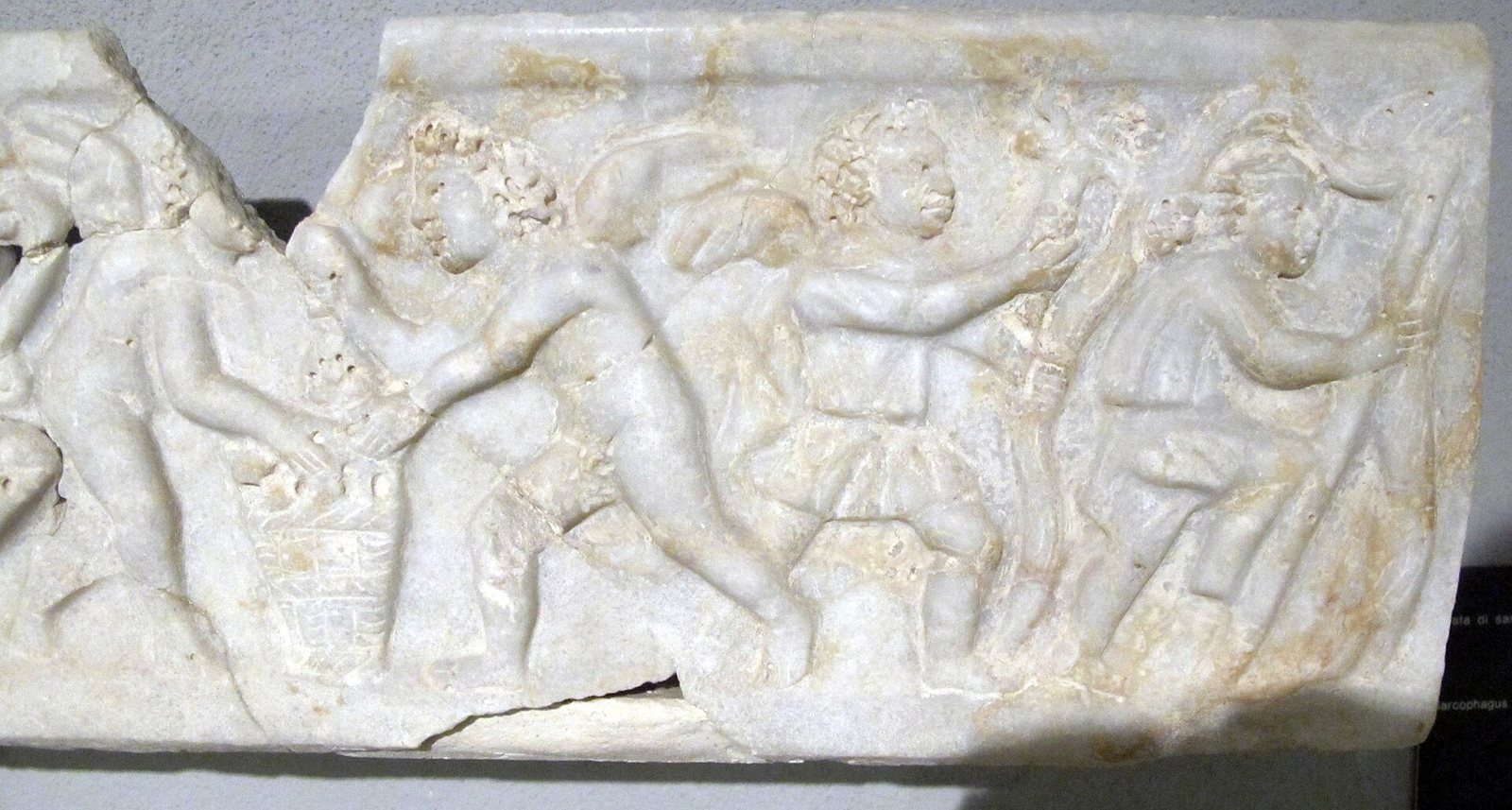
A surviving pavement belongs to a columbarium, a burial chamber with niches for cremation urns. Other funerary features include a carved grave marker depicting an infant and a sarcophagus showing the deceased.
Tomb of Alcinus
The Tomb of Alcinus identifies him as the designer of the visual setting for the Theatre of Pompey, a Roman theatre associated with Pompey the Great. His image shows him holding a chisel, with a compass, square, and water level nearby. The tomb also includes a figure of an enslaved attendant carrying a lamp.
Altar to Flora
An altar dedicated to Flora, a Roman goddess associated with flowers and flowering plants, is linked to Tiberius Claudius Optatus. He had been enslaved by Nero and later freed, and served as an official responsible for recording the emperor’s private property. The dedication is attributed to Optatus, although his wife is also named as dedicator, leaving the attribution uncertain.
Tomb associated with Gaius Sallustius Crispus Passienus
A tomb is associated with Gaius Sallustius Crispus Passienus, the second husband of Agrippina the Younger, Nero’s mother.