Vahanavank: An Armenian Monastery and Royal Burial Place
Site at a Glance
- Rating
- 4.9
- Popularity
- Low
- Country
- Armenia
- Primary era
- Medieval
- Eras represented
- Medieval
- Civilizations
- Armenian
- Site type
- Religious
- Remains
- Monastery
On this page15 sections
History
Vahanavank is a monastery about 7 kilometers west of Kapan, Armenia, whose origins date to the early 10th century. Its first church, sponsored in 911, had a dome over a cross-shaped plan. Vahan, the younger son of Dzagik, a prince of Baghk in Syunik, founded the monastery and gave it extensive estates. Syunik was a medieval Armenian principality and historical region in southern Armenia.
Foundation and growth
Stepanos Orbelian, a medieval Armenian historian and church leader, relates that Vahan became a monk to free himself from the devil and gathered about 100 followers before construction began. The monastery had a community of roughly 100 members and an associated school. Vahan’s nephew, Vahan I of Syunik, studied there and continued building work. He later became the leading bishop of Syunik and a catholicos, a senior leader of the Armenian Church. Construction at Vahanavank continued into the 11th century.
Royal center and decline
During the 11th century, Vahanavank became an important religious center for Syunik’s rulers and served as a royal burial place. In 1086, Queen Shahandukht II and her sister Kata added a vestibule, the monastery’s southern entrance, and the Church of Surb Astvatsatsin as a family mausoleum. Vahanavank belonged to the Armenian Apostolic Church and the Diocese of Syunik, a church district.
An earthquake damaged the monastery at an unknown date. After invaders conquered the kingdom of Syunik in the 12th century, Vahanavank lost importance. It had been abandoned and lay in ruins by the 14th century.
Archaeology and restoration
Archaeological work began in 1966, followed by reconstruction in 1969 under Armenian architect Arthur Meschian. Restoration was underway by 1978. The Church of Surb Astvatsatsin had been restored during the Soviet period. Later work on individual buildings and the arcade is described with their remains below.
Remains
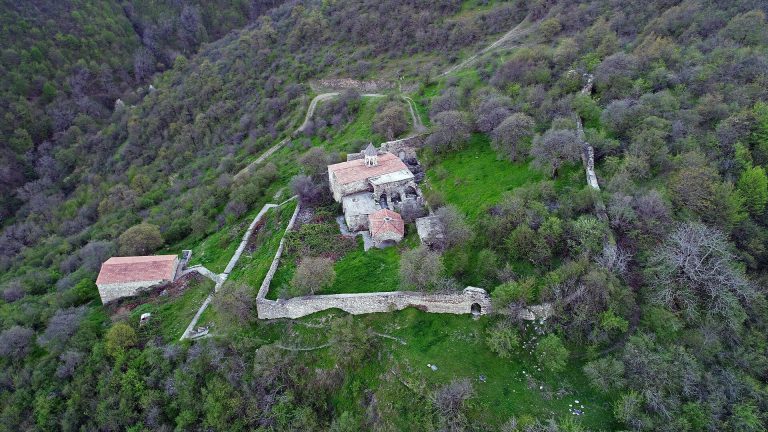
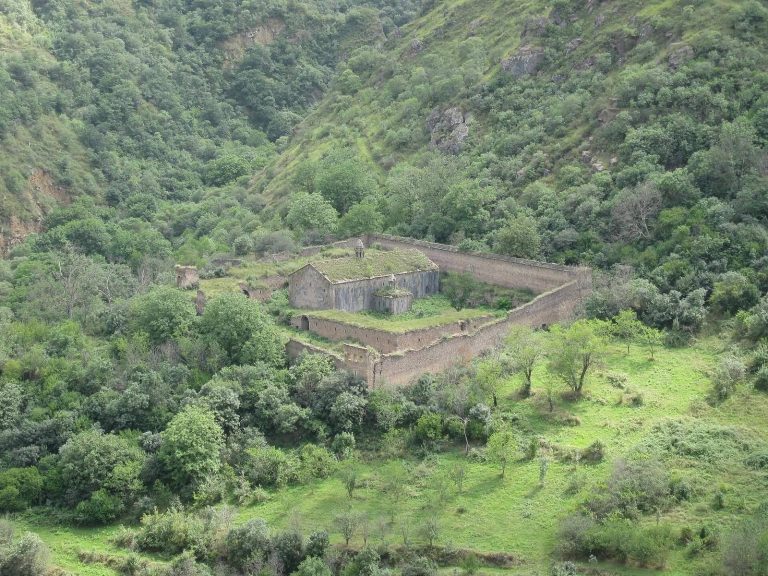
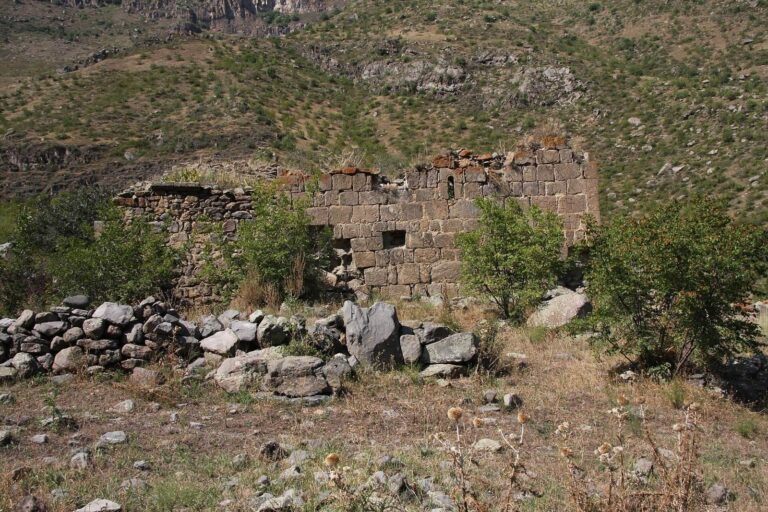
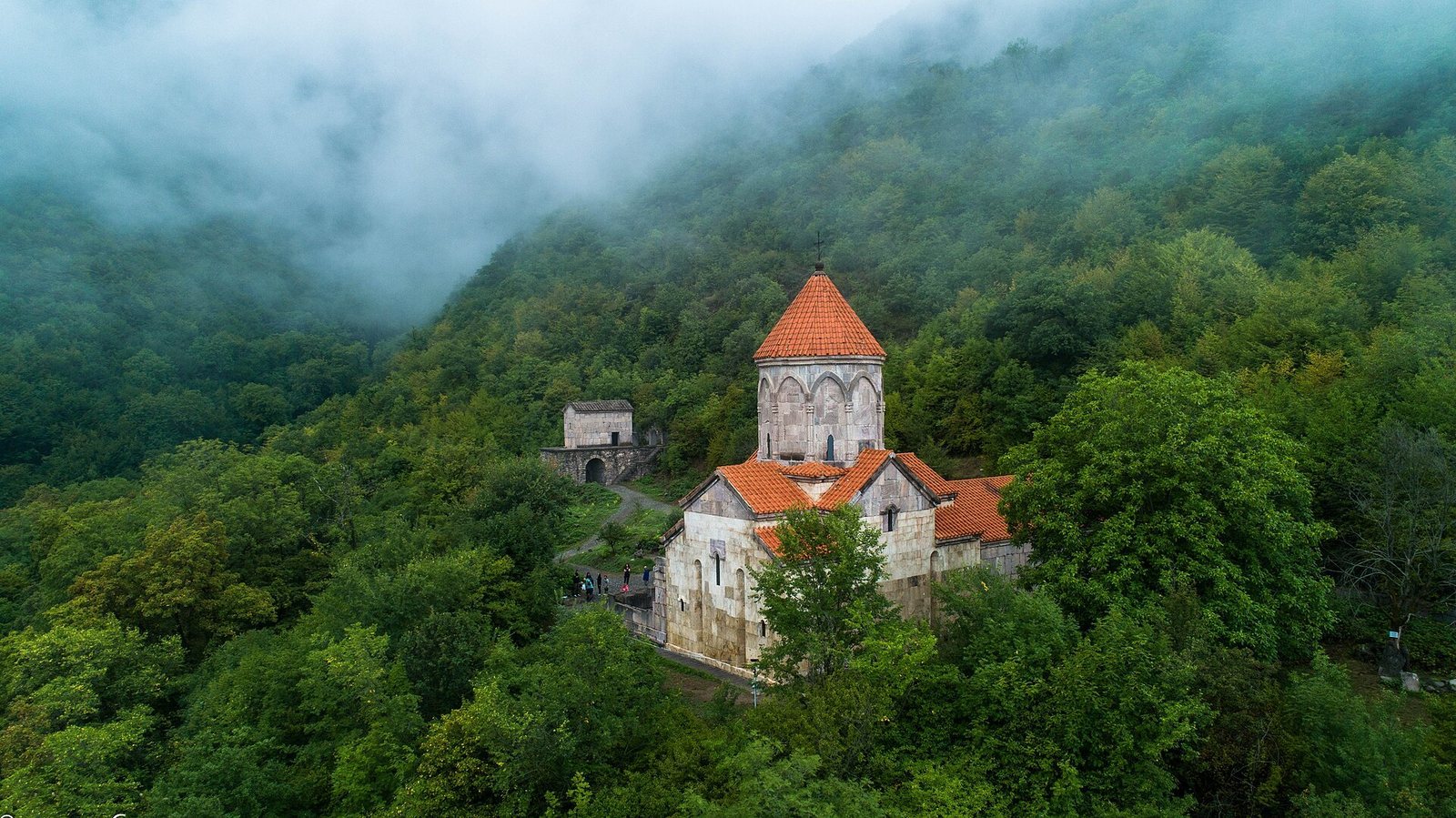
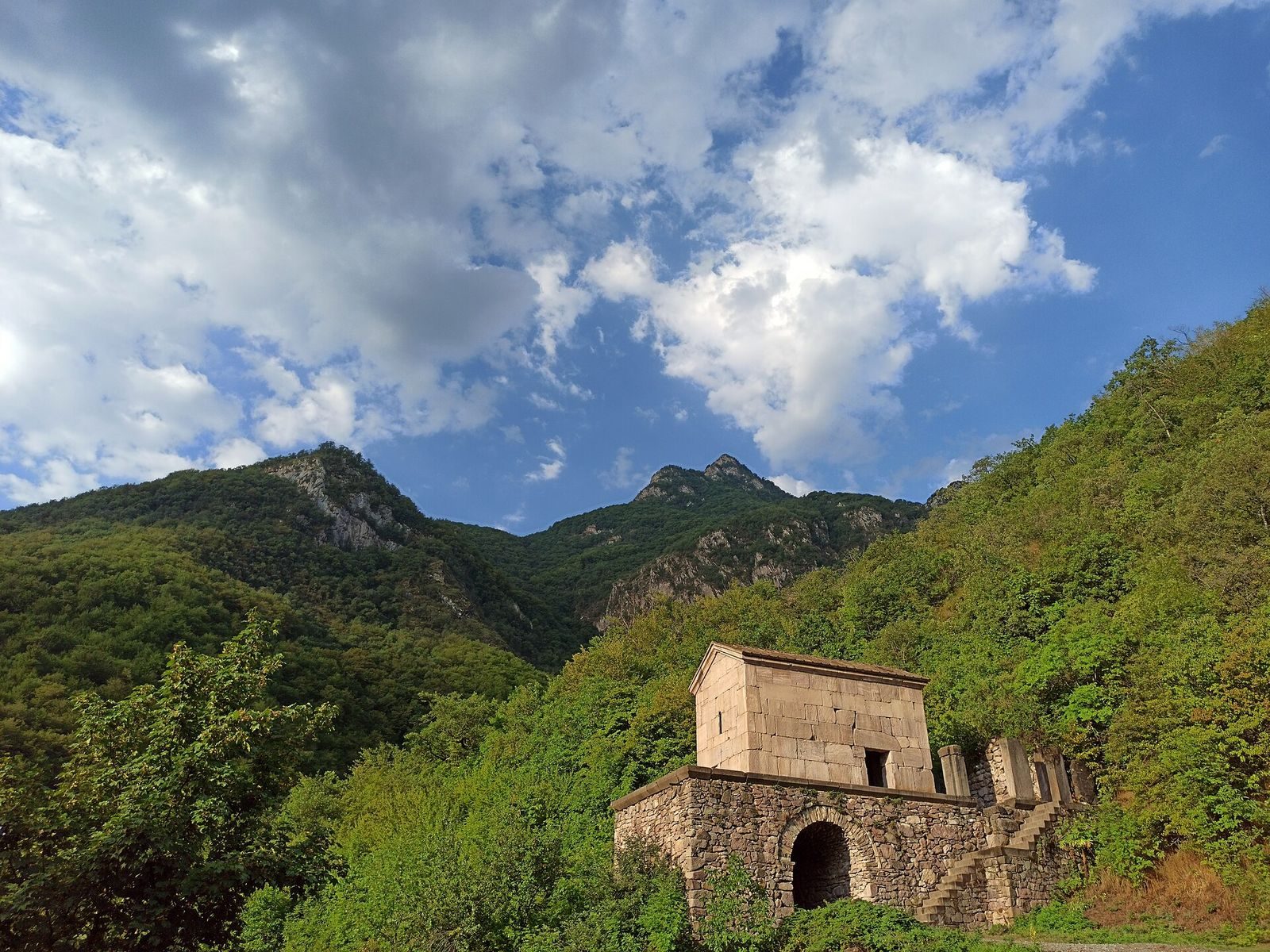
The monastery occupies forested slopes of Mount Tigranasar above the right bank of the Voghdschi River. A rubble-stone wall enclosed the complex to the south, north, and west. Its buildings included a south-to-north portico leading toward the narthex, the entrance area at a church’s west end, as well as an arched vestibule and portico in the monastery’s western part.
Church and entrance hall
Church of St Gregory the Illuminator
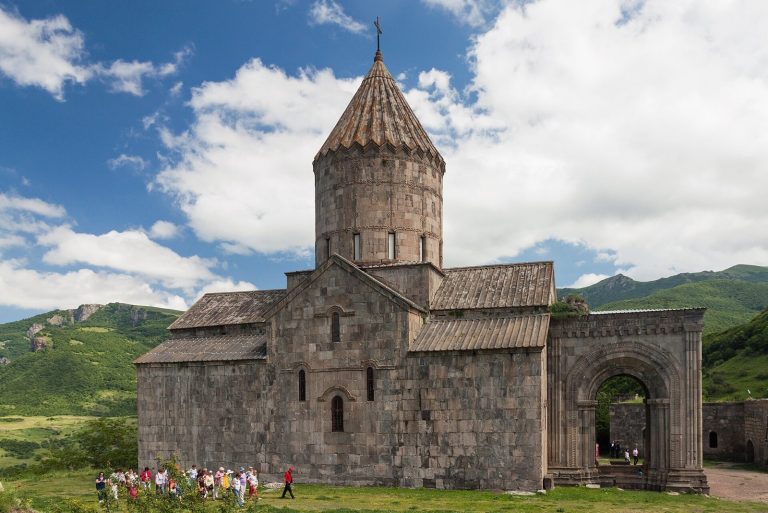
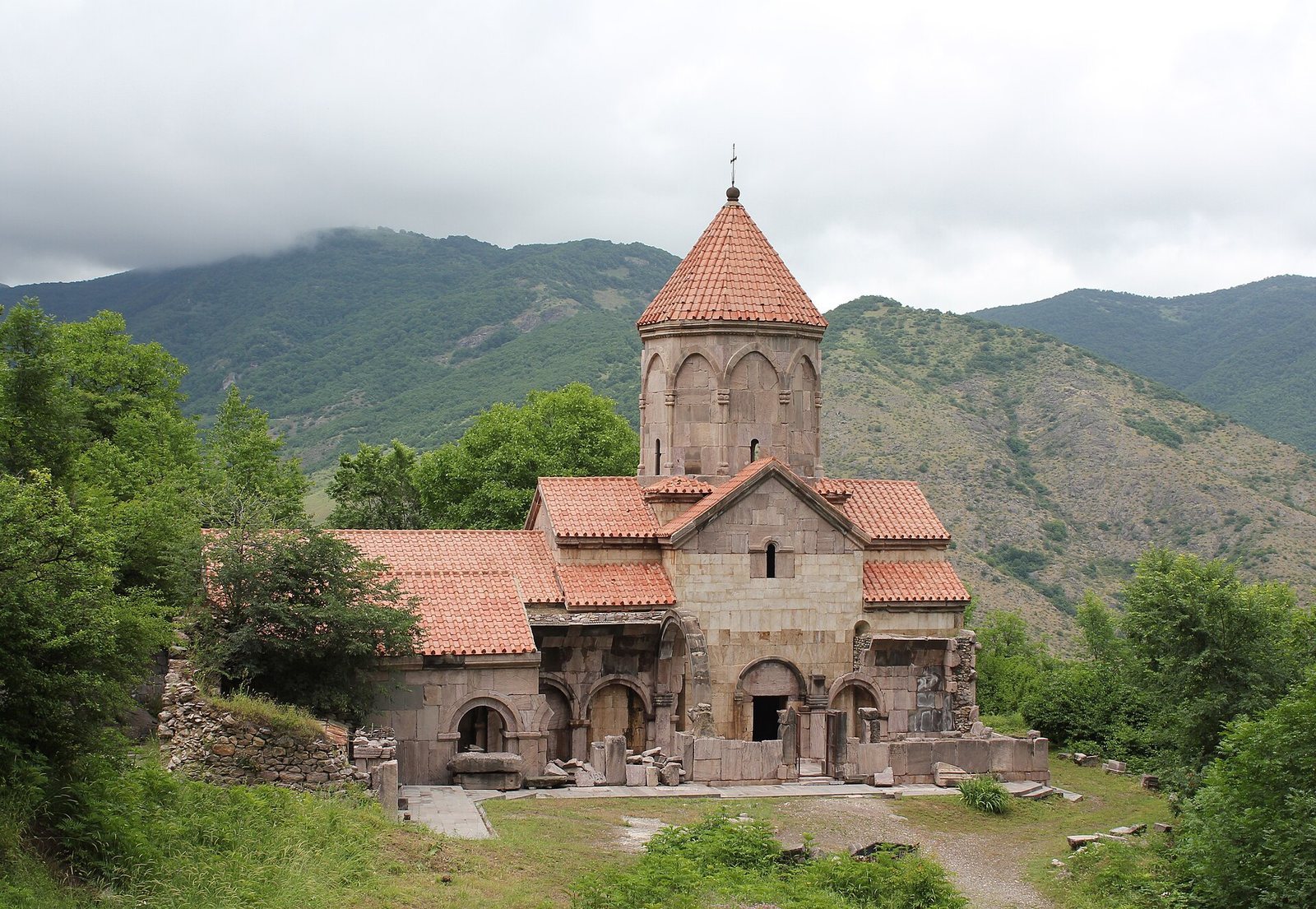
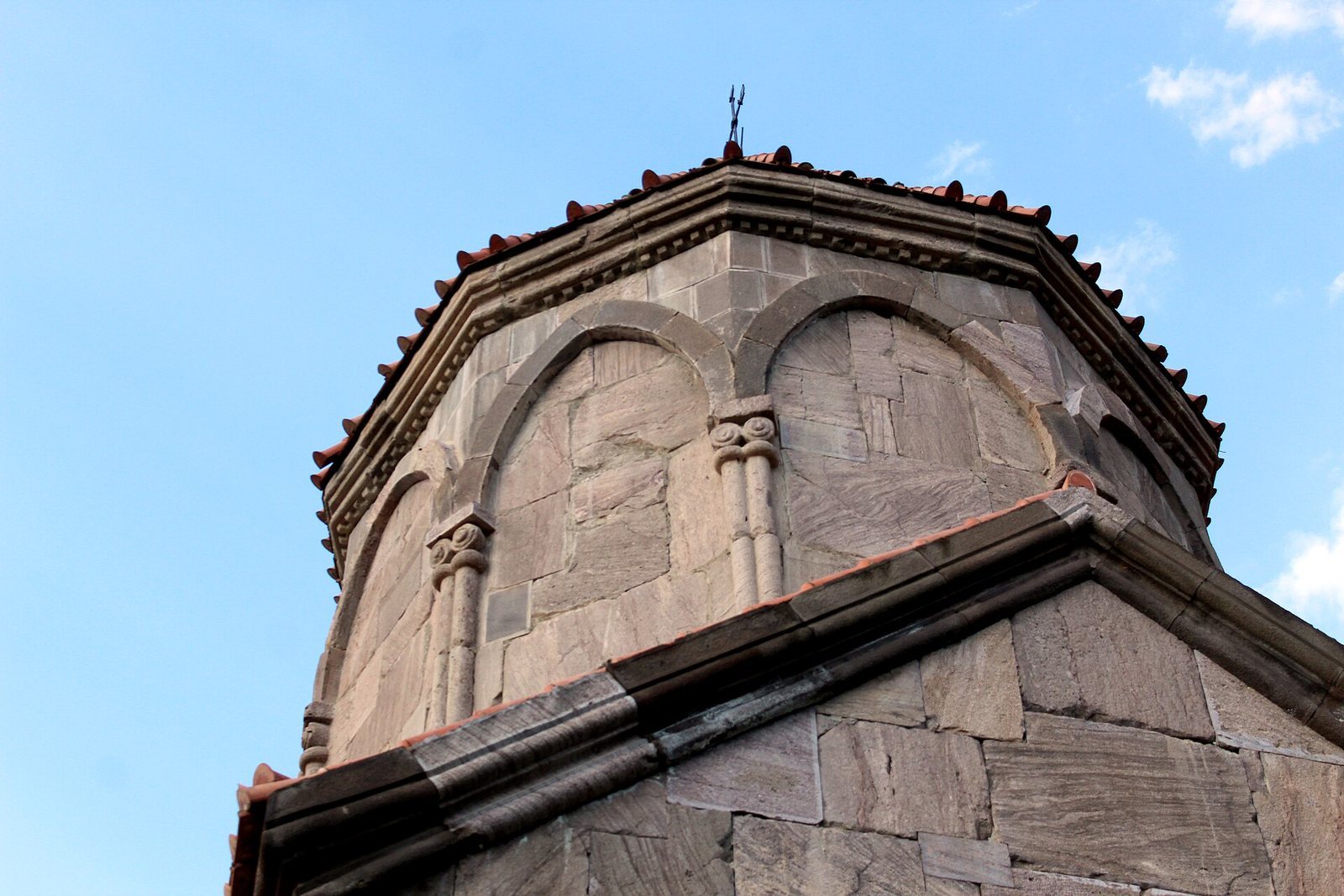
The oldest building is the Church of St Gregory the Illuminator, named for an early Christian leader traditionally regarded as the evangelizer of Armenia. Built of local reddish basalt, it has a dome over a cross-shaped plan. Its principal entrance is on the south side, with another entrance to the west.
Gavit
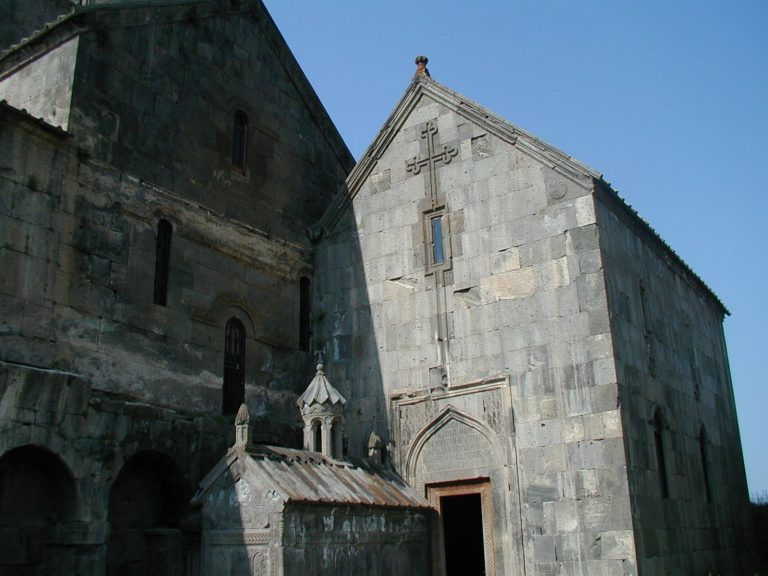
The gavit, a church entrance hall often used as a gathering space, adjoins the church on its west side. The rectangular hall had a southern entrance, and three massive horseshoe-shaped arches supported its roof. The central arch collapsed in an earthquake, badly damaging the building. Floral and geometric designs decorate an interior frieze.
Arcades
Arcades surrounding the church and gavit cover about 140 square meters. Many inscribed tombstones from the 10th and 11th centuries remain there. Restoration work from 2006 to 2009 repaired the church and adjoining gavit, while the colonnaded arcade was only partly restored.
Mausoleum and burial remains
Church of the Holy Mother of God
Surb Astvatsatsin, or the Church of the Holy Mother of God, is a small, plain, two-storey mausoleum about 25 meters from the larger church. It stands on a vaulted rubble-stone base and meets the mountain on its west side. An inscription on a stone near the base of the interior east wall dates to 1086 and refers to the church’s construction. A separate inscription in a vestibule names Catholicos Stepanos Orbelian.
Tombs and carved stones
The complex contains 10th- and 11th-century khachkars, carved Armenian stone monuments featuring crosses, along with inscriptions and burials. Burial remains include kings Smbat II and Grigor I, King Vasak, who died in 1051, and four other kings of Syunik. Grigor I died in 1072. Queens Sophia and Dinar are also among those buried here; Sophia, the mother of King Senekerim, died in 1081. Other named burials include princes Aschot Dschewanschir and Chaghbak, Wahan Nachaschinogh and Princess Chutschesch, both dated to the 10th century, and Prince Kjurike, dated to the 11th century. The remains also include military leader Gevorg Pahlevuli, dated to 1101, Sahak Sevada II, Ashot, a senior prince of Syunik, and the mother of Prince Vachagan.
Earlier cemetery
A large cemetery southeast of the monastery dates to around the end of the second millennium BC, many centuries before the monastery’s foundation.
Enclosure and associated remains
Refectory and other structures
The monastery’s buildings had tiled roofs. Its refectory was nearly completely destroyed and came to light again during excavations. An inscription found within the complex gives the year 1046, though it is uncertain whether that date refers to construction. Other structures and inscriptions also survive across the site.