Tsukayama Kofun: A Fifth-Century Burial Mound in Utsunomiya
Site at a Glance
- Popularity
- Medium
- Country
- Japan
- Primary era
- Classical
- Eras represented
- Classical, Medieval
- Civilizations
- Yamato
- Site type
- Burial
- Remains
- Necropolis
On this page10 sections
History
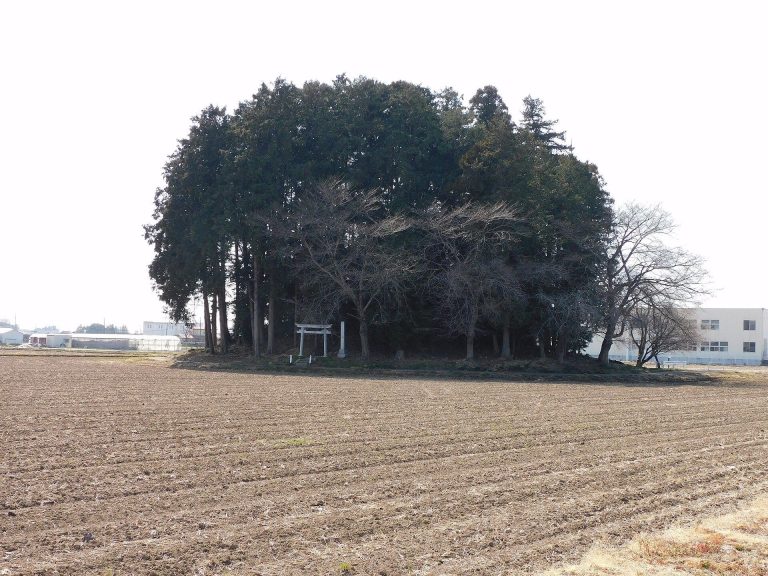
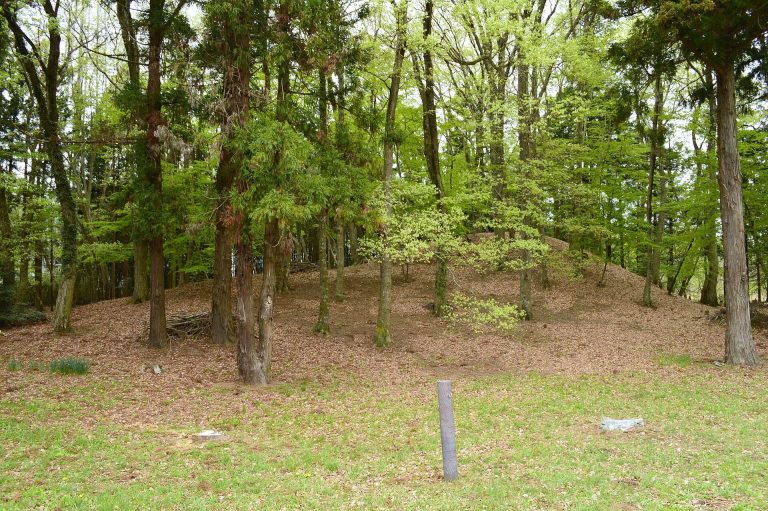
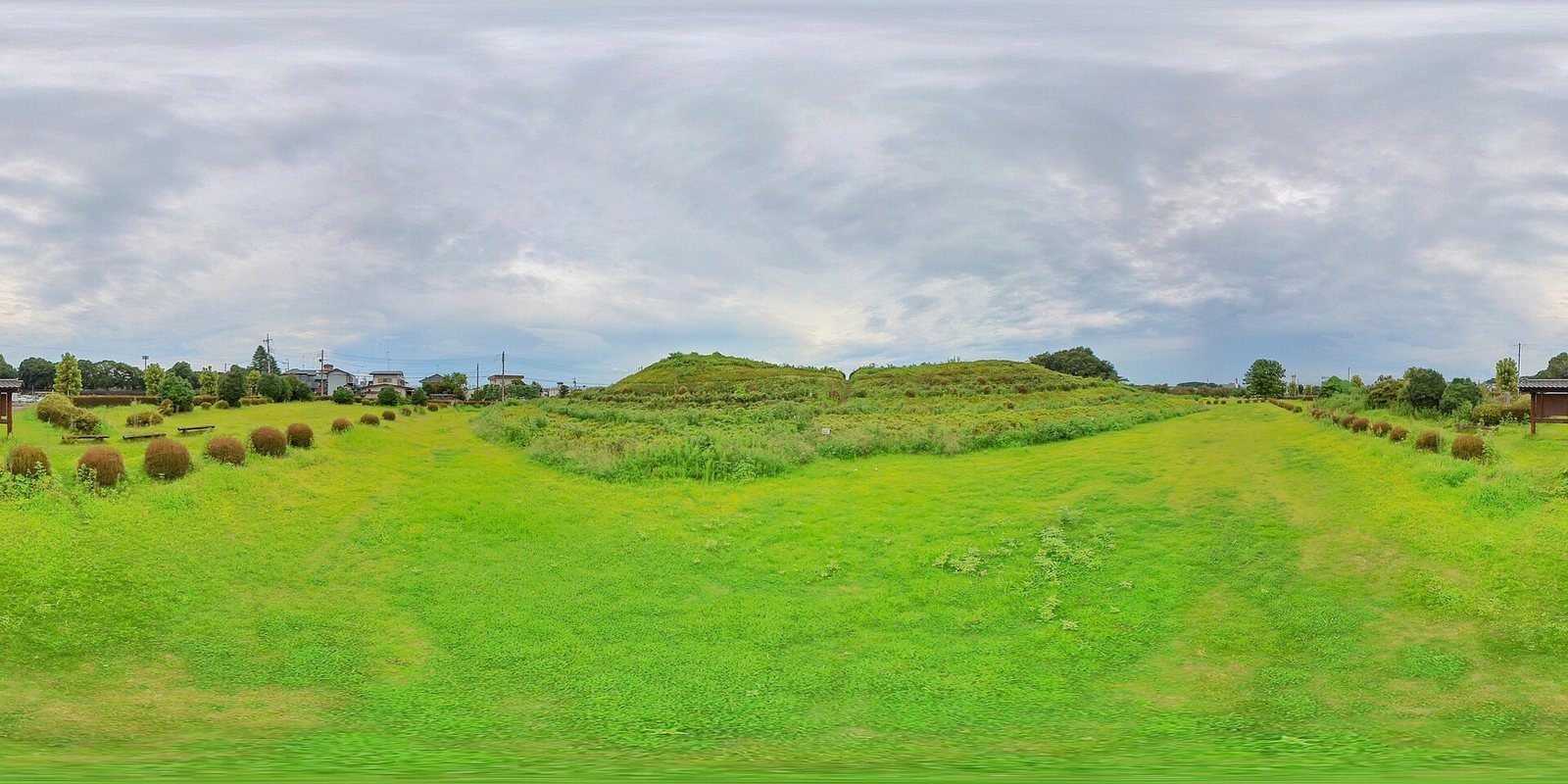
Tsukayama Kofun is an ancient Japanese burial mound, or kofun, in Nishikawada, Utsunomiya, Japan. Built around the middle of the fifth century, though a date in the latter half has also been proposed, it is the largest mound in the Tsukayama group. It is interpreted as the tomb of a major leader in southern Utsunomiya and helps explain the political circumstances of Shimotsuke, the historical region corresponding to modern Tochigi.
Fifth-century burial group
The group’s mounds date from around the middle of the fifth century to the beginning of the sixth, following the Mobara and Higashiya burial groups. Tsukayama West Kofun was built later in the fifth century, after the main mound and before Tsukayama South Kofun. The South mound dates to the end of the fifth century, possibly extending into the early sixth.
Protection and investigation
In 1966, a plan for National Route 121, part of the Utsunomiya Loop Road, was altered near the group to include a tunnel and protect the remains. Tsukayama West and East were excavated in 1976 in connection with road construction. The main mound was surveyed in 1989 and excavated four times from 1989 to 1991. Further work took place during road improvements in 1991–1992, and Tsukayama West and South were investigated between 1995 and 1997 during site development.
Tsukayama Kofun became a Tochigi Prefecture Historic Site in 1953; Tsukayama West and South received the same designation in 1973. Pottery from Tsukayama South was designated a Utsunomiya City Tangible Cultural Property in 2005.
Remains
Setting and group layout
The group occupies a plateau between the Tagawa and Sugata rivers in southern Tochigi. More than ten mounds once formed the group; the main mound, two scallop-shaped mounds and circular Mound No. 6 are identified as its four surviving principal mounds. A layout description places six small circular mounds north of the main mound, while Mound No. 6, Tsukayama West and Tsukayama South lie to its west and southwest. Two further small mounds were recorded within the grounds of a former shooting range.
Principal mounds
Tsukayama Kofun
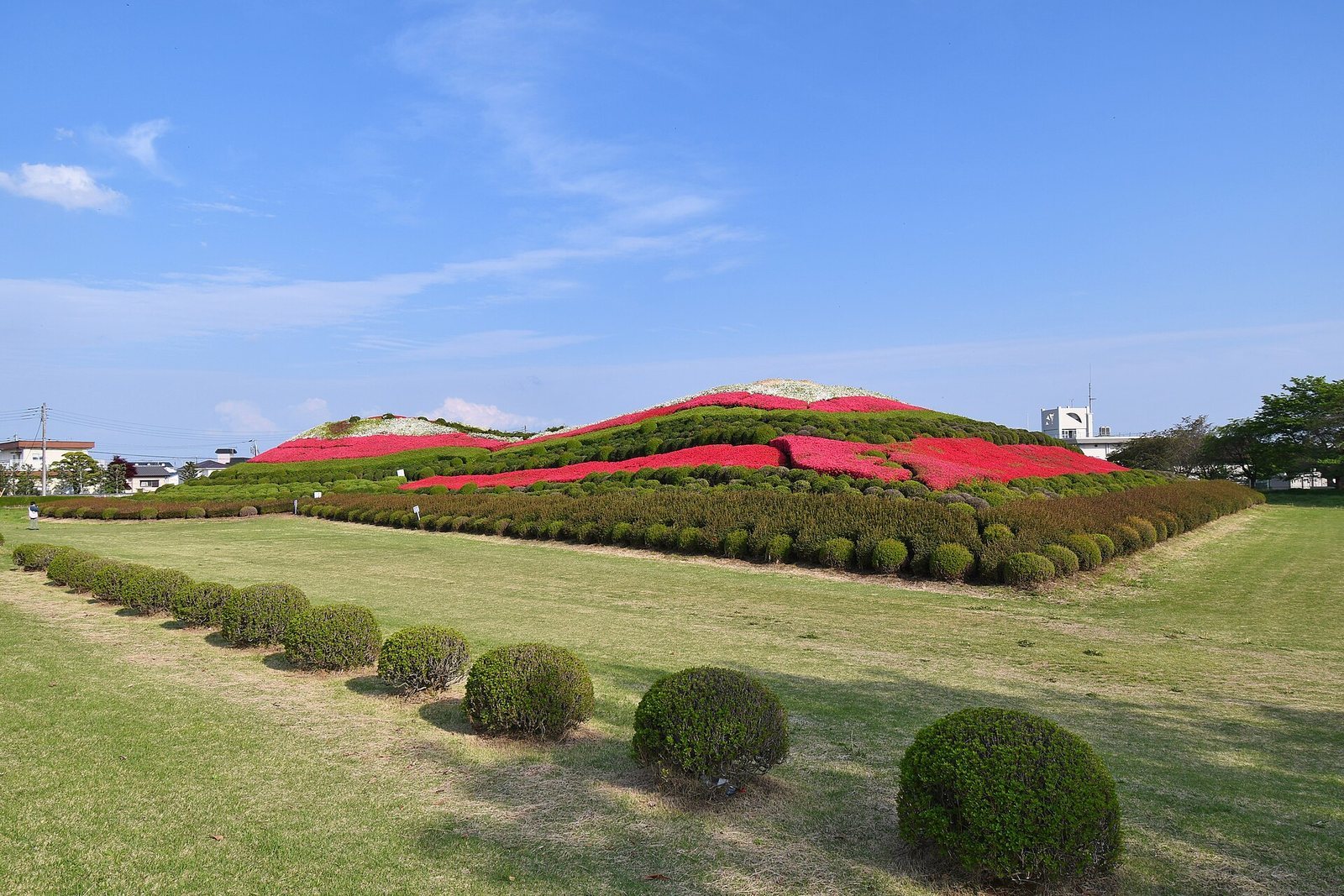
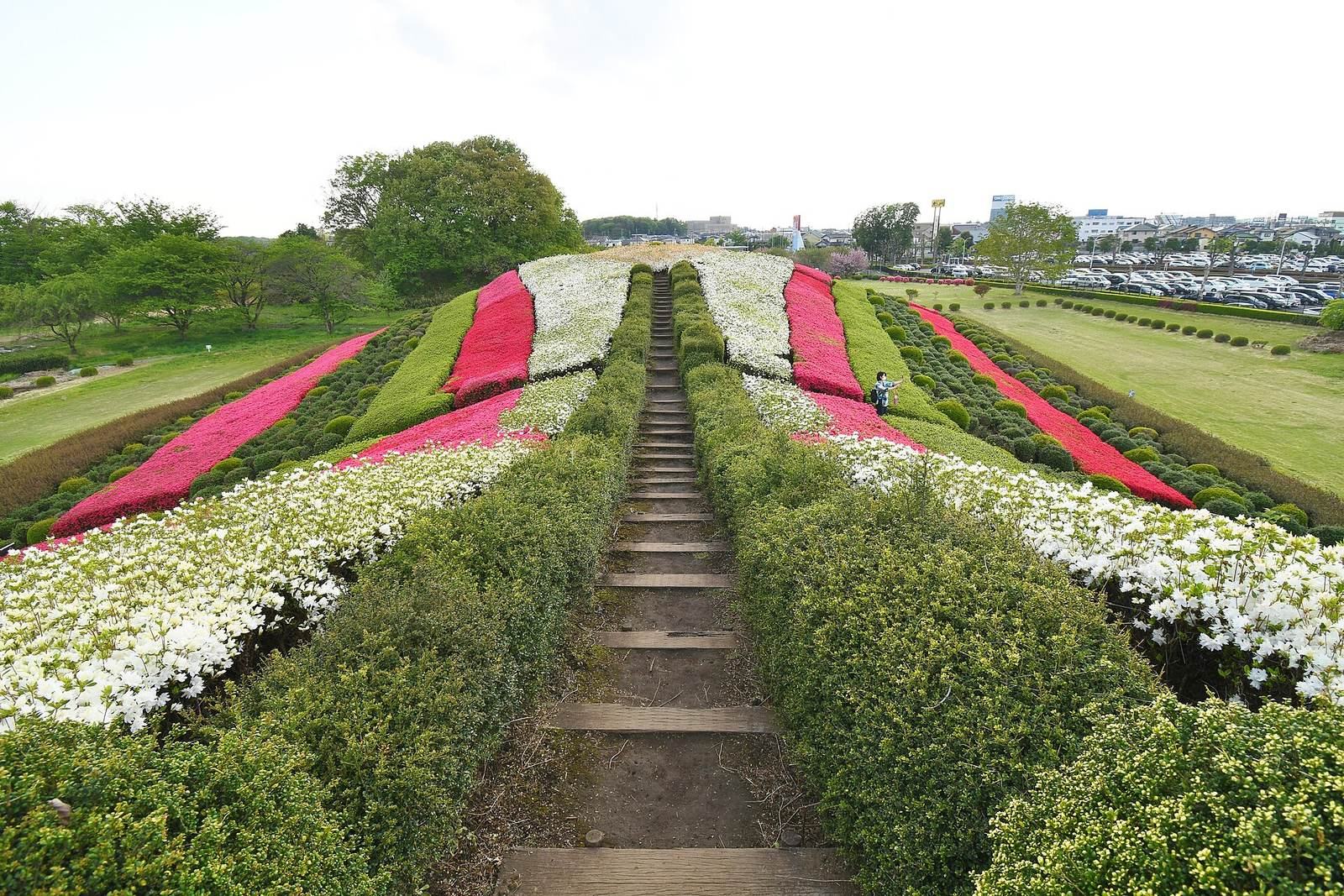
The main mound has a keyhole plan, with a circular rear joined to a rectangular front, which faces west. Its front projects unusually, giving the outline a sword-diamond-like form. The mound measures 98.3 metres long; a shield-shaped moat increases the overall length to 119.2 metres. The mound rises in three tiers, and a terrace-like platform projects from its south side where the front and rear sections meet. Stone facing was identified on the mound. A road cuts into part of the rear circular section. Finds include cylindrical haniwa, clay objects placed on or around burial mounds, and Sue ware, a type of ancient Japanese pottery, of the TK216–208 type. TK numbers are archaeological labels for Sue-ware types. Haji ware, another type of ancient Japanese pottery, was also found.
Tsukayama West Kofun
Southwest of the main mound, Tsukayama West has a keyhole plan with a relatively short front, a form also called scallop-shaped. Its front faces south-southeast. The mound is 63.1 metres long and 74.1 metres long including its moat. The rear section is 44.5 metres across and 6.7 metres high; the front measures about 18 metres long, 22 metres wide and 1.5 metres high. It was built in at least two tiers, although disturbance has affected the upper part. Surface finds include cylindrical haniwa and Sue ware of the TK208–TK23 type. A horseshoe-shaped moat surrounds the mound; it is shallow on the east, where the main mound constrains it. Part of a burial facility is defined at the summit of the rear mound.
Tsukayama South Kofun
South of Tsukayama West, Tsukayama South is another short-fronted, scallop-shaped mound, with its front facing south. It is 58 metres long, and its circular rear section rises 6.8 metres. The mound was built in two tiers. A horseshoe-shaped moat surrounds it and narrows on the northwest, where Tsukayama West constrains it. Finds include cylindrical and figurative haniwa depicting people, horses, deer and houses. Pottery includes Sue-ware vessels such as large jars, high-footed stands, decorated footed jars and double-necked jars, as well as Haji ware. The Sue ware belongs to the TK208–TK23 type. A depression and red-pigmented stones at the summit suggest that a vertical-pit burial chamber, a grave reached from above, was robbed.
Burial finds
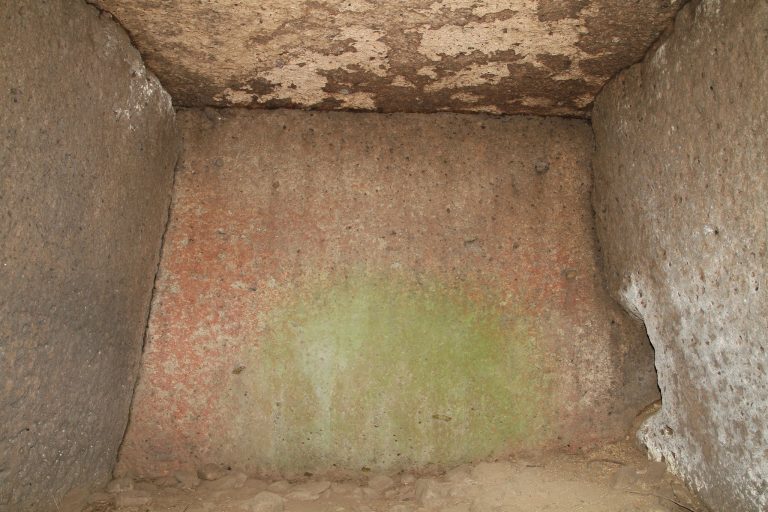
A haniwa coffin found within the group bears an incised scene of four deer, with male and female animals alternating. Such a coffin was made from clay haniwa elements.