Troitsky Markov Monastery: An Eastern Orthodox Monastic Center in Vitebsk, Belarus
Site at a Glance
- Rating
- 4.6
- Popularity
- Very Low
- Country
- Belarus
- Primary era
- Early Modern
- External website
- Open
- Eras represented
- Early Modern, Modern
- Civilizations
- Grand Duchy of Lithuania, Polish–Lithuanian Commonwealth, Russian
- Site type
- Religious
- Remains
- Church
On this page11 sections
History
Troitsky Markov Monastery is an Eastern Orthodox men’s monastery in Vitebsk, Belarus, traditionally associated with origins in the fourteenth or fifteenth century. It belongs to the Vitebsk and Orsha Diocese of the Belarusian Exarchate of the Moscow Patriarchate. According to its founding legend, a man named Mark withdrew to land that belonged to him, built a chapel, and was joined by other religious companions.
Early foundation and revival
The monastery continued until 1576, when it was abolished and its Trinity church became a parish church. The community was revived in 1633, and its foundation at Markowo is dated to 1642 under Samuel Lew Oginski, a nobleman and political official of the Polish-Lithuanian Commonwealth who served as a courtier of King Wladyslaw IV and as a district administrator of Troki.
Oginski established the monastery at Markowo, near Vitebsk rather than within the city. He first founded a parish church and then created the monastery in 1642, giving the village to the community as its material endowment. This arrangement allowed him to circumvent a royal prohibition on building Orthodox churches in Vitebsk after the killing of Josaphat Kuntsevich in 1623. Kuntsevich was a Uniate archbishop associated with efforts to promote the Union of Brest, which placed some Eastern Christian communities under papal authority while retaining their Eastern rites.
The Uniate archbishop Antoni Sielawa opposed the foundation, but the monastery survived and became an important Orthodox center in the Vitebsk region. It belonged to the group of monasteries subordinate to Holy Trinity Monastery in Slutsk. The community was intended to elect its own superior, while its first abbot was selected by Petro Mohyla, the Orthodox Metropolitan of Kyiv.
Seventeenth-century growth
The monastery flourished during the seventeenth century. In 1656, Patriarch Nikon of Moscow and all Rus presented it with a revered copy of the Kazan Icon of the Mother of God, a major Orthodox Marian icon associated with Kazan. The icon became the monastery’s principal object of veneration and later gave its main church its dedication.
Suppression, wartime damage, and revival
Authorities closed the monastery in 1920 and transferred its buildings to the police and other institutions. The buildings were systematically damaged or demolished, while the monastery’s icon was placed in a museum. During the Second World War, the Kazan Church was damaged and later partly restored. It remained the only church in Vitebsk that stayed open during the Soviet period.
After the dissolution of the Soviet Union, the monastic buildings were returned to the Russian Orthodox Church, and the community was reactivated on 23 November 2000. The Kazan Icon of the Mother of God was then returned to the Holy Kazan Church in a silver covering.
Remains
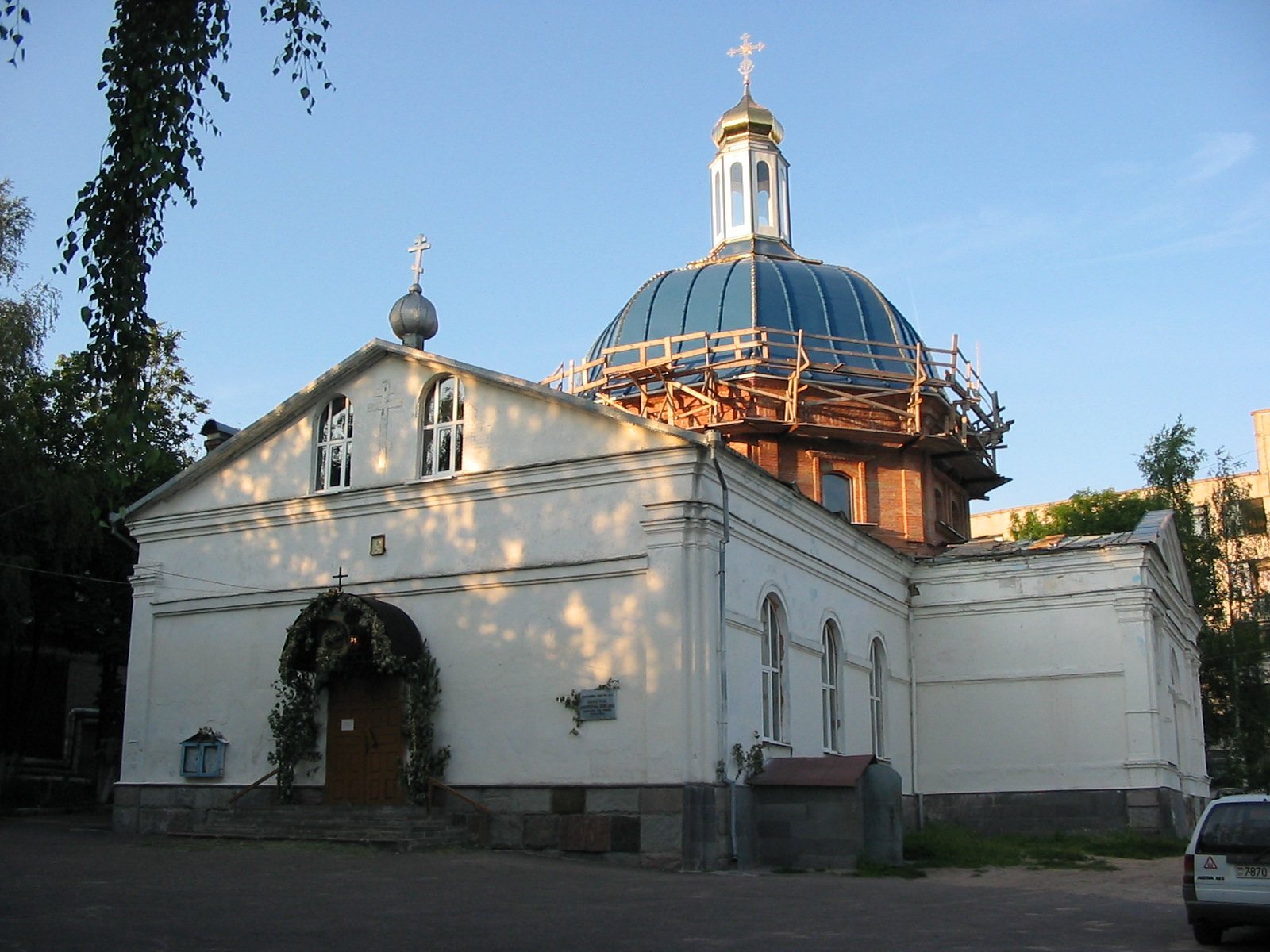
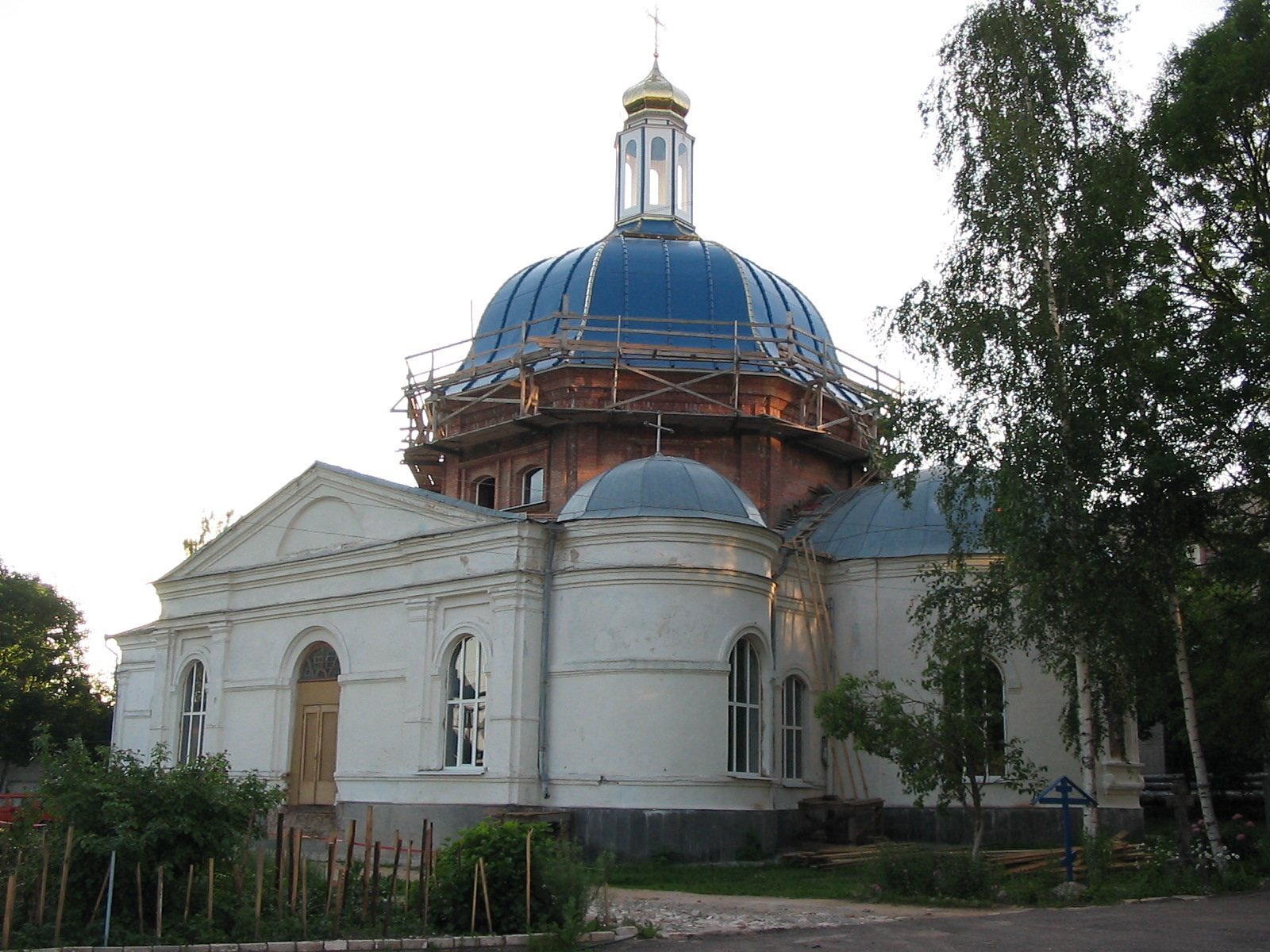
The surviving complex is centered on the Holy Kazan Church, the remaining church of a monastery that once included several wooden and stone buildings. Its architectural history combines the seventeenth-century wooden churches of the monastic complex with the later stone church that now preserves the monastery’s principal place of worship. The site stands in an industrial area surrounded by factory buildings.
Church and bell tower
Holy Kazan Church
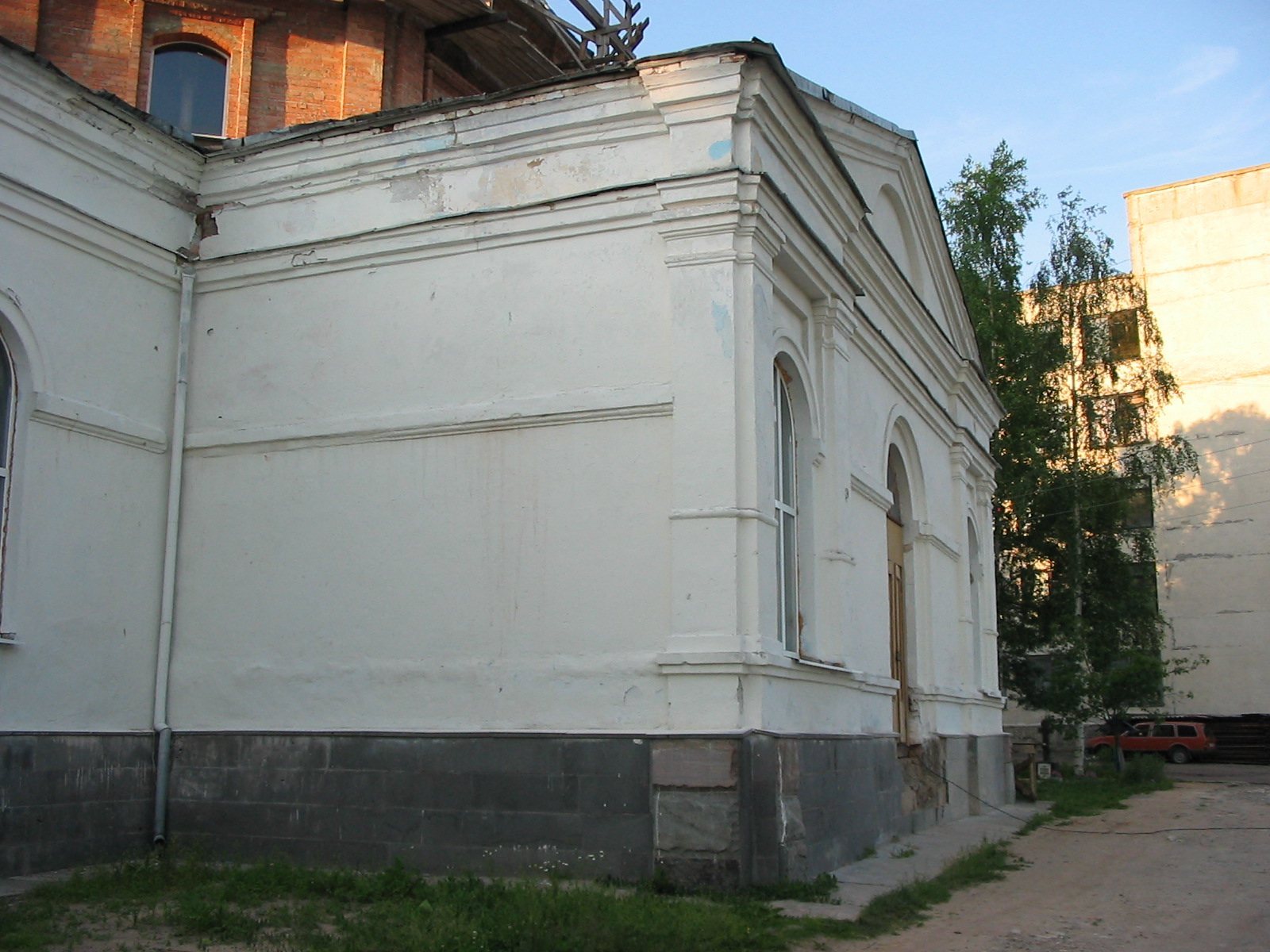
The Holy Kazan Church is the surviving monastery church and was originally built as the stone Intercession Church in 1760. The earlier Intercession Church, constructed in wood in 1650, burned in 1690 and was replaced by the stone building on the same site. The church was later re-consecrated in honor of the Kazan Icon of the Mother of God. Its principal altar is dedicated to the icon, while a side chapel honors Saint Sergius of Radonezh.
The church suffered damage during the Second World War and was partially restored afterward, initially without its dome. The Kazan Icon, presented to the monastery in 1656 and held in a museum during the Soviet period, was returned to the church in a silver covering.
Bell tower
A bell tower was erected in the 1850s to a design by M. P. Vysotsky. It formed part of the later architectural history of the monastery, whose surviving church had replaced the earlier wooden Intercession building.
Earlier wooden churches
Trinity Cathedral
The seventeenth-century monastery included the wooden Trinity Cathedral. It was regarded as one of the finest examples of Belarusian wooden architecture before its later destruction.
Intercession Church
The wooden Intercession Church was built in 1650 and burned in 1690. A replacement was constructed on the same site, culminating in the stone church of 1760 that later became the Holy Kazan Church.