Trilithon of Baalbek: Three Massive Stones in the Temple of Jupiter’s Base
Site at a Glance
- Popularity
- Very High
- Country
- Lebanon
- Primary era
- Unclassified
- Eras represented
- Unclassified
- Civilizations
- Unclassified
- Site type
- Religious
- Remains
- Temple
On this page6 sections
History
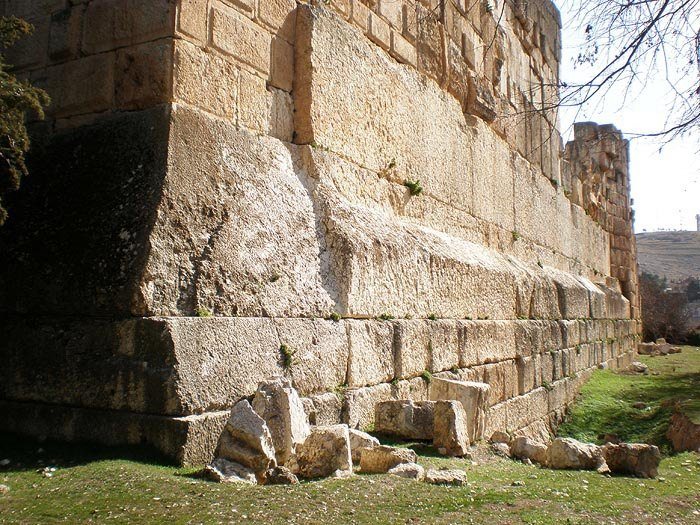
The Trilithon of Baalbek is an arrangement of three large stones in the Temple of Jupiter, within a UNESCO World Heritage property in Lebanon. The blocks’ construction remains uncertain: contemporary writing from Baalbek does not explain the work, and no single method of quarrying or transport has been established.
Proposed methods and human labor
Suggested ways of moving the blocks include levers, rotating winches and rollers. Comparisons with other heavy stone movements have been used to consider whether human labor could have managed the task, although they do not establish how the work at Baalbek was done.
In the second half of the eighteenth century, 400 workers took about three years to move Russia’s Thunder Stone, a granite pedestal weighing approximately 1,350 tonnes, about six kilometres. The pedestal supports the Bronze Horseman, a statue of Peter the Great in St Petersburg. It was estimated to weigh roughly twice as much as one Trilithon block, but the Russian operation did not require several stones to be fitted precisely together.
An estimate that 15,000 people would have been needed for the Baalbek blocks relies on an experiment suggesting that 16 workers could move one tonne of dressed stone about 1.6 kilometres in a day. A slower pace over a longer period would reduce the number required. Roman garrisons often carried out construction work, and a 1977 experiment showed that about 500 people could move a 600-tonne stone with pulleys and ropes.
Later discoveries and interpretations
The Trilithon was long regarded as the stone structure with the largest worked surface in the world. In 2014, Lebanese University students and Lebanese antiquities officials excavated a worked stone described as larger than the Pregnant Woman Stone, a large ancient block in the Baalbek quarry.
Erich von Däniken’s book Chariots of the Gods and the film Memories of the Future, based on the book, present the Trilithon as evidence of prehistoric contact with extraterrestrials. This is an unverified proposal, not an established explanation for the stones.
Remains
Temple retaining wall
The three limestone blocks lie in a row in the Temple of Jupiter’s western retaining wall, a structure that holds back soil or other material. They form part of the temple’s base and were an important element of the wall. Each block measures approximately 21.3 metres long, 4.8 metres high and 4 metres wide, and is estimated to weigh about 800 tonnes. The blocks lie about 7 metres above ground and were raised at least 10 metres to be placed with other megaliths, very large stones used in monuments or structures.
Quarry blocks
The limestone quarry generally identified as the source of the Trilithon lies about 900 metres to 1 kilometre from the temple terrace and slightly higher than it. A separate, larger limestone block remains in the quarry, about 1 kilometre southwest of the Trilithon. It measures approximately 21.5 metres long, 4.8 metres wide and 4.2 metres high, with an estimated weight of 1,200 to 2,000 tonnes. Its lower portion remains joined to the underlying bedrock.